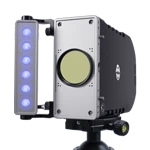
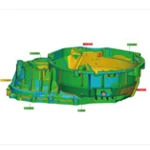
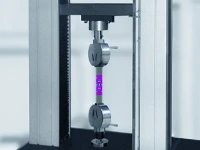
On July 3, the "Forum on the Application and Development of 3D Optical Measurement"—jointly hosted by XTOP3D Technology (Shenzhen) Co., Ltd., the School of Mechanical Engineering at Kyungpook National University (South Korea), and Pohang University of Science and Technology (POSTECH, South Korea)—was held in South Korea.
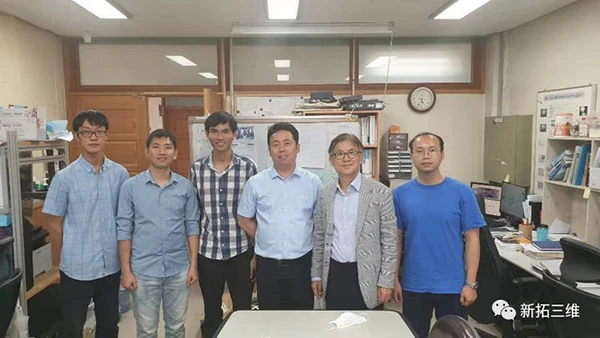
The forum was attended by numerous experts and scholars—including Professor Jin-Hwan Kim (POSTECH), Myoung-Pyo Hong (Korea Institute of Industrial Technology), Sang Kyun Oh (Daegu Mechatronics & Materials Institute), Mr. Chen Puchong (Asia-Pacific General Manager of Solution Co., Ltd.), and Cui Suixing (XTOP3D Technology (Shenzhen) Co., Ltd.)—who gathered to explore the prospects and practical industrial applications of 3D optical measurement.
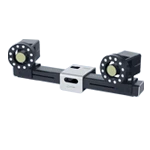
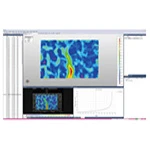
The conference highlighted the significant advantages of optical inspection in analyzing crack propagation characteristics in flexible materials. In contrast to the limitations of traditional strain-gauge methods, 3D optical inspection systems—specifically Digital Image Correlation (DIC)—enable non-contact, full-field 3D deformation and strain analysis, offering a viable replacement for conventional tools like extensometers and strain gauges. Discussions also covered the application of optical inspection in monitoring material wall-thickness variations and calculating elastic moduli, as well as how this technology assists designers in ensuring product safety and stability. Furthermore, the participants analyzed how the acquired material mechanical properties can provide a theoretical basis for Finite Element Analysis (FEA) and how simulation results can be validated, ultimately facilitating rapid and safe product design.
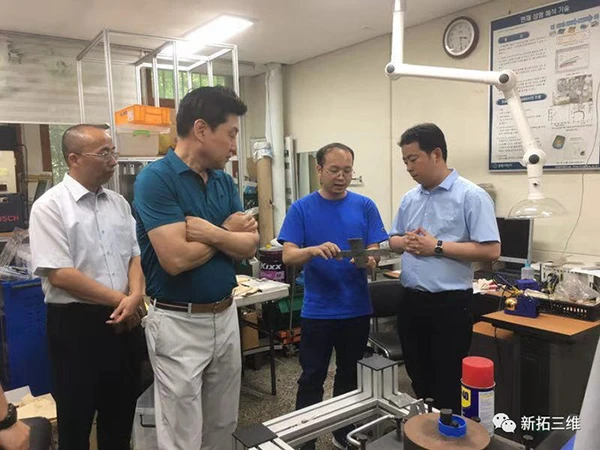
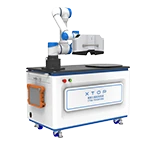
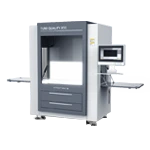
Cui Suixing, Overseas Sales Director at XTOP3D, delivered a presentation on the current status and future trends of "3D Optical Inspection Applications." Representing a leading domestic provider of 3D industrial inspection solutions, he detailed the research progress, applications, and advantages of XTOP3D’s optical inspection technology in fields such as material analysis and civil engineering. He noted that "optical measurement applications are becoming increasingly widespread, offering advantages unmatched by traditional measurement methods," and added that XTOP3D intends to collaborate with more research institutions and industry experts in this field.
Mr. Chen Puchong, Asia-Pacific General Manager of the Korean company Solution, spoke on "3D Optical Industrial Close-Range Photogrammetry." He highlighted that for large-scale object measurement, photogrammetry systems offer distinct advantages—such as speed, high efficiency, and precision—enabling enterprises and research institutes to effectively handle large-scale measurement tasks and helping the industry reach new heights.
Professor Jin-Hwan Kim from Pohang University of Science and Technology (POSTECH) in South Korea has long been engaged in steel technology research and possesses extensive experience in using optical measurement technologies for material testing. During his presentation on "Full-Field Optical Measurement Technology," Professor Kim repeatedly mentioned how the Chinese company XTOP3D helped solve 3D measurement challenges that had plagued his research team for years. It was announced at the forum that XTOP3D has reached an agreement with the College of Engineering at Kyungpook National University and POSTECH to continue close cooperation in 3D optical measurement, contributing to the advancement of the technology.
Kyungpook National University (KNU), South Korea
Established in 1946, Kyungpook National University (KNU) was formed through the merger of three institutions: Daegu Normal College (founded in 1926), Daegu Medical College (1923), and Daegu Agricultural College (1944). It was officially reorganized as a comprehensive national university in 1951 following the establishment of the College of Science and the College of Political Science and Law. KNU holds significant influence both domestically and internationally, ranking among the world's top 500 universities and standing out as a key regional national university. In the 2005 rankings of the top 100 universities in the Asia-Pacific region, only eight South Korean universities made the list; KNU was one of the only two national universities to achieve this distinction. Pohang University of Science and Technology (POSTECH), established in 1986, was South Korea's first research-oriented university. It has experienced rapid growth over its relatively short history of just over two decades. Guided by the mission of "providing the best education, conducting cutting-edge scientific research, and serving the nation and the world," it has evolved into a world-class, research-intensive university of science and technology. POSTECH is currently one of South Korea's leading institutions for engineering and technology and is a member of the Association of Pacific Rim Universities (APRU).