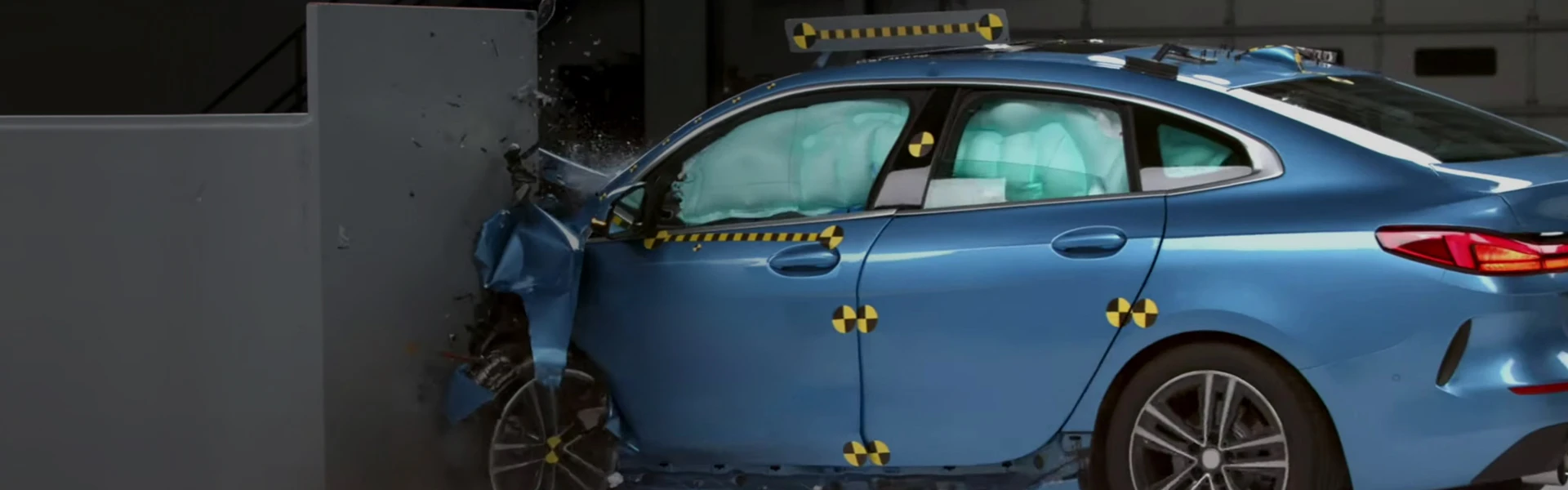
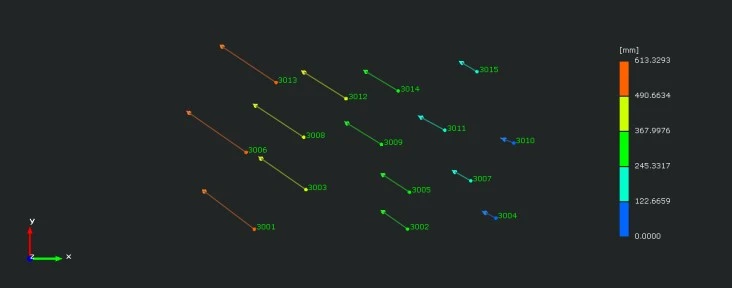
During the automotive R&D phase, engineers must analyze and test vehicle structures for stiffness, strength, stress distribution, and motion trajectories to ensure stability and safety under operational conditions. Traditional structural mechanics testing for automotive components has relied primarily on contact-based measurement methods—such as displacement gauges, velocity sensors, and strain gauges—which are cumbersome to operate and fail to capture comprehensive strain data across the entire field of view.
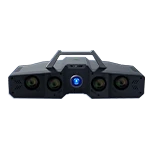
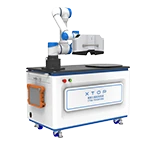
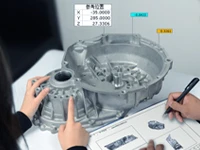
The XTOP3D XTDIC 3D full-field strain measurement system utilizes Digital Image Correlation (DIC) technology to measure full-field strain, displacement, velocity, acceleration, and vibration data without requiring physical contact with the specimen. Compared to traditional contact sensors, this system offers a wider range of applications, greater ease of use, and more comprehensive data, effectively facilitating optimized automotive design and pre-delivery inspection and assessment.
Crash Testing of Automotive Engine Hoods
The engine hood is a thin-shell structural component; its strength and stiffness are critical to vehicle safety. The hood must undergo extreme impact testing to evaluate these mechanical properties: strength testing assesses fracture characteristics and impact resistance under extreme collision scenarios, while stiffness testing verifies resistance to deformation to ensure compliance with industry standards for crash-related stiffness.
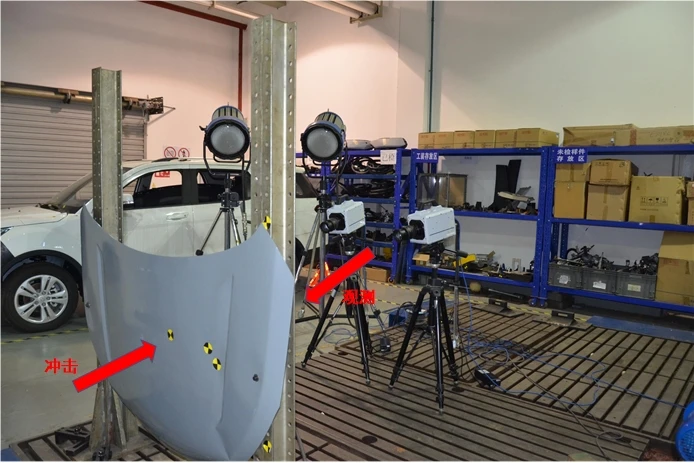
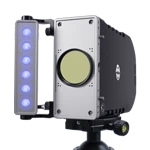
The XTDIC-STROBE 3D dynamic measurement system, utilizing a pair of high-speed cameras, captures images of the hood's transient deformation during high-speed impact in real-time. Through non-contact image acquisition, the system calculates data such as displacement fields, strain fields, and 3D trajectory and pose.
Displacement field trend – Curves showing displacement over time at key locations
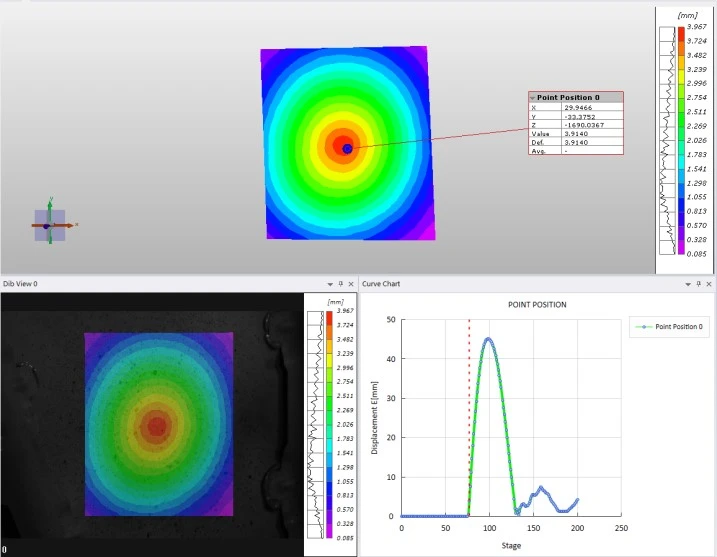
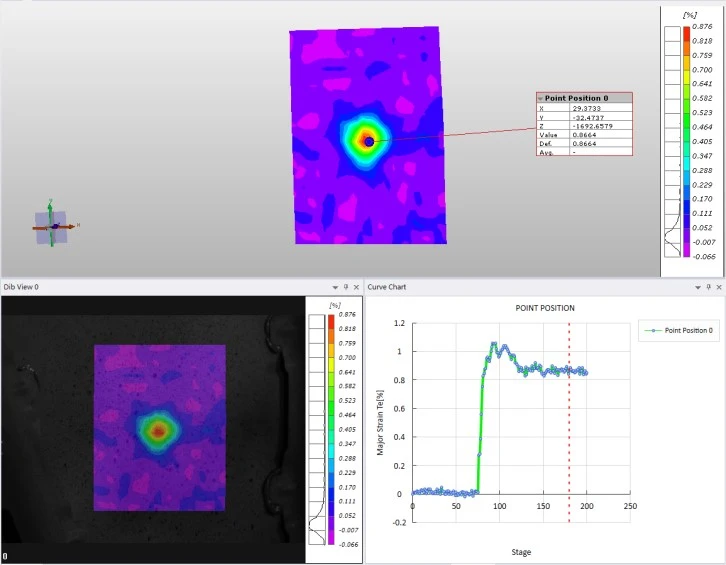
Trend of strain field changes – curves showing strain at key points over time
Automotive Door Closing Vibration Test
To investigate the dynamic vibration behavior of automotive doors, an automotive research institute utilized the XTOP3D XTDIC-SPARK 3D high-speed measurement system. By employing high-speed DIC to directly control high-speed cameras for image acquisition, the system enables the observation of high-speed transient surface deformations and vibrational displacements.
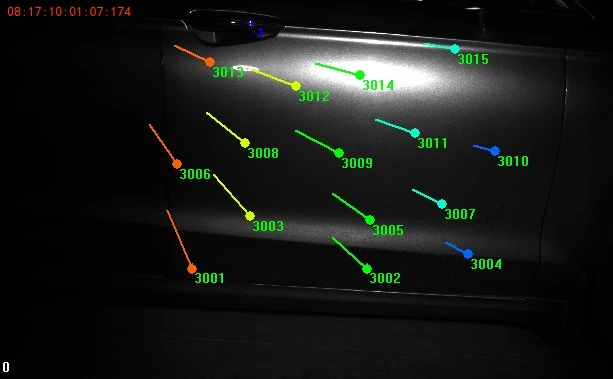
The XTOP3D high-speed DIC measurement system uses two high-speed cameras to capture images of the object at various stages of deformation in real-time. It utilizes accurately identified markers to perform stereo matching, reconstructs the 3D spatial coordinates of points on the object's surface, and calculates data such as deformation magnitude and 3D trajectory/pose.
The objectives of the automotive door vibration test are as follows:
1. To examine the vibration characteristics of the door during operation and validate theoretical modal models;
2. To measure the door's dynamic response characteristics, inform vibration reduction design, and provide a basis for product design improvements;
3. To analyze the causes of vibration and identify vibration sources, thereby enabling the effective implementation of vibration reduction and isolation measures;
4. To conduct vibration testing on the door during movement in order to optimize material usage and structural design, ultimately enhancing ride comfort.
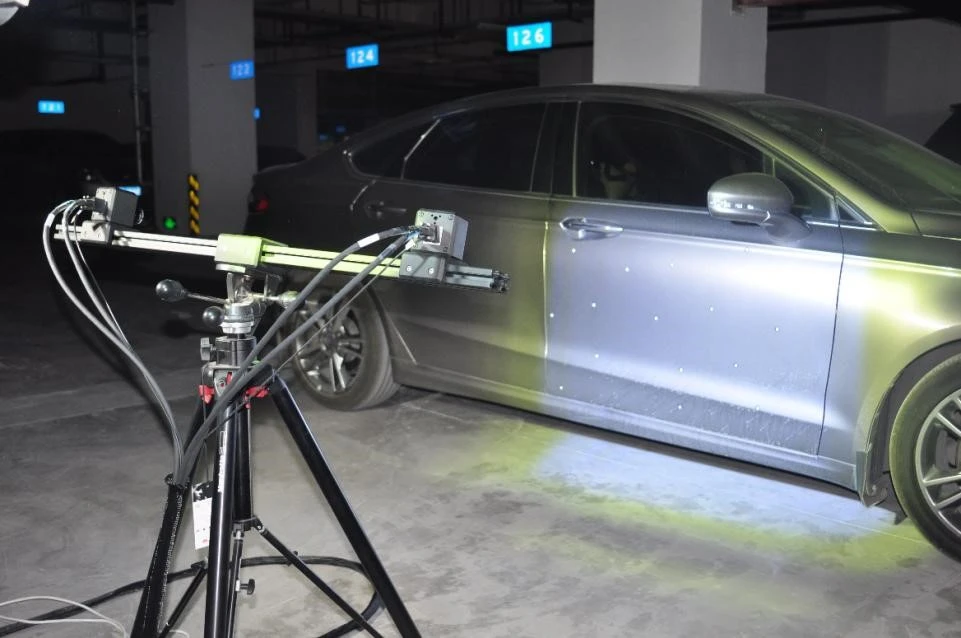
On-site car door vibration testing
Unlike traditional contact-based displacement measurement methods, the DIC high-speed camera measurement system eliminates the need to attach sensors. This avoids issues such as poor sensor adhesion or the inability to mount sensors—problems often caused by human error or material properties—which could otherwise lead to inaccurate data or measurement failure.
The DIC high-speed camera system captures full-field data with high spatial resolution, allowing for the simultaneous measurement of vibration displacement across a wide area. It provides comprehensive data, particularly in regions of concentrated vibration displacement—capabilities that traditional measurement tools cannot match.
High-Speed DIC Test Data Analysis
The figure below shows the displacement and deformation contour map of the markers on the car door. High-speed DIC captured the deformation trends and detailed data across different regions of the door, providing experimental measurements to support the modal analysis.
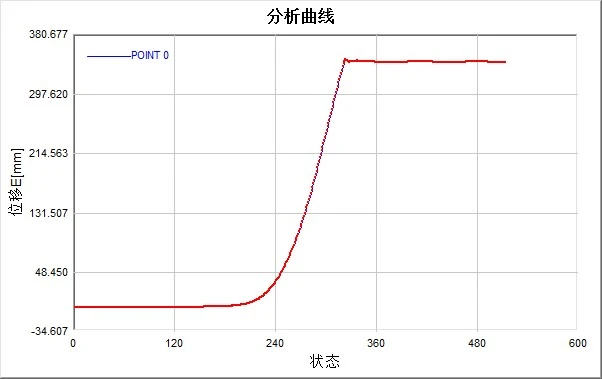
Select an arbitrary point to analyze the vibration displacement during the car door's movement, and plot the displacement-versus-motion curve:
Automotive Engine Startup Vibration Testing
Digital Image Correlation (DIC) technology enables the analysis of structural dynamic deformation, allowing for the assessment of factors such as twisting, bending, displacement, velocity, and acceleration. It facilitates the analysis of safety risks, service life, aging, and surface changes in components during operation, with the resulting test data helping to optimize product design.
Engine hoods exhibit significant displacement amplitudes during vibration. The XTOP3D XTDIC 3D full-field strain measurement system captures the structural vibration process; by processing the acquired images with XTDIC analysis software, the vibration displacement trajectories can be directly visualized. The displacement and vibration values obtained via DIC technology align with those from predictive models.
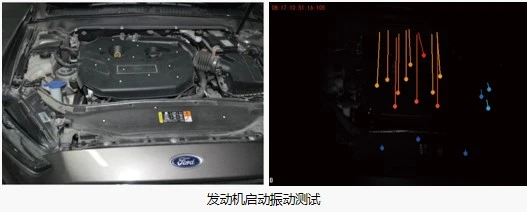
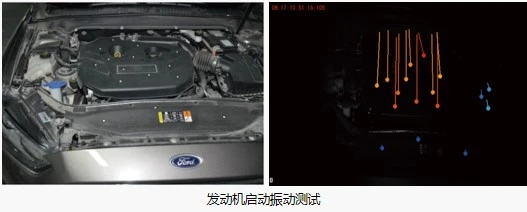
Vibration displacement data for engine start-up covers







 Video Center