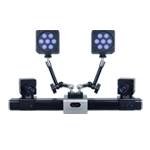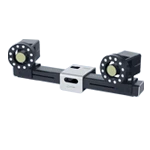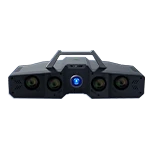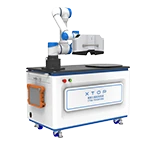

XTOP-DK Series

3D measurement SDK software

DIC digital speckle, DIC full-field strain measurement system, DIC measurement system
An efficient SDK toolset designed for photogrammetry and 3D reconstruction
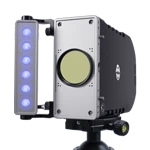
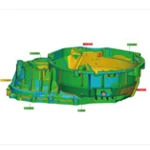
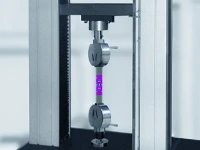
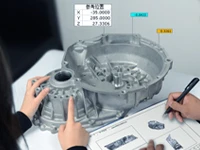
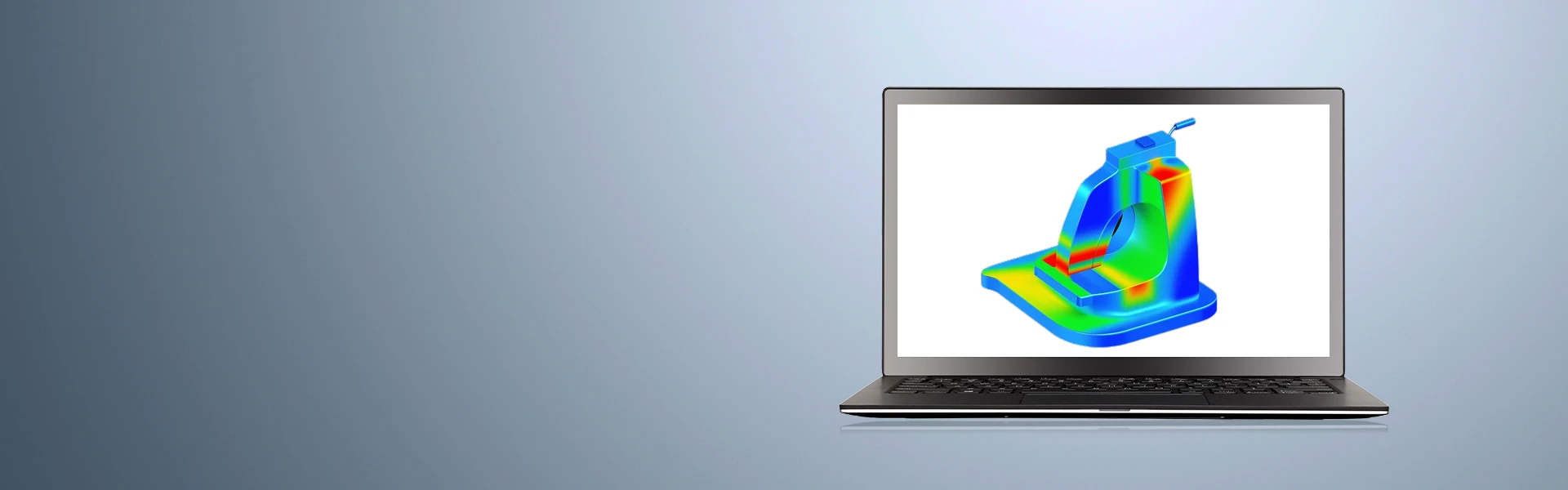
XTOP-DK is a highly efficient SDK toolset designed for photogrammetry and 3D reconstruction. It provides powerful camera control and calibration, 3D point cloud reconstruction, deformation calculation, and data analysis capabilities for scientific research, engineering, and industrial applications. Its core algorithm combines camera control with digital image correlation and stereo vision techniques to track and reconstruct speckle patterns or markers on an object's surface, enabling dynamic measurement of full-field 3D coordinates, displacement, and strain on an object's surface during deformation.
Modular design

Modular design

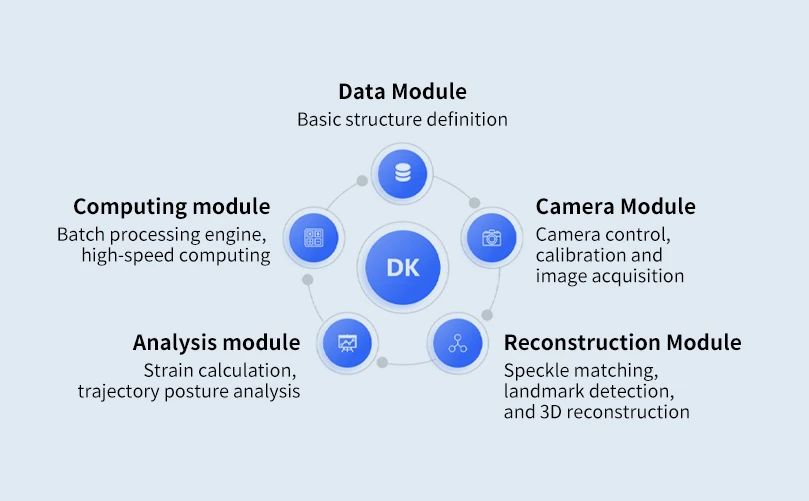
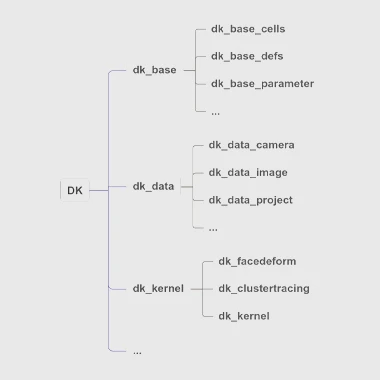
The algorithm library adopts a modular design, including modules such as data, camera, reconstruction, calculation and analysis, covering the complete chain from basic data structures to advanced computing functions, forming a full-link closed loop of "acquisition-reconstruction-analysis-output". Each module is decoupled through a C++ standardized interface, supports independent calling or collaborative work, and provides multi-threaded acceleration capabilities, taking into account the real-time requirements of industrial inspection and high-precision expansion of scientific research scenarios. Users can flexibly cut or customize the function chain based on business needs, and achieve one-stop efficient analysis from camera image acquisition to image processing, from point cloud reconstruction to post-processing analysis.
Advantages and features of XTOP-DK software
XTOP-DK software uses advanced algorithms and modular design to help users quickly and accurately reconstruct 2D images into 3D point clouds. It also supports advanced functions such as point cloud processing, deformation measurement, and material analysis.
  • Efficient core engine

    Standard C++ underlying program, modular core functions, adaptable to various industrial software development scenarios, and high operating efficiency.
  • Self-developed algorithm architecture

    The algorithm program is fully self-developed and does not rely on redundant and complex third-party open source. It has been accumulated and improved over a long period of time and is stable and reliable.
  • Open data interface

    Open underlying data structures and definitions, suitable for grafting and debugging of various application scenarios or platforms, direct memory access, and high efficiency.
  • Multithreaded acceleration

    Natively supports multi-threaded acceleration and batch processing to meet diverse development needs.
  • Deep customization service

    Provide customized development of algorithms, hardware or the entire chain, and provide one-stop support from demand analysis to actual implementation.
Featured function modules
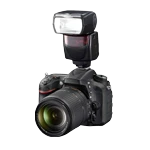
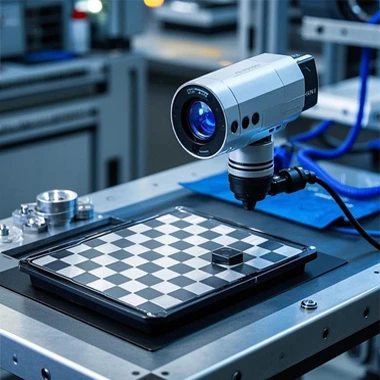
  • • Supports industrial cameras with a variety of interfaces, pixels, and frame rates, including USB 3.0, CXP, Gigabit, and 10Gigabit.
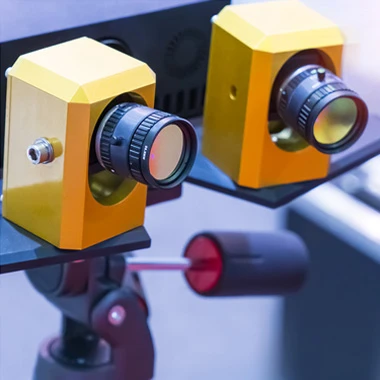
    • Supports cameras ranging from megapixels to tens of millions of pixels, and from low-speed to high-speed megapixel frames per second. It supports online synchronous acquisition at frame rates up to 4500 fps (not in high-speed acquisition, storage, download, and import mode), meeting acquisition needs in diverse scenarios.
    Camera Controls

    Camera Controls

  • • Supports calibration of single-camera, dual-camera, and multi-camera measurement systems, with no limit on the number of cameras.
    • Supports various calibration objects, including coded calibration plates, coded crosses, dot-matrix linear scales, and checkerboards. Global control points can be automatically generated for these calibration objects, while also supporting flexible self-calibration without global control points.
    • Supports 10-parameter and 2F camera distortion models, covering complex optical systems such as conventional, ultra-short-throw (1-6mm), ultra-telephoto (>100mm), and stereo microscopes.
    Camera calibration

    Camera calibration

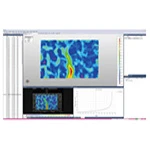
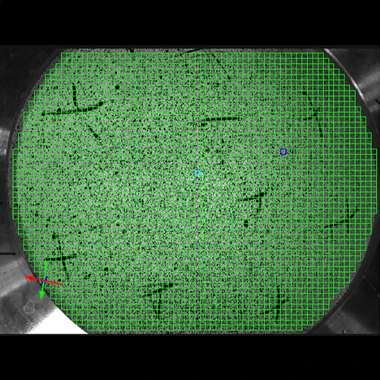
  • • Supports full-field speckle measurement, allowing customization of key measurement objects and areas. Different measurement grids can be created for different areas, and independent parameters can be set for calculation and analysis. Flexible calculation methods meet the needs of different scenarios.
    • Automatic seed point matching and diffusion calculation; supports automatic full-process calculation, accommodating independent and combined calculations for different processes.
    • Built-in proprietary high-precision matching algorithm enables sub-pixel speckle matching.
    Image Correlation Matching Based on Speckle

    Image Correlation Matching Based on Speckle

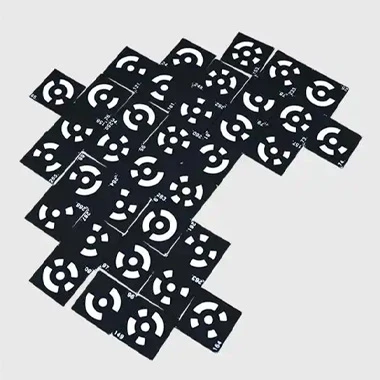
  • • Supports target point tracking, including circular markers, cross points, and feature points, adapting to diverse scene requirements.
    • A proprietary high-precision feature point recognition algorithm enables sub-pixel marker center positioning and reconstruction under diverse imaging conditions.
    • Supports real-time tracking of multiple markers, intelligently matching the spatial relationships between point sets to ensure stable tracking in complex scenes.
    • Combined with 3D reconstruction information, it outputs real-time 6Dof pose and other related data for rigid object tracking.
    Marker-based object tracking

    Marker-based object tracking

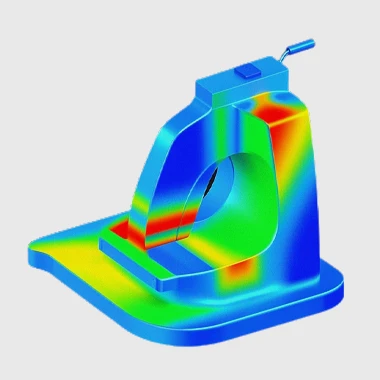
  • • Supports both line and grid strain calculation modes, covering a variety of deformation and strain calculation parameters: X, Y, Z, and E three-dimensional displacements; Z-value projection; radial distance, radial distance difference; radial angle, radial angle difference; strain X, strain Y, and strain XY; maximum principal strain; minimum principal strain; thickness reduction; Mises strain; Tresca strain; and shear angle. Data is provided for maximum, minimum, and full-field average values.
    • Automatically calculates material parameters such as elastic modulus, Poisson's ratio, n value, r value, and yield strength.
    Deformation analysis, strain calculation and other tools

    Deformation analysis, strain calculation and other tools

  • • Rich underlying data classes, covering diverse data definitions, including basic geometric elements (points, lines, planes, etc.), instanced target objects (cameras, images, etc.), and scenario-based data (meshes, point pairs, etc.)
    • Diverse data management: Supports import and export of engineering data, camera data, image data, and multiple 3D mode export formats (obj, ply, asc, etc.).
    Data Management

    Data Management

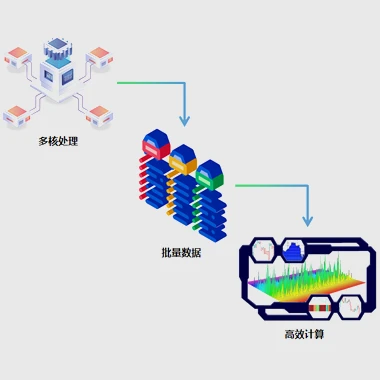
  • Customized batch processing engine supports multi-threaded computing and can achieve efficient computing of large batches of data.
    Batch computing

    Batch computing