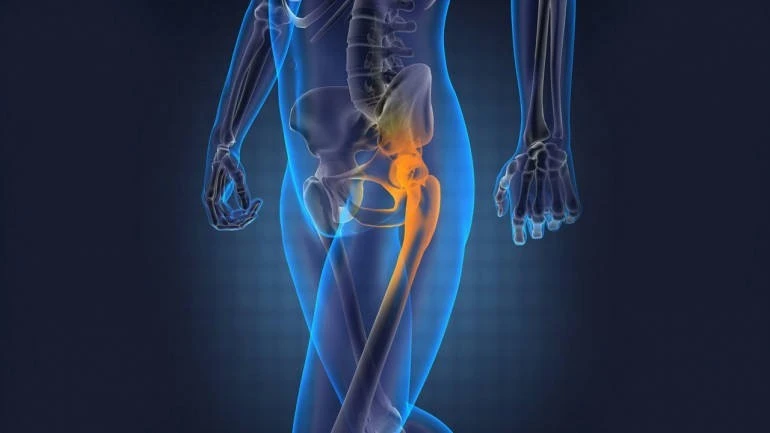
Bone repair material technology continues to achieve new breakthroughs, evolving from natural to synthetic, from single-component to composite, and from simple to complex forms; in terms of clinical efficacy, synthetic bone repair materials show promise in gradually replacing autologous bone and becoming a new option for bone grafting.
The mechanical properties of orthopedic material implants are of vital importance and are critical for them to function as they should. In the field of orthopedics, bone defects caused by severe trauma, bone tumors, osteomyelitis and other reasons are very common. Artificial bone replacement materials can be used for transplantation and repair of bone defects, and their material mechanical properties have become the focus of research.
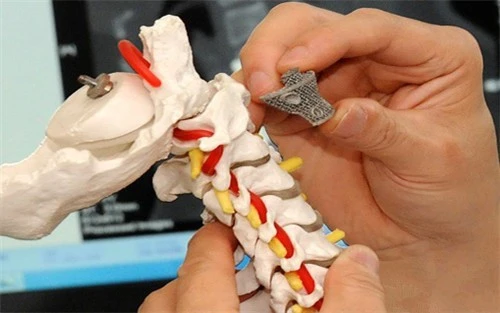
Bone tissue is primarily composed of minerals and is an anisotropic, heterogeneous material with complex mechanical properties. Conventional methods for measuring the mechanical properties of bone—such as using strain gauges and displacement meters—yield limited, unidirectional data that fail to accurately capture the material's true mechanical behavior under load.
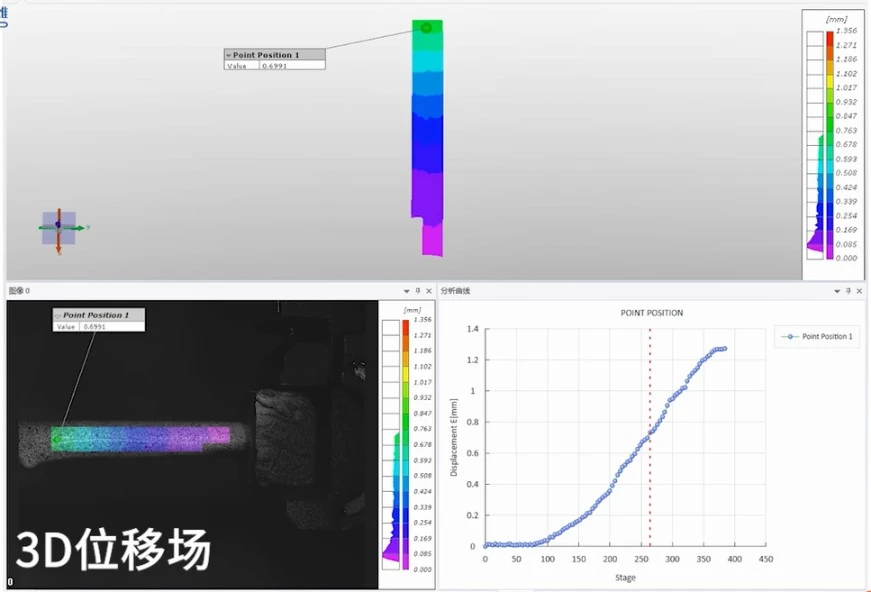
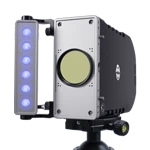
The XTDIC 3D full-field strain measurement system, independently developed by XTOP3D, utilizes Digital Image Correlation (DIC) technology to provide comprehensive 3D data. It enables precise measurement of deformation, impact resistance, and maximum load-bearing capacity in bone materials subjected to dynamic loading conditions.
Mechanical Property Testing of Bone Materials
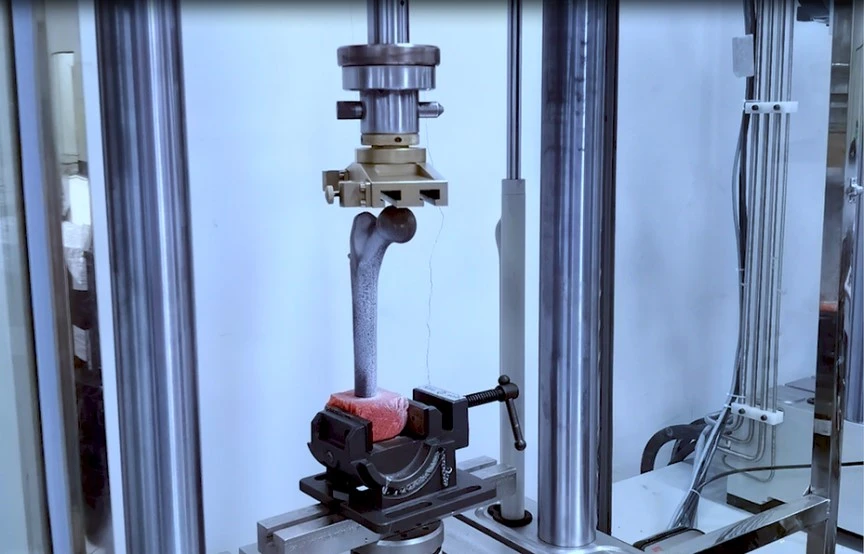
When external forces are applied to bone structures, they undergo stress and strain, exhibiting complex behavioral changes. Using specimens with relatively regular geometries to determine mechanical properties allows for a better understanding of the mechanical characteristics of bone materials (whether biological or synthetic).
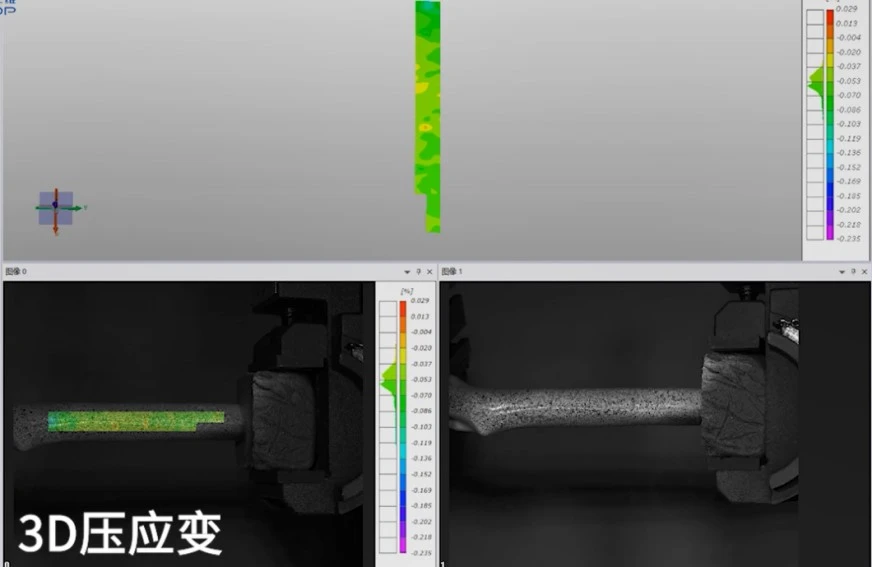
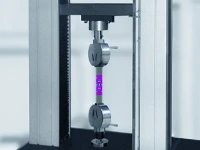
By employing representative compression testing methods alongside the XTOP3D XTDIC 3D optical strain measurement system, researchers can analyze the deformation behavior of bone-like materials under load. This process yields mechanical property data suitable for finite element simulations, thereby enriching the dataset available for bone material research.
Testing Deformation, Posture, and Fatigue in Bone Materials
Mechanical properties—such as the elastic modulus and Poisson's ratio—as well as performance parameters like fatigue life, are critical to the development of orthopedic implants. The behavior of bone materials under load and their adaptability within the human body directly influence the duration and effectiveness of recovery from bone injuries.
The XTDIC 3D full-field strain measurement system is increasingly applied in this field, facilitating tests such as tensile, compressive, and torsional shear stress analysis; fatigue life testing; realistic skeletal motion simulation; analysis of skeletal posture under load; and motion simulation testing for artificial joints.
Finite Element Validation of Bone Material Mechanical Properties
Finite element simulation analysis captures stress and strain variations within bone models, enabling the analysis of complex structures regarding geometry, shape, loading conditions, and material properties. It allows for the continuous monitoring of mechanical behavior following changes to materials or models and is widely used in both clinical applications and academic research within orthopedic biomechanics.
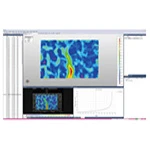
The XTDIC 3D full-field strain measurement system enables full-field displacement and strain measurement. By comparing actual test results from the XTDIC system with simulation data, researchers can validate and optimize finite element models, facilitating a precise and comprehensive comparative analysis.
Mechanical property parameters of bone materials are essential for studying the biomechanical behavior of human bones and serve as a crucial foundation for developing advanced artificial bone materials. The XTDIC 3D full-field strain measurement system offers a novel solution for research into new bone materials, thanks to features such as non-contact measurement, the accuracy and comprehensiveness of the data, and the ability to record the entire process of mechanical behavior.








 Video Center