Currently, cultural and creative derivative products, trendy figurines, intangible cultural heritage crafts, and industrial IPs generally face industry pain points such as low precision in hand-made replicas, difficulty in preserving original models, slow iteration and modification, poor consistency in mass production, and easy damage to original works . Traditional methods such as hand-sculpting and silicone molding cannot fully reproduce the subtle textures of products, and are time-consuming, labor-intensive, and have a low tolerance for error, which seriously restricts the commercialization of cultural and creative IPs, the digital preservation of IPs, and the development of refined mass production of figurines.
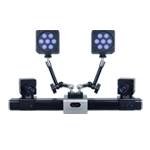
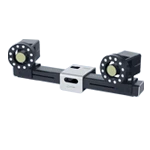
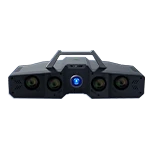
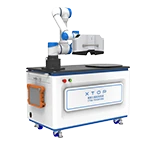
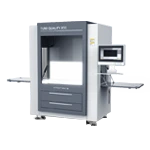
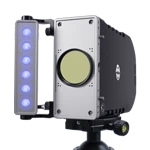
This solution leverages the XTOM fixed-position Blu-ray 3D scanner from XTOP 3D to achieve digital replication of cultural and creative, trendy collectible figures and industrial IPs, from physical prototypes to high-precision 3D models. It streamlines the entire process from " physical scanning—data model retouching—digital archiving—secondary design—3D printing mass production/IP derivative development ." The solution not only achieves digital preservation but also efficiently supports diverse business scenarios such as IP derivatives and virtual displays, helping the industry achieve digital transformation and commercial value-added.
I. Pain Points of Traditional Replica Processes
Industries such as Chinese-style collectible figures, industrial IP, and art reproductions suffer from multiple shortcomings when using traditional clay sculpting and silicone molding techniques:
1. Loss of details: Only the basic shape is reproduced. Microscopic features such as hair strands, facial texture, relief patterns, and paint brushstrokes cannot be retained. The finished product has a large difference in appearance, and IP modification and sample iteration take a long time.
2. Original works are easily damaged: Silicone molding and physical imprinting need to fit the original, which will scratch and squeeze out rare figures and original IPs, causing irreversible damage;
3. Difficult to preserve physical objects: Without standardized 3D digital assets, it is impossible to support IP derivatives, virtual display, and mass replication;
4. Fragmented industrial chain: The lack of a unified three-dimensional data foundation makes it difficult to efficiently coordinate online digital IP, offline mass production prototyping, and the development of cultural and creative derivative products.
II . Application of Blue Light 3D Scanning Solution
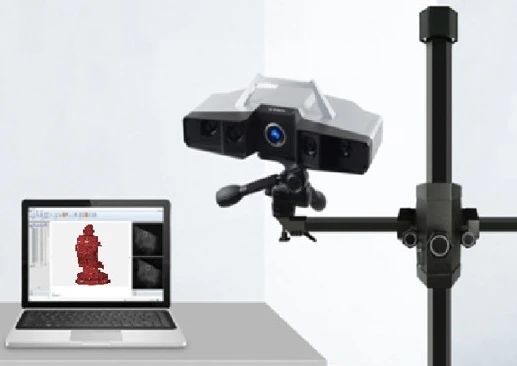
The XTOM photo-based blue light 3D scanner from XTOP 3D is suitable for high-precision 3D digital acquisition of cultural and creative/figure IPs. It is compatible with the traditional clay sculpting process and takes into account core needs such as fine replication, rapid modification, non-destructive protection of prototypes, and IP creation. It is suitable for scenarios such as trendy toy studios, cultural and creative centers, IP development, and 3D printing additive manufacturing.
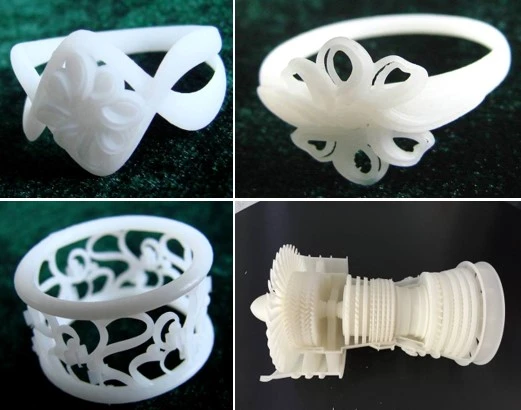
蓝光三维扫描技术用于3D打印逆向复刻
II. Advantages of Cultural and Creative Products & Collectible Figurines in Application Scenarios
1. Micrometer-level precision, restoring minute details
The device has a minimum dot pitch of 0.045mm, which can fully capture skin texture, clothing folds, micro carvings, and relief patterns; it is equipped with 3 scanning planes, suitable for small trendy toys, medium-sized ornaments, and original IP replicas .
2. Non-contact and non-destructive data acquisition, preserving rare prototypes.
The entire data collection process is completely contactless, requiring no heavy pressure or rubbing of prototypes. Collectible figurines, unique clay sculptures, and cultural relics can all be safely digitally archived.
3. Simple and efficient operation, significantly reducing the development cycle.
Automatic calibration, global stitching of marker points, intelligent noise reduction, and one-click mesh encapsulation allow for independent operation by a single person; the complete acquisition of complex figurines takes only ten minutes, significantly improving the efficiency of IP redesign and new product iteration.
4. Universally compatible output formats, facilitating the entire industry chain.
It outputs mainstream 3D formats, seamlessly integrates with reverse engineering software, and is compatible with production processes such as 3D printing, CNC engraving, silicone mold making, injection molding mass production, digital rendering, and AR virtual display.
III. Typical Application Scenarios and Cases
(I) Reverse Reproduction of Trendy Toys and Figurines and IP Iterative Development
Applicable needs : 1:1 high-precision replication of clay sculpture prototypes, secondary modification of IP characters, digital backup of rare collectible figures, and optimization of component clips for mass production.
Case Study: Development of Wukong IP Figurines in the Chinese Fashion Trend
1. Prototype pasting positioning points, 3D scanning to fully collect three-dimensional data of armor, hair, and ribbon wrinkles;
2. Reverse engineering software to repair flaws in clay sculptures and optimize facial expressions and relief textures;
3. Direct connection of 3D data to 3D printing to create white molds, and after verifying the component structure, it is used for silicone mold making and mass injection molding;
4. Permanently preserve digital archives and quickly generate multiple variant IPs such as Q-version, combat version, and static ornaments, shortening the new product development cycle.
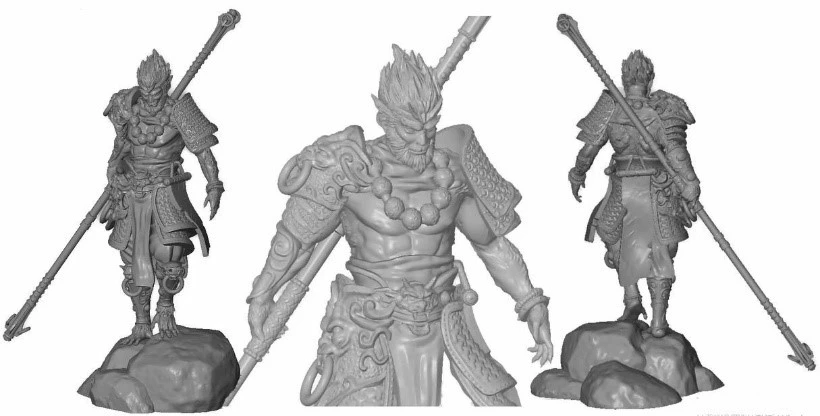
悟空手办IP扫描数据模型
(II) Digital Reproduction of Three-Dimensional Texture in Oil Paintings
Applicable needs: oil painting brushstrokes, three-dimensional texture creation of paint layering, proportional 3D printing replication, and production of online digital art gallery/AR display materials.
Case Study: Development of Realistic Oil Painting Replica Cultural and Creative Products
1. Non-contact acquisition of complete canvas texture, pigment protrusions, and brushstrokes in three dimensions;
2. Point cloud data is fused with high-definition color maps to generate an oil painting model with native color textures, creating a permanent digital archive;
3. Model scaling optimizes wall thickness, enabling 3D printing of oil painting replicas;
4. Expand online channels for displaying artworks and developing cultural and creative derivative products.
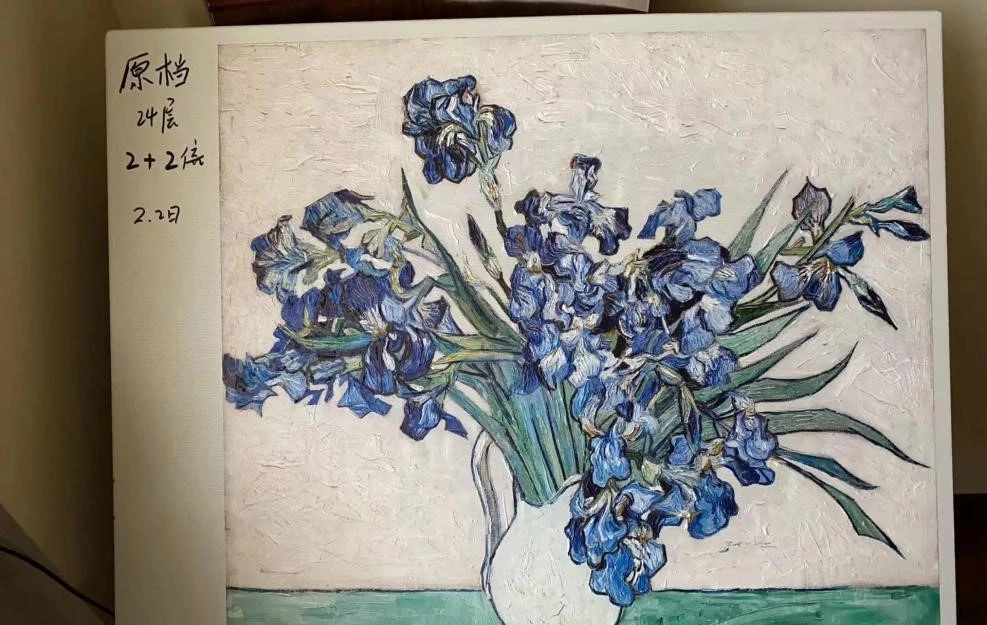
油画复刻3D打印成品效果
(III) Development of cultural and creative products based on stone carvings and reliefs
Applicable needs : Innovation of traditional patterns, virtual restoration of weathered reliefs, and production of replica ornaments/decorative cultural and creative products.
Case Study: Digital Archiving Project for Stone Carvings and Reliefs
1. Scan to fully restore curved surface contours , multi-layered carvings , and texture details;
2. Relying on 3D models to simulate the repair of damaged areas, providing 3D data support for cultural heritage preservation and creative industries ;
3. Extract simplified traditional patterns and develop cultural and creative products such as relief ornaments and decorative paintings;
4. Long-term archiving of three-dimensional data prevents the loss of patterns due to weathering of stone carvings.
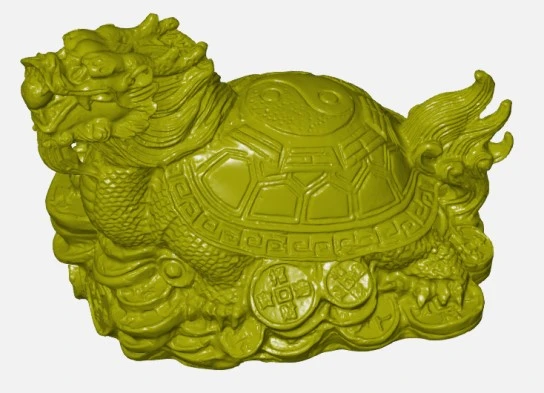
Bixi 3D scan model
(iv) Development of 3D Printed Sports Shoes
Applicable needs : Digital archiving of shoe lasts/molds, reverse engineering of the functional structure of sports shoes, personalized shoe customization design, and small-batch 3D printing flexible production.
Case Study: Digital Development of Sports Shoes
1. Optimization and lightweight design of sole structure texture, upper details, and shoe logo model;
2. Reverse engineer parametric CAD models and establish a traceable digital shoe mold database;
3. Topology optimization for weight reduction, adapting to 3D printing structure generation;
4. 3D printed functional verification prototype, scanning-printing closed-loop verification of dimensional tolerances;
5. Data-driven mold processing (shoe sole EVA foam mold/shoe upper cutting mold).
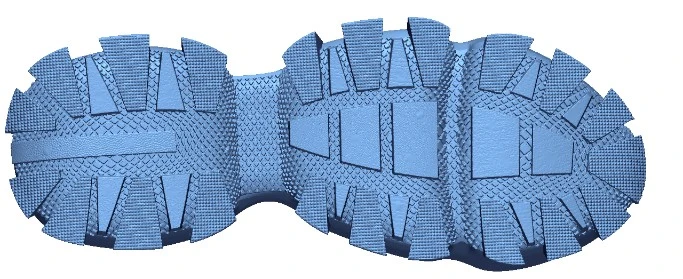
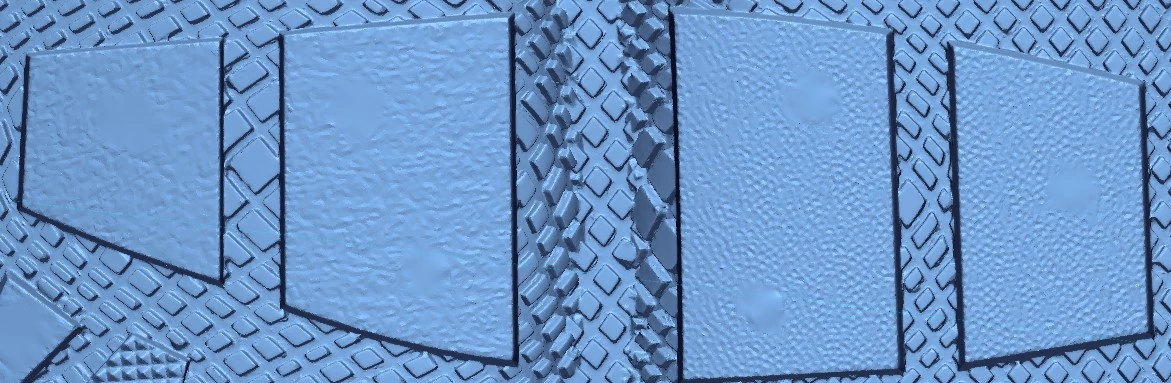
Blu-light 3D scanning technology effectively addresses pain points in the cultural and creative products and collectible figures industry, such as the lack of detail in traditional craftsmanship, the fragility of prototypes, long R&D cycles, and the absence of standardized digital IP assets. On one hand, it shortens the new product iteration cycle and reduces mass production prototyping costs; on the other hand, it builds a permanently reusable 3D digital asset library for IP, supporting new business models such as IP development, secondary design innovation, and 3D printing. Leveraging its high-precision detail reproduction capabilities, it creates differentiated cultural and creative products while empowering personalized flexible manufacturing, achieving a triple improvement in production efficiency, IP development, and commercial value.