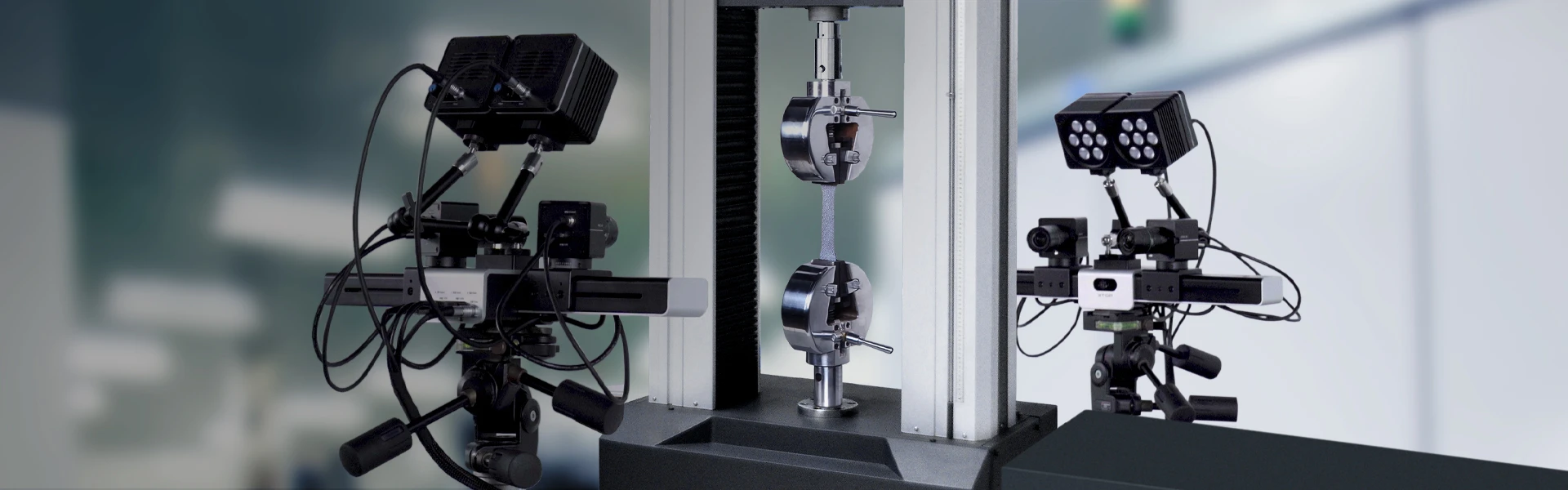
The DIC 3D full-field strain measurement system is based on Digital Image Correlation (DIC), a technique that calculates displacement and strain fields by analyzing changes in the speckle pattern on a specimen's surface. In mechanical property testing, DIC technology is primarily used to evaluate how materials perform under various environmental conditions, enabling the analysis of parameters such as strength, stiffness, plasticity, elasticity, and ductility. By employing DIC technology, the deformation and strain of a material under load can be measured continuously and comprehensively, ensuring the accurate acquisition of mechanical property data.
DIC technology offers significant advantages in specialized applications, such as measuring the mechanical properties of flexible materials, testing in high-temperature and high-pressure environments, analyzing large deformations and complex deformation processes, and measuring strain in micro-scale specimens. Its non-contact measurement method enables high-precision, full-field strain measurement on material surfaces; it allows for the accurate identification of points of maximum deformation and intuitive analysis of failure processes, thereby providing robust support for material performance evaluation and design optimization.
Applications of DIC Technology in Material Mechanical Property Testing:
Tensile Testing
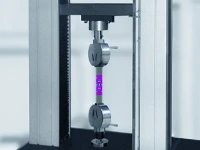
DIC technology records material elongation during tensile testing and determines strength criteria and plastic mechanical properties, thereby establishing performance indicators such as tensile strength, elongation at break, Young's modulus, and Poisson's ratio.
Compression Testing
In compression testing, DIC technology clearly and detailedly records the material's deformation process and calculates full-field surface strain. This technique is suitable for specialized applications, including measuring the mechanical properties of flexible materials, testing in high-temperature and high-pressure environments, measuring large deformations and complex deformation processes, and analyzing strain in micro-scale specimens.
Bending/Shear Testing
DIC technology is applied to 3-point and 4-point bending tests to determine parameters such as shear modulus and notch crack propagation. It offers distinct advantages, particularly when measuring high strain levels within small areas.
Interlaminar Fracture Toughness Testing
By utilizing full-field measurement and recording crack propagation behavior, DIC technology overcomes the limitations of traditional interlaminar fracture toughness testing, providing reliable and comprehensive data for material performance evaluation.
Buckling Testing of Composite Structural Components
Using DIC technology for buckling tests on material panels yields rich results, including information on geometric and material nonlinear instability.
Ultra-High Temperature Testing
DIC technology measures displacement and strain fields on specimen surfaces, making it suitable for tensile testing aerospace materials at ultra-high temperatures up to 2600°C.
Ultra-High-Speed Testing
When paired with high-speed cameras, DIC technology enables the measurement of high-speed dynamic 3D displacement and strain fields in scenarios such as high-speed impact, explosions, fatigue, vibration, rotation, and trajectory tracking.
Micro-Scale Testing
DIC technology is suitable for testing micro-scale specimens (e.g., 1.5 mm). Deformation images are captured using a stereo microscope integrated into the DIC microscopic measurement system, followed by computational analysis within the DIC software. DIC 3D Full-Field Strain Measurement System – Materials Mechanics Testing
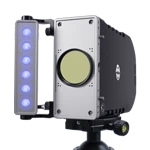
The Xintuo 3D DIC (Digital Image Correlation) system utilizes DIC technology to provide non-contact measurement and comprehensive data, while accurately recording material deformation behavior throughout the entire process. It is suitable for a wide range of mechanical property tests on materials and structures in civil engineering.
Tensile Testing of Concrete Materials
Tensile mechanical property testing is widely applied in areas such as material standardization, research and development, quality assurance, and structural design and analysis. Conducting tensile tests with the DIC 3D full-field strain measurement system yields a wealth of data.
The DIC system enables the acquisition of full-field strain distributions, visualizing strain variations across different regions of the material. It generates stress-strain curves to illustrate the relationship between stress and strain during loading, and calculates Young's modulus and Poisson's ratio—parameters that characterize material stiffness, elasticity, and deformation behavior—thereby helping researchers gain deep insight into the material's deformation mechanisms and mechanical performance.
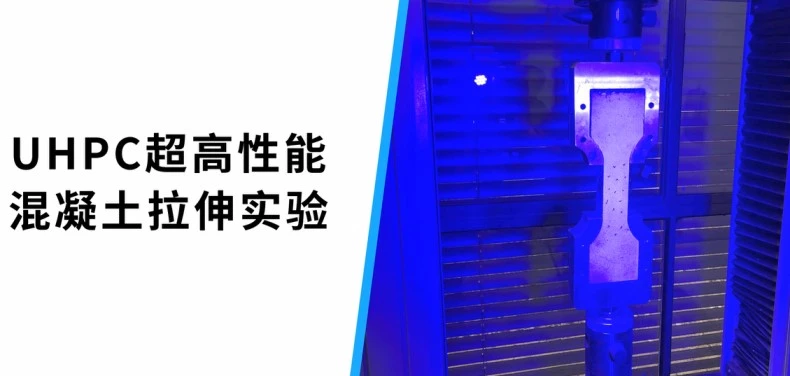
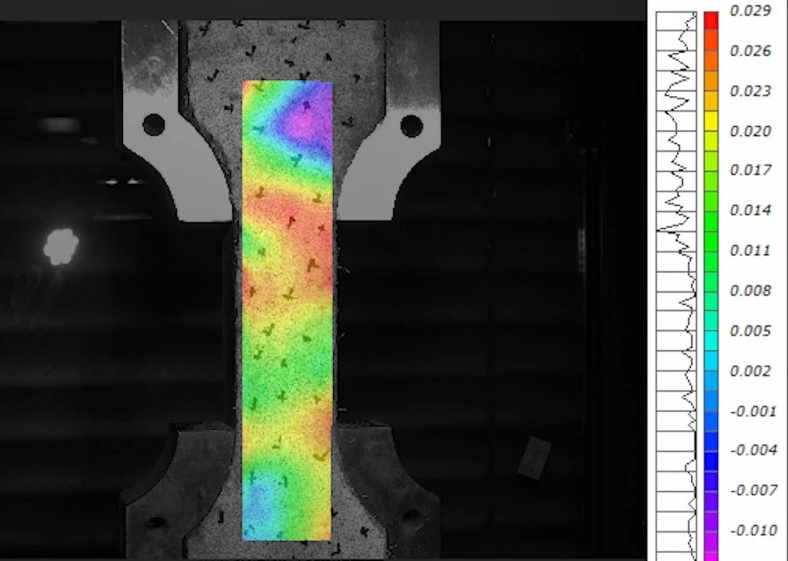
Tensile test of UHPC (Ultra-High Performance Concrete)
Compression Testing of Fiber-Reinforced Concrete
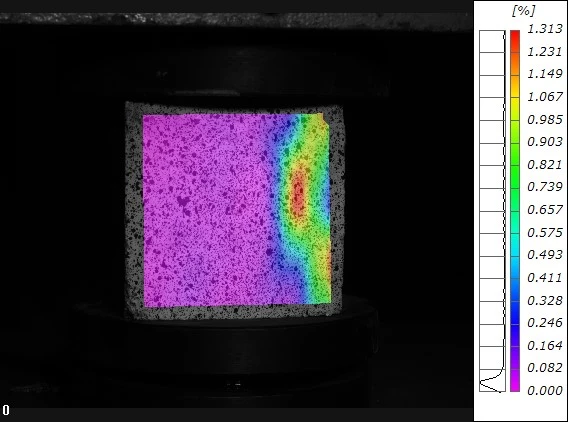
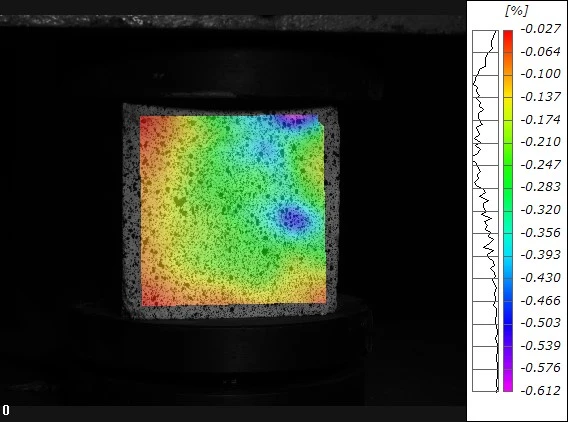
Fiber-reinforced concrete incorporates various fibers to enhance its properties, playing a significant role in improving the overall crack resistance and load-bearing capacity of concrete structures. Compression testing is essential for material standardization, quality assurance, and structural design and analysis.
A 3D Digital Image Correlation (DIC) full-field strain measurement system can acquire data on the material's compressive properties while recording and analyzing information such as global strain magnitudes and crack propagation paths, enabling researchers to gain a clear understanding of the material's compressive mechanical behavior.
Bending and Shear Testing of Concrete Materials
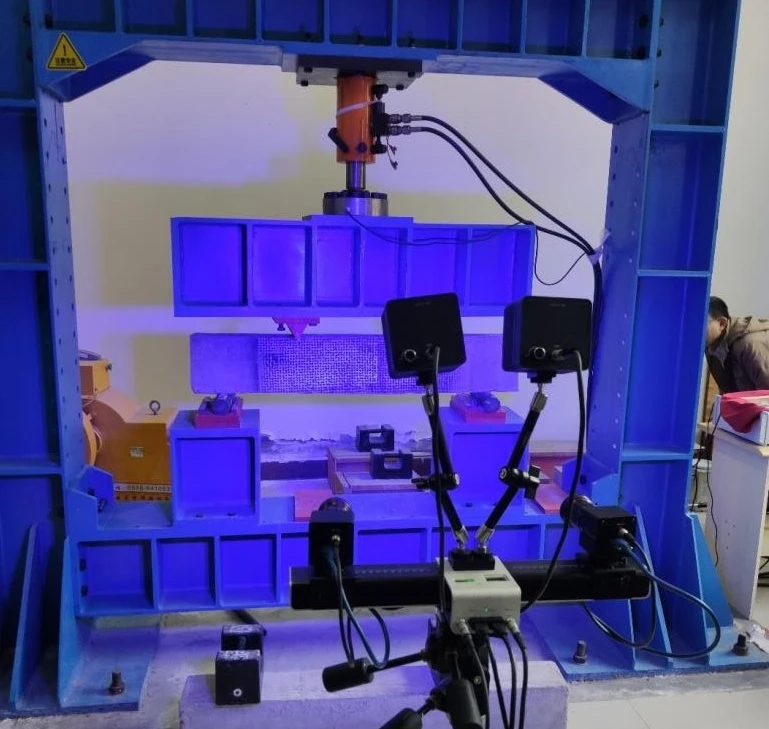
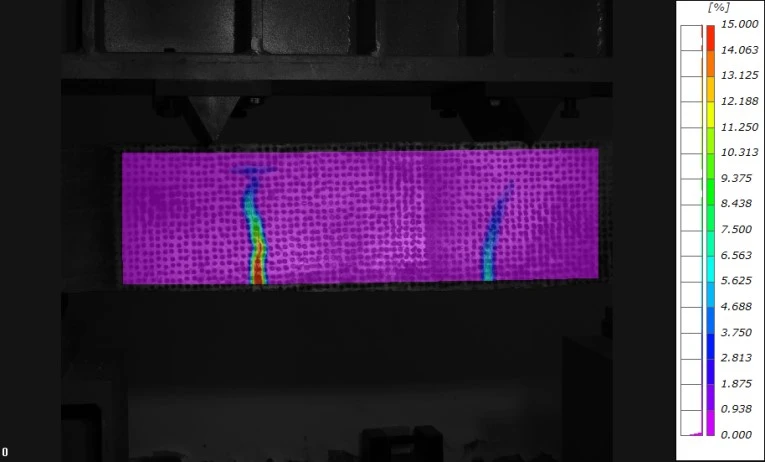
Bending and shear tests on concrete materials serve as methods to determine material performance under specified conditions. These tests provide a basis for quality control in concrete structures and the establishment of material specifications, and they also support structural design work.
A 3D full-field strain measurement system based on Digital Image Correlation (DIC) is employed in 3-point and 4-point bending tests to determine parameters such as shear modulus and notch crack propagation. DIC non-contact strain measurement technology offers distinct advantages, particularly when measuring high strain levels within small areas.
Fatigue Testing of Composite Structural Components
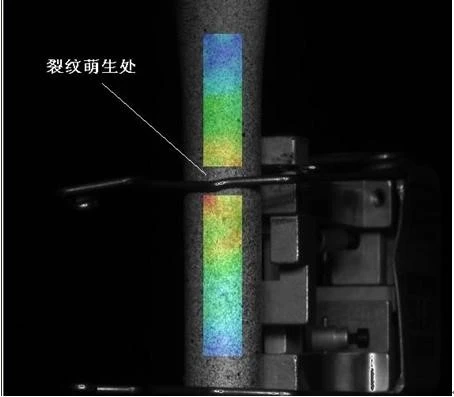
Composite structures can sustain damage due to fatigue even under stress levels far below the material's static strength. Under repeated cyclic loading, material damage gradually evolves into cracks; these cracks propagate until they reach a critical length, leading to structural failure when the component can no longer withstand peak loads.
In composite fatigue testing, a 3D full-field strain measurement system (DIC) comprehensively records the processes of crack initiation and evolution—including the attainment of critical crack length and the moment of fracture. Simultaneously, it analyzes the relationship between material damage and external loading, providing visual results and extensive fatigue test data for material research.
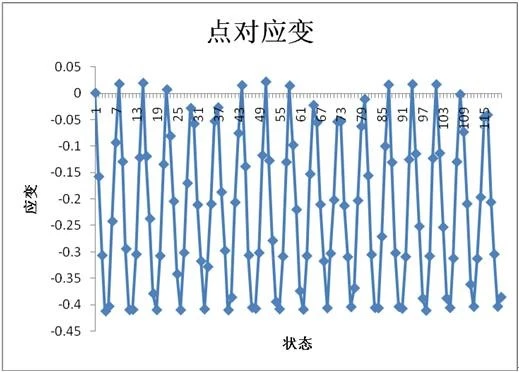
The XTOP3D DIC 3D full-field strain measurement system is used for mechanical property testing of materials. It records material elongation during tensile testing and determines strength criteria and plastic mechanical characteristics, thereby establishing performance metrics such as tensile strength, elongation at break, Young's modulus, and Poisson's ratio. Additionally, it enables full-field measurement of strength and surface strain during deformation processes—including compression, bending, and shear—providing a robust basis for material design and analysis.







 Video Center