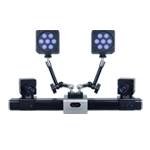
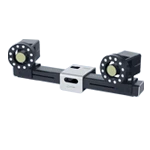
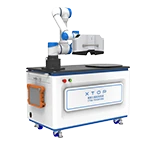
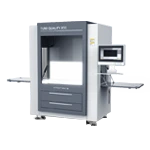
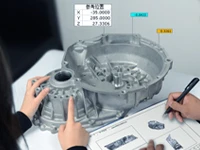
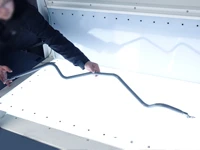
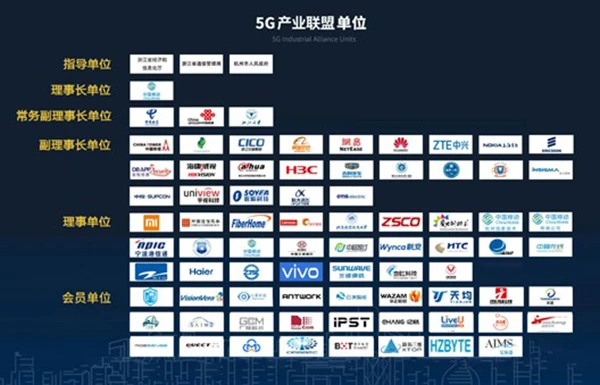
On September 18, the 5G Industry Alliance held its third-quarter secretariat working meeting in Hangzhou, Zhejiang. As one of the inaugural member units of the Zhejiang 5G Industry Alliance, XTOP3D participated in the meeting and actively promoted the application of 5G technology in the field of industrial inspection. During the event, XTOP3D’s 3D scanning and inspection technology—powered by 5G—was showcased as a case study, representing Zhejiang Province's first "5G + Intelligent Manufacturing" application.
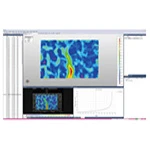
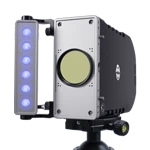
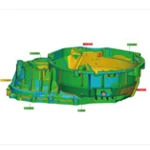
XTOP3D’s 5G-based 3D scanning and inspection technology enables the rapid and precise acquisition of 3D surface data and the generation of 3D models. Massive datasets captured during measurement are transmitted in real-time via 5G networks to the cloud, where servers quickly process and compare the data to verify the physical model's conformity with the original theoretical model, while simultaneously providing real-time feedback to the factory.
This 5G-enabled 3D scanning and inspection technology significantly reduces inspection times, laying the technical foundation for comprehensive, 100% product inspection. Furthermore, the establishment of a quality information database facilitates the subsequent analysis and traceability of quality issues, thereby cutting costs and directly enhancing operational efficiency.
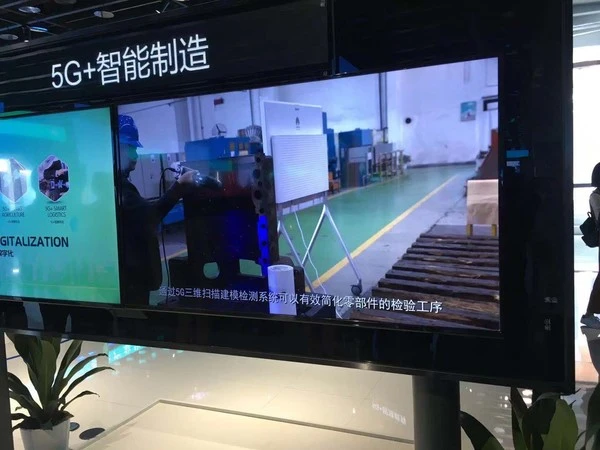
5G Empowers Industrial Inspection, Boosting Production Efficiency
With its characteristics of high speed, low latency, and high reliability, 5G technology is becoming a key enabler for industrial enterprises accelerating the adoption of smart manufacturing. As the manufacturing sector trends toward automation and intelligence, achieving efficient, high-precision inspection is emerging as a focal point for future technological development.
While the level of inspection automation has risen significantly, the resulting massive volume of data poses a challenge for network bandwidth. By leveraging 5G networks to transmit measurement data to cloud servers for rapid comparison in real time, measurement times are drastically reduced, leading to substantial improvements in both production efficiency and product quality.