Project Background
Aquaculture cages are vital equipment in fishery production; their performance and service life directly impact the economic viability and sustainability of the industry. Excessive localized deformation of the netting caused by typhoons or ocean currents can lead to structural failure, whereas net replacement strategies based on deformation monitoring can significantly extend service life. However, traditional manual measurement methods are inefficient and struggle to achieve high precision in underwater environments.
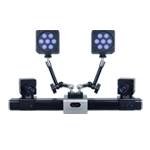
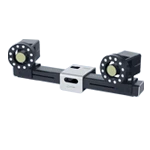
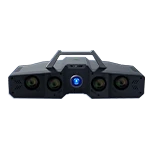
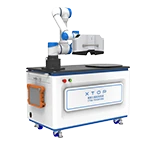
The XTOP3D XTDIC 3D full-field strain measurement system—a non-contact method for measuring deformation and displacement—has gained prominence in recent years across fields such as materials science, civil engineering, and aerospace. The question arises: can DIC be successfully applied in underwater environments to overcome challenges such as refraction and water turbulence—which reduce image contrast—and achieve precise displacement measurements of fishing nets?
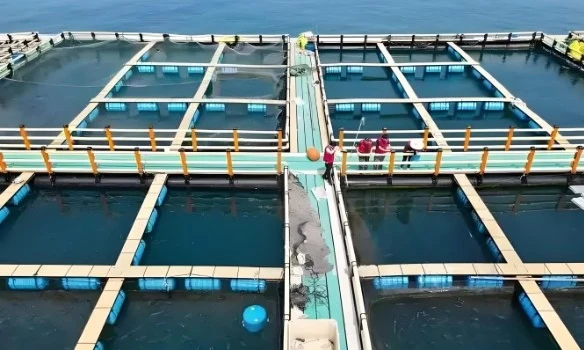
The Challenge: Precision Measurement Through a Barrier
Underwater measurement presents two core challenges:
1. Observation through a barrier: Direct contact with the object is impossible; images must be acquired indirectly via optical systems (e.g., through a glass barrier or using underwater cameras).
2. Environmental interference: Factors such as refraction caused by water and thick glass, as well as uneven lighting, degrade image quality and, consequently, measurement accuracy.
Traditional methods—such as laser displacement sensors or strain gauges—often fail to operate reliably underwater. In contrast, Digital Image Correlation (DIC) technology, with its non-contact, high-precision, and highly adaptable nature, offers an ideal solution to this challenge.
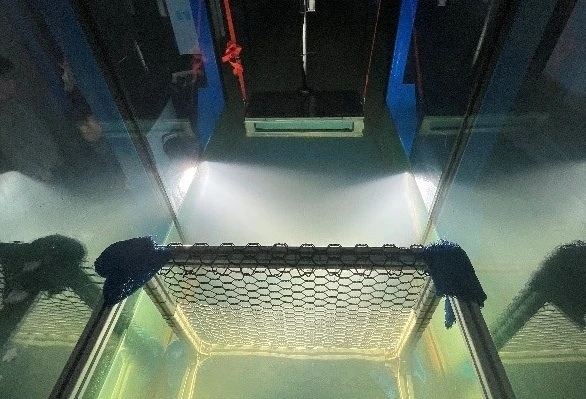
Addressing Key Challenges: DIC Measurement Solution
Glass Medium and Optical Window: The glass medium resolves the critical issue of equipment waterproofing, providing a safe and reliable environment for DIC testing.
Imaging Quality: High-resolution cameras, appropriate lenses, and longer exposure times are utilized to overcome low-light conditions when observing underwater fishing nets, ensuring the acquisition of high-quality speckle images.
Optical Distortion Correction: Distortion caused by the glass medium is calibrated prior to the experiment to prevent significant measurement errors arising from refraction between the glass and water. The XTDIC 3D full-field strain measurement system employs optical distortion correction algorithms for calibration and pre-correction, effectively mitigating issues related to the medium and refraction effects.
Measurement Accuracy: The aforementioned strategies ensure that the DIC algorithm can track the movement of speckle points with extremely high sub-pixel accuracy, thereby guaranteeing precise displacement measurements.
Introduction to DIC Measurement Across Media
The XTOP3D XTDIC 3D full-field strain measurement system is designed for measurements across various media (high/low temperatures, underwater, through mirrors, or in a vacuum).
The Challenge: Image distortion is broken down into two components—refractive distortion and lens distortion.
Traditional DIC calibration models cannot accurately correct for refractive distortions arising from two distinct optical paths:
Air → Glass → Air
Air → Glass → Water → Glass → Air
The Solution: By precisely determining the camera's intrinsic matrix, extrinsic matrix, and distortion parameters to correct for lens distortion, the system enables accurate Digital Image Correlation (DIC) measurements—even when imaging through thick glass windows or capturing underwater objects like fishing nets.
1. Experimental Design
To simulate a real underwater environment and replicate water flow conditions, a scaled-model experiment was designed:
Test object: A standard fishing net sample panel.
Flume environment: A glass flume capable of simulating various water flow conditions.
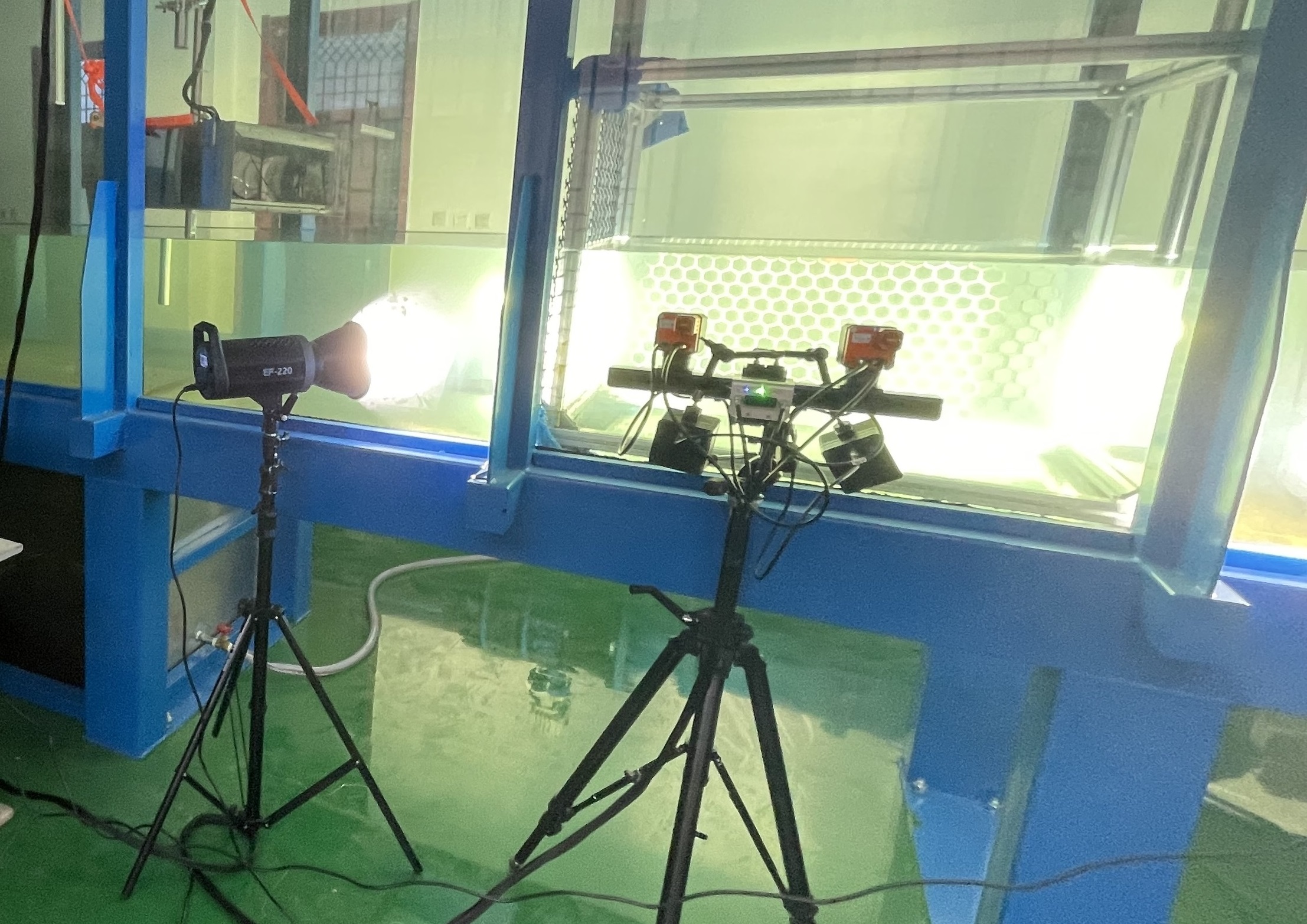
2. DIC Measurement Equipment
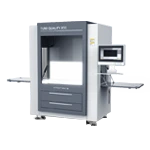
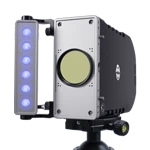
XTDIC 3D Full-Field Strain Measurement System
Environmental simulation system for controlling water flow and lighting
Apply a random speckle pattern to the surface of the fishing net (or utilize its natural texture).
Continuously capture images of the fishing net under load or in a dynamic environment using DIC cameras.
Use DIC algorithms to match feature points between image pairs and calculate the displacement vector for each pixel.
Analyze parameters such as deformation curves and deformation trends at critical locations.
3. Special measures for the application of underwater DIC technology
To overcome issues related to poor underwater image quality, the following measures were implemented prior to the experiment:
Image enhancement: Image preprocessing algorithms (such as contrast enhancement and noise-reduction filtering) were used to improve image quality.
Multi-frame fusion: Multiple image frames were superimposed to mitigate the effects of water agitation and uneven lighting.
Dynamic calibration: Calibration for distortion correction was performed on the DIC system prior to the experiment to ensure the accuracy of the measurement reference.
4. Experimental Procedure and Results
Static loading experiment: The fishing net was secured underwater, subjected to static loads of varying weights, and monitored for displacement changes.
Dynamic wave simulation experiment: Waves were generated in a flume tank, and the dynamic deformation of the fishing net was recorded in real time.
3D reconstruction: Images captured by DIC cameras were processed using DIC software to visualize the 3D displacement field of the fishing net.
DIC Measurement Results:
Displacement Accuracy: Achieves sub-pixel precision (0.01 pixels), corresponding to an actual displacement error of less than 0.1 mm.
Deformation Distribution: Clearly reveals the difference in displacement between the edges and the center of the fishing net, demonstrating DIC's capability to capture complex deformations.
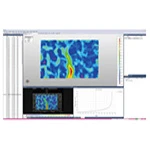
3D Visualization: Color-coded displacement maps and deformation contour plots generated by the DIC software intuitively illustrate the underwater deformation trends of the fishing net.
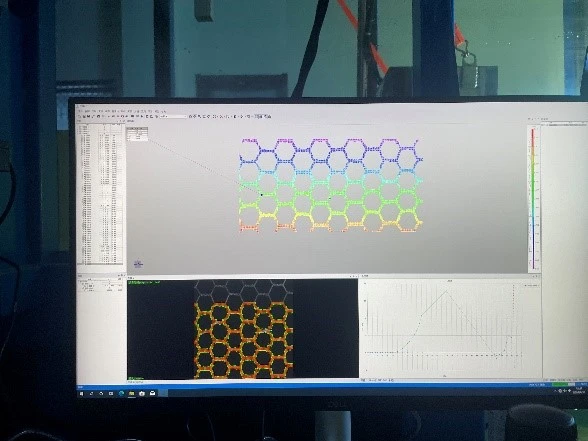
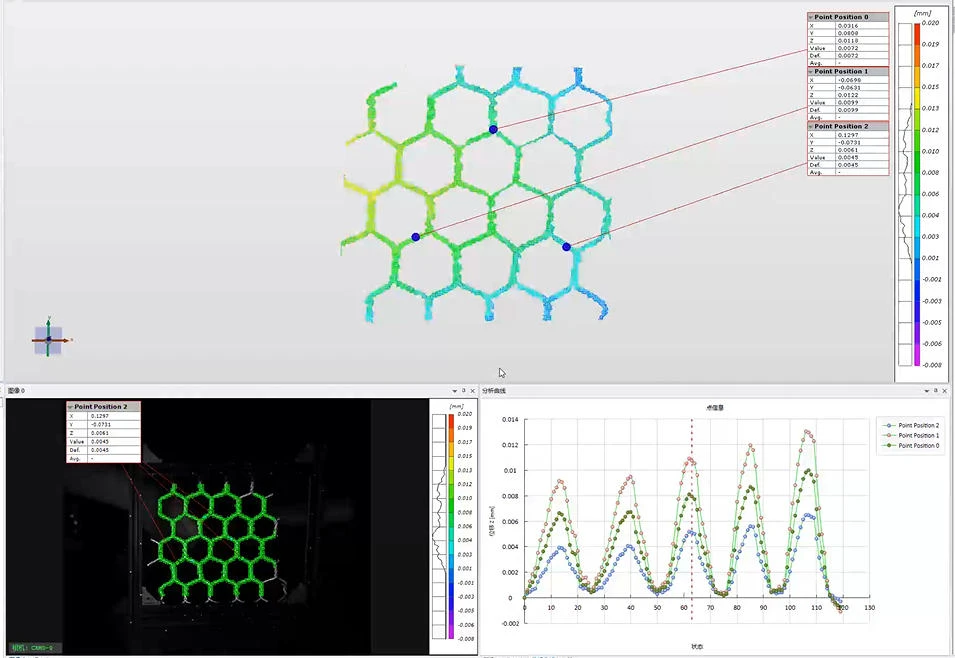
Displacement Analysis Curves for Key Points
Three key nodes (such as corner points, intersections, and midpoints of edges) were selected on the fishing net to record their displacement changes during the experiment. The following are the 3D displacement analysis curves for these representative nodes:
Node Displacement Curves:
Time/Frame Count: Horizontal axis, representing the progression of the experiment.
Displacement (mm): Vertical axis, representing node displacement in the X, Y, and Z directions.
Curve Characteristics: The curves exhibit distinct oscillatory deformation patterns significantly influenced by the water flow, with the greatest displacement occurring in the Z-direction (perpendicular to the net surface).
Node Curve Characteristics: The fishing net exhibits periodic oscillation in displacement; these curves provide a visual representation of how different locations and nodes on the net are affected by water flow fluctuations.
Applications and Experimental Value of DIC Technology
The XTOP3D XTDIC 3D full-field strain measurement system employs optical distortion correction and calibration—even when imaging through thick glass windows or capturing underwater specimens—to directly acquire the full-field deformation behavior of objects in their actual service environments. By providing critical data support for design verification, performance assessment, safety assurance, and failure analysis of equipment operating in extreme environments, it serves as a vital experimental tool for driving technological progress in relevant fields.