I. Background
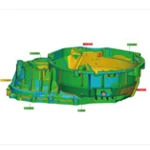
In the fields of high-end industrial manufacturing, precision equipment, and mechanics research, the precise acquisition of full-field dynamic parameters regarding high-frequency structural vibration is a core testing method for evaluating dynamic service performance, verifying structural fatigue reliability, and predicting component service life. Traditional contact-based measurement methods suffer from significant limitations: added mass or stiffness alters the specimen's inherent dynamic characteristics; confined internal spaces make it difficult to arrange multiple contact measurement points; and the ability to collect only discrete, single-point vibration data severely restricts the analysis of vibration mechanisms in precision structures.
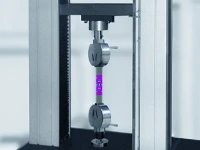
Monocular high-speed Digital Image Correlation (DIC) technology enables rapid measurement using a single high-speed camera. It can simultaneously capture full-field displacement, strain, and time-series vibration responses, making it highly suitable for testing scenarios such as high-frequency vibration, transient impact, and dynamic material property analysis. The system offers flexible deployment and excellent spatial adaptability, providing unique engineering advantages for vibration testing of micro-scale precision components.
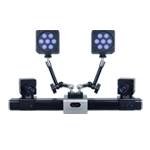
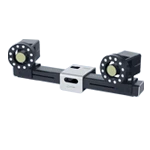
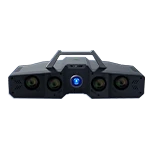
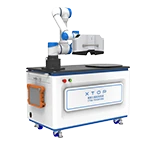
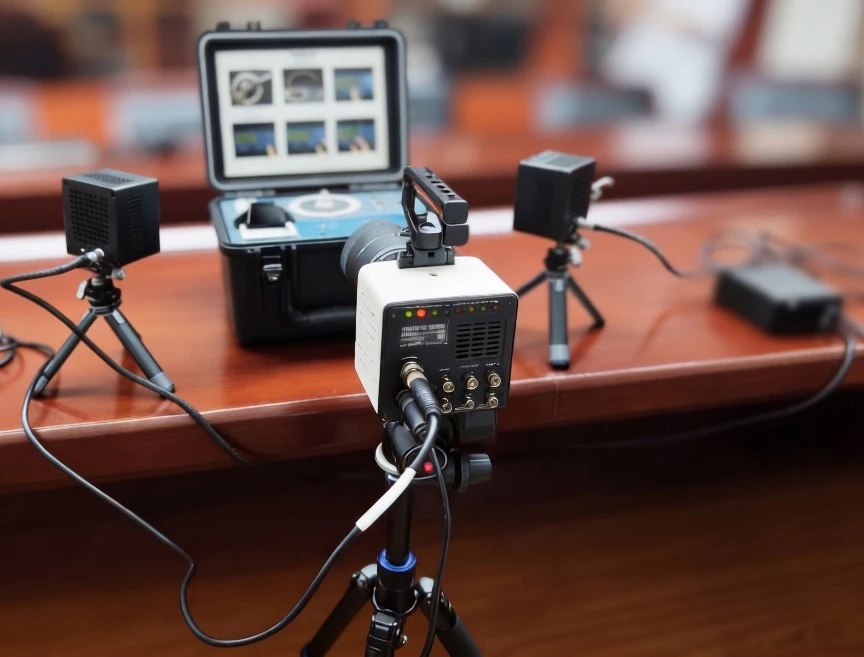
In this experiment, a portable standard vibration calibrator served as the controllable sinusoidal vibration excitation source. Using the XTOP3D XTDIC-SPARK monocular high-speed DIC system, two typical vibration test conditions were conducted: high-speed variable-frequency sweeping and low-speed steady-state fixed-frequency vibration. The system comprehensively captured time-series data on full-field vibration displacement, instantaneous velocity, and acceleration for the micro-specimen, thereby quantitatively validating the measurement accuracy, data stability, and practical engineering applicability of the monocular high-speed DIC technology.
I. Selection of High-Speed DIC Technical Solutions
Application Scenarios for Monocular High-Speed DIC (Optimal Solution for This Test)
High-frequency vibration detection scenarios involving small, precision planar components or confined spaces (such as narrow cavities); cases focusing solely on 2D planar vibration; tests primarily involving steady-state or transient small-amplitude vibrations; and situations prioritizing rapid setup and low-cost testing where quantification of 3D out-of-plane vibration is not required.
Application Scenarios for Binocular High-Speed DIC Technology
Large, complex curved components; scenarios involving significant out-of-plane vibration or torsional deformation; tests requiring 3D spatial displacement data and comprehensive 3D modal analysis; large-amplitude, large-deformation dynamic testing; and scenarios with specific requirements for quantifying 3D vibration amplitudes and spatial mode shapes.
For high-frequency vibration trajectory testing of micro-scale precision planar components, monocular high-speed DIC fully meets testing requirements regarding spatial adaptability, temporal synchronization, ease of setup, and micro-displacement measurement accuracy, making it the optimal optical measurement solution that balances testing efficiency with measurement precision.
II. Monocular High-Speed DIC Technical Solution
Reduced Synchronization Errors
Image acquisition is performed using a single high-speed camera with a unified time reference, eliminating phase difference issues caused by insufficient synchronization accuracy.
Enhanced Spatial Adaptability
Monocular systems require only a single viewing angle, allowing the imaging path to be positioned closer to the specimen. This makes them suitable for spatially constrained testing environments (such as Hopkinson bar tests or small specimen testing) and facilitates easier installation.
Reduced Calibration Complexity
No calibration procedure is required, thereby minimizing data errors caused by calibration instability (e.g., due to vibration, temperature fluctuations, or airflow disturbances).
High Sampling Frequency and Precision
Supports sampling frequencies up to 100,000 Hz, enabling precise capture of rapidly changing stress and strain behaviors. It meets measurement requirements for extreme dynamic conditions—such as explosions, impacts, and high-speed vibrations—ensuring high data precision and reliability. III. Test Scheme Design
The test utilizes the Xintuo 3D high-speed DIC measurement system in conjunction with a controllable vibration calibration excitation source. Two typical vibration test cases were designed to cover steady-state low-frequency and transient wide-frequency vibration scenarios. By analyzing time-series data regarding displacement, velocity, and acceleration at full-field measurement points on the specimen, the following were evaluated:
Test Case 1: High-speed variable-frequency test: The excitation frequency varies continuously and dynamically while dynamic response data is captured throughout the process; this evaluates the system's data tracking capability and measurement accuracy in wide-frequency, non-steady-state vibration environments.
Test Case 2: Low-speed fixed-frequency test: Steady-state sinusoidal excitation with fixed frequency and amplitude is applied, and vibration time-series curves are recorded; this verifies the data stability and consistency of the system's low-frequency, steady-state measurements.
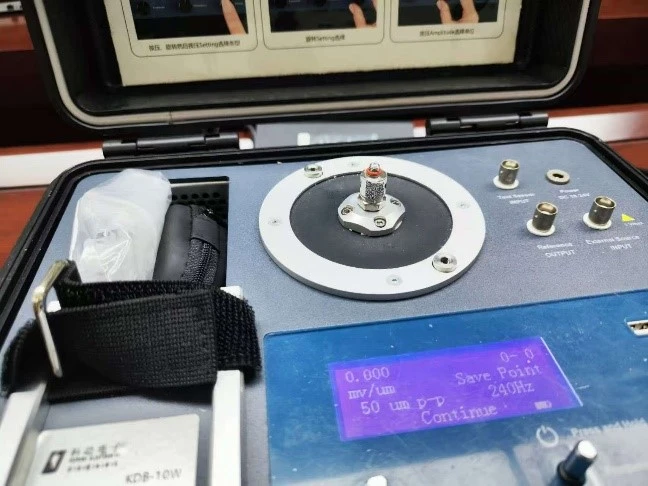
Surface speckle treatment of the small specimen under test
IV. Test Scenario 1: High-Speed Variable-Frequency Test
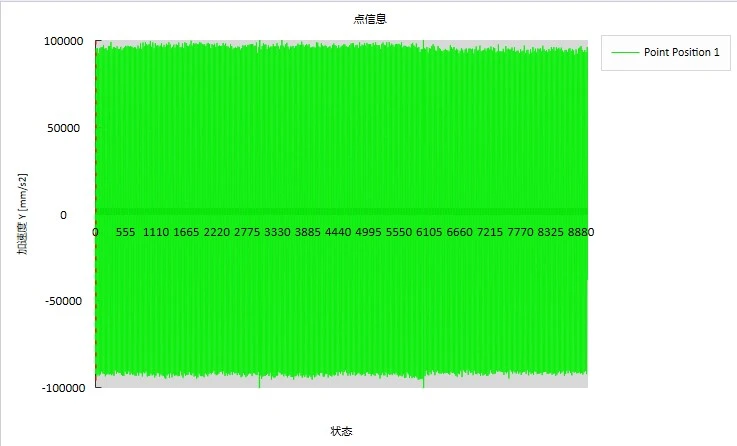
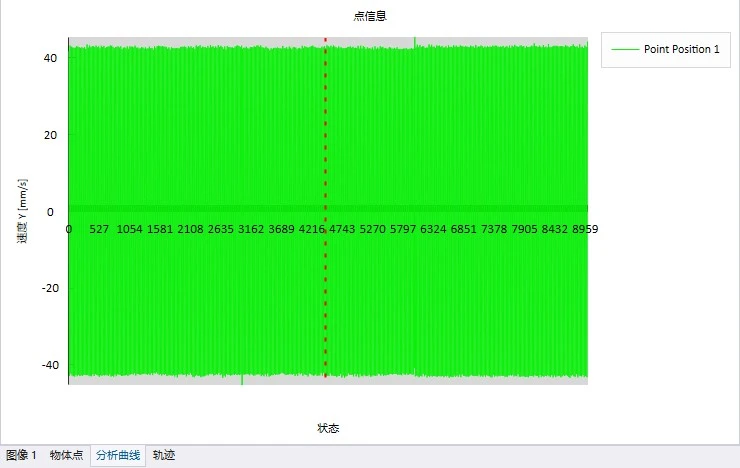
The measured curves demonstrate that the high-speed monocular DIC system fully captures the vibration response characteristics across the entire frequency sweep range: the amplitude of the excited specimen exhibits distinct amplitude modulation in response to changing excitation frequencies—rising sharply within the resonance band and gradually decaying outside of it.
During the transient intervals of rapid frequency switching, the acceleration-time curve remains continuous and smooth, free from data gaps or abrupt numerical jumps, thereby confirming the system's excellent transient capture capabilities. The velocity and acceleration curves satisfy the mathematical relationship of differentiation and exhibit low noise levels, highlighting the stability of the DIC numerical solution process.
Overall curves from the high-speed variable-frequency test
High-speed variable-frequency acceleration curve
High-speed variable-frequency speed profile
V. Test Scenario 2: Low-Speed Fixed-Frequency Test
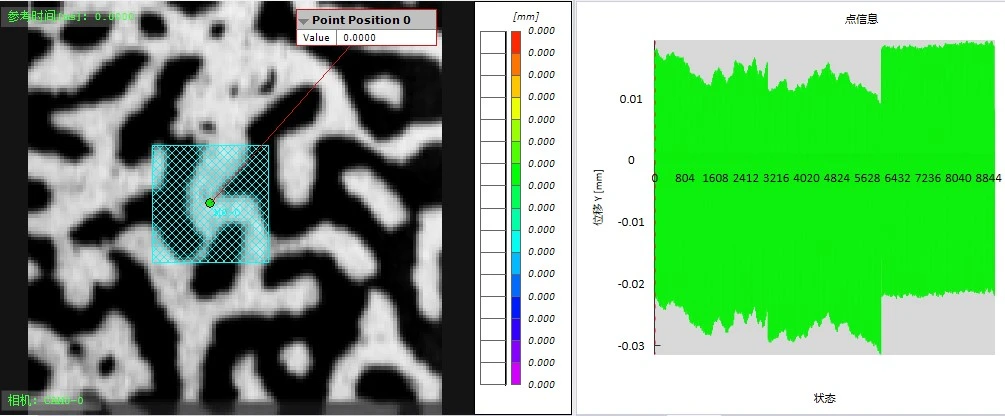
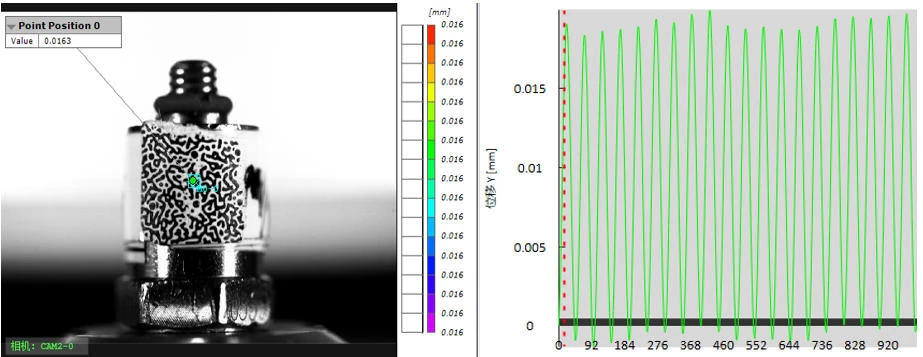
The displacement-time curve exhibits a regular sinusoidal waveform with a stable period and minimal peak-to-peak fluctuation, accurately reproducing the simple harmonic motion characteristics of the specimen. Leveraging sub-pixel interpolation algorithms, the system achieves micron-level displacement detection.
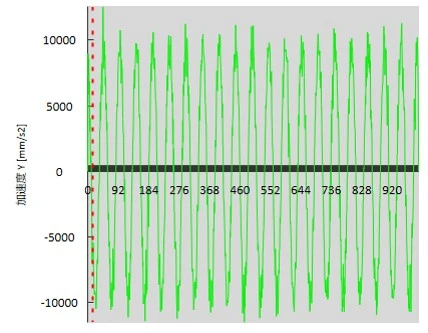
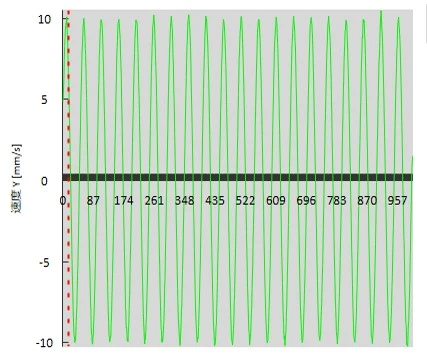
Low-frequency vibration involves longer periods, ensuring a sufficient number of sampling points per cycle; the displacement, velocity, and acceleration curves are smooth and demonstrate an excellent signal-to-noise ratio. The acceleration and displacement curves strictly adhere to the second-order differential relationship, and the three sets of physical data show good internal consistency, with no baseline drift or anomalous jitter throughout the test.
Low-speed fixed-frequency displacement curve
Low-speed fixed-frequency acceleration curve
Low-speed fixed-frequency speed curve
VI. Analysis of Results
Based on the data from the two test scenarios, XTOP3D’s monocular high-speed DIC technology demonstrates the following key performance characteristics in vibration trajectory measurement:
Broadband response capability: During high-speed variable-frequency testing, the monocular high-speed DIC technology successfully tracked the full dynamic process under conditions of continuously changing frequencies. This is of significant practical value for addressing non-steady-state vibration issues encountered in engineering, such as engine start-stop sequences and shock responses.
High-precision displacement measurement: Utilizing sub-pixel interpolation algorithms, the DIC technology achieves a displacement measurement resolution better than 0.01 pixels, enabling the detection of vibration displacements at the micron or even sub-micron scale.
Synchronous acquisition of multiple physical quantities: Data on displacement, velocity (first derivative of displacement), and acceleration (second derivative of displacement) can be acquired simultaneously. The mathematical consistency—based on calculus—among the velocity, acceleration, and displacement curves validates the reliability of the measurement data.
Non-contact, non-intrusive operation: DIC measurement technology involves no physical contact with the test object; this advantage is particularly significant for vibration testing of lightweight, flexible, or micro-scale structures.
Full-field, multi-point measurement: Synchronous measurement of all grid points within the Region of Interest (ROI) allows for the acquisition of the full-field vibration displacement distribution. This provides a rich data foundation for advanced vibration analyses, such as modal analysis, nodal line identification, and mode shape extraction.