Automated and intelligent 3D inspection represents an inevitable trend in the manufacturing industry. Across sectors such as automotive, aviation, aerospace, energy, and defense, the sheer variety of parts makes contact-based measurement methods inadequate for meeting rapid measurement demands. Furthermore, as products evolve and undergo upgrades, there is an urgent need to inspect a vast number of complex, customized components using non-contact optical measurement technologies for rapid reconstruction. Consequently, automated 3D measurement systems combining robotic arms with structured-light 3D scanners have emerged as a key solution for the rapid, batch inspection of complex parts.
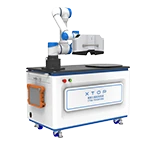
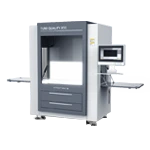
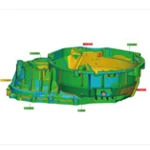
The XTOP3D XTOM-STATION automated inspection center employs a solution that integrates industrial robots with stationary blue-light 3D scanners. By effectively combining the respective strengths of these technologies, the system captures high-precision, high-detail 3D data from workpiece surfaces. It then compares this data against theoretical CAD models to analyze specific dimensions or detect defects, thereby enabling automated batch inspection of manufactured parts and providing an efficient, precise, and automated solution for a wide range of measurement tasks.
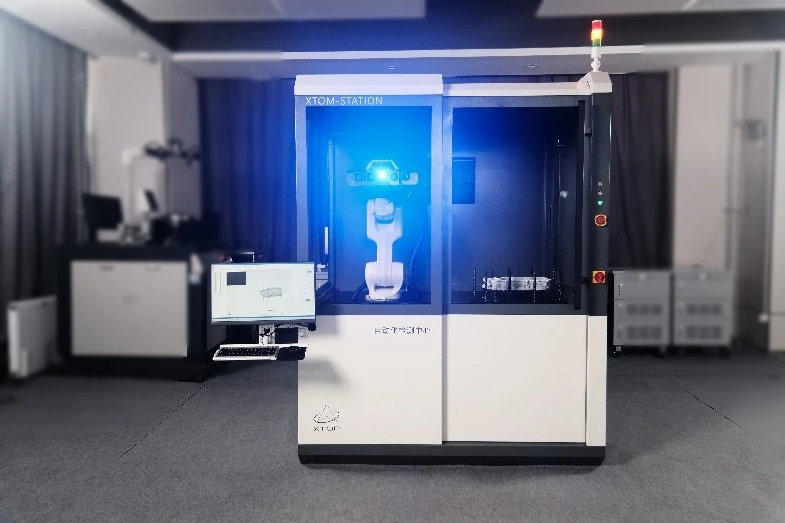
Hardware Overview
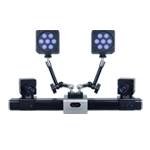
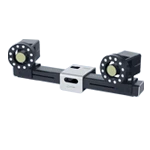
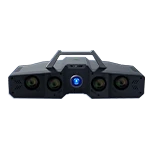
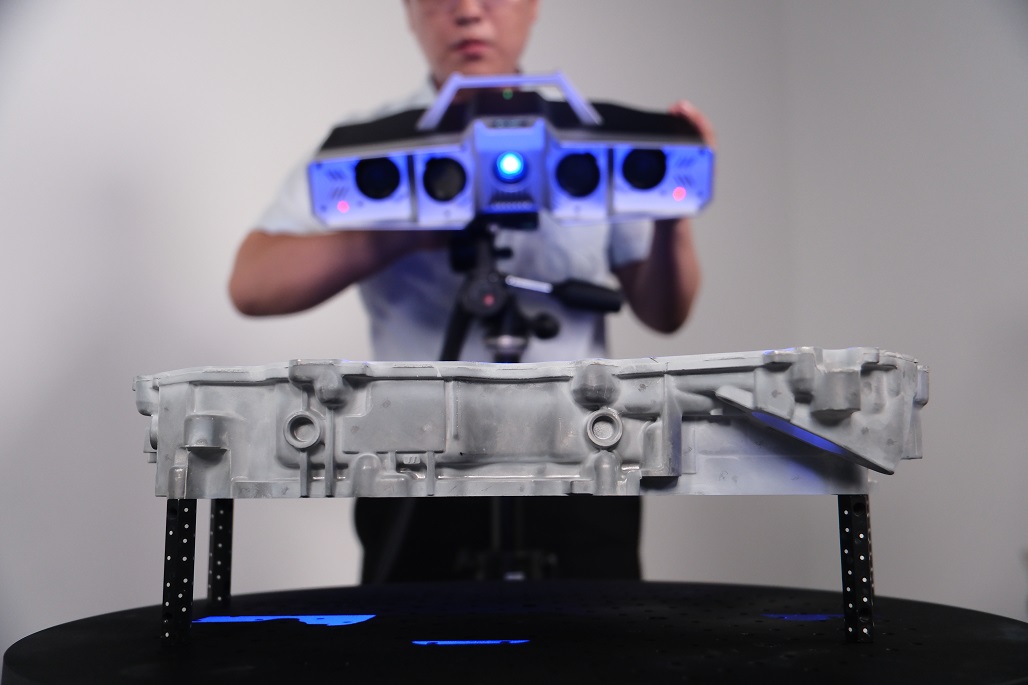
1. XTOM-12M Micron-Level Precision Blue-Light 3D Scanner
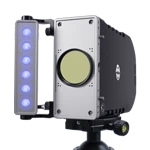
The XTOM-12M is a key hardware component for automated 3D measurement systems, offering distinct advantages in accuracy and detail reproduction. It achieves a peak accuracy of 6 microns and features a 12.3-megapixel ultra-high-resolution industrial camera, delivering a point spacing of 0.021 mm. In terms of accuracy and detail fidelity—two critical parameters for data quality—it represents the industry's state-of-the-art for structured-light 3D scanning equipment.
Blue-light 3D scanning technology is increasingly becoming the preferred choice for measuring small-to-medium-sized workpieces, thanks to its high precision, full-dimensional measurement capabilities, and non-contact nature, as well as the comprehensive, accurate data it provides. It is particularly well-suited for components requiring high precision and featuring complex, fine geometric details—such as aerospace blades, structural parts for electronics and appliances, precision injection-molded components, and stamping dies.
2. Introduction to Fixtures
In industrial manufacturing, workpieces often vary in type and feature irregular shapes; various types of fixtures can be employed to secure them. Custom fixtures are available for workpieces with irregular shapes or special structural features, ensuring scanning stability and data quality.

Flexible Fixtures
Suitable for small, structurally stable, and relatively rigid components (such as sheet metal parts), flexible fixtures create a support structure that adapts to various workpiece shapes while preventing deformation or damage caused by rigid clamping.
Flexible Fixtures with Clamps
Clamps precisely secure the workpiece position, ensuring stability during scanning, while the flexible fixture cushions the clamping pressure to minimize the risk of deformation. These fixtures enable rapid positioning and securing of medium-sized workpieces, facilitating efficient scanning.
Turntables or Rotary Fixtures
For workpieces requiring multi-angle scanning, turntables or rotary fixtures enable automatic rotation, allowing the blue-light 3D scanner to capture complete 3D data from various angles. Turntables can rotate precisely according to preset paths and angles; they are commonly used for the full-dimensional inspection of small injection-molded parts, electronic components, and similar items.
3. Introduction to Industrial Robots
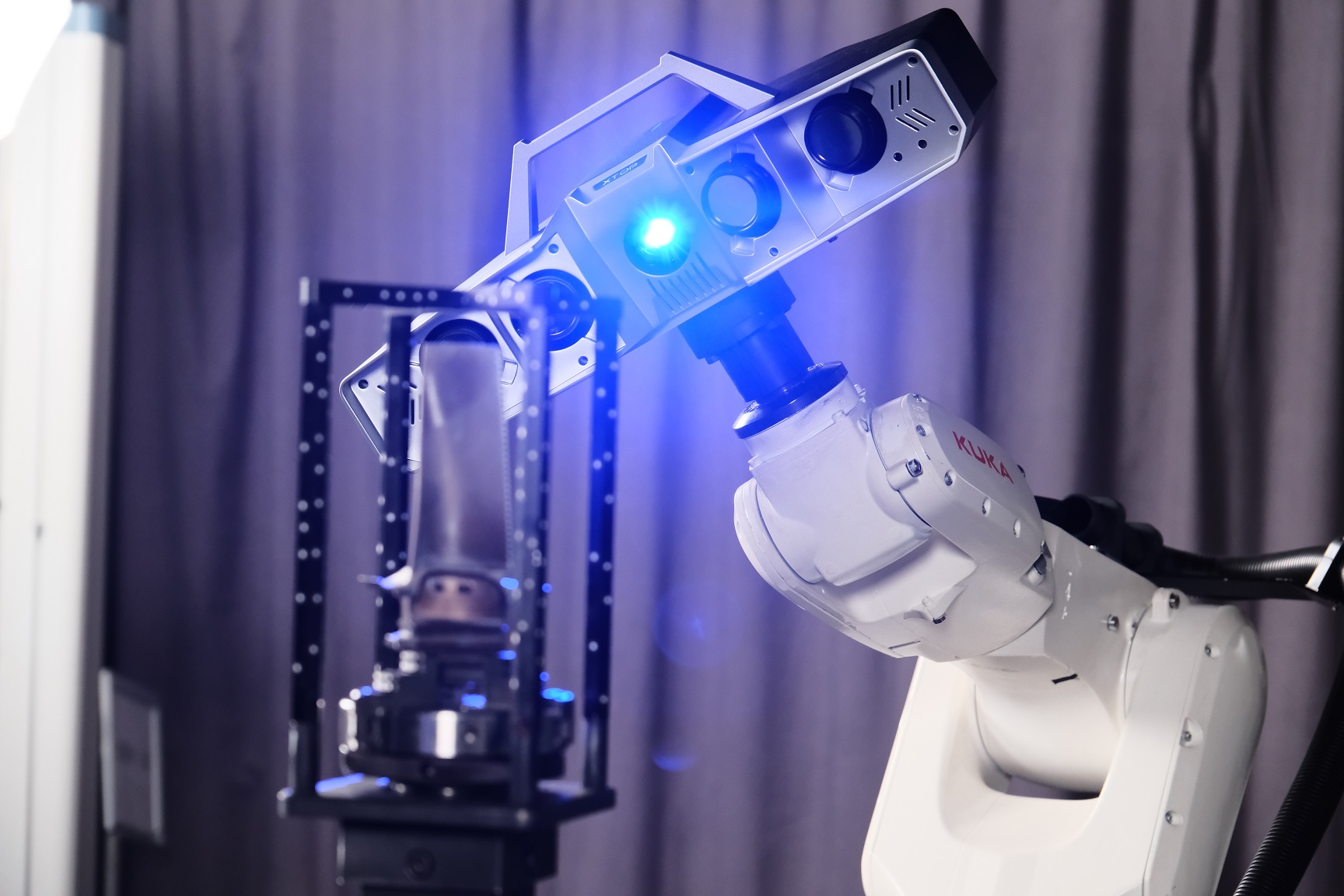
The XTOM-STATION automated inspection center utilizes a six-axis robot, with the industrial robot's positioning mechanism moving in synchronization with the robot itself.
Both the robot and the positioning mechanism feature extremely high repeatability, ensuring that every scanning position is precisely defined and consistently reproducible. Consequently, each scanning position corresponds to a unique coordinate within the global coordinate system, allowing measurement data from different orientations to be unified into a single coordinate system and enabling marker-free data stitching.
Software Overview
In terms of software algorithms, the longer the period of technical accumulation, the more mature the 3D scanning and point cloud optimization algorithms become, resulting in higher overall 3D data quality; XTOP3D possesses nearly 20 years of experience in proprietary technology development.
3D Scanning Software
XTOP3D XTOM 3D scanning software delivers a smoother, more efficient scanning experience through optimizations in core algorithms, point cloud quality, and data post-processing. It enables automatic point cloud stitching based on the precise coordinates of reference points during measurement—eliminating concerns about cumulative error—and lays the foundation for exceptional detail reproduction and metrology-grade 3D inspection.
3D Inspection Software
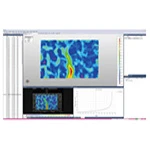
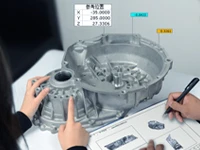
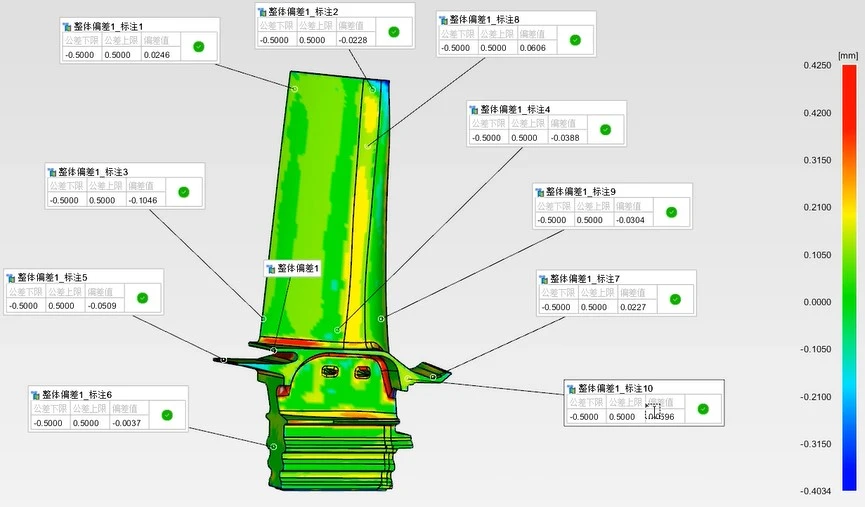
XTOP3D X-INSPECT 3D inspection and analysis software compares 3D data models obtained from scanning against imported CAD models or the average of multiple scans using various alignment methods. It performs comprehensive annotation, dimensioning, GD&T analysis, and measurement evaluation on the results, ultimately generating detailed inspection reports.
Automation Control Software
Automation control programs are primarily used for controlling the motion of robotic arms and rotary tables, managing 3D scan data acquisition, and performing data processing. The XTOP-STATION automation software integrates all these functions, enabling automated inspection operations within a single system. It achieves automatic path planning, scanning, and inspection without the need for manual intervention, saving time and effort while providing peace of mind.
Typical Case Study: Automated 3D Inspection
Automated 3D Measurement of Aerospace Blades
Aerospace blades present significant technical challenges due to their complex profiles, minute leading and trailing edge radii, thin and twisted geometries, numerous dimensional features, high production volumes, and stringent requirements for manufacturing and inspection accuracy.
The XTOP3D XTOM-STATION automated inspection center enables the automated 3D measurement of blades. Based on the measurement data, it automatically analyzes parameters such as chord length, blade thickness, and edge radii to determine whether the blades meet quality specifications.

Automated Batch 3D Measurement of Automotive Sheet Metal Parts
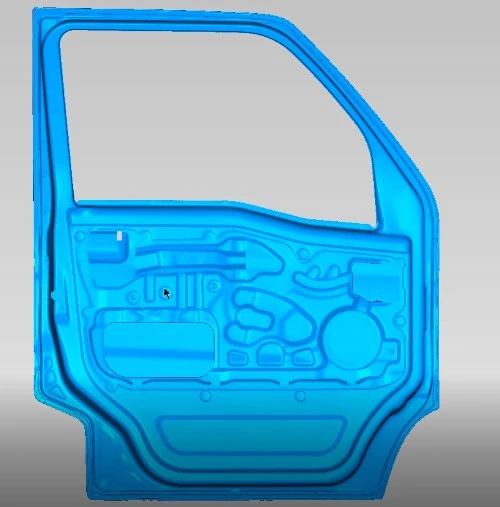
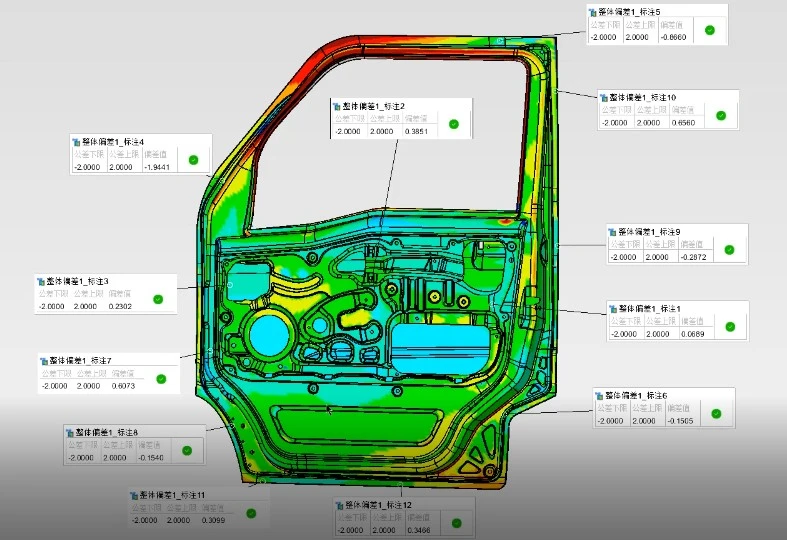
The XTOP3D XTOM-STATION automated inspection center enables one-click automated scanning and inspection, capturing clear 3D data of circular holes, slotted holes, and boundaries on automotive door sheet metal parts. Integrated with 3D inspection software, it analyzes hole dimensions, boundary profiles, and overall dimensional deviations; notably, it employs a grayscale feature-based algorithm for circular hole fitting, ensuring higher inspection accuracy.
Automated 3D Measurement for Castings
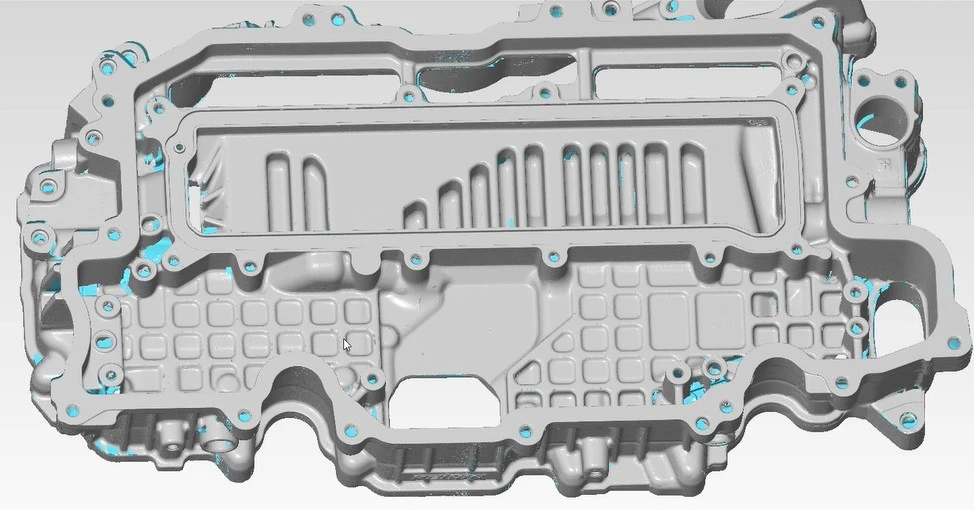
The casting industry involves the production of a vast number of molds and castings. As requirements for part precision continue to rise, manufacturers are striving to produce components that meet stringent tolerance standards. This industrial upgrading has created an urgent need for rapid, accurate, and comprehensive part inspection technologies.
The XTOM-STATION automated inspection center replaces manual labor with robotics; it plans scanning paths for products and automatically executes 3D scanning and inspection tasks, thereby significantly enhancing measurement efficiency while reducing labor and management costs.

To meet the demand for batch inspection of complex components—shifting from traditional spot checks to comprehensive 100% inspection—there is a need for faster, more efficient, stable, and highly automated inspection methods capable of handling various types of workpieces. The XTOP3D XTOM-STATION automated inspection center replaces certain traditional inspection fixtures with a combination of blue-light 3D scanning and flexible tooling. It utilizes industrial robots to perform automated 3D scanning and efficiently analyze specific dimensions or defects, thereby enabling automated batch inspection of manufactured parts and offering significant advantages in cost control and production efficiency.