The Forming Limit Curve (FLC) test is a method used to evaluate the limiting formability of metallic materials during the forming process. In sheet metal forming, FLC testing enables the rapid determination of material failure limits under various strain states; this facilitates the optimization of process parameters and die designs, ultimately enhancing forming quality and material utilization rates.
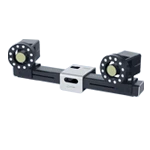
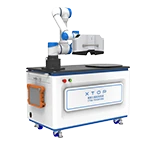
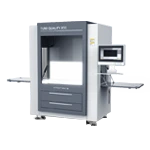
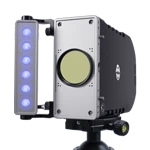
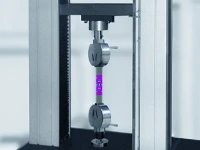
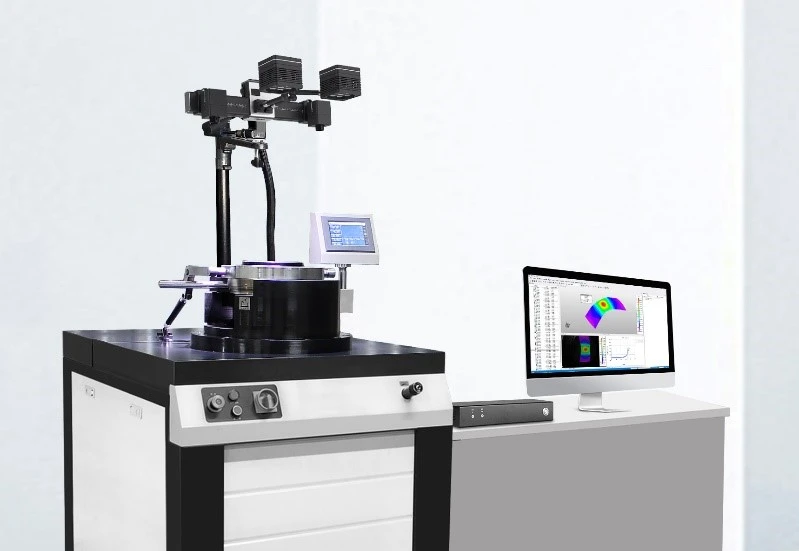
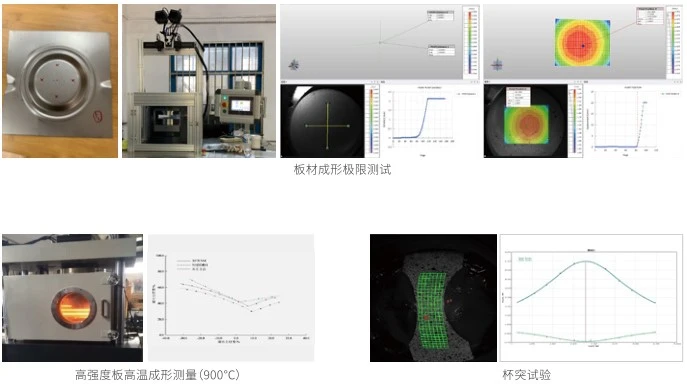
The XTOP3D XTDIC-FLC 3D sheet metal forming limit measurement system utilizes Digital Image Correlation (DIC) technology in conjunction with sheet metal forming and cupping testing machines. By employing grid-based strain analysis to directly acquire limiting strain values and generate the FLC, the system enables the rapid determination of material forming limit curves.
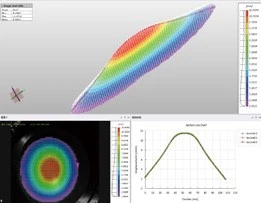
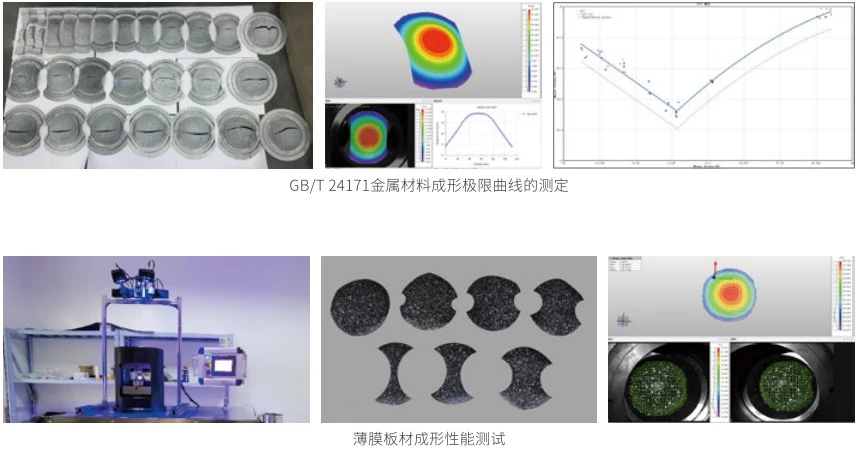
Determination of Forming Limit Curve (FLC) for SPCC Sheet Metal
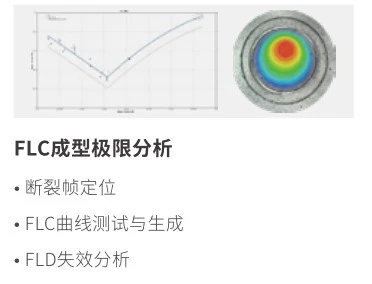
XTSM Software Module
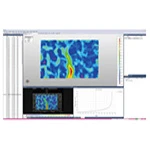
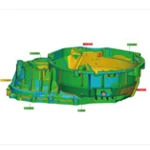
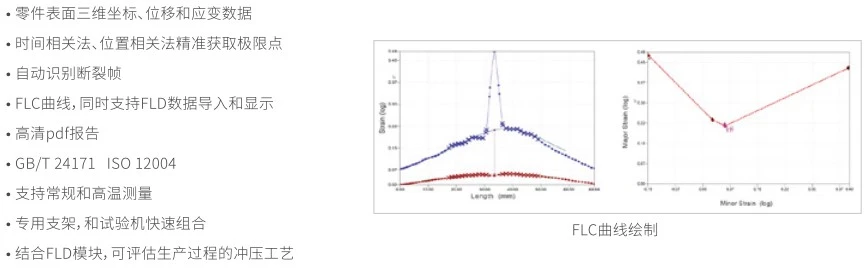
The XTDIC-FLC 3D Sheet Metal Forming Limit Measurement System is equipped with the XTSM software module, enabling precise fracture frame localization, FLC curve testing and generation, and FLD failure analysis. By efficiently measuring the strain field on the sheet metal surface, it establishes high-precision material FLC curves.
Technical Features of the XTDIC-FLC System
FLC testing is simple and intuitive; it has become an effective method for evaluating material formability and serves as a crucial basis for developing stamping processes. The advantages of using FLCs to predict material forming limits under various conditions include:
-
Strain path dependency: FLC curves account for the influence of strain paths. Since materials may undergo different strain paths during actual forming processes, FLC curves provide a comprehensive description of a material's forming capability.
-
Prediction of instability and fracture: FLC curves can predict not only instability and fracture during stretching but also instability behavior during compression. This is vital for understanding and controlling complex forming processes.
-
Material performance evaluation: FLC curves are used to assess material forming performance, including forming limits, work-hardening characteristics, and fracture toughness. Such information is essential for material selection and the optimization of forming processes.
-
Integration of experiment and simulation: FLC curves serve as a bridge between experimental data and numerical simulation. FLC curves obtained experimentally can be utilized in numerical simulations to predict material behavior under various forming conditions.
Digital Image Correlation (DIC) technology offers higher precision, broader applicability, and more convenient data processing, making it the mainstream measurement technique for FLC testing. Based on DIC technology, the XTDIC-FLC system is a dynamic, real-time FLC testing solution; it enables the observation of every instant during sheet metal forming, facilitates the testing and verification of forming performance, and generates FLC curves.
FLC testing has significant applications across various industrial and engineering sectors:
1. Automotive manufacturing: Optimization of sheet metal forming processes and lightweight design
2. Aerospace: Evaluation of high-performance materials and design of component forming processes
3. Shipbuilding: Optimization of hull structures and material selection
4. Electronics: Precision forming and application of new materials
5. Construction engineering: Forming of structural materials and design of decorative materials
6. Energy equipment: Forming of pipes and vessels and R&D of new materials
7. Medical devices: Forming of biomaterials and manufacturing of precision instruments
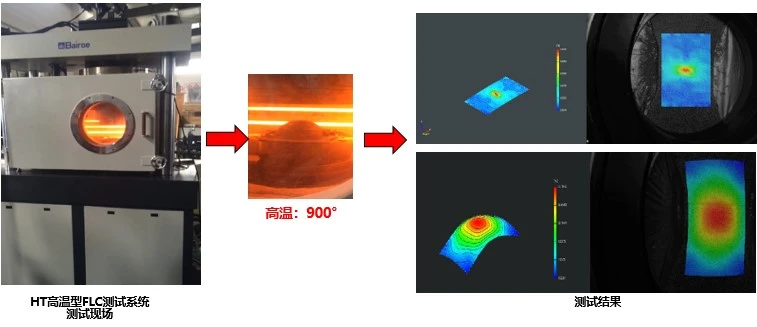
Case Study on Sheet Metal Forming Limit Curve (FLC) Testing