With the explosive growth of new energy vehicles and energy storage systems, monitoring the swelling behavior of lithium-ion batteries has become a focal point for the industry. Swelling not only affects battery performance but can also lead to safety hazards such as thermal runaway.
Traditional contact-based detection methods (such as strain gauges) suffer from limitations—including single-point constraints, wiring interference, and the inability to capture out-of-plane deformation—making it difficult to meet the requirements for the precise safety assessment of next-generation, high-energy-density batteries. Digital Image Correlation (DIC) technology stands out due to its non-contact, high-precision 3D monitoring capabilities, offering a novel solution for battery health monitoring, management, and research.
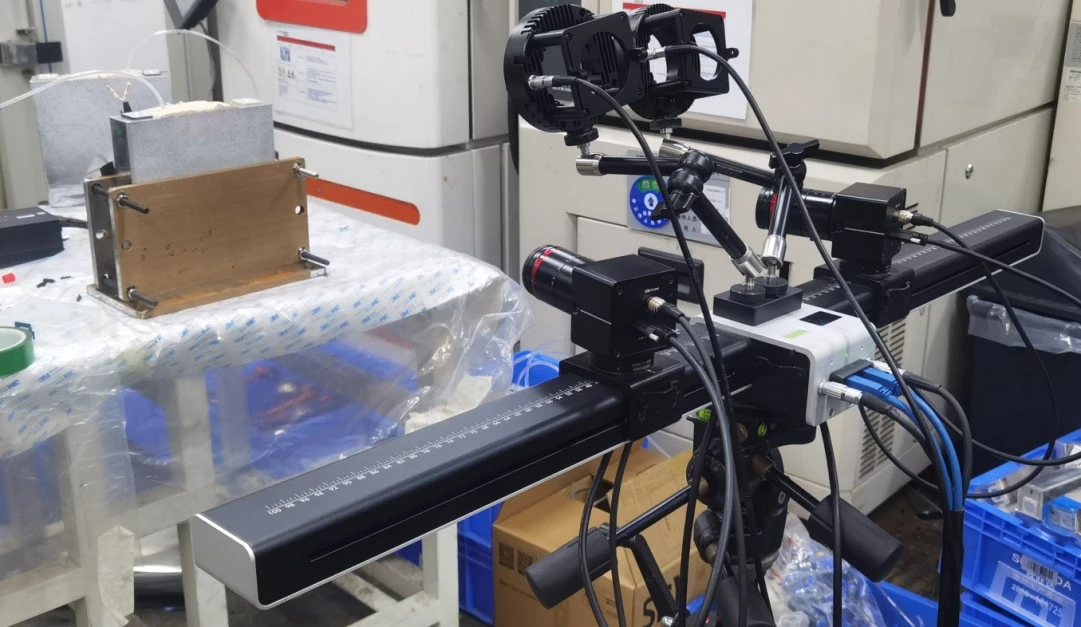
How does DIC technology "visualize" battery expansion?
The core of Digital Image Correlation (DIC) technology lies in digital image feature matching and displacement calculation:
1. Surface preparation: Spraying a high-contrast random speckle pattern onto the battery casing or utilizing natural surface textures as tracking markers;
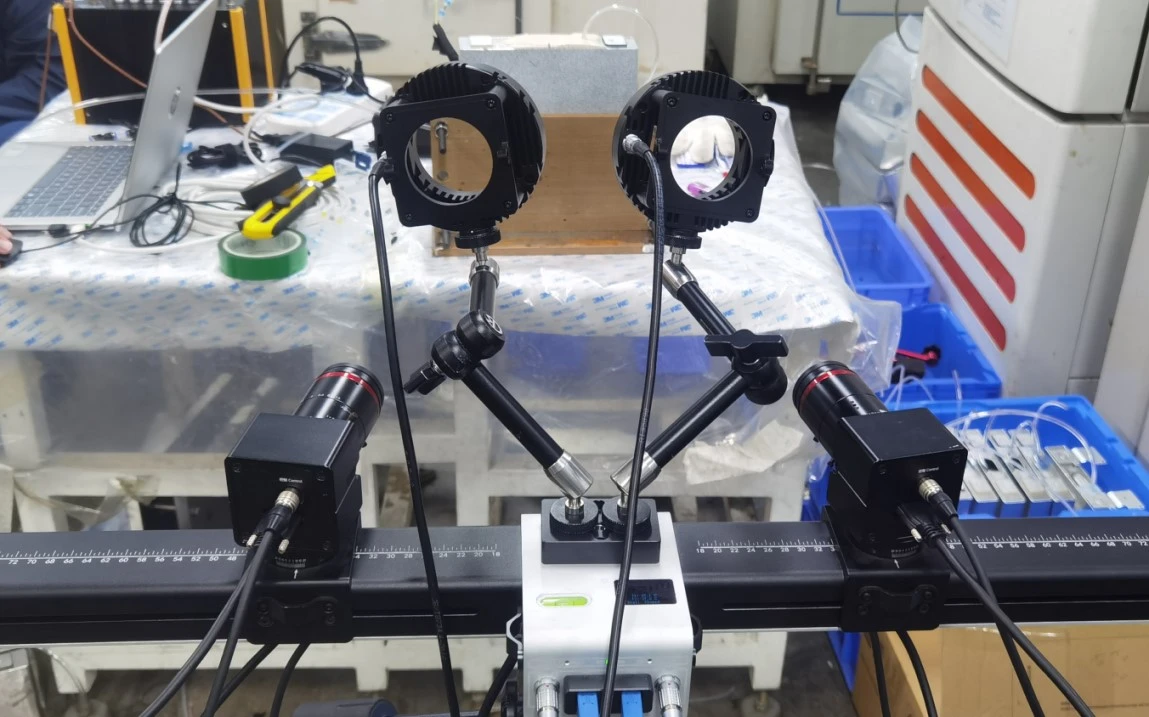
2. Synchronized dual-camera acquisition: Recording image sequences of the battery surface during charge and discharge cycles;
3. Algorithmic analysis: Calculating spatiotemporal correlations between digital images to match feature point displacements across different time points, thereby constructing a 3D strain distribution map.
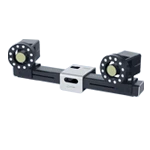
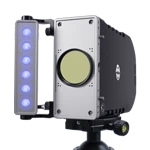
The XTOP3D XTDIC 3D full-field strain measurement system offers an innovative solution for the non-destructive testing of power batteries. Based on DIC technology, it enables the dynamic, full-field capture and analysis of minute deformations in the battery casing—without physical contact—under various operating conditions, such as charge-discharge cycles and temperature fluctuations.
Experimental Details
Test Subject: Prismatic lithium-ion battery. Axial compressive deformation was induced via internal pneumatic pressurization to simulate operational loading conditions. The test involved three sample groups (designated 1#-0.005 and 2#-0.01).
Core Equipment: Xintuo 3D XTDIC-12M 3D full-field strain measurement system. It features a field of view (FOV) of approximately 200 mm and offers high-resolution, full-field strain and displacement analysis capabilities.
Loading Process: The battery was initially in a static state. Subsequently, cyclic internal pneumatic pressure was applied, completing five pressurization-depressurization cycles to simulate the repetitive loading encountered during actual operation.
Specimen Preparation:
A matte white base coat was applied to enhance contrast;
A matte black spray was applied to create a high-contrast, random speckle pattern.
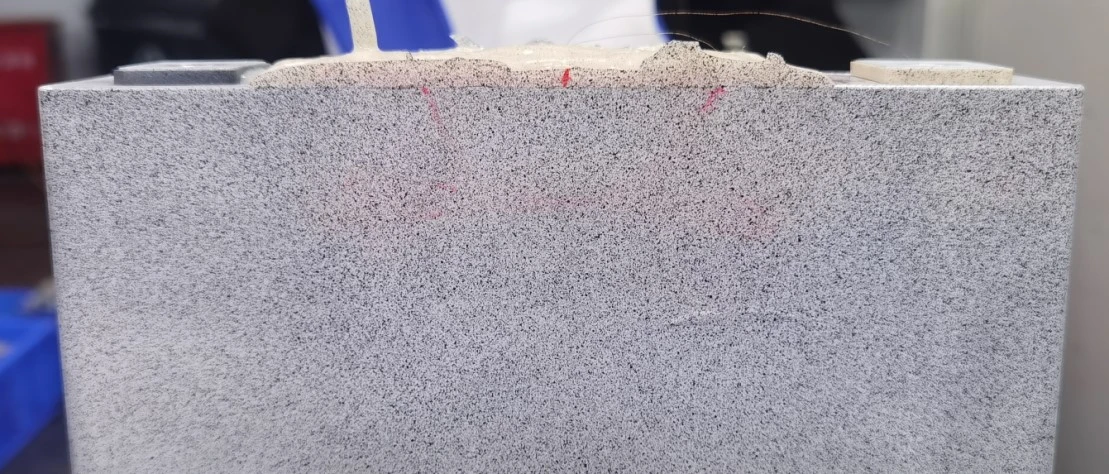
Data baseline: The first static image (pre-pressurized state) serves as the starting point for deformation analysis.
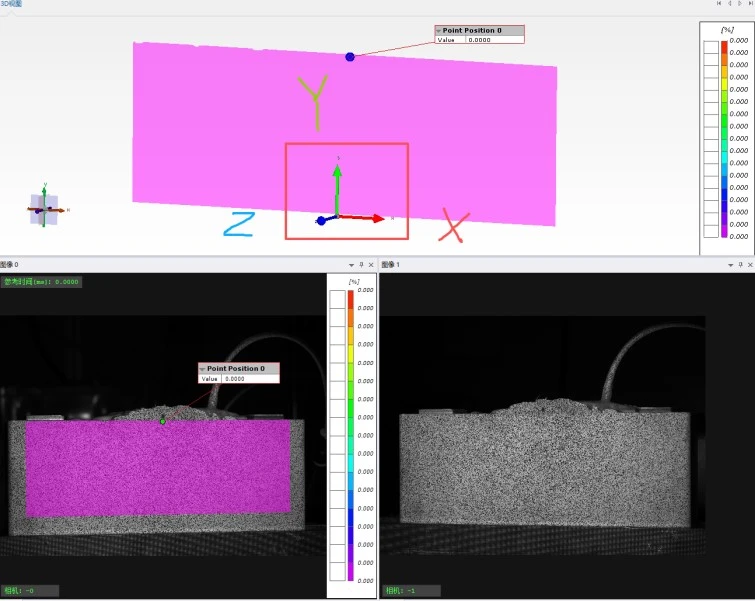
Selection of DIC Measurement AOI
To focus on the areas relevant to the study, an AOI (Area of Interest) is specifically defined; by pre-selecting a specific region within the image, data analysis and processing can be concentrated on that area. Upon completion of the analysis, the data is presented in the form of a 3D coordinate plot.
DIC Data Analysis and Results
Full-field 3D Displacement Analysis:
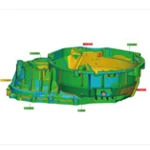
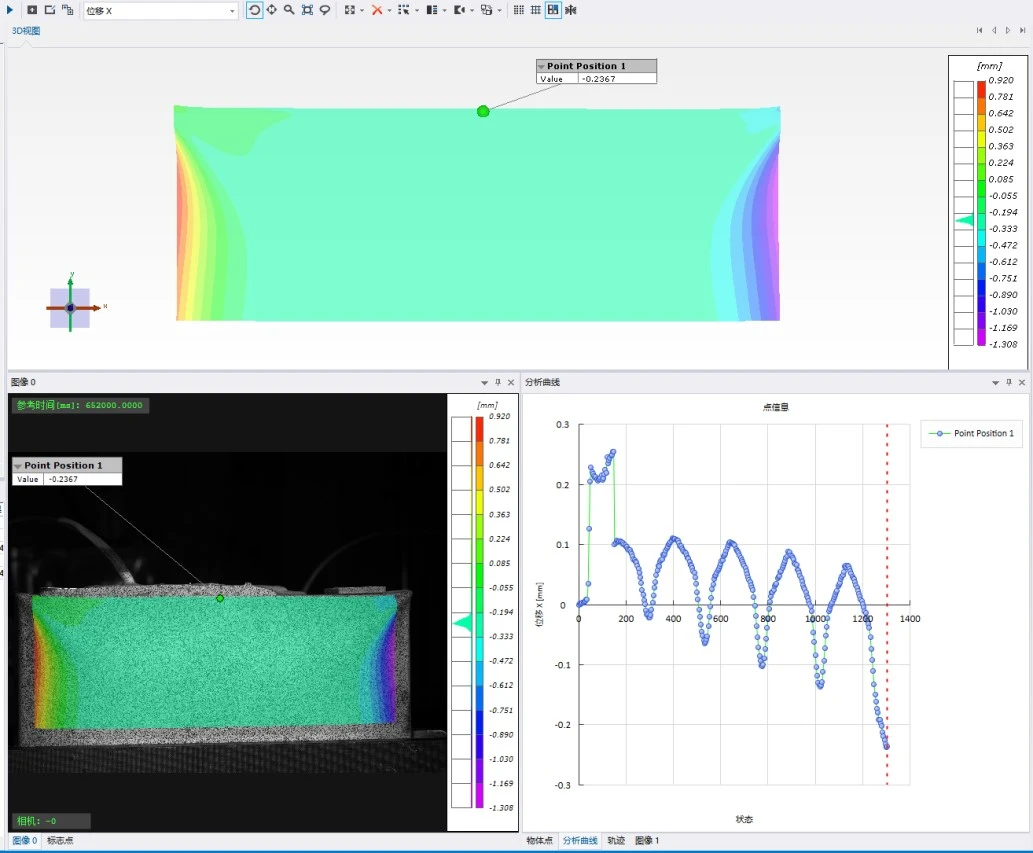
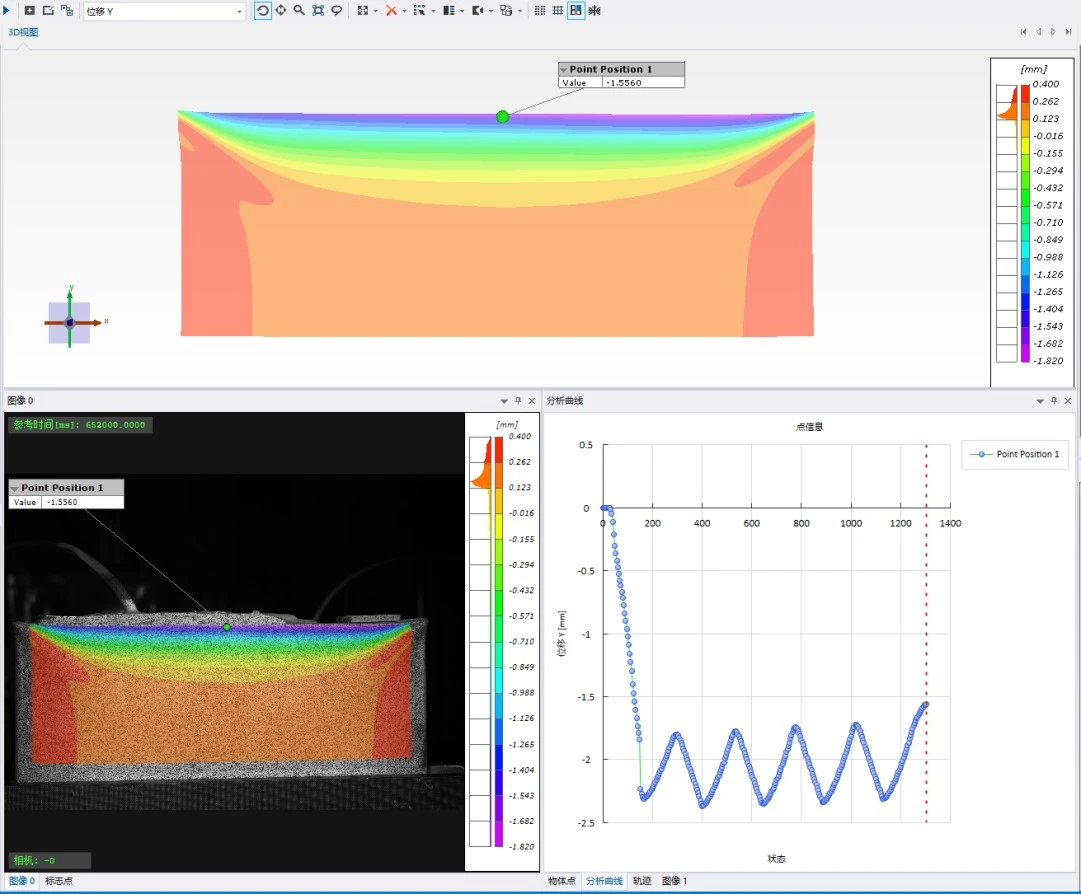
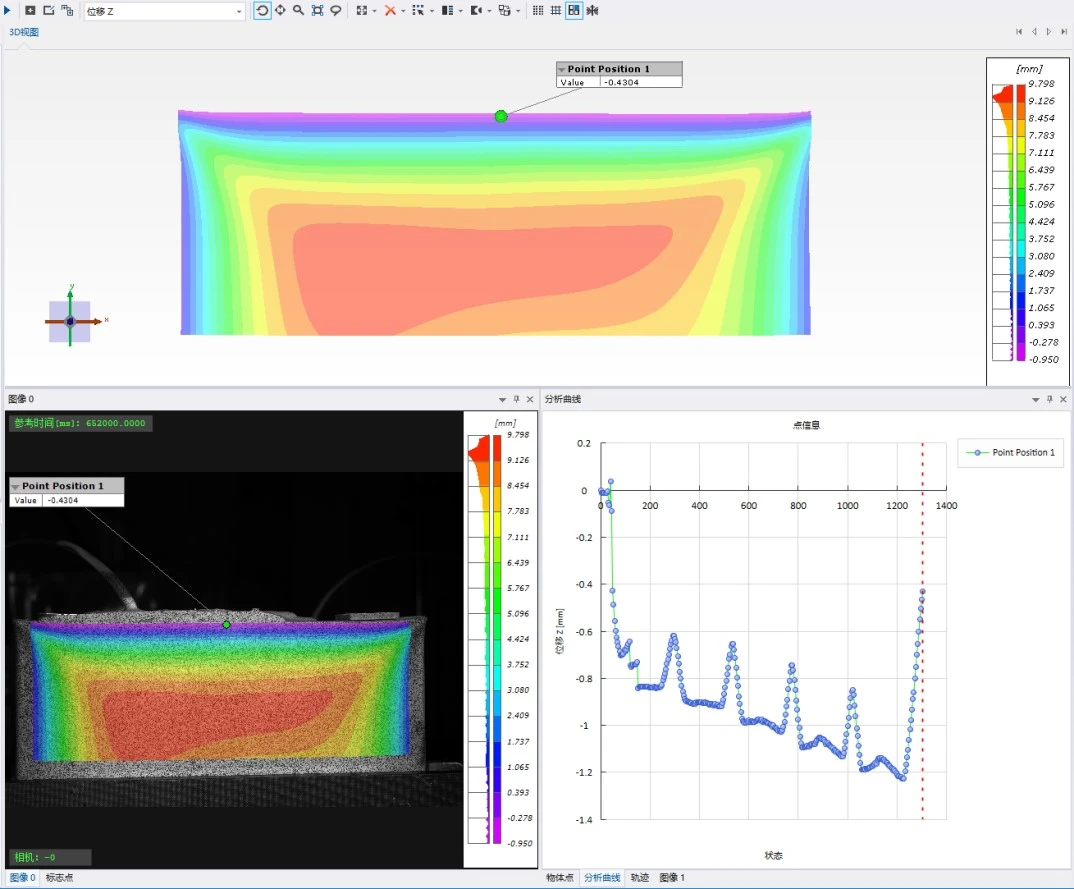
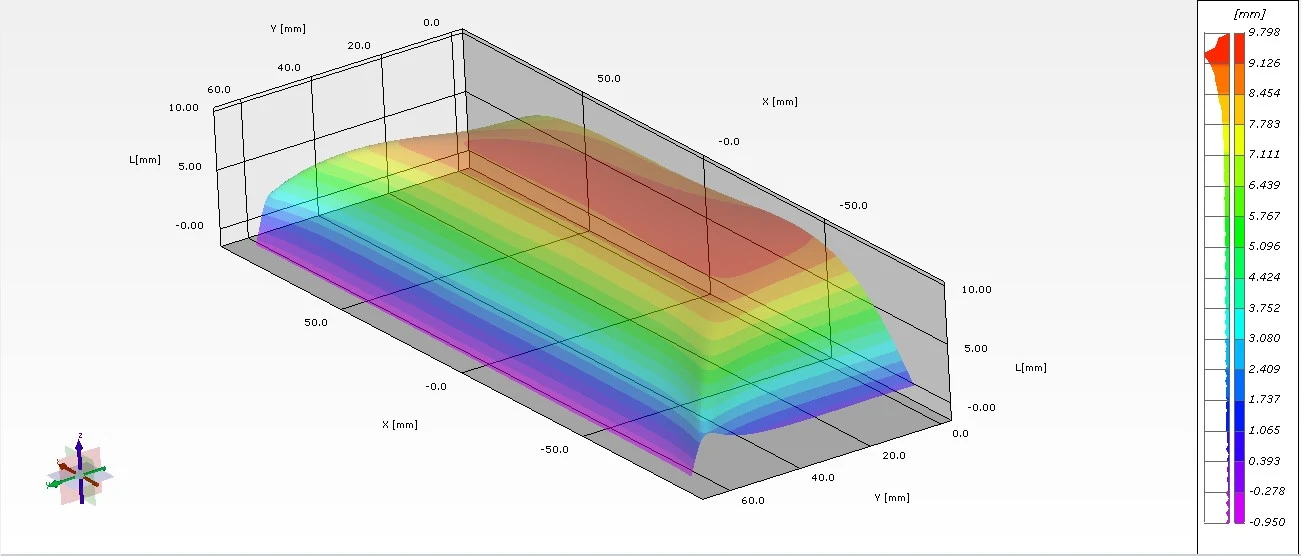
Overall Deformation: DIC displacement maps intuitively visualize the full-field 3D displacement patterns of the battery casing during the pressurization process.
Maximum Displacement: Analysis reveals the maximum displacement of the battery sample along the Z-axis, highlighting its significant deformation response under compression.
Cyclic Response: The XTDIC 3D full-field strain measurement system fully captures the multi-dimensional displacement-time history curves at measurement points across five cycles, providing a crucial basis for dynamic response analysis.
No.1 Battery Specimen – Displacement Analysis
No.2 Battery Specimen – Displacement Analysis
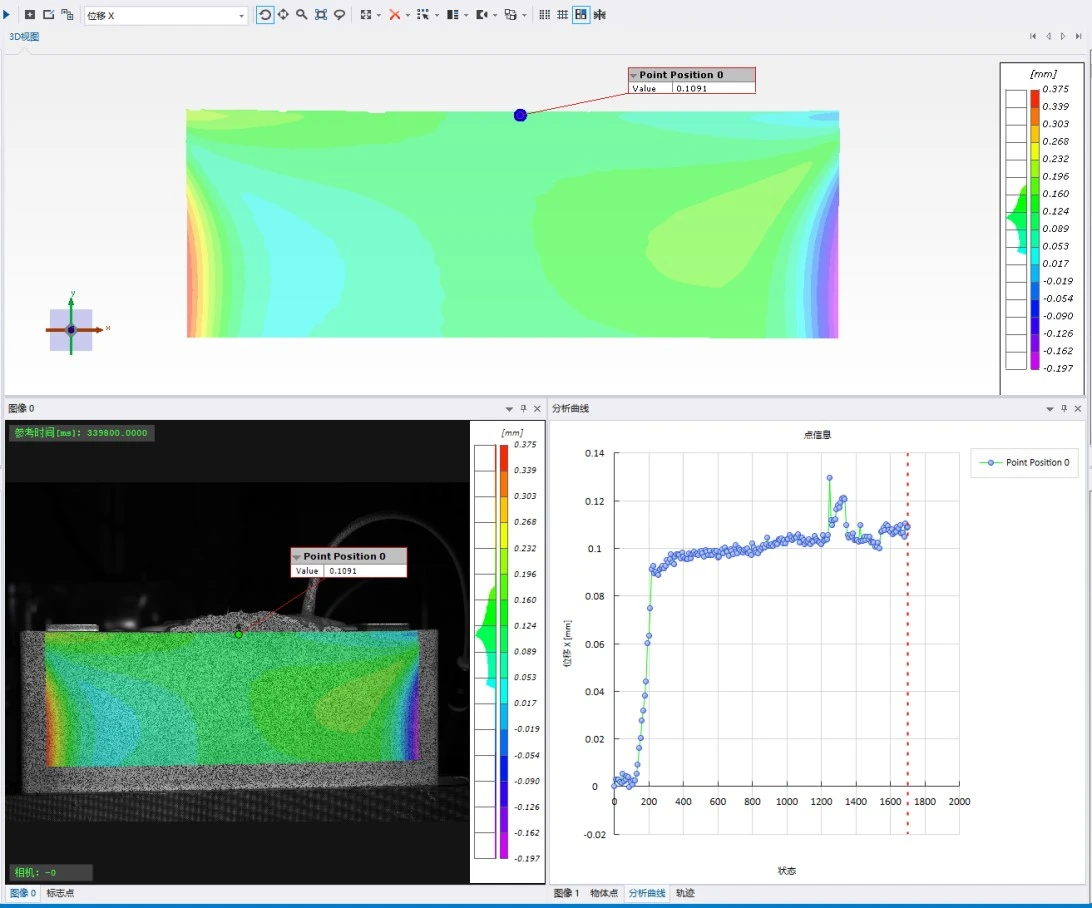
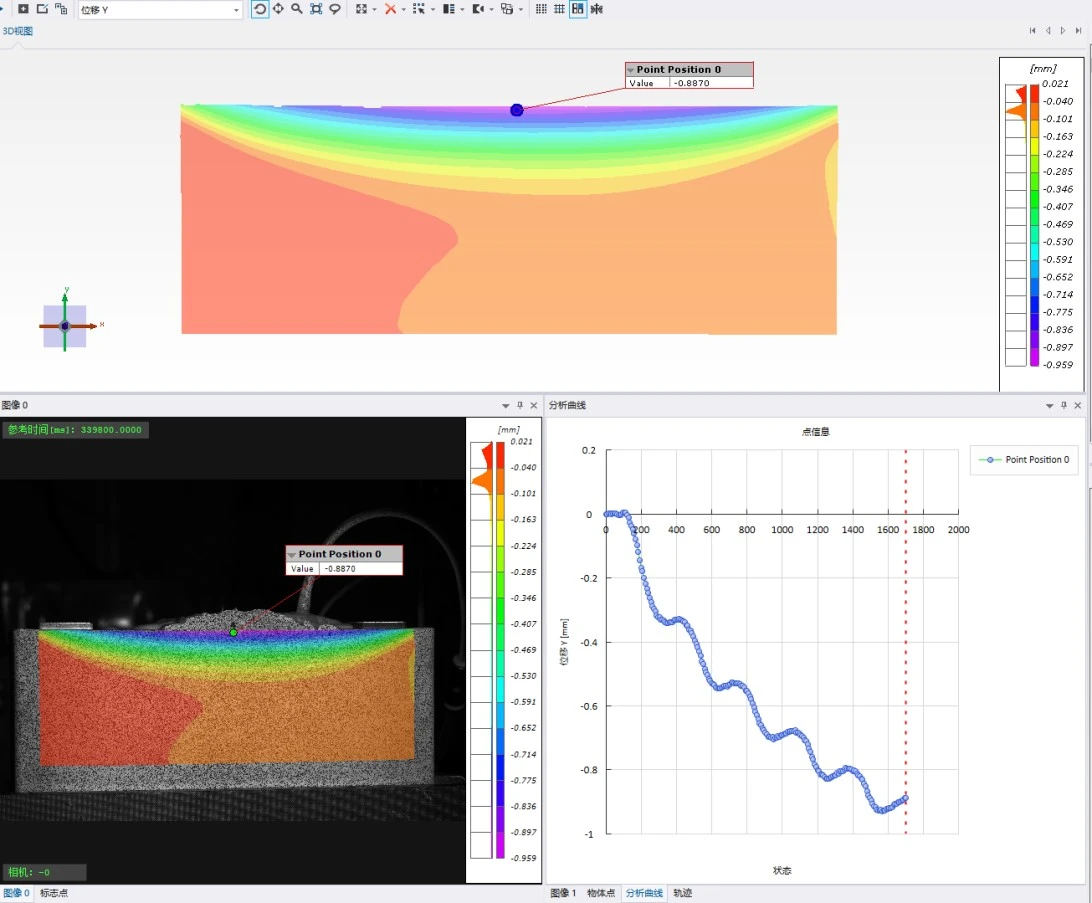
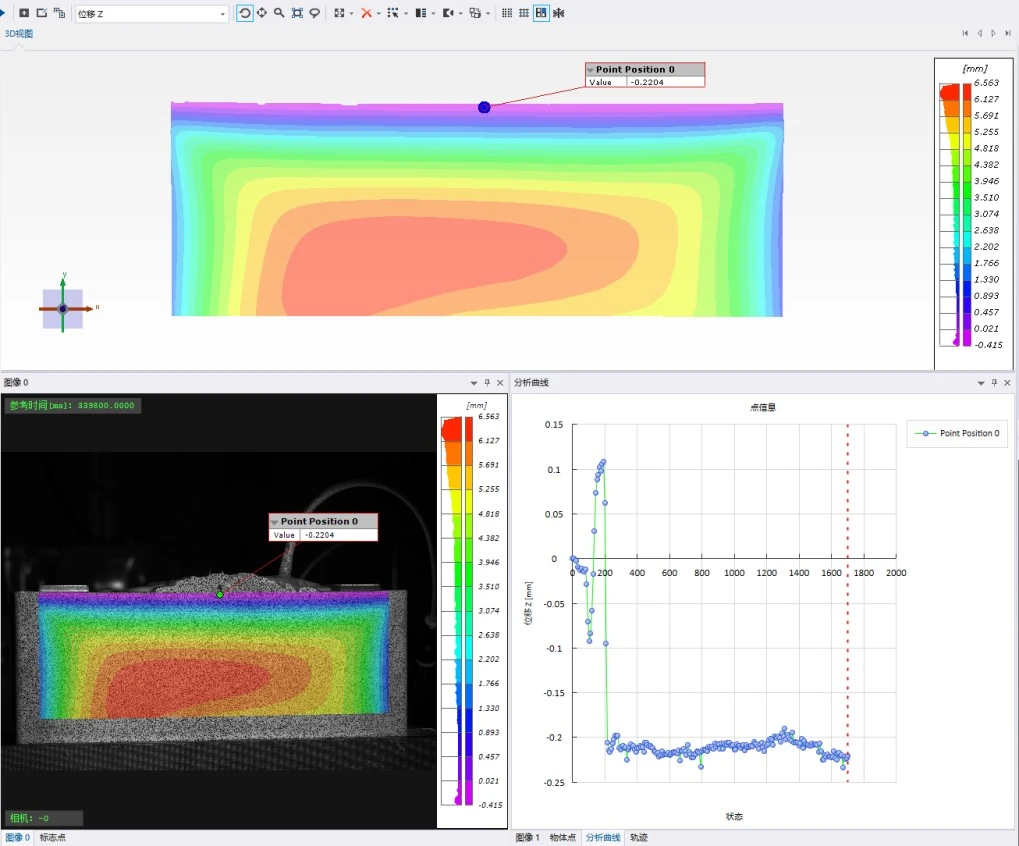
3D Observation: The XTDIC 3D full-field strain measurement system enables the analysis of 3D displacements across the entire battery surface structure. It supports point-based analysis, curve plotting, and data output, facilitating the identification of asymmetric or localized buckling behavior.
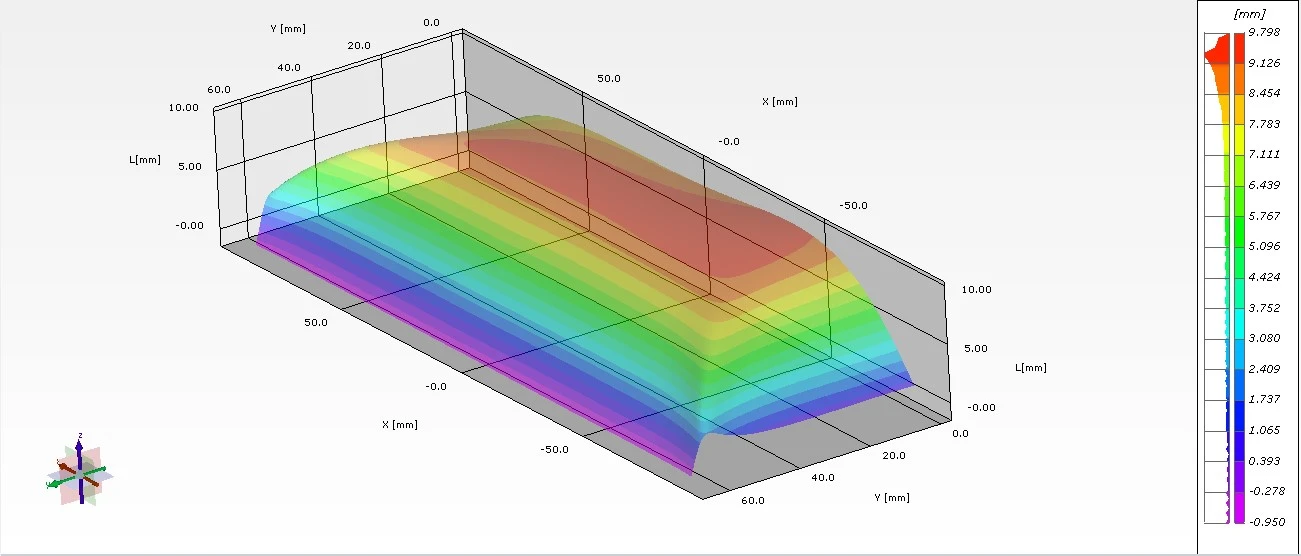
Data can be viewed in a 3D view.
Analysis of Y-direction Strain Evolution
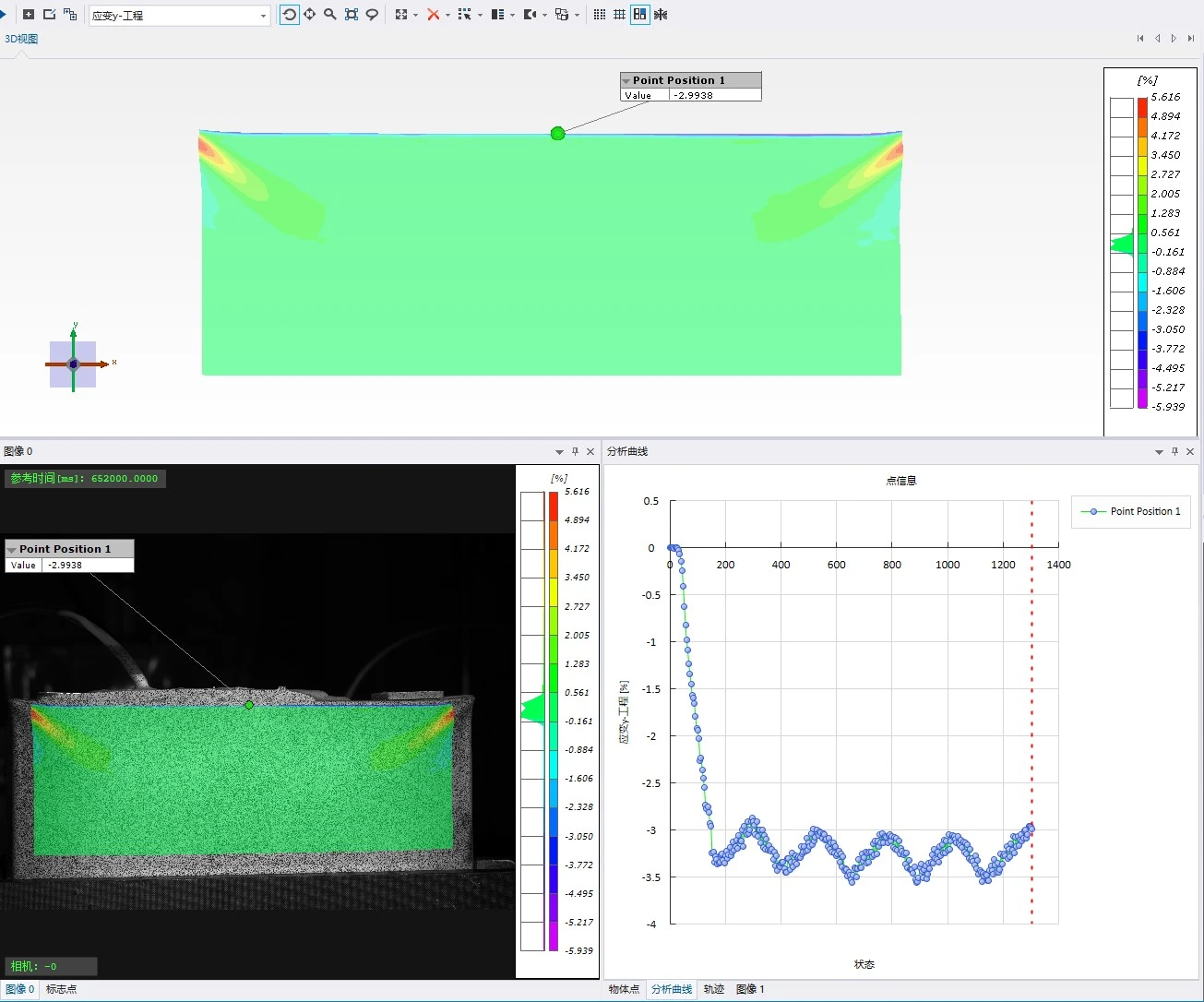
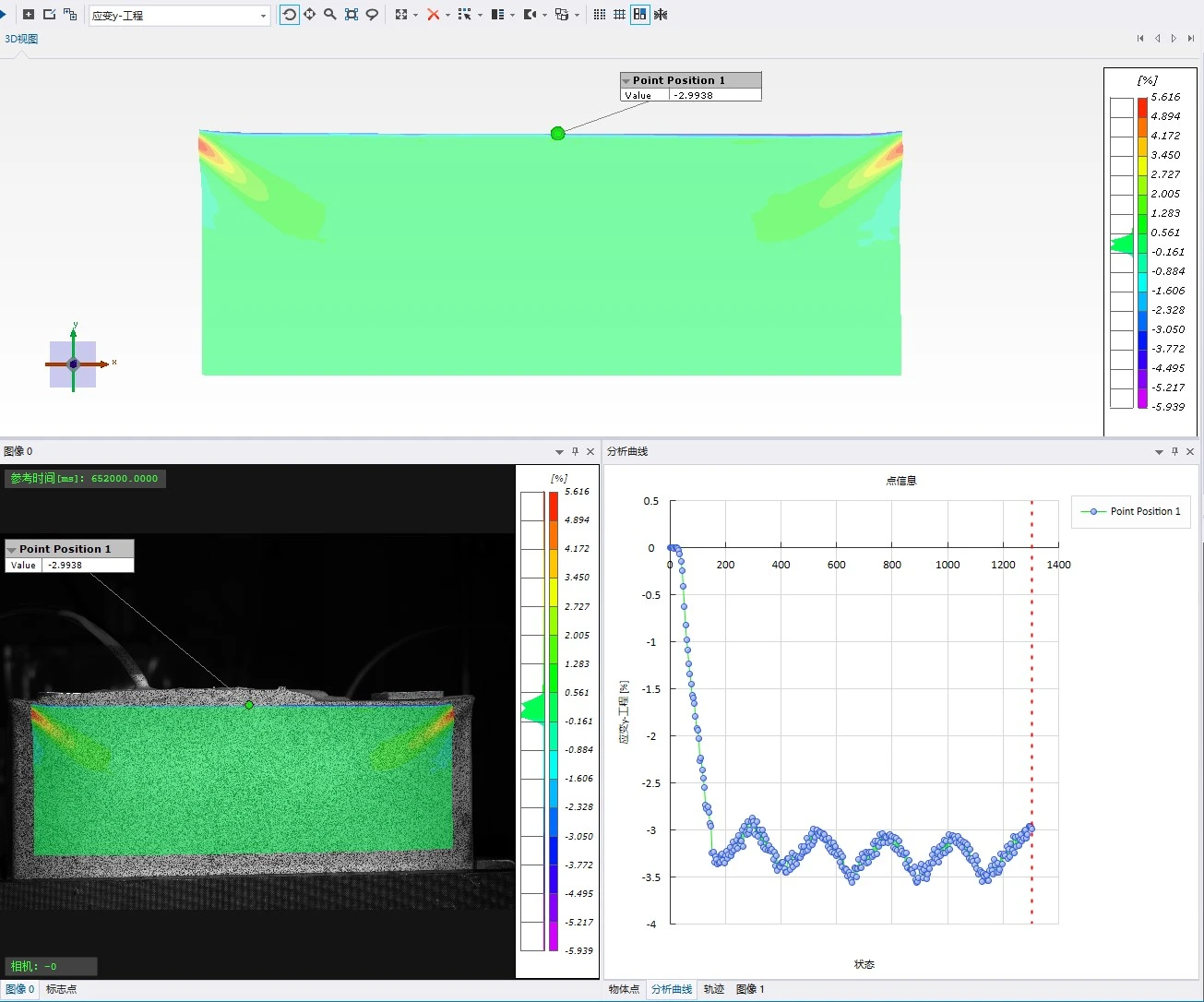
Full-field strain distribution: Strain maps illustrate the variation in Y-direction strain responses across different regions during the pressurization phase.
Spatial distribution variations: Data analysis reveals differences in strain across various locations of the casing.
Visualization of the cyclic process: The DIC system analyzes the dynamic Y-strain curves across five loading cycles, clearly demonstrating the elastic deformation characteristics, strain hysteresis, and cumulative effects of the battery material.
Identification of strain concentration hotspots: Full-field DIC measurements precisely locate regions of strain concentration, providing direction for structural optimization.
Battery Cell Sample 1 – Y-Strain Analysis
Battery Cell No. 2 Sample – Y-Strain Analysis
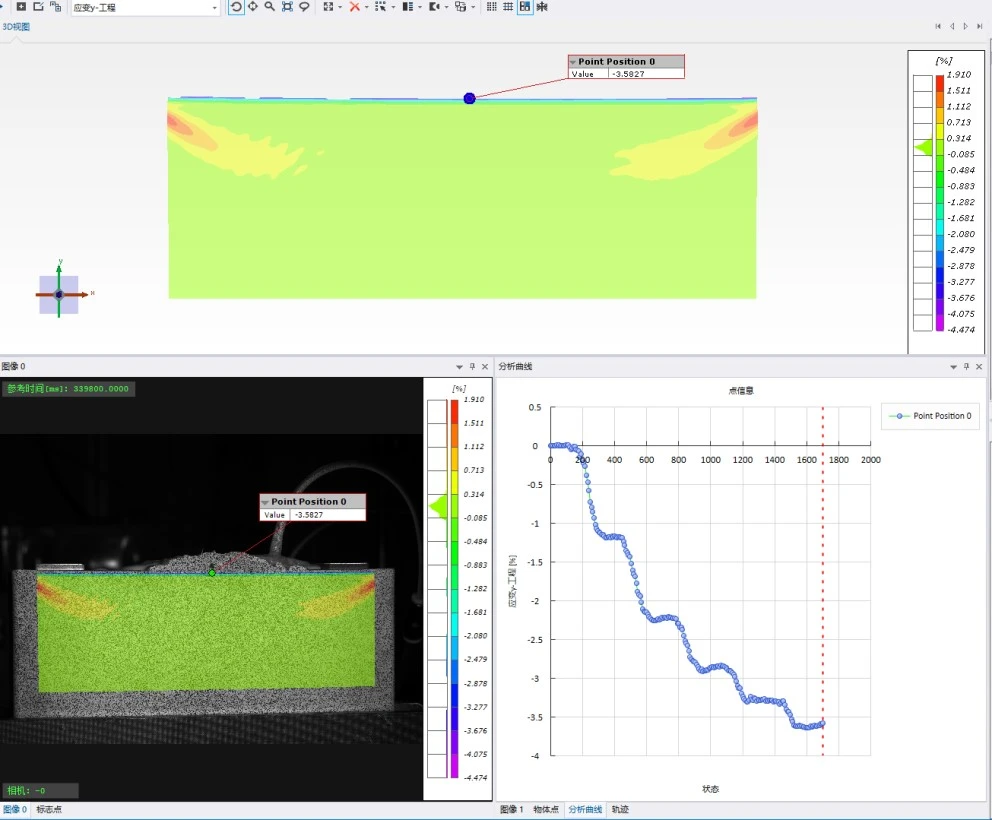
Based on the strain maps obtained from DIC measurement and analysis, significant strain variations are evident across various locations of the battery specimen; by selecting specific points for analysis and plotting the corresponding curves, the magnitude and trend of the strain can be observed.
Summary of Data Visualization Analysis
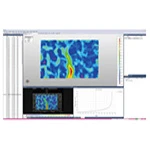
XTDIC software enables data visualization, allowing for the quick and easy viewing of 3D contour maps, line plots, and curves, thereby presenting complex DIC results intuitively.
In terms of Z-axis displacement, Battery Sample 1 exhibited the maximum displacement of 9.798 mm.
Analysis of the strain data reveals distinct strain variations in the battery specimen across five cycles, as well as localized strain concentration.
If the focus is limited to a specific, localized area (such as the region where a strain gauge is applied), the Field of View (FOV) of the XTOP3D XTDIC 3D full-field strain measurement system can be reduced to conduct analysis and data comparison.
Utilizing high-resolution imaging and advanced DIC algorithms, the XTOP3D XTDIC system accurately measures 3D deformation and strain distribution in battery electrodes, separators, and even entire battery packs during charge-discharge cycles. This provides critical data for evaluating structural stability and offers essential experimental evidence for optimizing battery safety design and implementing early warning systems.
Furthermore, by combining DIC technology with other advanced testing methods—such as infrared thermal imaging—to measure temperature and strain fields, and by generating comprehensive color-coded maps to visualize specific data values, researchers can gain deeper insight into strain behavior across different battery lifecycle stages and extreme operating conditions. This approach provides vital experimental support for optimizing battery safety design and developing early warning capabilities.