Real-time, full-field measurement technology for deformation and displacement is reshaping the "data closed-loop" of intelligent automotive manufacturing. As noted by the Society for Experimental Mechanics: "The paradigm shift from localized point measurements to full-field measurements marks the entry of structural reliability assessment into an era driven by high-dimensional data" [1]. Amidst the global automotive industry's transition toward electrification and intelligence, Digital Image Correlation (DIC) technology—leveraging its non-contact, full-field measurement capabilities—has emerged as a pivotal technology for enhancing product reliability, evolving from a laboratory tool to a core component of industrial operations.
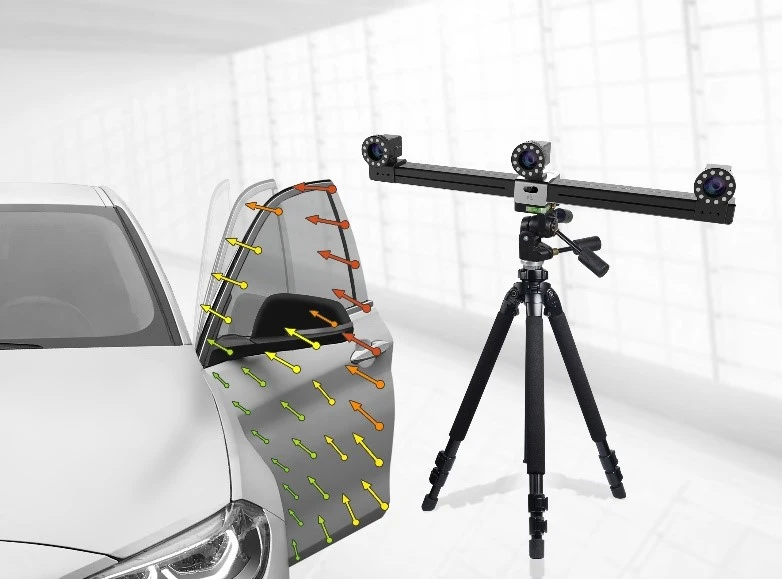
Driven by measurement needs in the automotive industry
Battery safety monitoring: Assessing thermal runaway risks requires full-field data on the spatial distribution of deformation—specifically expansion/contraction during charging/discharging and deformation caused by collisions or crushing—in traction batteries.
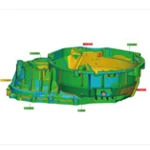
Integrated die-casting process: Analyzing residual stress in large aluminum alloy structural components requires mapping the strain field across the entire area.
Upgraded crash safety regulations: Standards such as Euro NCAP require data on the deformation evolution of energy-absorbing zones with millisecond-level temporal resolution.
Intelligent chassis development: Control algorithm calibration relies on dynamic deformation data from key components of drive-by-wire systems.
Industry consensus indicates that "shifting full-field measurement from the laboratory to the production line is the essential path to addressing multi-scale mechanics issues in intelligent automotive manufacturing" [2].
Comparison of Mainstream Full-Field Measurement Technologies
A systematic study published in *Scientific Reports* conducted a comparative evaluation of three mainstream full-field optical measurement techniques—LDV, digital holography, and DIC—for vibration analysis applications [3]:
|
Technical Characteristics
|
LDV
|
Digital holography
|
DIC
|
|
Measurement principle
|
Doppler frequency shift
|
Interferometric imaging
|
Speckle tracking
|
|
Displacement sensitivity
|
Extremely high (nanoscale)
|
high
|
medium
|
|
Large-displacement measurement
|
Restricted
|
Restricted
|
Excellent (>50% strain)
|
|
Surface preparation
|
Simple
|
Simple
|
Speckle pattern required
|
|
Simulation and Verification Adaptation
|
Data conversion required
|
Data conversion required
|
Can interface directly with FEA meshes.
|
Research indicates that for scenarios common in automotive manufacturing—such as crash testing and fatigue analysis—DIC technology has become the preferred solution for structural mechanics testing due to its non-intrusive nature, full-field measurement capabilities, and broad geometric applicability [4]. In contrast, ESPI and LDV offer superior sensitivity for measuring high-frequency vibrations and minute displacements.
Typical Applications of DIC Technology in the Automotive Industry
DIC (Digital Image Correlation) technology is widely applied in the automotive industry, primarily in the following areas:
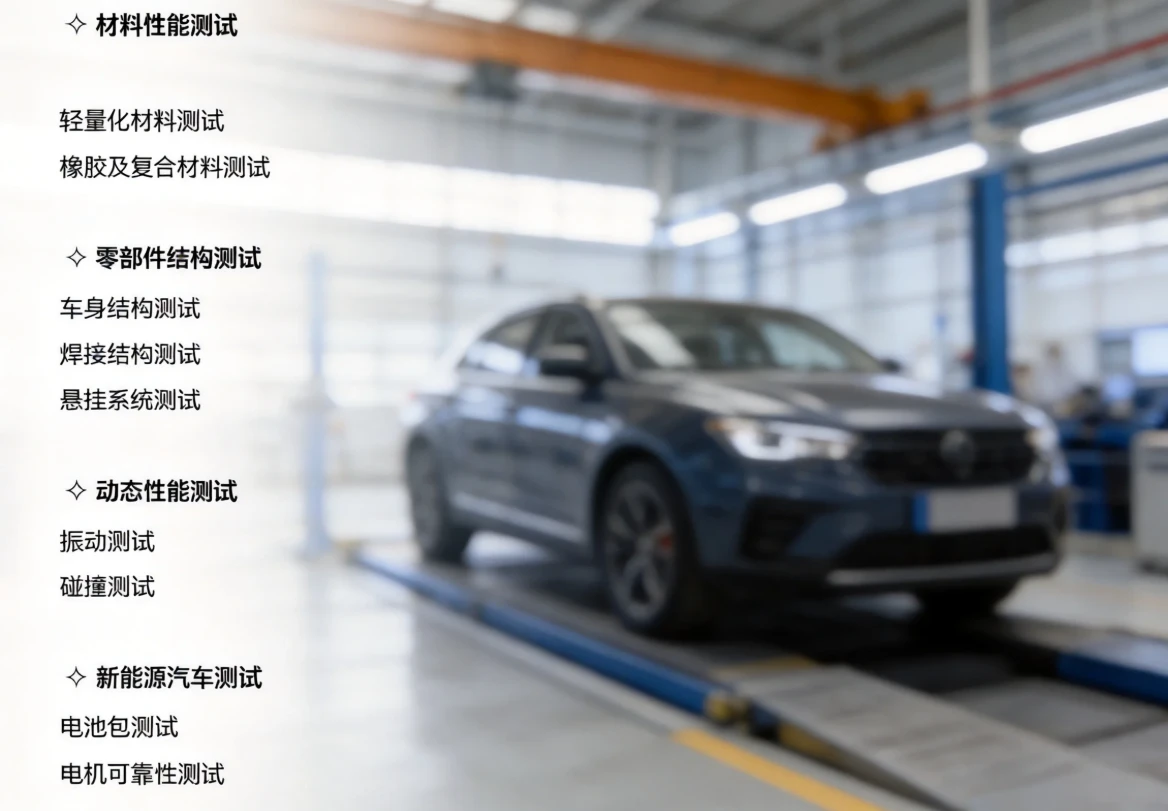
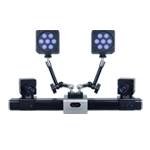
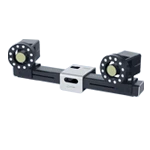
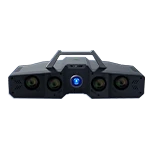
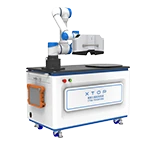
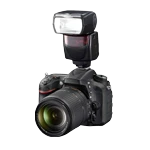
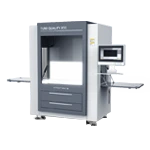
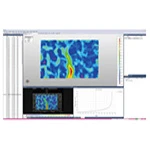
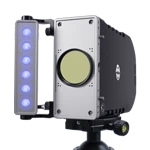
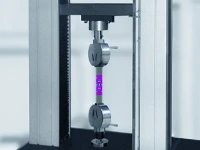
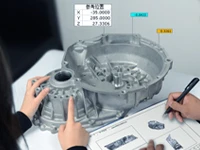
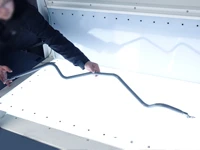
The XTOP3D XTDIC 3D full-field strain measurement system is suitable not only for static testing of materials and structures but also for high-speed measurements—such as high-speed tensile testing, high-frequency vibration analysis, and impact or crash testing. It is widely used in the automotive industry for lightweight design, safety performance verification, and manufacturing process optimization, helping manufacturers enhance product quality and safety.
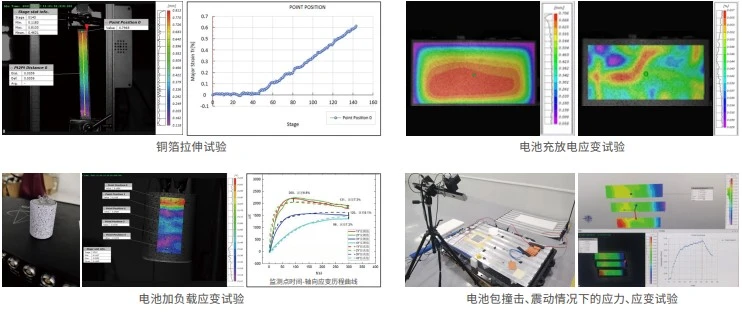
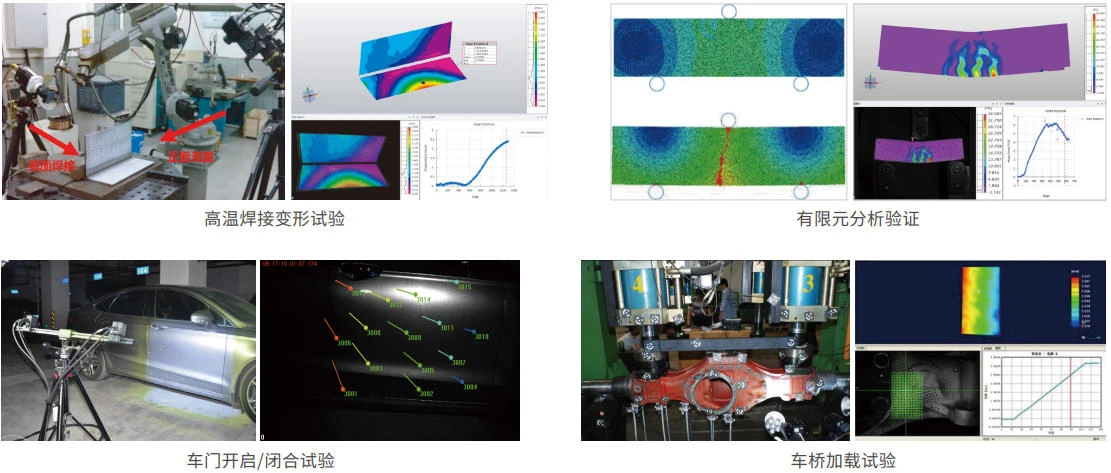
Structural Upgrade in Automotive Measurement Demands
Expansion of Measurement Dimensions Driven by Material Complexity
The constitutive behavior of lightweight materials exhibits significant spatial non-uniformity. Schreier et al. [5] demonstrated through tensile tests on dual-phase steel that traditional strain gauges incur measurement errors of up to 22% at 15% strain due to localization effects, whereas Digital Image Correlation (DIC) technology—utilizing full-field strain gradient analysis with a spatial resolution of 0.1 mm—can limit this error to within 5%.
Requirements for High-Frequency Capture of Dynamic Events
Safety testing for power batteries demands microsecond-level temporal resolution. Research by the Roth team [6], utilizing an X-ray high-speed DIC system, revealed that the critical transition of the battery casing from elastic deformation to rupture under crushing loads occurs within 0.8 ms; traditional sensors, limited by bandwidth (≤10 kHz), are unable to fully capture this process.
Cutting-edge research on DIC technology applications in the automotive industry
1. Calibration of material constitutive models
Full-field DIC data is reshaping the paradigm for establishing material models. Research by Li et al. [7] on DP780 high-strength steel demonstrated that the plastic strain ratio (r-value) distribution obtained from DIC-based biaxial tensile tests could correct a 22% prediction error found in traditional models.
Wang Zhen et al. [8] utilized the XTDIC system to conduct radial fatigue tests on aluminum alloy wheels (GB/T 5334-2023), capturing micro-strain gradients of 0.12 mm at the spoke roots. The deviation between measured radial deformation and simulation results was 4.7% (compared to >15% with traditional strain gauges), and the stress concentration zone associated with a porosity defect was identified as having a diameter of 3.2 ± 0.5 mm.
2. Dynamic reliability assessment
Full-field reconstruction during high-speed impact events is a hallmark application of DIC technology. Reu [9] used a multi-camera synchronization system (with a timing error of <100 ns) to confirm that the maximum principal strain on the B-pillar during a 50 km/h side-impact test reached 38%, with a 15 mm discrepancy between the observed strain concentration zone and CAE simulation predictions. This finding directly drove the topological optimization of vehicle body reinforcements, resulting in a 12% increase in crash energy absorption.
Li Qiang et al. [10] conducted crush tests on power battery packs (GB 38031-2020) using the XTDIC system. They employed high-speed acquisition at 200,000 fps to capture sudden strain changes occurring 0.8 ms prior to casing rupture and reconstructed the 3D folding deformation process of the casing (with a spatial accuracy of ±0.05 mm). Chen Hang et al. [11] utilized the XTDIC system to conduct bench tests on cast iron steering knuckles (GB/T 2611-2022), monitoring fatigue damage—specifically under quenching cycles reaching 1,200°C—using a ceramic speckle pattern. Key performance metrics included: crack initiation warning at 1,250,000 cycles (whereas magnetic particle inspection only detected it at 1,337,500 cycles); strain accumulation hotspot localization error of ≤0.3 mm; and a speckle pattern detachment rate of <1% over 2,000 hours.
Expanded Applications of DIC Technology in the Automotive Industry
Multi-technology fusion—such as the integration of intelligent algorithms—has enabled automatic crack detection accuracy to reach 99.3% (Zhang [12]). Furthermore, multi-physics coupling, achieved by synchronizing DIC technology with infrared thermography, allows for the thermo-mechanical fatigue analysis of brake discs with a lifespan prediction error of less than 8% (SAE 2023-01-0875 [13]).
Conclusion
By converting material deformation into high-dimensional data streams, DIC technology is establishing a digital foundation for automotive reliability engineering. Breakthroughs in areas such as multi-scale damage analysis and intelligent quality control mark the entry of intelligent automotive manufacturing into a new era of "full-field measurability."
Additionally, the convergence of deep learning and optical metrology is making end-to-end intelligent displacement and strain measurement a reality. A review published in *Light: Science & Applications* highlights that the application of deep learning in optical metrology is significantly enhancing measurement accuracy and processing speeds [16], thereby laying the groundwork for the widespread adoption of full-field measurement technologies in intelligent automotive manufacturing. In recent years, leading automakers have been actively exploring the integration of DIC systems into in-line production inspection processes, marking a transition from offline laboratory testing to real-time, in-line quality monitoring.
References
[1]Sutton M A, et al. The changing landscape of experimental mechanics, Scientific Reports, 2022.
[2]EikoSim White Paper: Model-based DIC for CAE Validation, 2023.
[3]Scientific Reports. Comparison of three full-field optical measurement techniques applied to vibration analysis. 2023. https://www.nature.com/articles/s41598-023-30053-9
[4]MDPI Materials. Application of Digital Image Correlation for Strain Mapping of Structural Elements and Materials. 2024, 17(11), 2577.
[5]Schreier HW. Error Mechanisms in DIC Measurement of Localized Strain. Opt Lasers Eng 2021;138:106405
[6]Roth CC. X-ray High-speed DIC for Battery Safety Testing. Int J Impact Eng 2023;172:104418
[7]Li Z. Data-driven Constitutive Modeling of DP780 Steel. Mater Des 2023;225:111539
[8] Wang Zhen et al. Application of XTDIC in deformation monitoring of aluminum alloy wheels. China Measurement & Test, 2023;49(5):78-84.
[9]Reu PL. DIC for Crashworthiness Validation. Mech Syst Signal Process 2022;168:108692
[10] Li Qiang et al. Mechanical integrity testing of battery packs based on XTDIC. Automotive Engineering, 2024;46(1):32-38
[11] Chen Hang et al. Validation of XTDIC in fatigue damage monitoring of steering knuckles. Journal of Mechanical Strength, 2023;45(6):1341-1348
[12]Zhang L. Graph Neural Networks for Defect Detection. Nat Mach Intell 2024;6:112-122
[13]SAE International. DIC-IR Thermography for Brake System Analysis. SAE Paper 2023-01-0875
[14]Light: Science & Applications. Deep learning in optical metrology: a review. 2022. https://www.nature.com/articles/s41377-022-00714-x