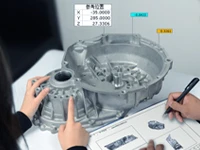
With the advancement of construction industrialization, there is a strong national push for industrialized construction and intelligent building practices. Innovative construction methods—such as slip-forming, climbing formwork systems, and prefabricated concrete structures—are widely adopted in high-rise projects due to their efficiency and energy-saving capabilities. A specific high-rise real estate project utilizes a "box-formwork/cast-in-place shear wall" modular integrated concrete construction technology; this process requires concrete to undergo simultaneous pouring, vibration, and initial setting within dynamically rising formwork, effectively enabling buildings to be constructed much like automobiles.
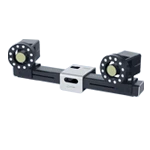
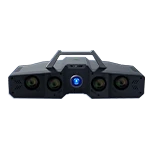
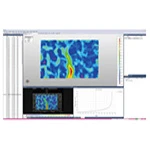
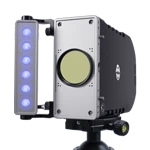
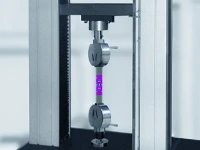
During this process, the walls are subjected to the combined effects of vibrators, the fluid load of the poured concrete, and formwork friction, making them susceptible to localized plastic deformation and vibration—phenomena that are difficult for traditional sensors to fully capture in terms of transient deformation. Consequently, the XTOP3D XTDIC 3D full-field strain measurement system was introduced to conduct non-contact, 3D deformation monitoring throughout the entire pouring and construction cycle.
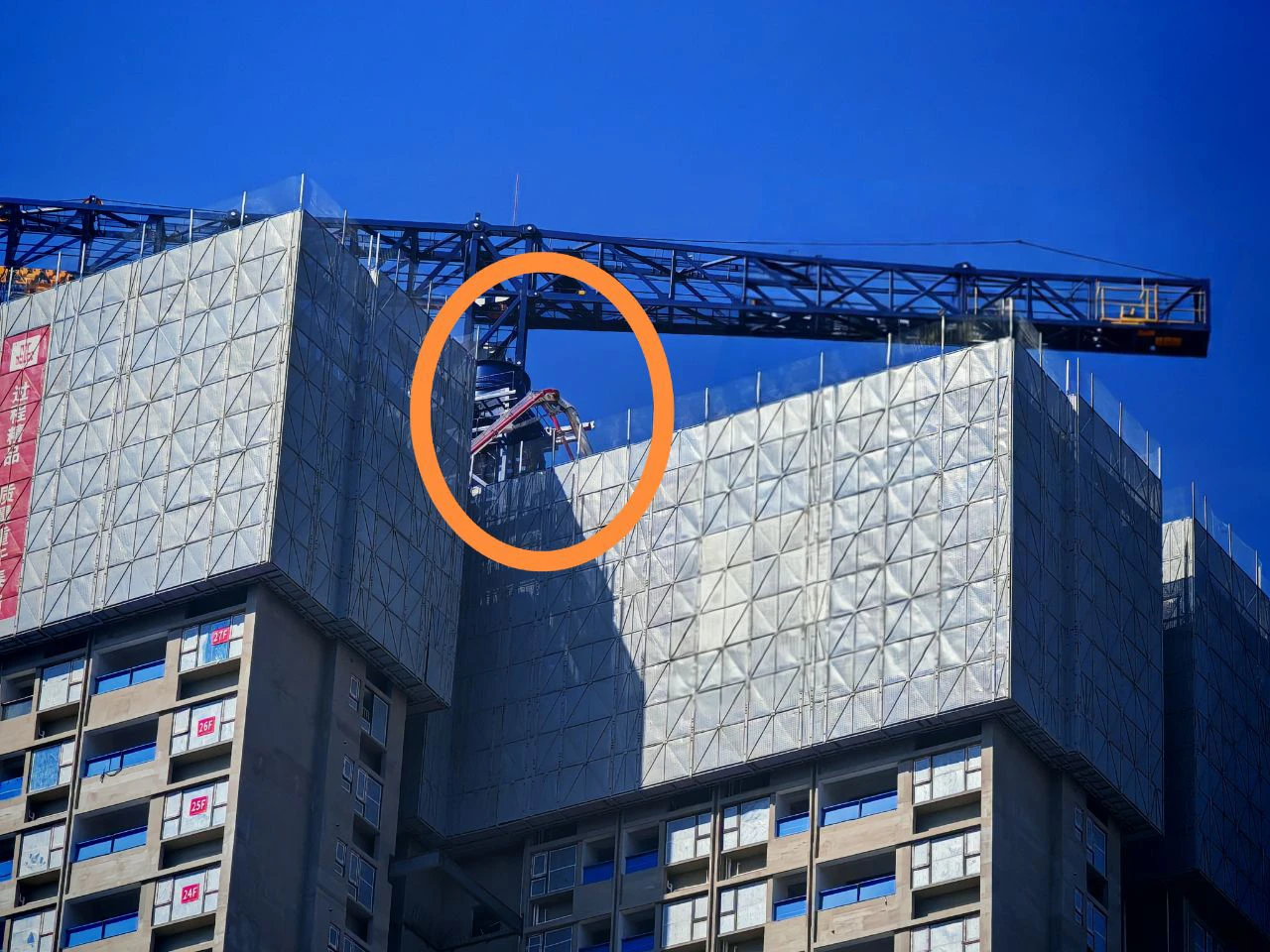
Necessity of Applying DIC Technology
Requirement for dynamic response monitoring: Vibrator operation and the casting process induce transient, micron-scale surface displacements on the wall, necessitating sub-pixel measurement accuracy.
Visualization of the full-field strain distribution: Due to the rheological properties of concrete, strain distribution across the wall is non-uniform; thus, full-field strain mapping is required to replace single-point monitoring.
Multi-stage analysis of wall deformation: Continuous tracking is needed to monitor the evolution of wall deformation from the fluid concrete stage through to hardening, thereby revealing the mechanisms of dynamic deformation during the casting process.

Innovations in DIC Technology Application
1. Optimization for adaptability to complex construction environments
On-site deployment: Utilizes active LED illumination to enable image capture of high-contrast speckle patterns during nighttime construction;
Dust interference resistance: Employs an adaptive multi-frame image filtering algorithm to prevent the loss of speckle features caused by adhering cement dust;
Multi-view synchronous acquisition: Deploys two sets of industrial cameras to cover critical zones of wall deformation during concrete pouring, eliminating blind spots caused by obstructions.

2. Separation of rigid-body vibration and extraction of true deformation
Rigid-body displacement compensation based on the DIC algorithm: Displacement sensors are installed at the top of the formwork to record vibration displacement trajectories in real time.
DIC data fusion: A coordinate transformation model is established to subtract the rigid-body motion component of the formwork from the full-field DIC displacement data.
Frequency-domain filtering and denoising: Wavelet packet transform is employed to separate the vibrator's fundamental frequency from ambient vibration noise, thereby extracting the true concrete strain signal.

Application of DIC Technology for Deformation Monitoring During the Three Stages of Concrete Casting
1. Concrete Casting Stage
Core physical process: Flow and impact of fresh concrete against formwork
DIC monitoring targets: Instantaneous lateral displacement of formwork; fluid pressure distribution
DIC application advantages: Full-field dynamic capture of wall deformation caused by fluid impact
2. Vibration and Compaction Stage
Core physical process: Mechanical disturbance from the vibrator
DIC monitoring targets: Formwork vibration response; early-stage plastic deformation of concrete
DIC application advantages: High-frequency dynamic deformation measurement
3. Setting and Hardening Stage
Core physical processes: Hydration-induced shrinkage; temperature gradients; self-weight settlement
DIC monitoring targets: Shrinkage cracks; warping deformation; settlement of the support system
DIC application advantages: Long-term monitoring of micro-deformations in the wall
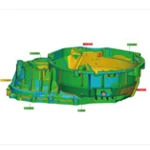
Analysis of the 3D Displacement Field of the Wall
Displacement in X/Y Directions (Lateral Displacement)
This constitutes the core application of DIC technology for monitoring wall deformation.
Displacement Field Distribution Patterns: Observe the displacement distribution across the wall during the pouring process to identify any distinct "bulging" zones (areas of peak displacement); these zones often represent the locations at highest risk of formwork failure.
Displacement Magnitude: Monitor the maximum and average displacement values in real-time, and assess risk by comparing them against the permissible deformation limits specified in the formwork design and the theoretical values calculated for concrete lateral pressure.
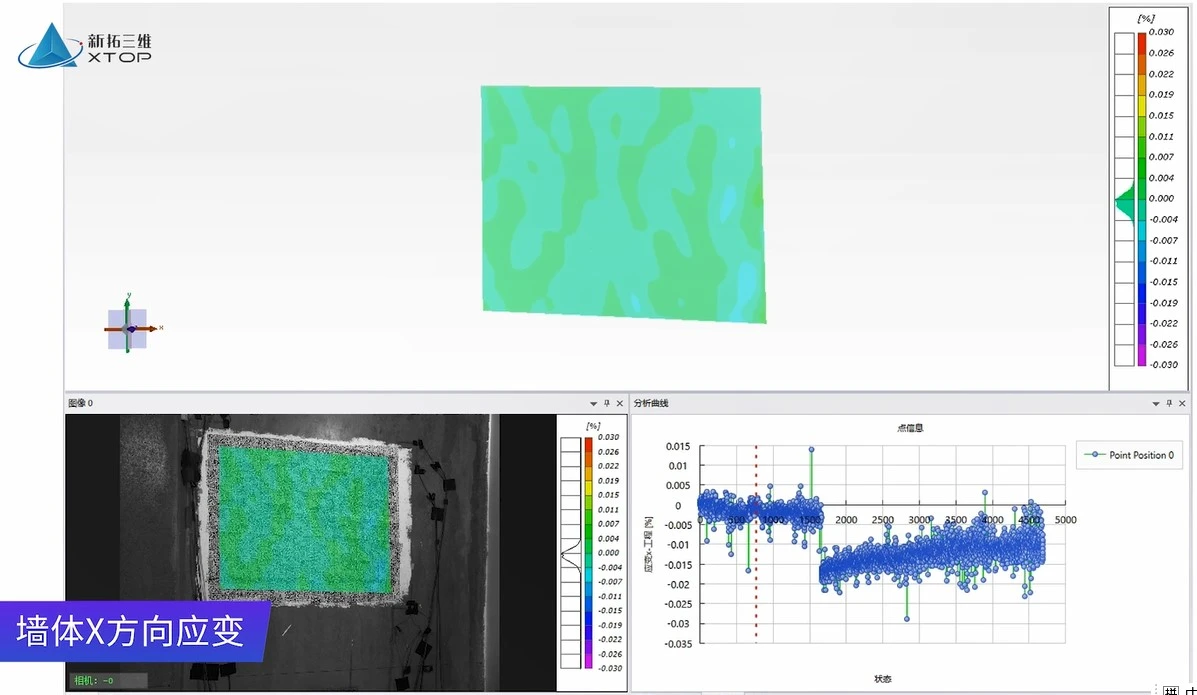
Dynamic response: Analyze the instantaneous displacement amplitude and frequency response during the operation of the vibrating rod. Determine whether the vibration causes a significant instantaneous increase in displacement and whether the displacement oscillations remain within safe limits.
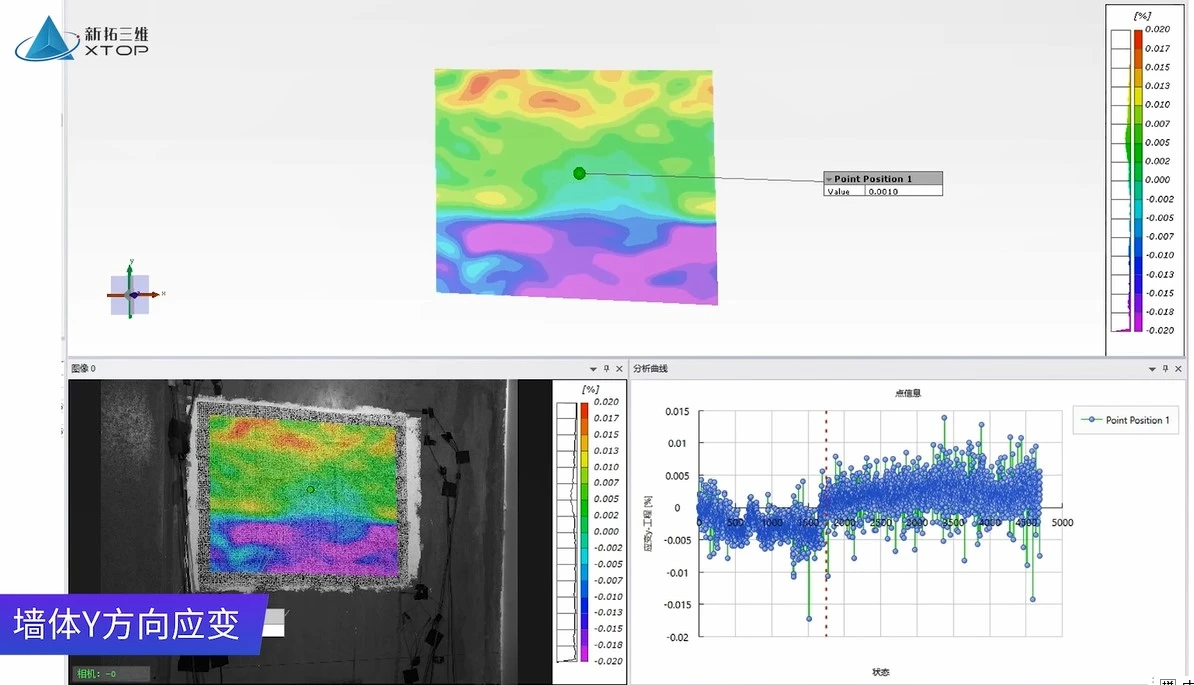
Displacement gradient: The rate of spatial variation in displacement. High displacement gradients may indicate localized stress concentrations or constraints.
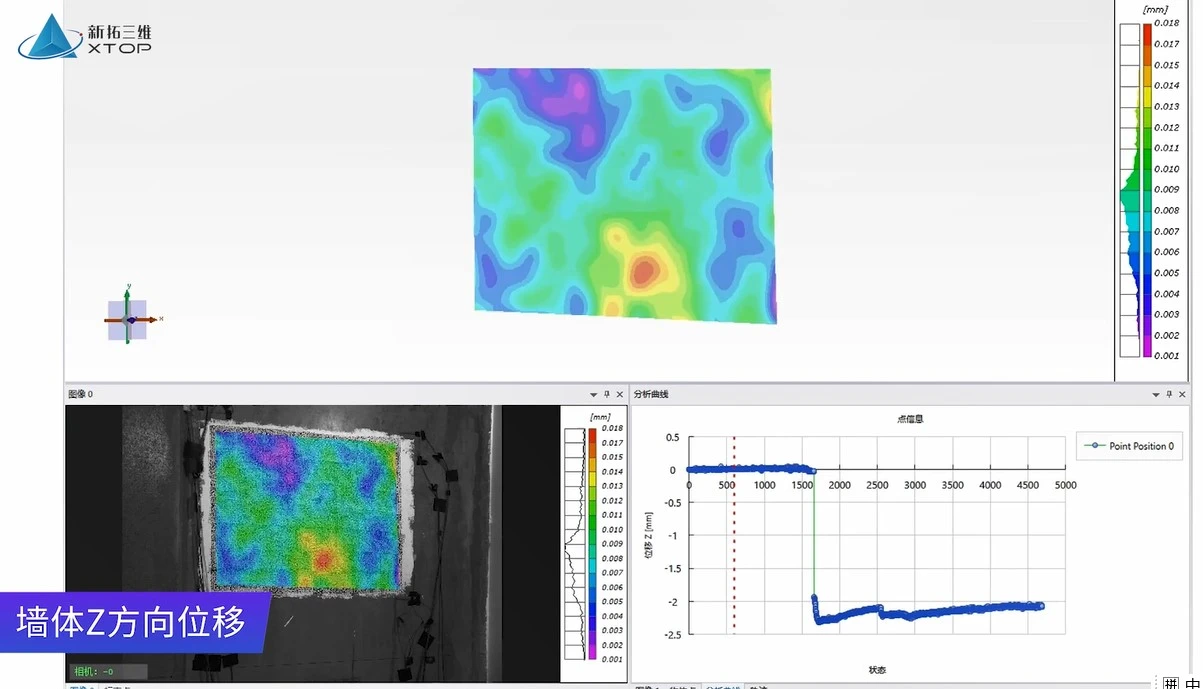
Z-direction displacement (vertical displacement)
Settlement/Heave: Monitoring the settlement (negative displacement) of the formwork support system or foundation, or localized heave (positive displacement) caused by internal pressure.
Changes in flatness: Variations in Z-direction displacement reflect dynamic changes in the flatness of the wall surface.
Coupling with lateral displacement: Analyzing whether lateral displacement (X/Y) is accompanied by significant vertical displacement (Z) helps in understanding the overall stability of the formwork system.
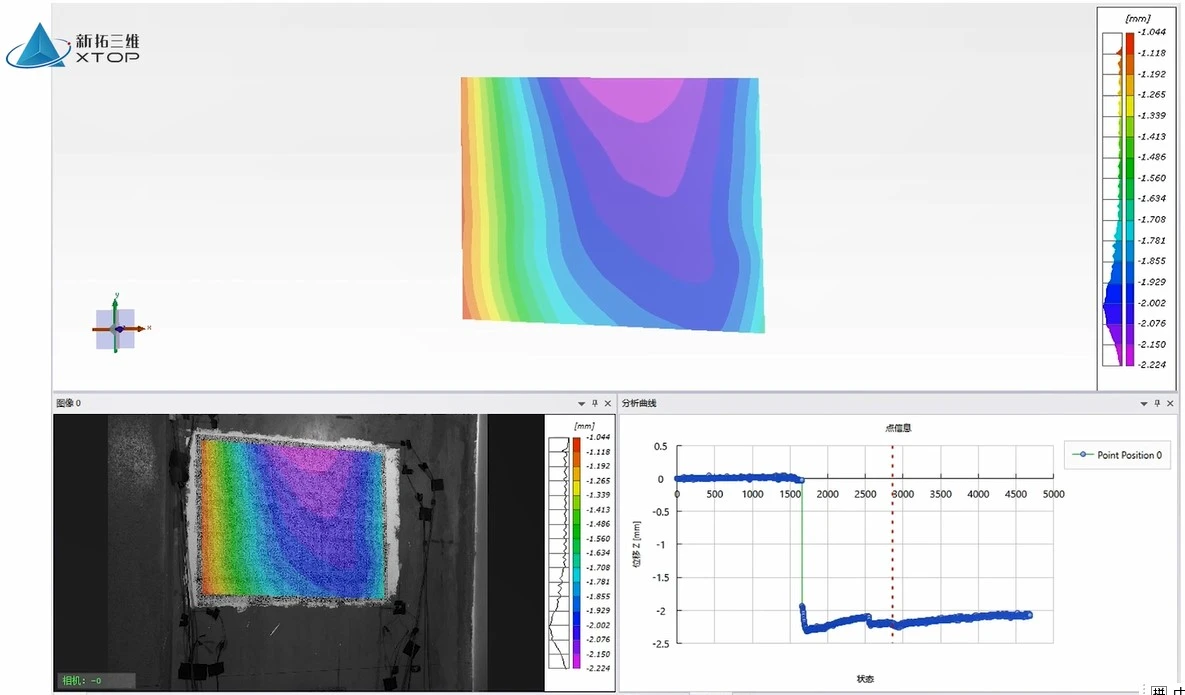
Displacement vector synthesis: Combine displacements from three directions to calculate the magnitude and direction of the resultant displacement vector, thereby comprehensively characterizing the spatial motion trajectory of each point.
Conduct time-series analysis on the displacements at key locations to observe how they vary with pouring height, time, and vibration operations.
Summary of the Application Value of DIC Technology
This modular concrete high-rise vividly demonstrates the robust technology behind industrialized construction. Through continuous exploration of new technologies and processes—such as modular concrete construction and prefabricated interior fit-outs—housing quality is consistently enhanced via technological innovation.
Based on Digital Image Correlation (DIC) technology, the XTOP3D XTDIC 3D full-field strain measurement system offers a novel solution for monitoring wall deformation during the concrete pouring process in modern construction. DIC technology plays an irreplaceable role in addressing the challenges of monitoring concrete pouring operations, providing a high-precision, full-field scientific method for quality control.
-
Precisely locate the maximum values and zones of concentration for lateral displacement (X/Y) and vertical displacement (Z).
-
Identify potential risks of formwork blowout and areas of stress/strain concentration.
-
Quantify the dynamic displacement/strain response induced by vibration.
-
Understand deformation modes (expansion, bending, shear).
-
Evaluate the performance of the formwork system and the reasonableness of the construction methods.
-
Provide robust data support for optimizing design, ensuring construction safety, and enhancing engineering quality.