To address the challenge of directly quantifying the mechanical behavior of reinforcement within reinforced concrete, binocular Digital Image Correlation (DIC) technology was employed to conduct full-field monitoring of concrete cylindrical specimens under static compression, enabling non-contact, three-dimensional (3D) deformation measurement across the entire field. A high-resolution camera system captured real-time speckle images of the specimen surface, while 3D reconstruction algorithms were used to derive data on displacement and strain field distributions.
The experiments quantitatively determined the 3D surface displacement fields, surface crack propagation paths, longitudinal and transverse strain distributions, and the evolution of strain concentrations; the DIC results were also compared with measurements obtained from traditional strain gauges. The findings demonstrate that DIC technology can accurately capture the initiation and propagation of surface cracks in concrete while indirectly reflecting the cooperative interaction of internal reinforcement through surface strain fields. These experimental data provide a high-precision basis for the design of reinforced concrete structures and the analysis of failure mechanisms.
1. Background of the Experimental Study
As a core material in structural engineering, the compressive performance of reinforced concrete is directly linked to structural safety. During static compression, the evolution of surface cracks in the concrete is strongly coupled with the stress state of the internal reinforcement. While traditional strain gauges and displacement transducers can capture data at discrete points, they struggle to visualize full-field deformation; furthermore, strain gauges—with their complex wiring—are prone to failure during the brittle fracture of concrete.
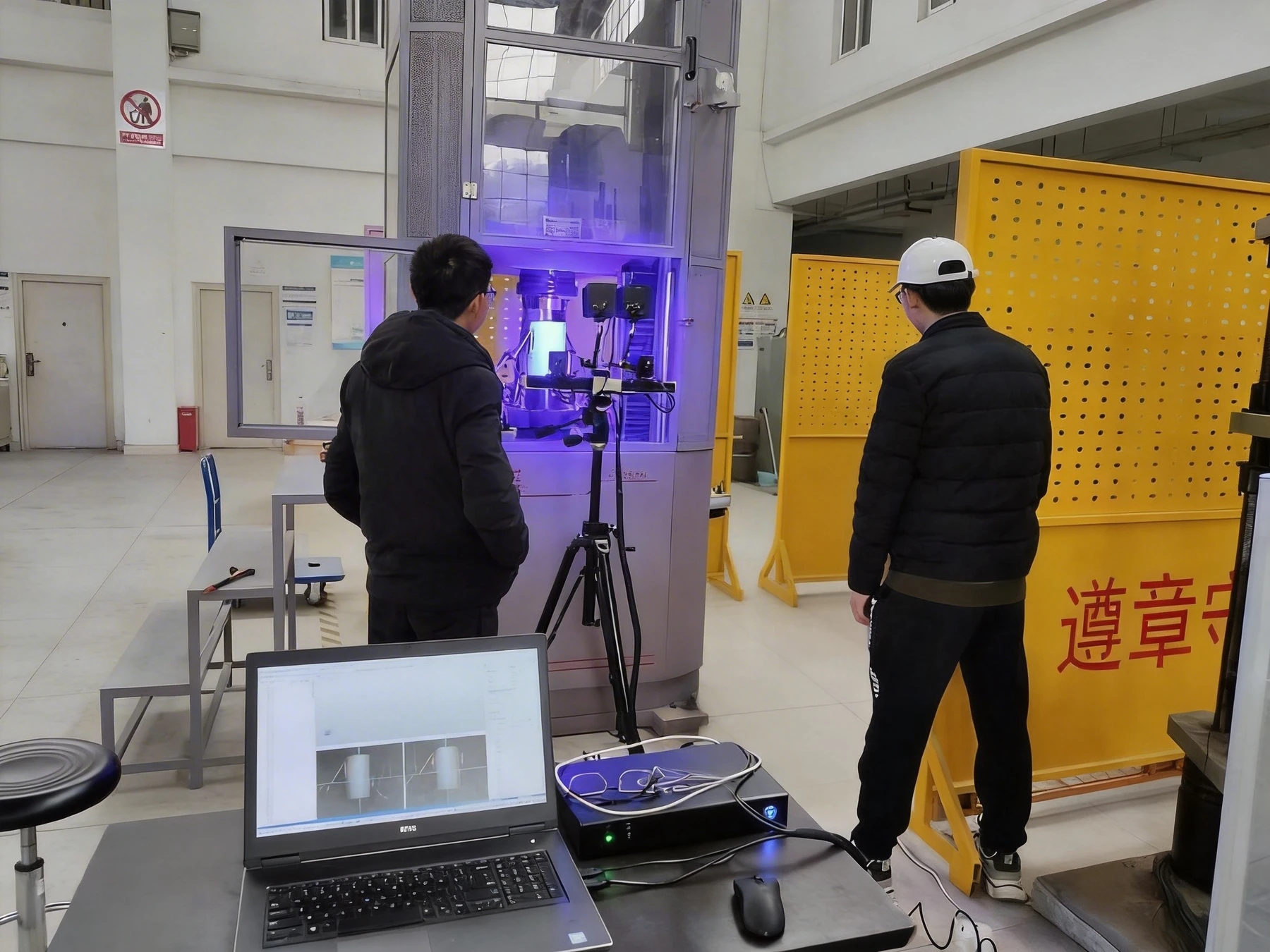
Analyzing the mechanical behavior of internal reinforcement is particularly challenging, as existing methods rely on destructive dissection or indirect inference, lacking direct observation of the synergistic deformation between the reinforcement and the concrete. Against this backdrop, this study employs the XTDIC 3D full-field strain measurement system—featuring proprietary software, hardware, and algorithms—to conduct high-precision measurements of the 3D displacement field on the concrete surface. By back-calculating the stress state of the internal reinforcement, this approach offers a novel method for investigating the in-service performance of reinforced concrete.
2. Core Value of DIC Technology Applications
DIC (Digital Image Correlation) strain measurement systems play a pivotal role in the study of the mechanics of uniaxial compressive failure in concrete. Key application areas include:
Full-field strain measurement and deformation analysis
DIC systems can capture full-field displacement and strain data—ranging from uniform deformation during the elastic stage to localized strain concentration during the failure stage—enabling researchers to gain a more accurate understanding of concrete's deformation behavior and failure mechanisms.
Monitoring of crack initiation and propagation
During uniaxial compression, DIC systems can monitor the location of crack initiation, propagation paths, and propagation speeds in real-time, providing critical data for studying the fracture mechanics of concrete.
Determination of stress-strain relationships and mechanical parameters
By integrating loading data, DIC systems can plot stress-strain curves for concrete specimens to determine mechanical parameters such as elastic modulus, Poisson's ratio, and compressive strength; this is particularly valuable for studying the mechanical behavior of concrete in the non-linear stage.
Study of non-uniform deformation and localization phenomena
Concrete is a heterogeneous material; during compression, non-uniform deformation and localization phenomena (such as the formation of shear bands) occur. DIC systems can quantify the degree of strain concentration in these localized deformation zones, helping researchers gain deeper insight into the relationship between concrete's microstructure and its macroscopic mechanical properties.
Validation of numerical simulations and finite element models
Comparing experimental data obtained via DIC systems with simulation results allows for the assessment of the accuracy and reliability of numerical simulations, thereby providing theoretical support for the design and optimization of concrete structures. 3. Experimental System and Testing Methods
Experiment Overview
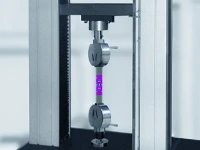
For compression tests on cylindrical reinforced concrete specimens (containing longitudinal reinforcement), a 5-megapixel binocular DIC system is employed for full-field deformation tracking:
Scientific Issue: The correlation between concrete surface crack propagation patterns and internal reinforcement stress.
Engineering Requirement: Quantifying the enhancement effect of reinforcement on the compressive performance of concrete.
Technical Advantages: Overcomes the limitations of strain gauges (such as complex wiring and poor durability against specimen failure) and enables visualization of the strain field throughout the entire failure process.
Experimental Equipment Configuration
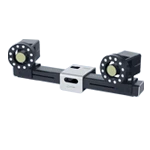
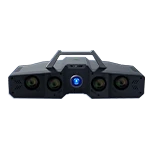
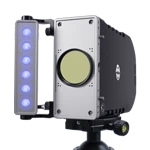
In practical engineering applications, the XTDIC-5M 3D full-field strain measurement system (by XTOP 3D) is utilized. This non-contact, full-field measurement approach addresses key challenges such as precisely locating the onset of loading-induced damage in concrete, quantitatively analyzing strain gradients, and dynamically reconstructing the damage and failure process.
Binocular DIC Measurement System: Two 5-megapixel industrial cameras (synchronized)
Sampling Frequency: 4 fps (suitable for quasi-static compression processes)
Lens Configuration: 35mm fixed-focal-length industrial lenses
Light Source System: High-uniformity blue LED light source
Specimen Surface Speckle Patterning: High-contrast speckle pattern created using matte black and white paint
Measurement Principles and Data Processing
DIC Calibration (Intrinsic and Extrinsic Parameters): Establishing a 3D coordinate system and correcting for lens distortion
Data Acquisition: Synchronous capture of image sequences throughout the entire compression process
DIC Software Analysis:
3D Displacement Field: Tracking the spatial motion trajectories of surface points
Lagrangian Strain: Calculating longitudinal and transverse strain distributions
Crack Identification: Determining crack initiation locations based on principal strain thresholds
Integrated Analysis: Spatiotemporal alignment of full-field DIC strain data with data from traditional strain gauges
4. Experimental Results and Analysis
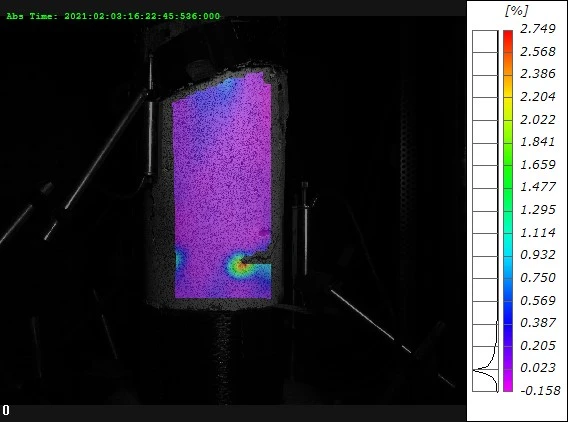
Surface Strain Concentration Characteristics
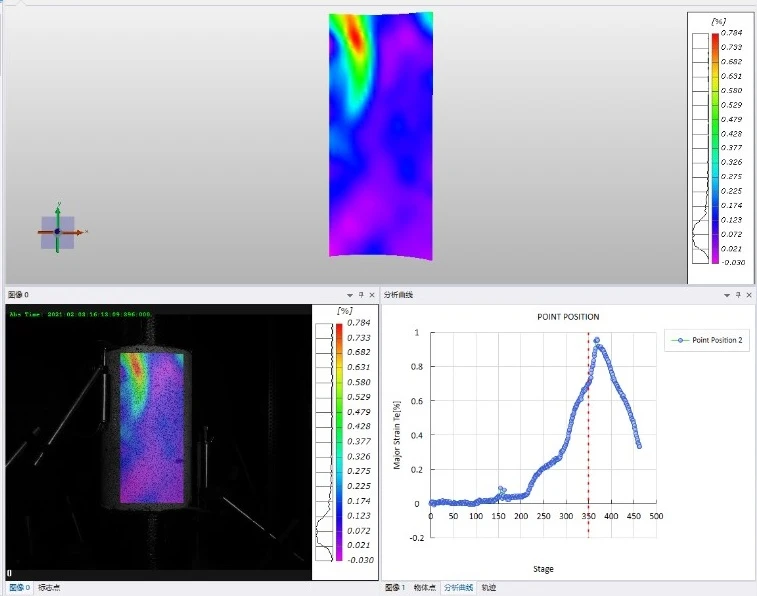
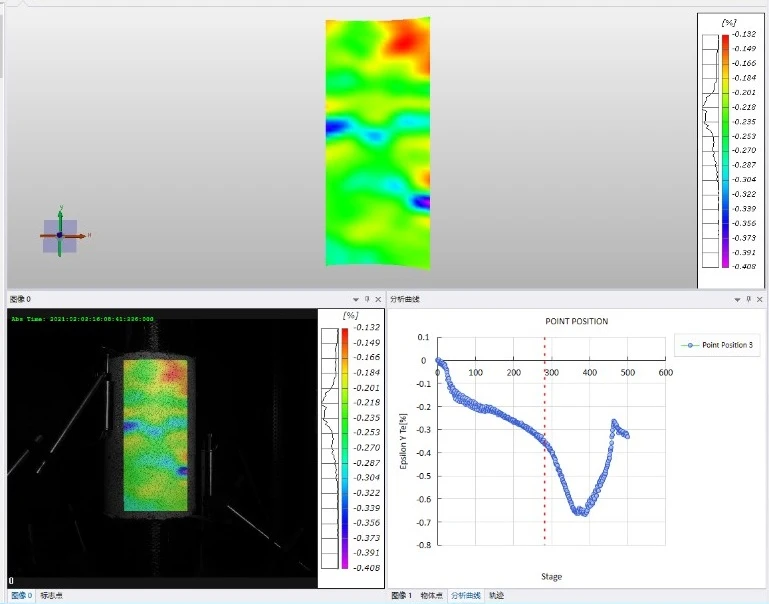
Longitudinal compressive strain: Strain values at the crack tip identify high-risk zones for crack propagation.
Transverse tensile strain: Concentration of tensile strain perpendicular to the crack direction reflects the mechanism of brittle tensile failure in concrete.
Strain suppression in the reinforcement zone: Reduced compressive strain at locations corresponding to the reinforcement verifies the reinforcing bars' enhanced restraining effect on the concrete.
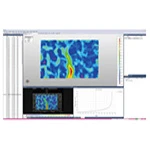
Concrete specimen principal strain data, strain concentration:
Longitudinal strain of concrete specimen, compressive stress concentration:
Crack Propagation Path and Failure Mode
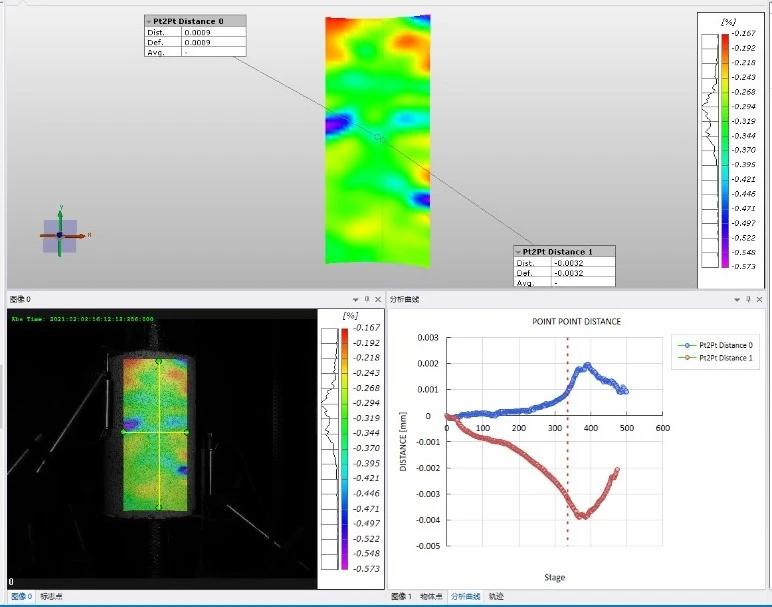
Propagation path: The crack propagates along a 45° diagonal path, bypassing the reinforcement.
Failure mechanism: The reinforcement effectively restrains lateral expansion, shifting the failure mode from crushing to diagonal shear failure.
Engineering verification: Specimens with plastic wrapping at the ends exhibited delayed surface cracking, demonstrating that local confinement can enhance ductility.
5. Conclusions and Engineering Significance
In this study, the XTOP3D XTDIC 3D full-field strain measurement system was applied to compression tests on large-scale reinforced concrete specimens, successfully achieving full-field quantitative characterization of surface strain fields and crack propagation paths.
Analysis of surface strain distributions revealed the confining effect of the reinforcement on the concrete; the reinforcement enhanced the concrete's compressive strength and altered its failure mode. The rebound of transverse strain during the plastic stage demonstrated the contribution of the reinforcement to ductility.
Binocular DIC measurement technology provides experimental data to support surface damage assessment of in-service concrete structures and guides reinforcement layout strategies to mitigate strain concentration (such as adding confinement rings at the ends). Furthermore, the visualization of deformation fields enhances researchers' understanding of damage and failure mechanisms in concrete under loading.