As automotive designs become increasingly stylish and diverse, the configurations of vehicle lighting systems have grown more complex. During the manufacturing of structural components for automotive lights, the dimensional accuracy and geometric tolerances of the reflector and housing directly impact the unit's optical performance. Furthermore, the housing features numerous mounting points that require comprehensive dimensional and positional inspection to ensure assembly precision, sealing integrity, and aesthetic quality.
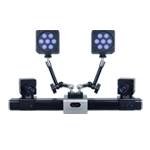
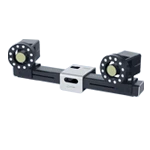
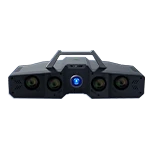
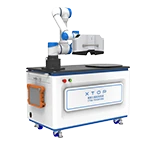
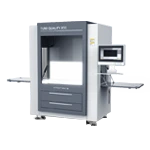
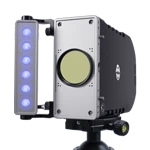
The XTOP3D XTOM blue-light 3D scanner utilizes blue-light fringe projection to minimize interference from ambient lighting. Equipped with high-resolution industrial cameras, it offers advantages such as high efficiency and precision, non-contact operation, comprehensive data acquisition, and digital inspection capabilities—thereby significantly boosting production efficiency and enabling more accurate monitoring of quality trends.
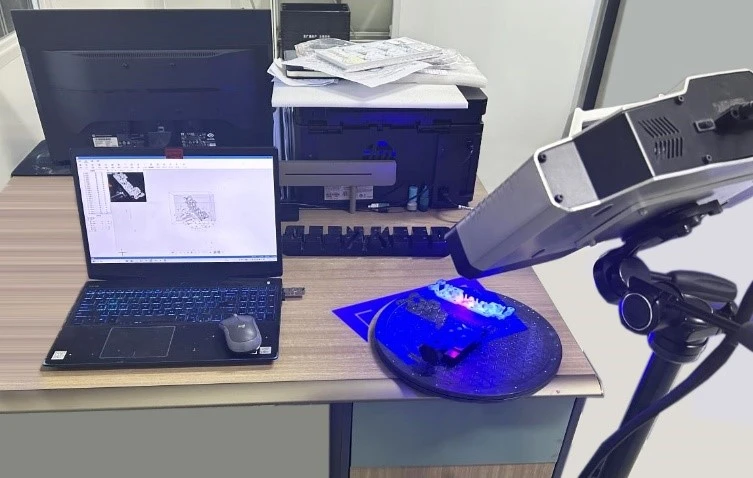
Structural components of automotive lighting often feature complex free-form surfaces, thin walls, and intricate details (such as mounting holes, clips, and ribs). Traditional contact measurement methods—like Coordinate Measuring Machines (CMMs)—are inefficient and struggle to provide comprehensive coverage. While custom inspection fixtures offer faster throughput, they suffer from limitations such as cumbersome operation, poor versatility, high costs, and the inability to record measurement data.
Furthermore, traditional inspection reports typically consist of lists of numerical values; they lack intuitive visualization of overall deformation, which hinders problem analysis and process improvement.
Blue-Light 3D Scanning Solution
Utilizing a blue-light 3D scanner for full-dimensional 3D digital inspection of automotive lighting structural components offers the following advantages:
Non-contact and non-destructive: Eliminates measurement interference caused by contact forces on thin-walled or easily deformable parts.
High precision and high resolution: Achieves micron-level accuracy with fine point spacing, perfectly capturing complex surfaces and intricate features.
Full-field measurement: Captures millions of data points across the workpiece surface in a single scan, enabling true "full-dimensional" inspection.
High speed: Generates a 3D data model of the component through multi-angle scanning, significantly boosting inspection efficiency.
Portable and flexible: The equipment is relatively lightweight and can be used on the shop floor, in the laboratory, or at a supplier's facility.
Intuitive visualization: Generates high-precision 3D point cloud models, allowing for intuitive color-mapped deviation analysis.
Full-Scale 3D Inspection of Lamp Shade Surfaces
The XTOP3D XTOM blue-light 3D scanner is used to capture accurate and complete 3D data of the injection-molded lamp shade surface. The resulting 3D model is then imported into professional inspection software for comparison against the original CAD design model.
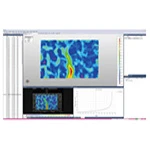
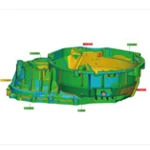
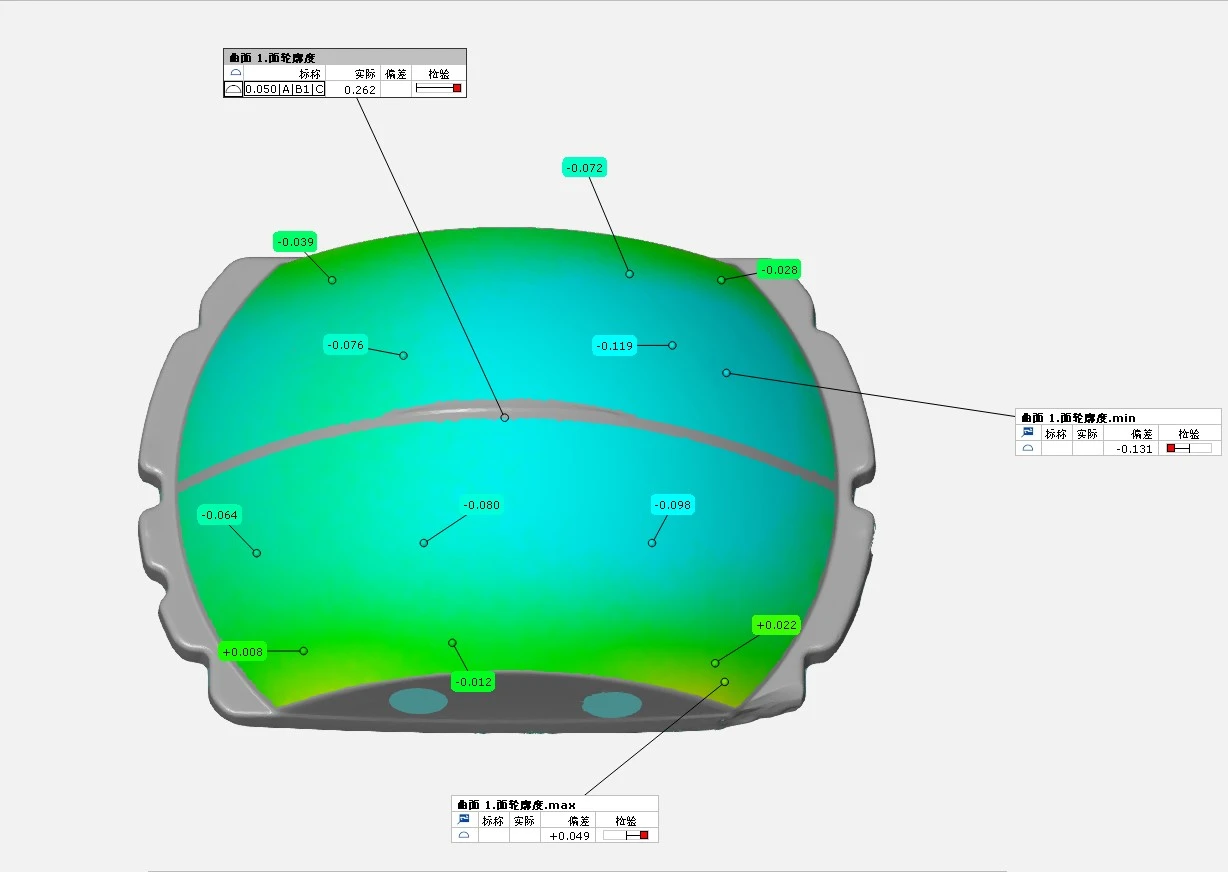
The generated color map allows for an intuitive assessment of deviations between the manufactured product and design specifications, enabling a determination of whether quality control standards have been met.
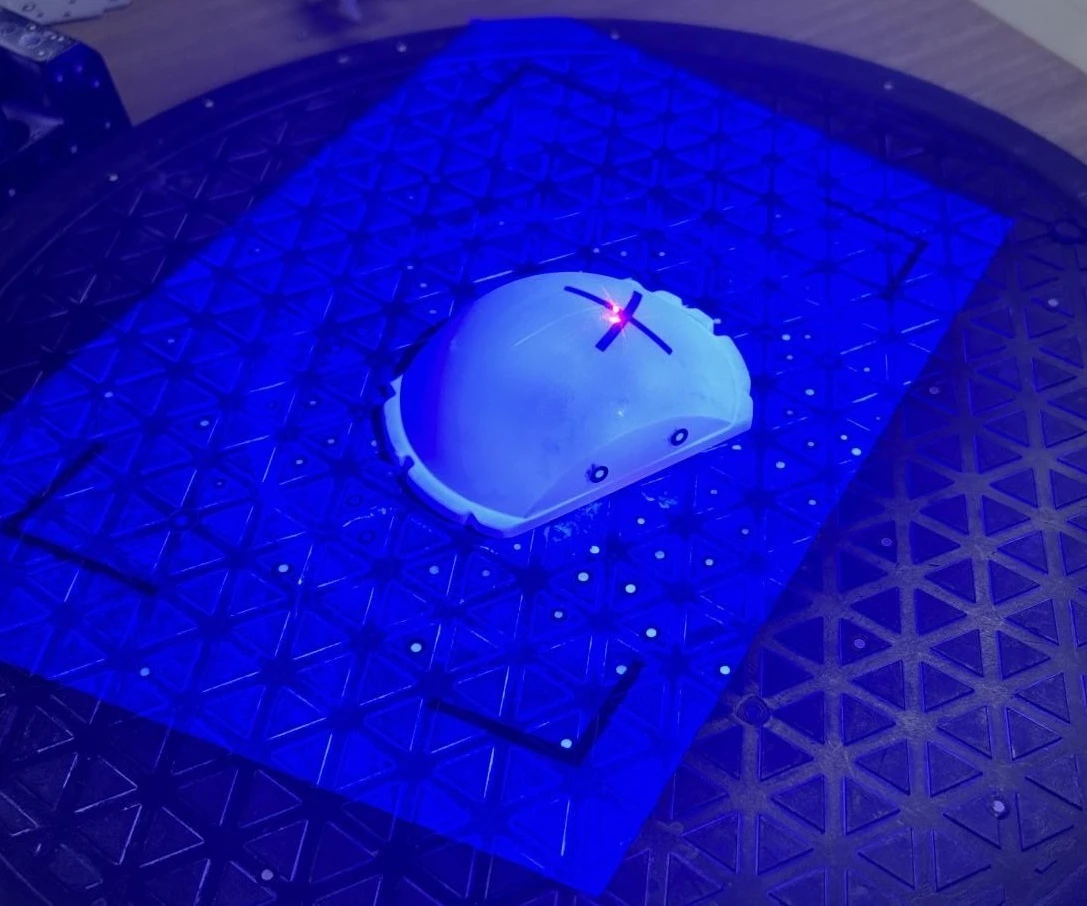
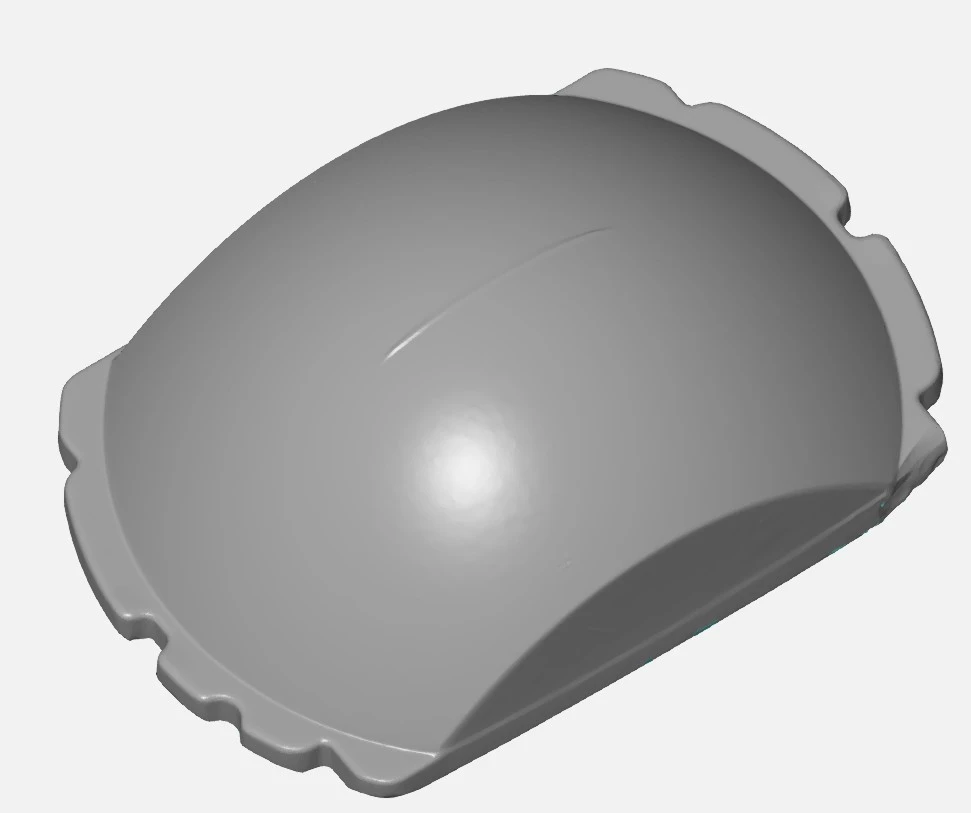
The XTOM blue-light 3D scanner offers superior detail resolution and an advanced curvature sampling algorithm, enabling time savings in dimensional analysis while ensuring high-fidelity scan details. The image below shows a 3D model of the part generated through the 3D scanning process.
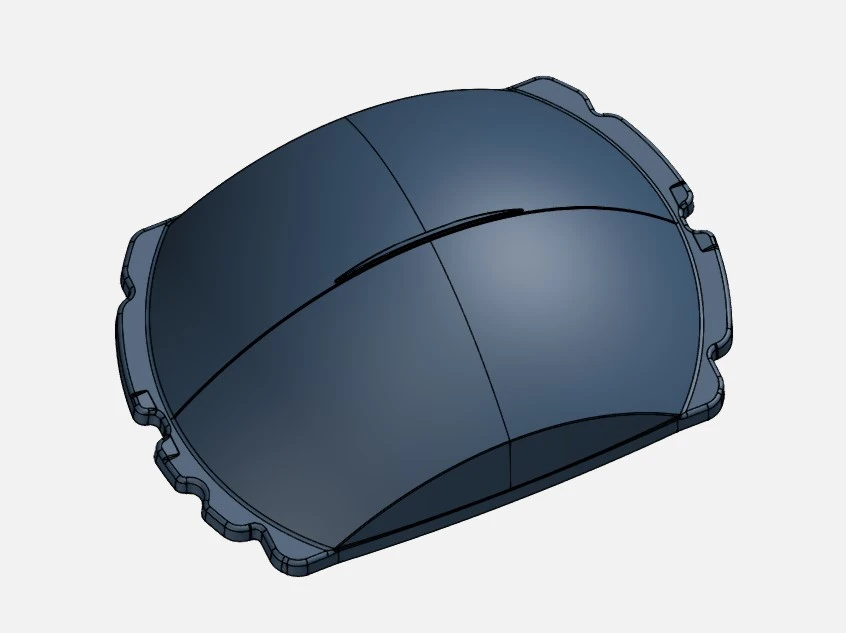
Import the scanned 3D point cloud data into 3D inspection software and compare it with the CAD design model to intuitively evaluate the deviation between the manufactured product and the design specifications. The image below shows the original CAD design model:
Integrated with 3D inspection software, the system rapidly generates detailed, visual inspection reports and promptly detects and locates quality issues. It provides precise data analysis to help manufacturers make quick adjustments, ensuring the dimensional accuracy of injection-molded lighting components.
Full-Scale 3D Inspection of Automotive Light Structural Components
Utilizing the XTOM blue-light 3D scanner for first-article and periodic inspections of automotive light structural components helps manufacturers reduce production costs, shorten time-to-market, and ensure the consistency and reliability of the parts.
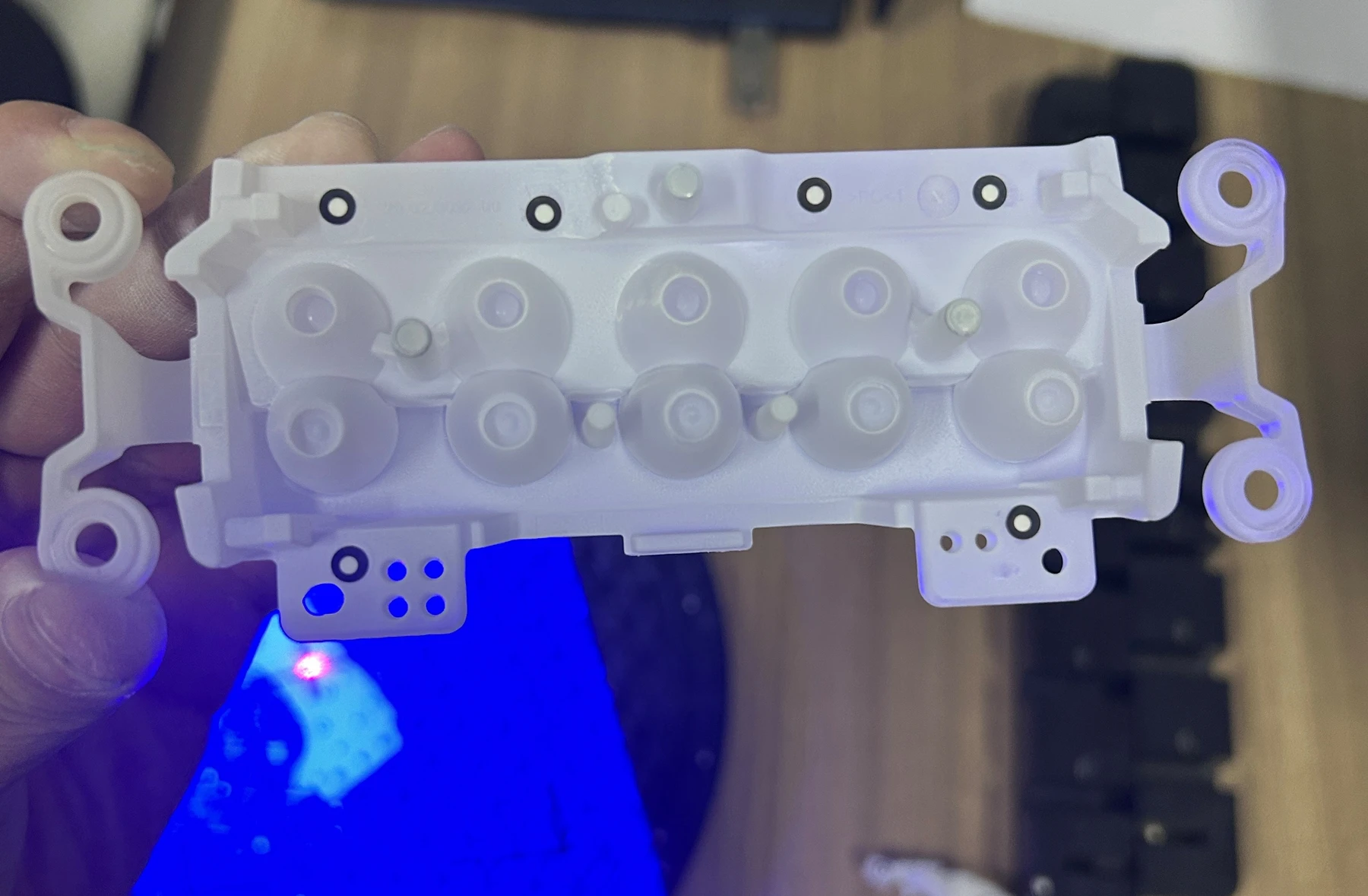
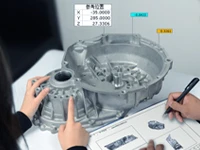
Adjust the XTOM blue-light 3D scanner to the optimal capture range and perform multi-angle 3D scanning of the automotive light structural components, ensuring that every detail is fully captured and obtaining 3D model mesh data suitable for subsequent analysis.
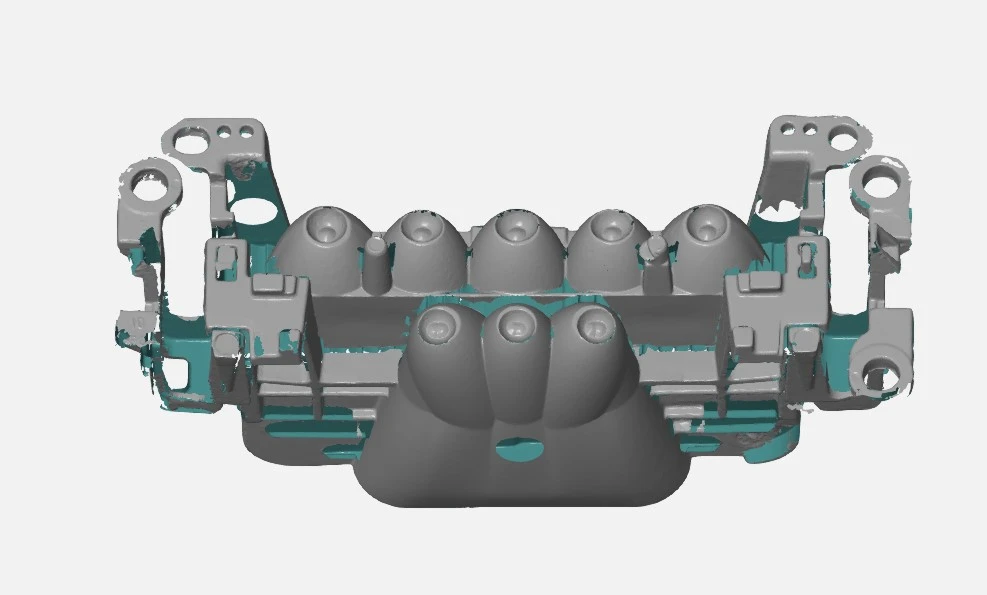
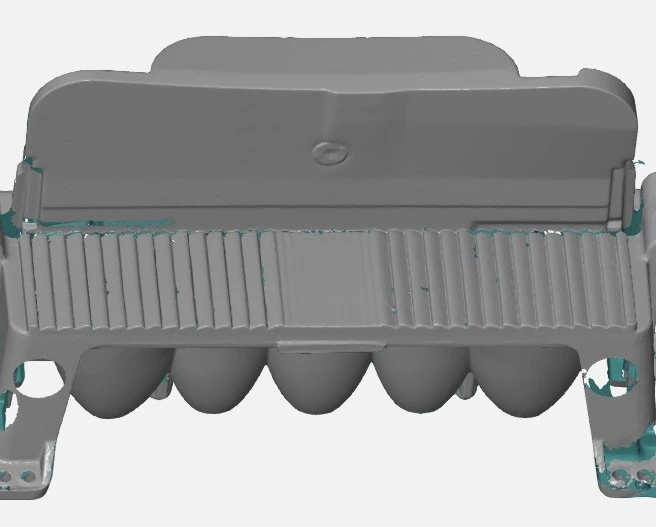
Import the processed 3D model into professional 3D inspection software. Align the scan data with the CAD data using methods such as RPS or best-fit, and compare the result against the CAD design model. The image below shows the CAD design model:
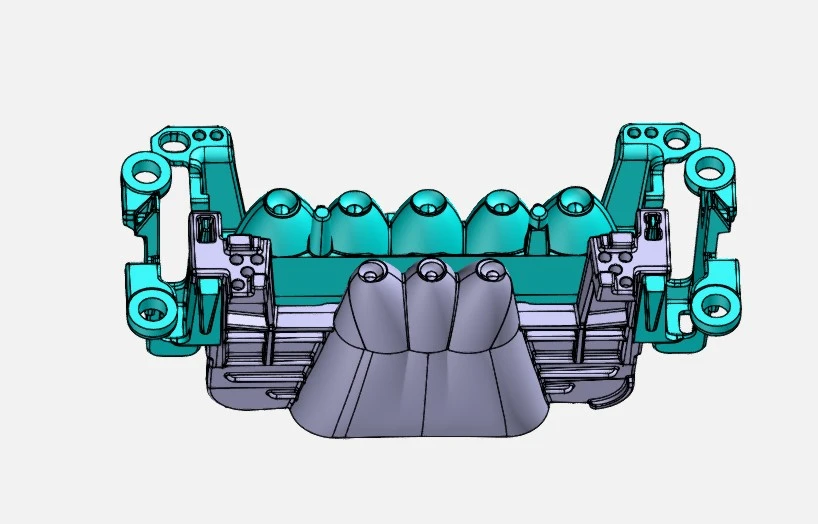
Once aligned, deviations in the profile can be visualized, allowing for an intuitive assessment of pass/fail data across various areas and easy inspection of hole position tolerances. Additionally, surface comparison can be used to inspect the reflective areas of vehicle lights, enabling simple and effortless detection of dimensional and surface profile deviations; this helps reduce the defect rate and improve overall product quality.


By utilizing the XTOP3D XTOM blue-light 3D scanner, inspection data can be archived in real-time, establishing a digital quality management system. This not only facilitates data traceability and analysis but also enables the generation of visual inspection reports—eliminating the omissions and inconveniences associated with manual inspection—thereby helping to enhance the level of intelligence and digitalization in automotive component production management.