Foreword
The hazards posed by slopes cannot be underestimated. Once a slope "acts up," disasters such as landslides, collapses, and debris flows can follow in quick succession, plunging the surrounding area into a dire situation.
Monitoring slope deformation is of critical importance. Acting as an "invisible guardian," it leverages technology to monitor the mechanisms of deformation and failure under rainfall conditions, thereby safeguarding slope protection efforts and ensuring engineering quality.

01 Why is research into slope displacement prediction necessary?
Landslides occur frequently in engineering projects and have become one of my country's major geological hazards. The development of landslides is influenced by various factors—such as rainfall, human activity, and geological structures—making the accurate prediction of slope displacement extremely challenging.
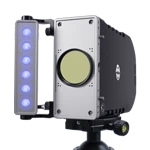
Consequently, researchers must accurately predict slope displacement and utilize advanced testing methods to identify potential risks. Given the diversity of deformation and failure modes across different slope types, comprehensive monitoring is essential. Researchers have chosen to employ the XTOP3D XTDIC 3D full-field strain measurement system to investigate the mechanisms of stress-induced deformation in sandy soil slope models.
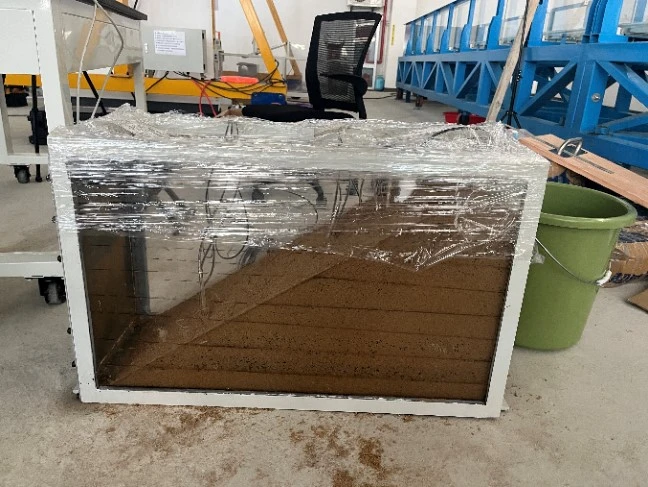
Deformation Prediction Model for Sandy Soil Slopes
02 Engineering Pain Points: The "Inaccuracy" Dilemma in Indoor Scale-Down Experiments
In the study of slope geological hazards, physical similarity model testing is a core method for revealing failure mechanisms, yet it has long been constrained by bottlenecks in monitoring technology:
▸Disturbance model for contact sensor installation: Conventional displacement meters are susceptible to damage from rainfall erosion, and their installation disturbs the original state of the slope.
▸ Loss of subsurface information: Traditional measurement methods only capture discrete point data and fail to capture the evolution of the sliding zone within the slope.
▸ Transient process analysis of faults: The lack of full-field dynamic records of the seepage-deformation coupling process induced by artificial rainfall.
▸ Inability to identify micro-shear bands: Millimeter-scale initial shear deformation is difficult to capture.
03 DIC Technology for Slope Deformation Testing
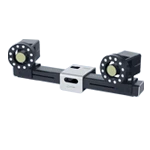
The XTDIC 3D full-field strain measurement system is employed to test and analyze the full-field displacement of a soil slope model during rainfall.
Full-field non-contact measurement
→ Avoids disturbing the model's original structure through sensor embedment
3D deformation field reconstruction
→ Simultaneously outputs X, Y, and Z displacements and their time-series evolution
Visualization of internal slip surfaces
→ Captures the formation process of potential slip zones through a transparent observation window
Precision detection of micro-strain
→ Resolves soil shear deformation at the magnitude of 30 με (micro-strain)
Multi-physics coupling analysis
→ Integrates pore water pressure data to establish a seepage-deformation correlation model
XTOP3D DIC 3D Full-Field Strain Measurement Solution
-
Rapidly capture the full-field displacement and full-field stress of large structures
-
Non-contact, real-time tracking of surface movement on sand slope models.
-
Capturing dynamic displacement and strain distributions at scales ranging from millimeters to micrometers.
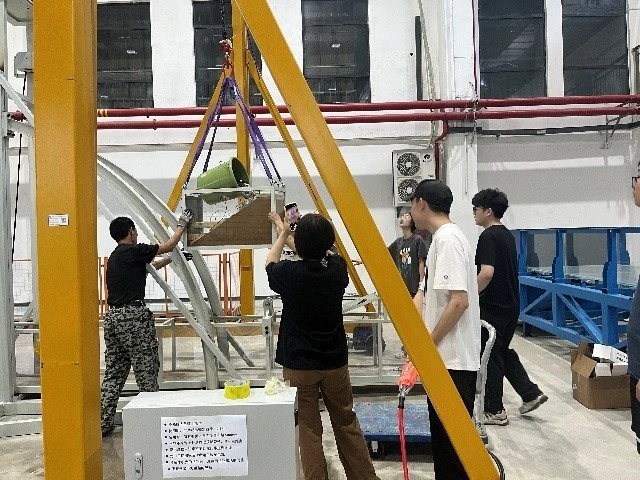
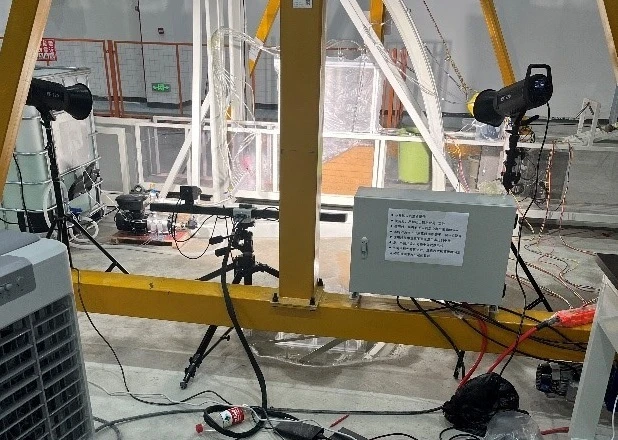
Supplementary illumination using a wide-field light source
Experimental Procedure
The sandy soil slope model was placed on the experimental rig, and the XTDIC 3D full-field strain measurement system was used to capture data from the slope model during rainfall for subsequent data processing.
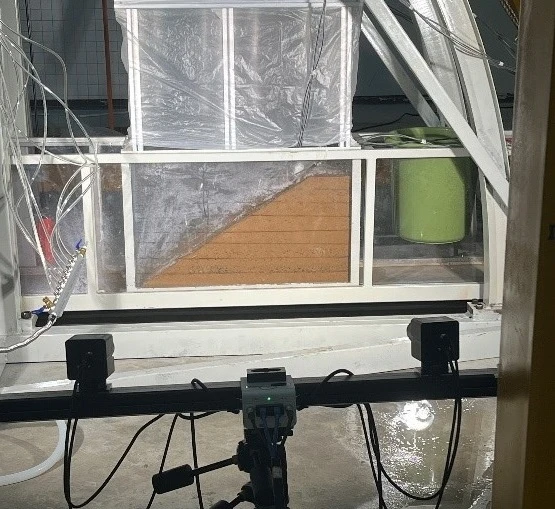
The application of the XTDIC 3D full-field strain measurement system to deformation testing of sandy soil slopes has enabled full-field deformation analysis:
-
End-to-end optical monitoring for static and dynamic testing
-
Full-field, high-precision displacement/strain distribution analysis
-
Significantly reduce sensor deployment and maintenance costs.
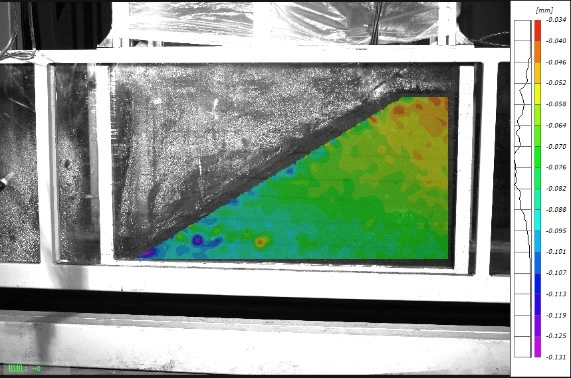
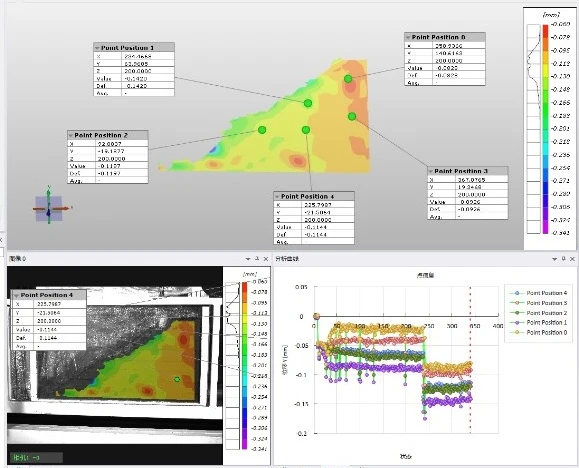
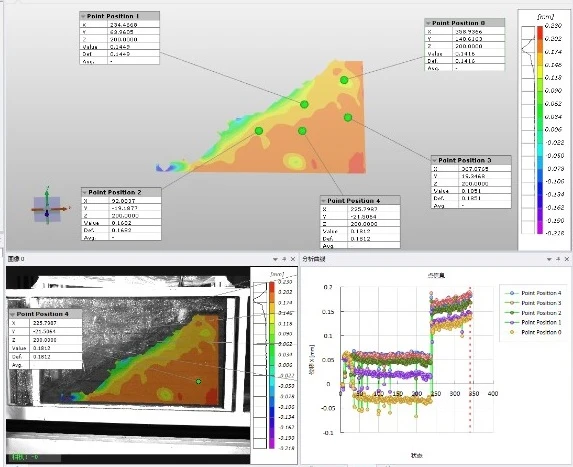
Research on Slope Deformation Mechanisms: Technology Enhancing Engineering Safety
A speckle pattern was created on the surface of a sandy soil slope model using a mixture of activated carbon particles and sand. The XTDIC 3D full-field strain measurement system was employed to capture image sequences of the model's surface during rainfall.
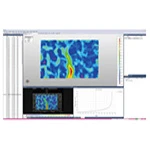
Image matching was performed using DIC software to calculate the displacement and strain fields of the sandy soil slope model.
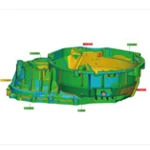
Displacement field analysis: Significant horizontal displacement was observed at the slope crest, while subsidence occurred in the middle section.
Strain field analysis: Principal strains were concentrated in the area extending from the crest to the middle section; the zones of strain concentration closely corresponded to the distribution of the displacement field.
Failure mode identification: Analysis of the deformation field evolution identified a typical "sliding" failure mode, with the critical failure surface exhibiting an arc-shaped distribution.
Conclusion
Sandy soil slopes are highly fluid, prone to deformation, and situated in complex environments.
Non-contact DIC measurement technology is pivotal for pinpointing the potential sliding surfaces and critical zones of landslides.
It provides a quantitative basis for optimizing landslide remediation projects and designing support structures.
It serves as an "invisible guardian" for lives and infrastructure!
The technology applied in this article is derived from XTDIC's 3D full-field strain measurement solutions.