Case Background
Noodles may appear ordinary, yet they embody complex mechanical behaviors. High gluten content gives pasta its firm, elastic texture; while ordinary noodles lose their structural integrity after just five minutes of boiling, pasta remains "resilient" even after ten minutes, retaining a satisfying chewiness.
From food science to materials science, the study of noodle structure, texture, and resistance to deformation—specifically their microscopic deformation behavior—has long been a key aspect of understanding material mechanical responses.

owever, traditional macroscopic measurement methods struggle to capture the precise deformation and strain distribution of noodles at the micro-scale, posing significant challenges—particularly under non-destructive and dynamic loading conditions.
How can we accurately map every nuance of deformation as noodles bend and gain insight into their micro-scale mechanical properties? Addressing this is not only a requirement for scientific research but also a cornerstone for advancing new materials and manufacturing processes.
Applications of Micro-DIC Technology
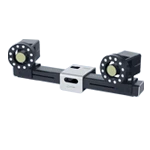
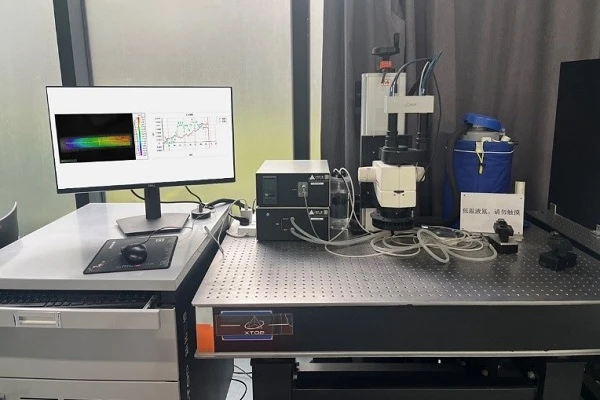
To gain a deep understanding of the deformation behavior of materials at the micro-scale, core experimental processes—including load control, real-time microscopic observation, and full-field strain calculation—are indispensable. The XTOP3D XTDIC-MICRO microscopic strain measurement system is a non-contact measurement solution designed specifically to meet these requirements.
-
High-precision microscopic observation: The microscopic DIC system performs tracking and analysis at the micro-scale, capable of capturing minute deformations that are imperceptible to the naked eye.
-
Full-field strain measurement: Unlike point measurements (such as those using strain gauges), DIC technology is based on the principle of image matching; it enables the simultaneous acquisition of displacement and strain information for all points on an object's surface, providing full-field deformation and strain data.
-
Non-contact measurement: Eliminates the need for physical contact with the sample, thereby avoiding potential interference or damage caused by contact; this is particularly suitable for fragile, soft, or complex-surfaced materials.
-
High measurement accuracy: Supports one-touch, fully automated data acquisition and calibration; features built-in optical distortion correction for the microscope; offers a displacement measurement accuracy of 0.01 pixels and a strain measurement accuracy of up to 20 microstrain.
When investigating the bending deformation of spaghetti, a microscopic DIC system—leveraging its capabilities for high-resolution, full-field, non-contact, and dynamic measurement—precisely measures strain distribution at the bending point, edge regions, and even across the entire cross-section, thereby revealing "hotspot" areas.
Pasta Bending Test Procedure
Test Objective: To investigate the strain distribution characteristics of a specific type of pasta under various bending loads using a microscopic DIC system, and to explore the relationships between these characteristics and the pasta's thickness, diameter, and internal structure.
Test Steps:
Sample Preparation: Select pasta samples that are uniform in length, diameter, and material composition. Apply a random speckle pattern to the surface of the pasta (via spraying or affixing) to facilitate tracking by the DIC software. Ensure the pasta is completely dry and the pattern is clearly defined.

System Calibration: Precise lens distortion correction and system calibration are performed on the microscopic DIC system camera and the stereomicroscope to ensure measurement accuracy.
Image Acquisition: During the bending loading of the pasta, the microscopic DIC system camera captures a sequence of images of the pasta surface. The capture area covers the region where maximum deformation is expected to occur.
Data Analysis Results
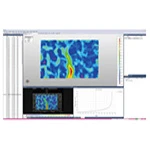
Data Processing: DIC software was used to match consecutive image frames, calculate the displacement field for each pixel on the spaghetti strand, and subsequently derive the strain field (including normal strain and shear strain).
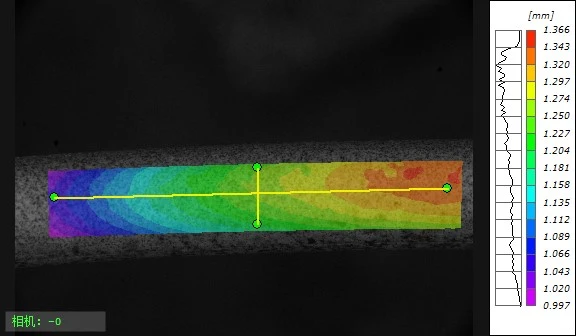
(1) DIC software was used to calculate displacement contour map data for the spaghetti bending process;
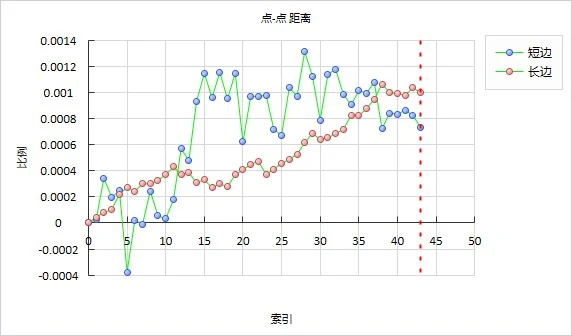
(2) Two pairs of points were selected along the long and short sides of the spaghetti surface to plot linear strain curves for both directions.
(3) The strain contour maps visually illustrate the gradient variations and spatial distribution characteristics of the strain on the spaghetti surface, extending from the loading point to the fixed end.
Micro-DIC systems offer advantages such as high resolution, high magnification, and comprehensive data acquisition when investigating the bending deformation and strain of flexible, slender structures like noodles. By revealing the mechanical behavior of noodles at the micro-scale, these systems provide a powerful analytical tool for fields such as food science and materials engineering. They not only overcome the limitations regarding precision and applicability inherent in traditional methods but also open new avenues for a deep, microscopic understanding of material deformation.
When combined with 3D-DIC technology and in-situ micro-testing machines, micro-DIC measurement systems can be used to characterize the mechanical properties of materials at the micro-scale; furthermore, when paired with thermal stages, they enable deformation testing under specific temperature gradients—such as the assessment of thermal deformation effects and the determination of coefficients of thermal expansion.