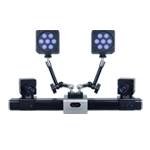
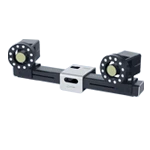
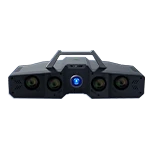
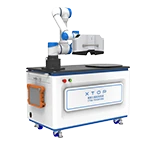
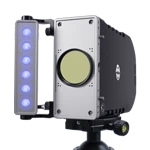
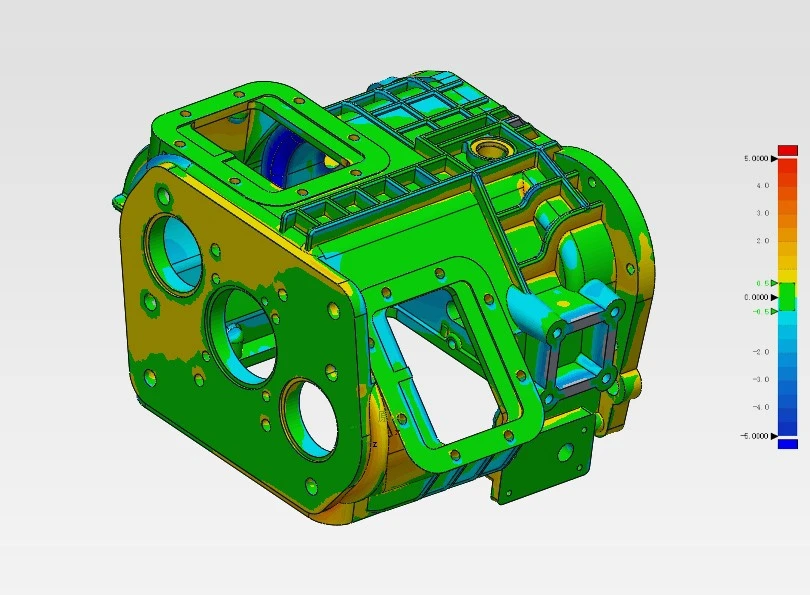
In the precision casting industry, component production involves multiple integrated manufacturing steps; inspection efficiency is key to ensuring quality and minimizing rework, while comprehensive, full-dimensional 3D inspection data is vital for optimizing every stage of the manufacturing process. By capturing complete and precise 3D scan data from the surfaces of precision castings, the XTOM industrial-grade blue-light 3D scanner from Xintuo 3D streamlines workflows for mold validation, quality control, defect analysis, and reverse engineering, thereby enhancing dimensional quality and accelerating production.
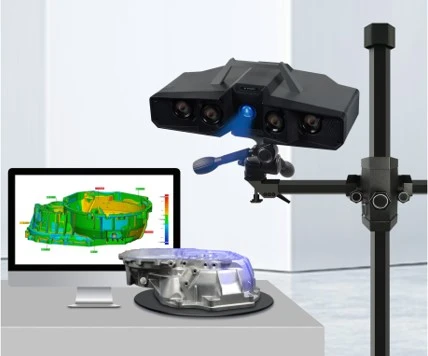
Inspection Requirements & Blue-Light 3D Scanning Technology Applications
1. High-Precision Geometric Measurement
Precision castings have strict dimensional tolerance requirements, often necessitating micron-level accuracy. The XTOM industrial-grade blue-light 3D scanner delivers measurements with this level of precision, ensuring parts meet design specifications.
2. Capturing Details of Complex Surfaces
Precision castings often feature complex, intricate geometries—such as grooves, protrusions, and textures. Blue-light 3D scanners accurately capture these complex geometric features, providing detailed surface curvature data.
3. Measurement of Diverse Precision Castings
Precision castings are made from various materials, including metals and alloys, each imposing different requirements on measurement accuracy and equipment. Blue-light 3D scanning technology consistently achieves high-precision results across these diverse materials.
4. Automation and Flexibility
Frequent inspection is required during precision casting production, making ease of use and flexibility critical. Blue-light 3D scanners enable rapid, non-contact measurements in various environments, thereby boosting production efficiency.
5. Data-Driven Decision Making
Inspection data must support decision-making and enhance the intelligence of the production process. Data provided by blue-light 3D scanners allows for real-time analysis, enabling rapid problem identification and solution generation.
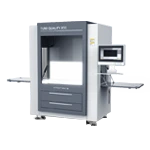
The XTOP3D XTOM industrial-grade blue-light 3D scanner performs full-dimensional 3D scans of complex precision castings quickly and without contacting the part's surface. Adaptable to various measurement environments and objects, it is ideal for the full-dimensional 3D inspection of small-to-medium precision castings. It supports a wide range of inspection needs, including GD&T verification, material thickness analysis, and assembly analysis.
Additionally, the XTOM industrial-grade blue-light 3D scanner can be used in conjunction with a contact probe. This probe measures hidden features, discrete points, and deep cavities, thereby enhancing the coverage and data comprehensiveness of the non-contact 3D scanning process.
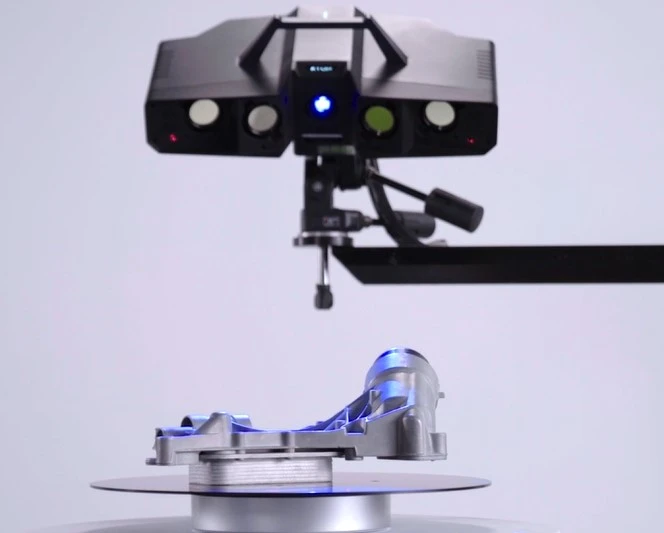
Design Phase: Reverse Engineering and Digital Archiving
Application: Scanning legacy physical castings, prototypes, or physical models that lack original blueprints.
Value: Rapid acquisition of accurate CAD models for replication, design improvement, mold making, or the creation of a digital library of spare parts.
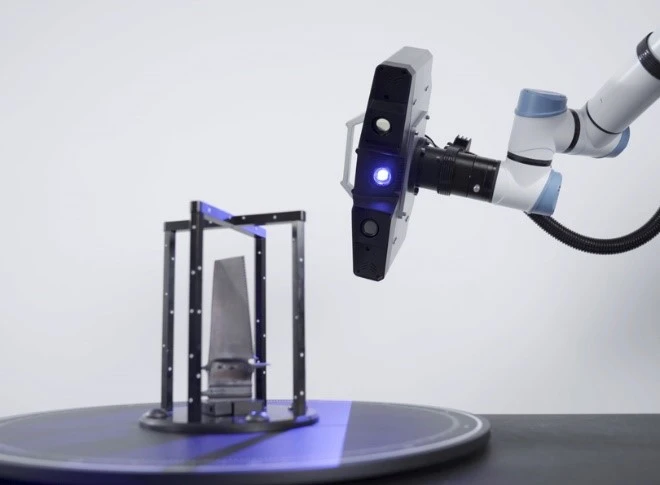
Capture of Complex Geometric Contour Details
Requirement: Micron-level features on precision castings—such as surface porosity and draft angles—must be fully captured.
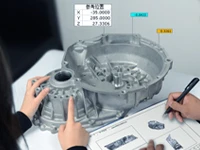
Technical Advantage: The XTOM industrial-grade blue-light 3D scanner utilizes high-resolution industrial cameras and blue-light 3D scanning technology to clearly capture details such as contours and curved surfaces, ensuring the model accurately matches the physical object.
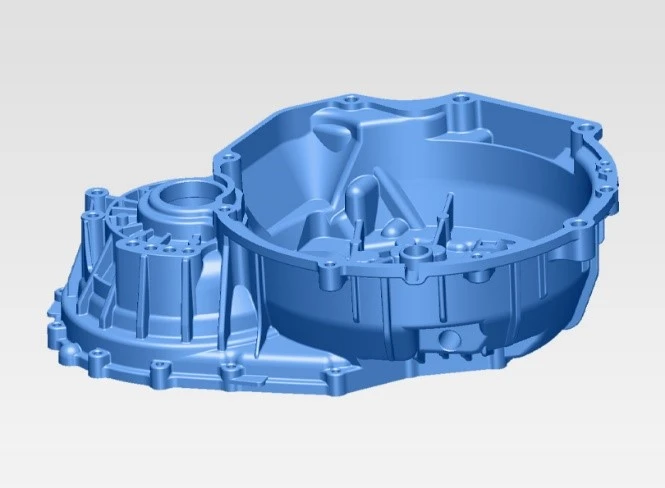
Scan data of complex automotive engine block castings
Flexible, Rapid 3D Scanning Inspection
Addressing the Need: Precision casting blanks often exhibit significant deformation; traditional fixtures are costly and difficult to adapt.
Technical Advantages: Non-contact 3D scanning supports free-form scanning and stitching; eliminates the need for specialized tooling, reducing setup time by 50%.
Capturing Fine Details on Small Components
Addressing the Need: Precise control is required for the thin walls and airfoil profiles of small precision castings, such as turbine blades.
Technical Advantages: Multiple scanning field-of-view options available (starting at 100mm × 75mm) with accuracy up to ±0.006mm, ensuring the complete capture of minute features.
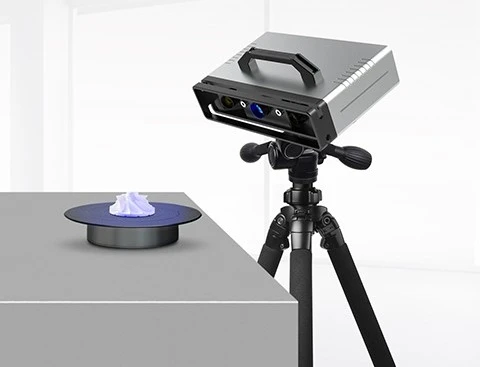
Analysis Phase: Data-Driven Quality Control
Inspection Scenarios
Rapid full-dimensional inspection, 3D first-article inspection, GD&T verification, material thickness analysis.
Industry Pain Points
Full-dimensional sampling rate for precision castings is under 10%; first-article approval cycles take days; reliance on CMMs for form and position tolerance checks is inefficient; wall thickness variations lead to shrinkage porosity or deformation.
Blue-Light 3D Scanning Solution
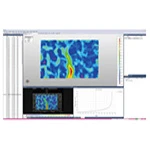
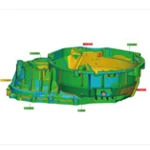
Completes full-part scanning in 3 minutes; automatically compares data against CAD to generate color-coded deviation maps; provides real-time visual deviation analysis, boosting issue-localization efficiency by 80%; automatically generates GD&T reports (e.g., flatness, coaxiality) with one click; measures thickness via cross-sectional slicing to pinpoint areas exceeding tolerances.
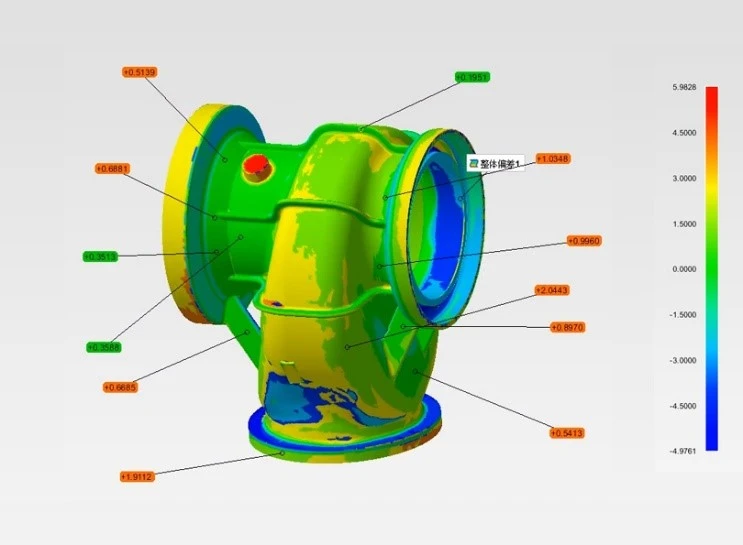
Production Phase: End-to-End Quality Control
Pinpointing Dimensional Deviations
By measuring dimensional accuracy during the precision casting stage, deviations are pinpointed, and precise data is provided to support process optimization.
Reducing Mold Trials
Generating GD&T inspection reports enables timely adjustment of process parameters, thereby reducing the number of iterations and mold trial costs.
Product Quality Assurance
Rapid 3D scanning captures complete and accurate 3D inspection data, facilitating better process corrections and improvements to ensure product quality.