In the field of consumer electronics manufacturing, blue-light 3D scanning technology is emerging as a core method for product quality control. Utilizing non-contact measurement, blue-light 3D scanners achieve micron-level dimensional accuracy and enable comprehensive digital modeling of complex curved surfaces. They play an indispensable role in enhancing product yields and optimizing manufacturing processes, providing critical technical support for precision manufacturing in the 3C electronics industry.
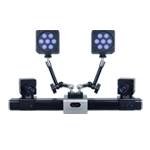
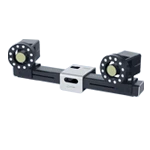
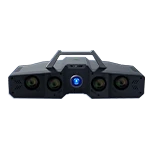
The following section introduces the application of the XTOP3D XTOM-MATRIX series of blue-light 3D scanners in 3C manufacturing. By accurately capturing key dimensional features—such as the curvature of product casings and seam gaps—these scanners facilitate dimensional quality control across the entire workflow from R&D to production, meeting the consumer electronics industry's rigorous standards for aesthetic quality.
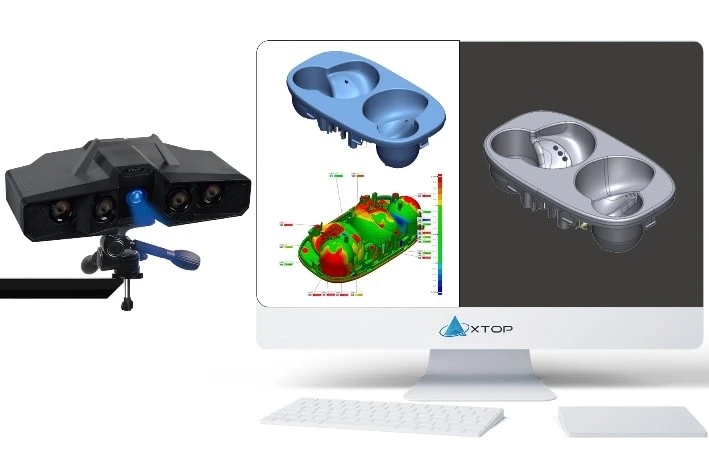
Blue-Light 3D Scanning Technology
Diverse Applications in 3C Manufacturing
Precision manufacturing in the 3C electronics sector—encompassing products such as smartphones, tablets, laptops, and wearable devices—is characterized by increasingly complex designs, refined manufacturing processes, and stringent quality standards.
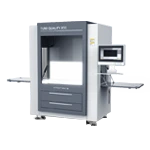
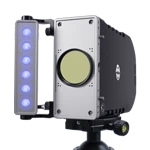
The XTOM-MATRIX series of blue-light 3D scanning and measurement systems utilizes blue-light fringe projection technology to rapidly capture complete 3D surface data from complex workpieces, significantly boosting measurement efficiency. These systems can be integrated into automated production lines to enable automated measurement, data analysis, and quality control. They generate high-clarity 3D models and comprehensive measurement reports, facilitating analysis and decision-making for engineers.
1. Product Design and R&D Phase
During the early stages of 3C electronics development, blue-light 3D scanning and measurement systems provide designers with powerful reverse engineering capabilities. By scanning existing products or samples, engineers can rapidly acquire precise 3D data, enabling the transformation of physical objects into digital models.
Key Applications:
Reverse Modeling: Scanning competitor products or established models to obtain precise 3D data, serving as a reference for new product designs.
Virtual Assembly Verification: Importing scanned component models into CAD systems to conduct virtual assembly tests and verify the fit and interaction between parts.
Design Optimization: Comparing scanned data against design models to identify flaws and implement optimizations.
Real-World Case Study:
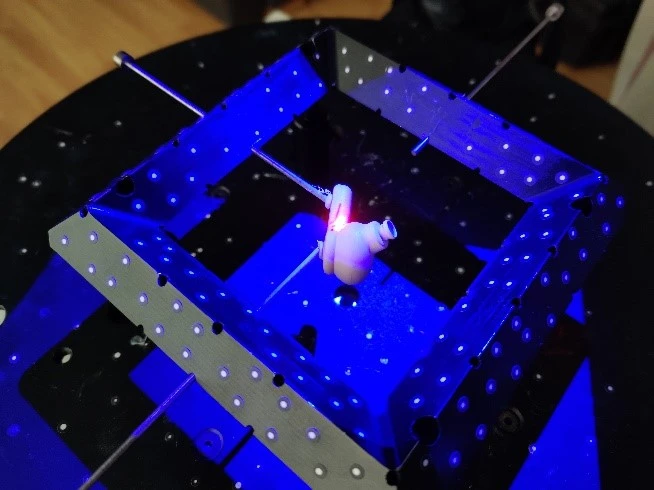
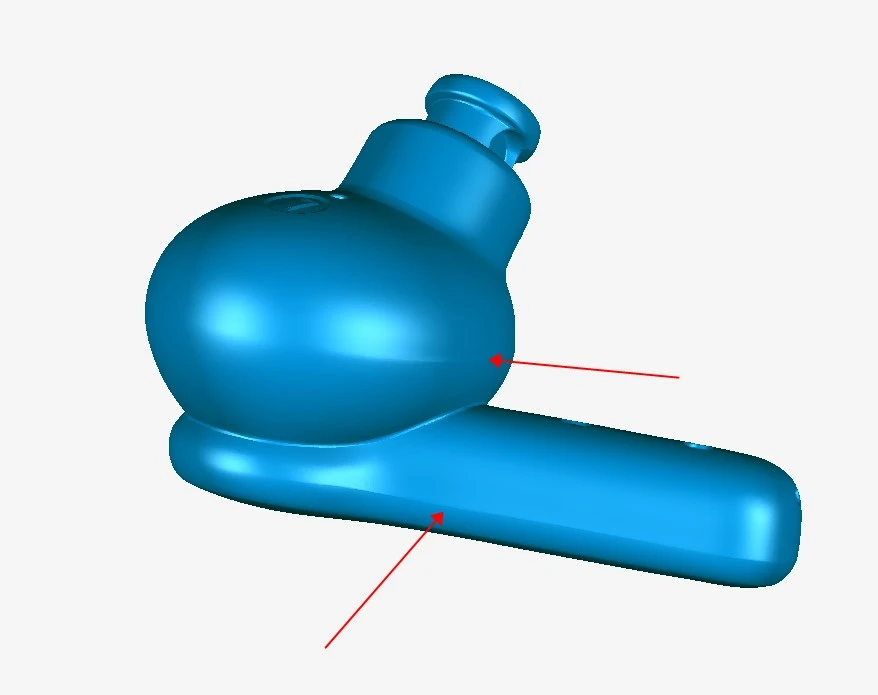
A manufacturer utilized blue-light 3D scanning technology to perform reverse engineering analysis on Bluetooth earphones; this successfully optimized the product's structural design while enhancing the overall aesthetic quality.
2. Manufacturing Stage
During the production of 3C electronic products, mold quality directly impacts product quality and production efficiency. Blue-light 3D scanning and measurement systems can perform 3D scans on molds created from preliminary designs to capture data on their actual shape and dimensions.
Key Applications:
• Mold Dimension Inspection: In the manufacturing of 3C electronics, blue-light 3D scanning systems are used for mold design and inspection, as well as batch inspection of components. They measure overall deviations, dimensional variances, and geometric tolerances, subsequently generating detailed inspection reports.
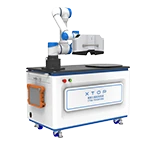
• Batch Component Inspection: By integrating 3D scanning technology with automated multi-axis turntables or robotic arms, the system enables automated measurement, data analysis, and quality control. This allows for real-time monitoring of production quality and the prompt detection and correction of deviations.
• Real-time Data Archiving: 3D inspection data facilitates real-time storage and management. It preserves quality records for various product batches and enables the analysis of key production parameters, providing a data foundation for product quality traceability and continuous improvement.
Real-world Case Study:
A manufacturer utilized blue-light scanning technology to perform full-dimensional 3D inspection on speaker molds—specifically checking parting line accuracy and virtual assembly fit. This approach resolved issues where uneven speaker thickness compromised sound quality, ultimately enhancing the audio performance of the products.

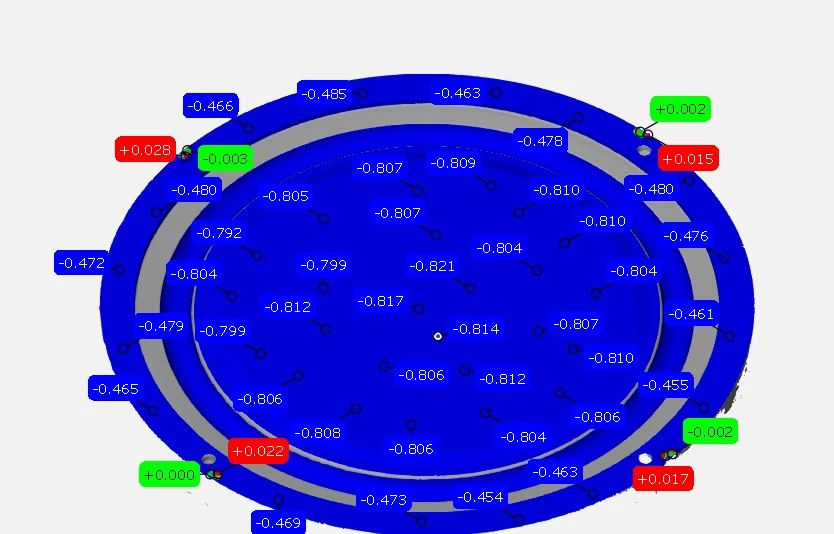
3D Inspection of Audio Equipment Molds
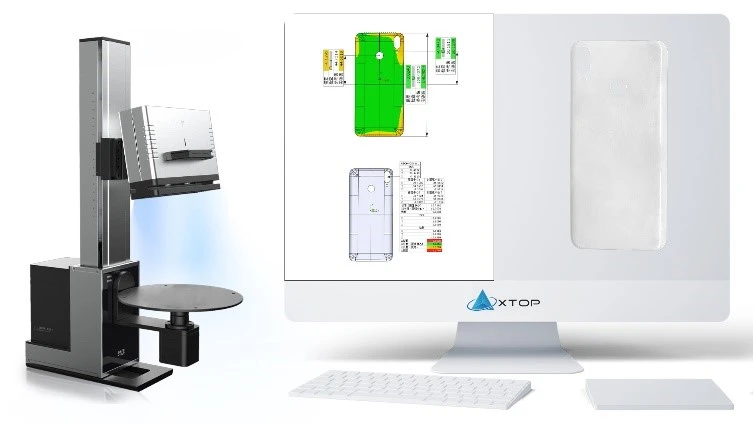
Automated inspection of mobile phone back covers
Practical Application:
For products such as mobile phones and earphones that demand extremely high dimensional precision, blue-light 3D scanning and measurement systems can accurately measure the dimensions of the entire product and its individual components. This ensures strict adherence to dimensional specifications during mass production, thereby enhancing the product's overall quality and reliability.
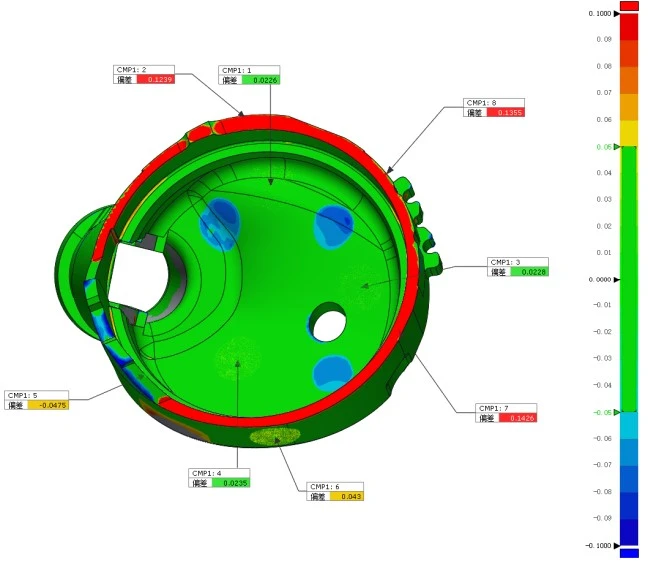
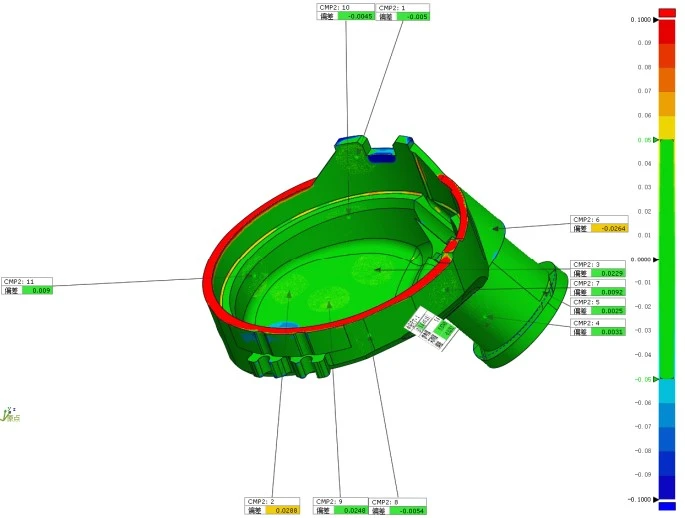
3D Inspection of 3C Headphone Injection-Molded Parts
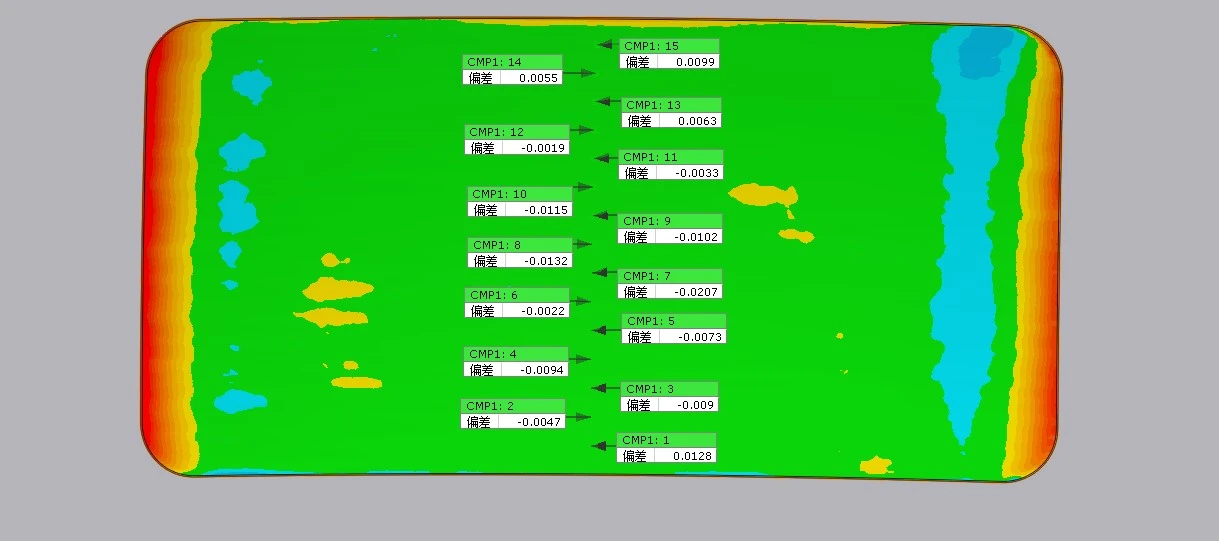
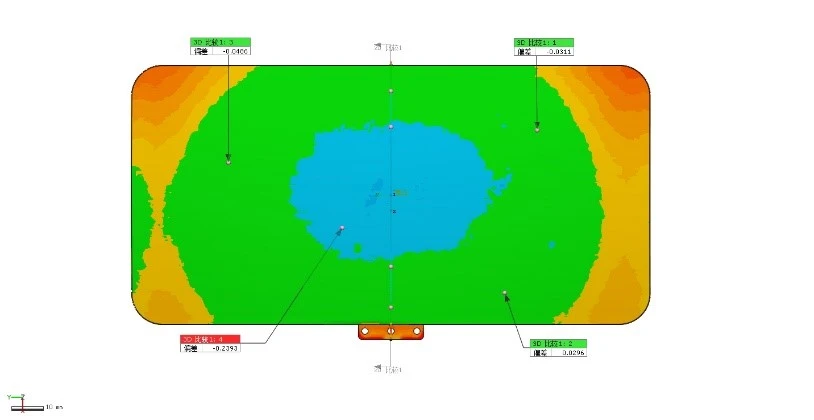
3D Dimensional Inspection of Mobile Phone Screen Protectors
3. Quality Control Stage
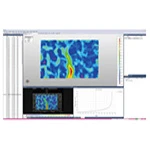
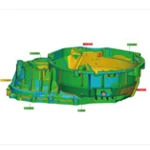
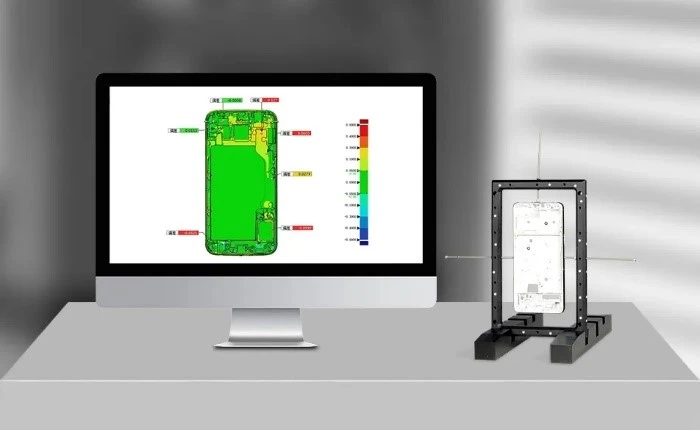
Blue-light 3D scanning systems can be used for rapid quality assessment of components. By capturing 3D data from molds and using professional inspection software to compare this data against original blueprints, a dimensional deviation heat map is generated, providing precise 3D data to support deviation correction.
• Product Dimensional Inspection: Conduct full-dimensional 3D inspections on finished products to identify non-conforming items, thereby improving yield rates and reducing rework. Examples include measuring critical dimensions, positional accuracy (such as for bolt holes and mounting holes), and checking assembly clearances and tolerances between components.
• Assembly Precision Control: 3C electronic products often comprise numerous precision components, where assembly precision directly impacts performance and reliability. Inspection verifies the positional accuracy of components during assembly and ensures that assembly clearances meet specifications, guaranteeing proper product functionality.
• Reverse Mold Correction: When inspections reveal dimensional deviations or quality issues, blue-light 3D scanning technology accurately measures the magnitude and location of the deviations. It provides specific parameters and correction strategies, offering precise data support for mold adjustments.
Practical Application:
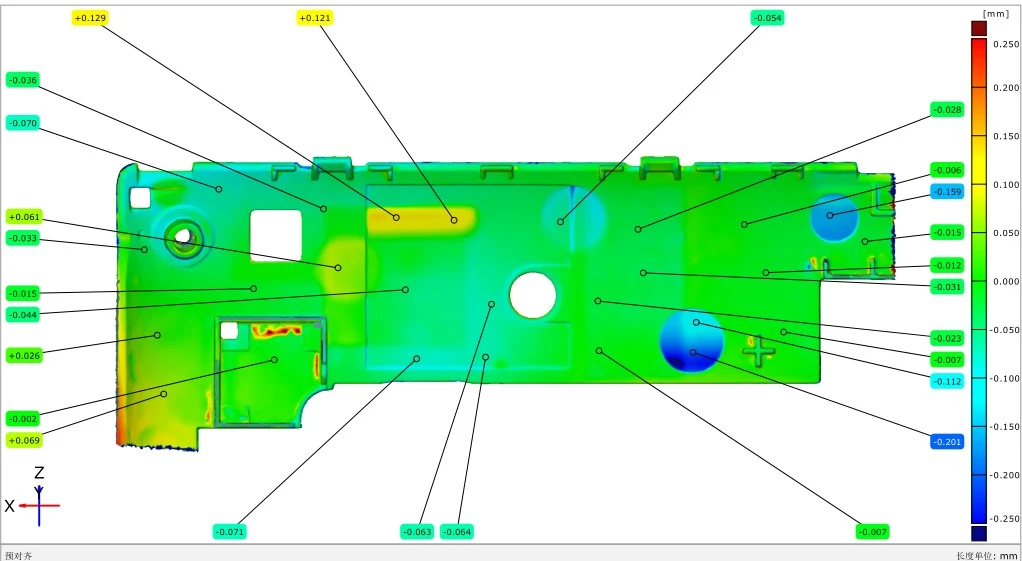
Leveraging its advantages of full-field coverage, high efficiency, and high precision, the XTOM-MATRIX blue-light 3D scanning and measurement system is suitable for inspecting complex components such as those found in computers and mobile phones. By capturing 3D data through scanning and processing it with 3D inspection software, the system rapidly generates dimensional measurements for the entire part. This enables the verification of critical dimensions—such as the length, width, and aperture of a mobile phone's middle frame, as well as mating surface profiles, side fillet cross-sections, and edge clearances—to ensure they meet assembly specifications.
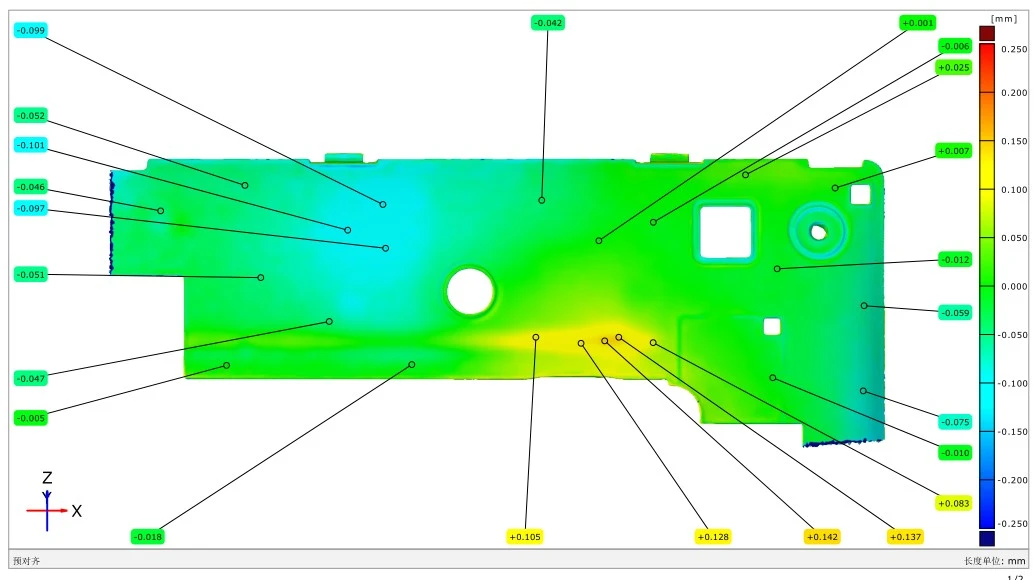
3D Inspection of Computer Backplate Injection-Molded Parts
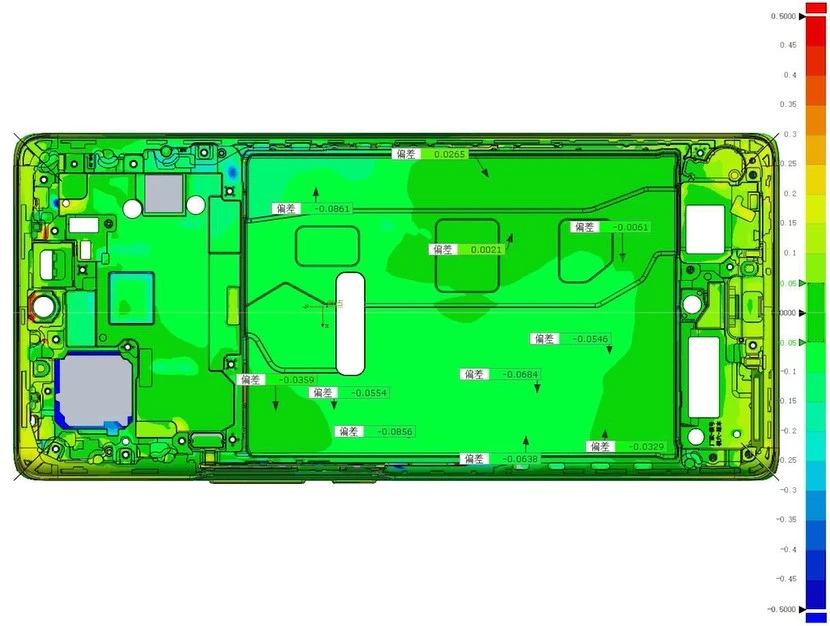
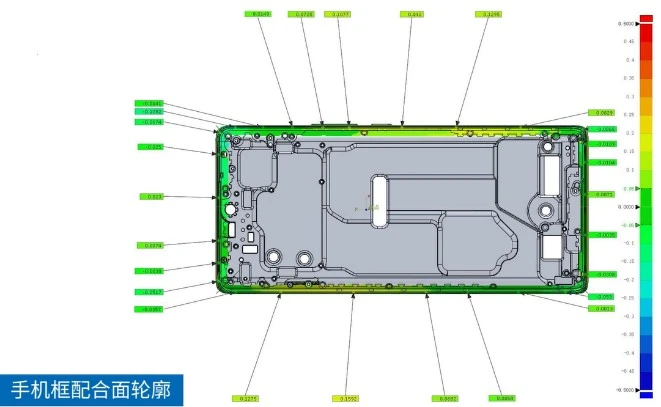
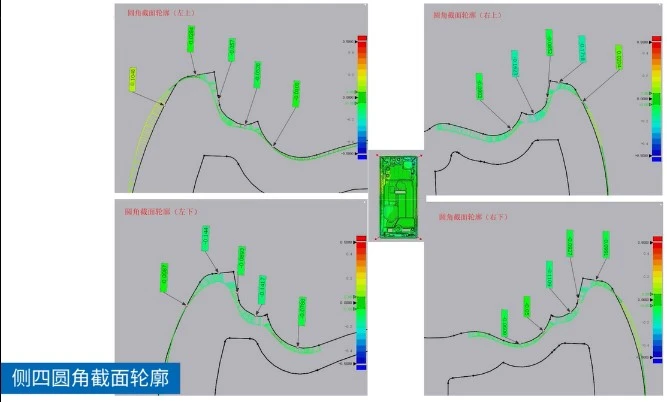
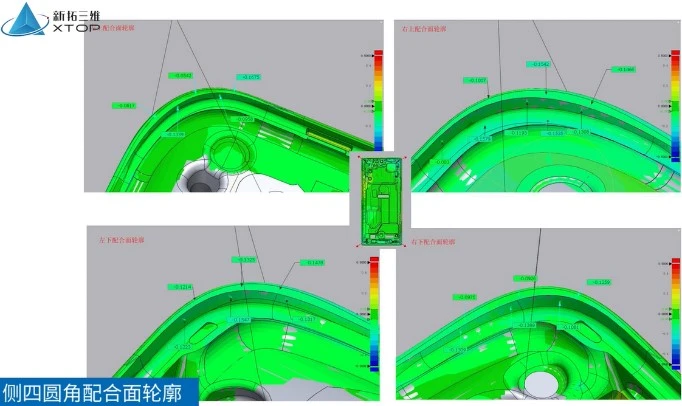
3D Full-Dimension Inspection of Mobile Phone Middle Frames
Blue-light 3D scanning technology has become indispensable to the 3C consumer electronics industry, playing a pivotal role in enhancing product quality, reducing production costs, and boosting manufacturing efficiency. During the conceptual design phase, it accelerates prototype validation through high-precision 3D modeling; in mass production, it enables micron-level dimensional inspection to ensure process consistency; and during quality control, it facilitates product inspection, assembly analysis, and mold quality assessment—thereby minimizing mold modifications and shortening lead times. This full-lifecycle digital solution not only significantly improves the quality and reliability of consumer electronics but also drives the industry’s ongoing evolution toward intelligent and personalized manufacturing.