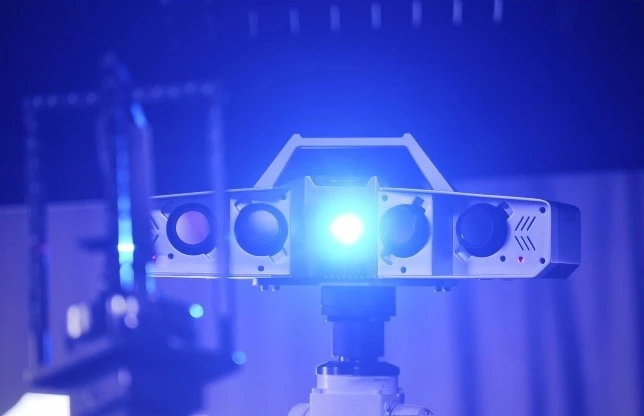
As precision manufacturing continues to evolve, the design complexity and dimensional accuracy requirements for components are steadily rising. Effectively controlling the quality of high-precision workpieces—characterized by complex multi-surface geometries and intricate structures—has become a critical challenge for manufacturers.
Furthermore, the assembly of precision components demands the highest standards of safety, reliability, and performance. The application of blue-light 3D scanning technology, combined with specialized inspection software, has emerged as a core solution for ensuring quality in both component inspection and assembly. This technology enables manufacturers to comprehensively monitor overall profile deformation and critical dimensional accuracy, while also allowing for the visualization, analysis, and optimization of assembly lines prior to actual production.
Requirements for 3D Inspection and Assembly Verification
3D Full-Dimensional Inspection
Precision components often feature complex free-form surfaces and intricate structures—such as complex shapes, grooves, holes, and narrow gaps—where traditional contact measurement methods often encounter blind spots. Quality control in this context faces three major challenges:
Complex Structures
Intricate features—including curved surfaces, hole locations, and thin walls—make it difficult for traditional measuring tools to achieve comprehensive coverage.
Strict Tolerances
Critical areas, such as mating surfaces and mounting holes, demand extremely high precision regarding dimensions, positional accuracy, and profile tolerances.
Low Inspection Efficiency
Quality inspection processes are time-consuming and rely heavily on manual expertise, resulting in poor consistency and high costs.
Why Implement Virtual Assembly?
1. Cost Control
Prevents damage to parts (especially those with surface treatments or thin-walled components) caused by physical trial assemblies, significantly reducing costs associated with trial assembly waste.
2. Assembly Reliability
Detects assembly interference between parts early and verifies the precision of component positioning, substantially increasing the first-pass assembly success rate.
3. R&D Efficiency
Enables the simultaneous validation of multiple design options (such as the fit of different tolerance zones), thereby shortening the product development cycle.
4. Supply Chain Collaboration
Facilitates digital sharing of assembly validation data across different manufacturing sites, reducing the time required for coordination between suppliers regarding process adjustments and assembly.
Blue-Light 3D Scanning Solution
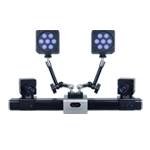
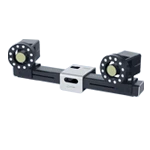
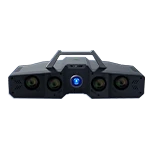
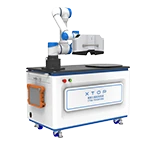
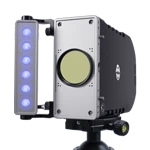
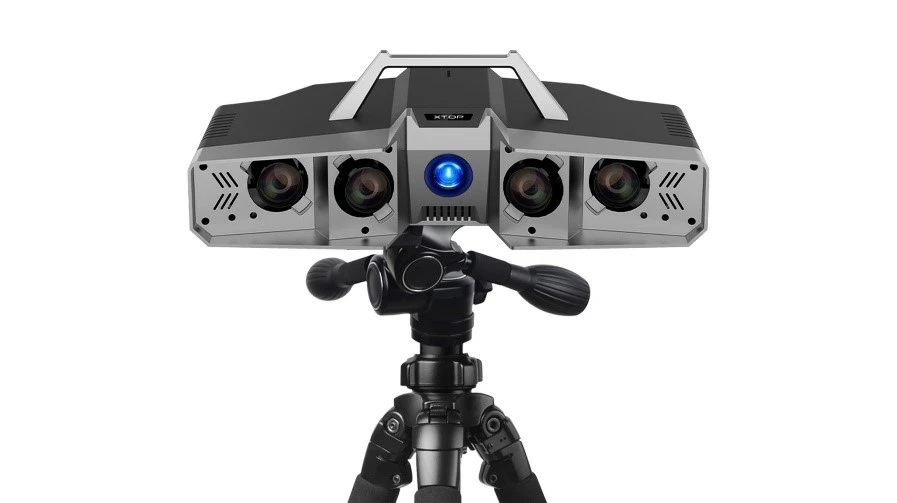
The XTOP3D XTOM blue-light fringe projection 3D scanner utilizes blue-light technology to efficiently capture 3D data from complex workpieces. It accurately reproduces intricate surface geometries and fine details, delivering the precision required for geometric dimensioning and tolerancing (GD&T) analysis and inspection of precision components.
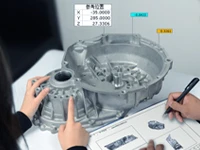
By importing 3D scan data models—including those of assemblies—into the software, the system automatically aligns coordinate systems using reference markers. This enables the analysis of gaps and interferences between components, accurately replicating the actual assembly conditions.
3D Inspection and Analysis of Blades
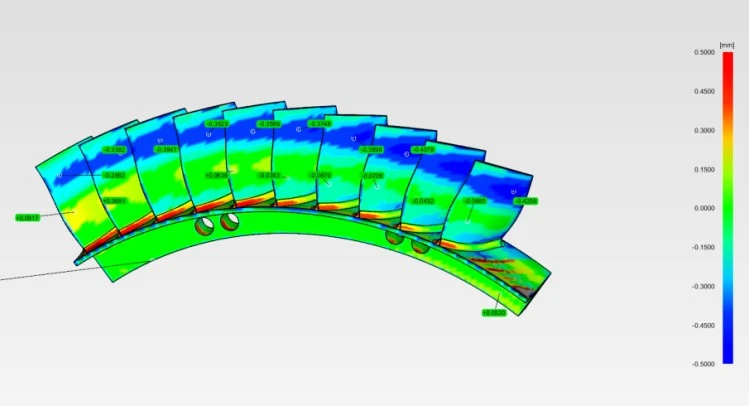
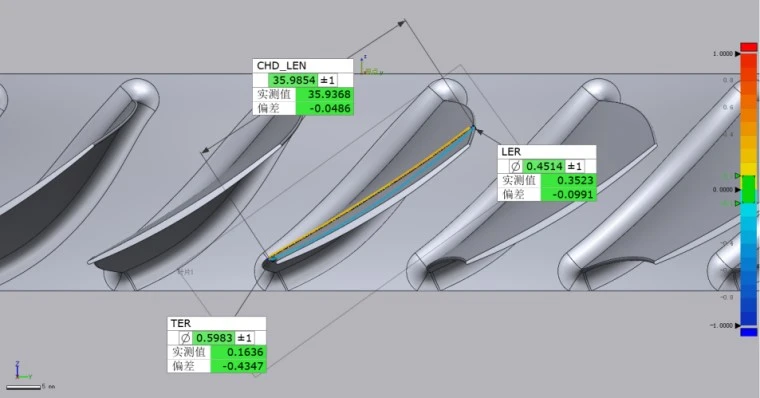
The XTOM blue-light 3D scanner performs 3D scanning and analysis on precision-cast blade profiles. It analyzes critical dimensions such as chord length, leading edge, and trailing edge, and directly generates full-dimensional inspection reports, thereby enhancing inspection efficiency and reliability.
-
Perform GD&T analysis on dimensions such as blade chord length, leading-edge diameter, and trailing-edge diameter.
-
Align the scanned model with the CAD model to perform full-dimensional 3D inspection.
-
Creating overall deviations and deviation annotations helps improve assembly precision.
-
Analyzing the assembly fit between parts facilitates the iterative optimization of product design.
3D Inspection and Analysis of Plastic Parts
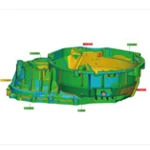
The XTOP3D XTOM blue-light 3D scanner performs multi-angle scanning of plastic parts to generate high-quality, real-time 3D data models. By importing the scanned 3D model and the original CAD design into inspection software, full-dimensional 3D inspection is achieved. Key parameters—such as hole locations, mounting surfaces, cylindricity, and positional deviations—are measured with precision, allowing for an intuitive assessment of whether the product meets design specifications.
Mating surfaces and mounting holes: Inspect the flatness, parallelism, and positional accuracy of mating surfaces, as well as the hole diameter, hole spacing, and coaxiality of mounting holes.
-
Thin-walled and fine structures: Inspect the uniformity of thin-wall thickness, as well as the dimensional accuracy and integrity of fine structures.
-
Surfaces and Fillets: Analyze surface profile, fillet radii, and transition effects.
-
Tolerance analysis: Determine whether plastic parts meet specifications based on design tolerance requirements and calculate the proportion of parts exceeding tolerances.
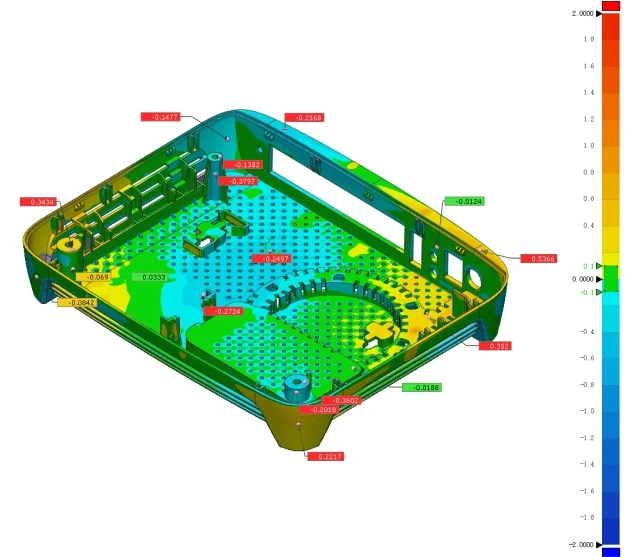
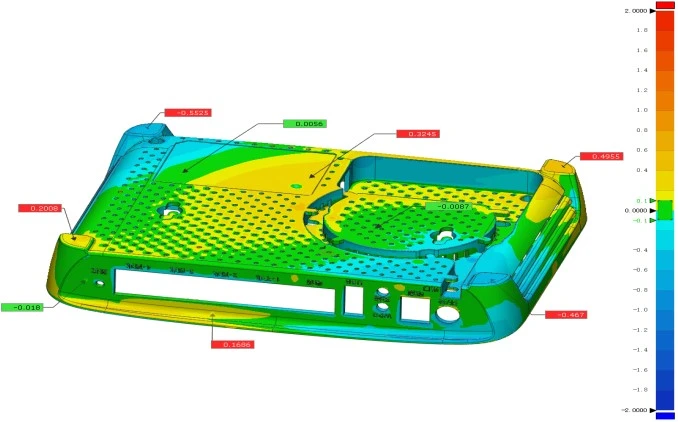
3D Scanning and Assembly Verification
Traditional manufacturing processes rely on physical trial assemblies, requiring iterative testing and time-consuming optimization using physical prototypes. A single assembly verification can take days, and the inability to quantify assembly gaps or interferences makes process optimization difficult.
By utilizing XTOM blue-light 3D scanning technology, the generated 3D data models can be used for assembly verification. This allows for the early assessment of assembly compatibility, the detection and avoidance of assembly interferences, and the prevention of downstream rework. Furthermore, archiving these 3D models supports future quality traceability, product iteration and upgrades, and process optimization.
Virtual Assembly of Drone Connection Housing
The XTOP3D XTOM blue-light 3D scanner was used to scan the drone's battery compartment and battery connection housing, capturing complete, high-quality 3D data models of the physical components. A color-coded deviation map was then generated by comparing the scan data against the original CAD model.
Based on the virtual assembly results and precise dimensional data, the optimized 3D model was used for 3D printing to rapidly produce the physical connection housing, thereby realizing the optimized assembly structure design.
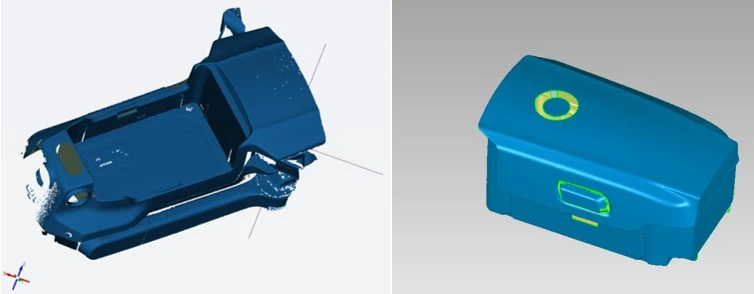
实物3D扫描数据模型
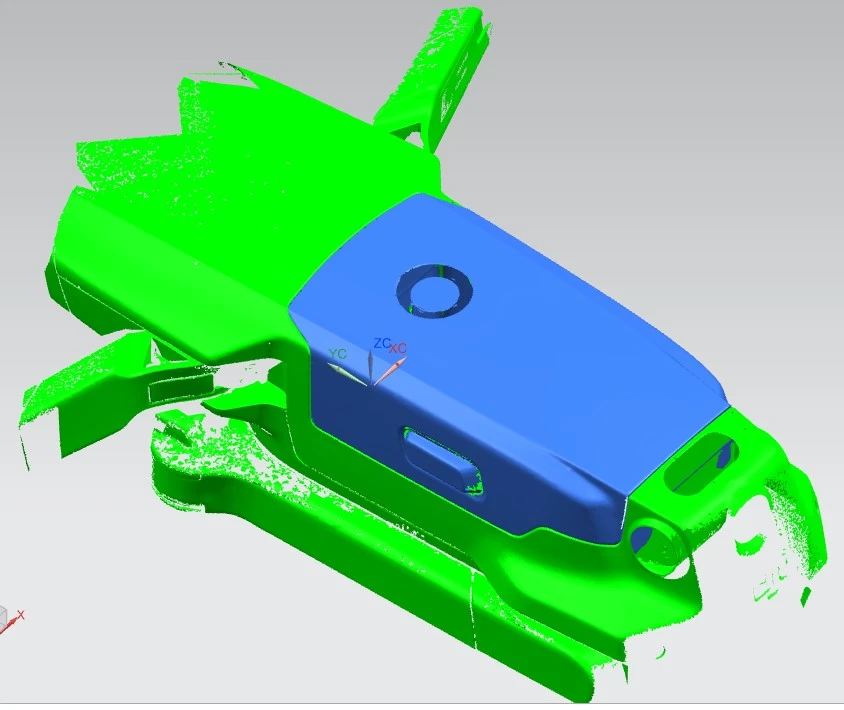
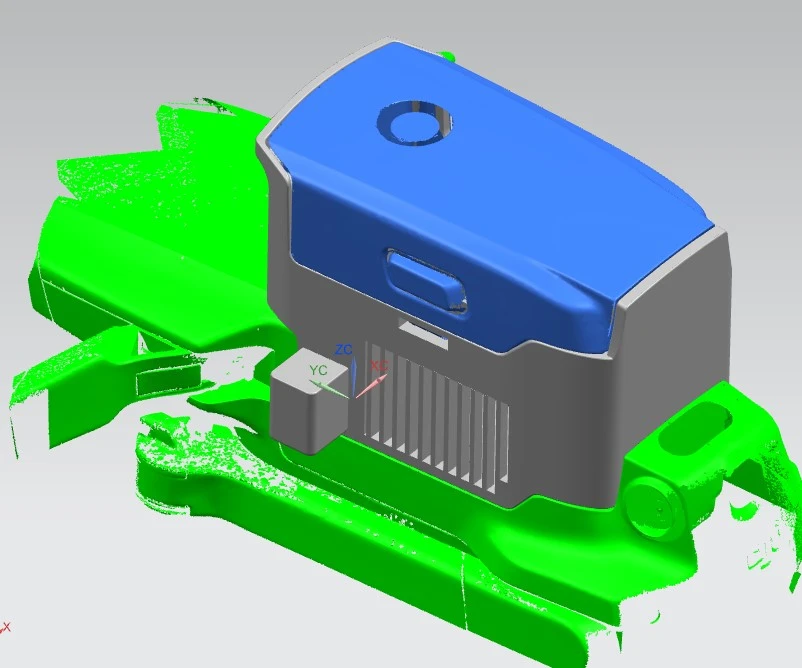
无人机与电池壳体虚拟装配结果
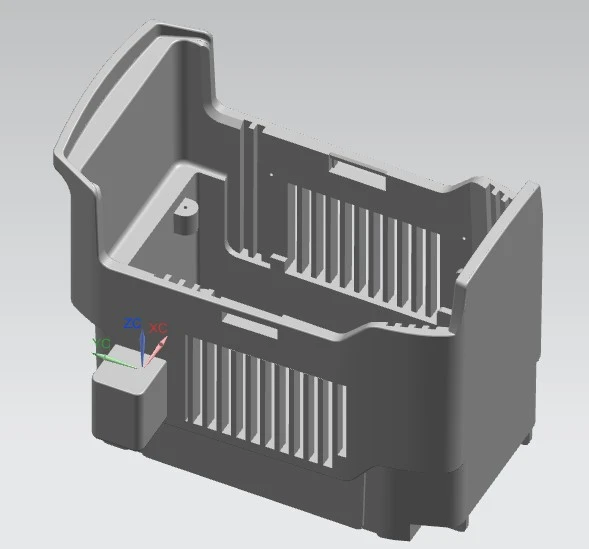
根据虚拟装配结果设计出中间灰色连接壳体
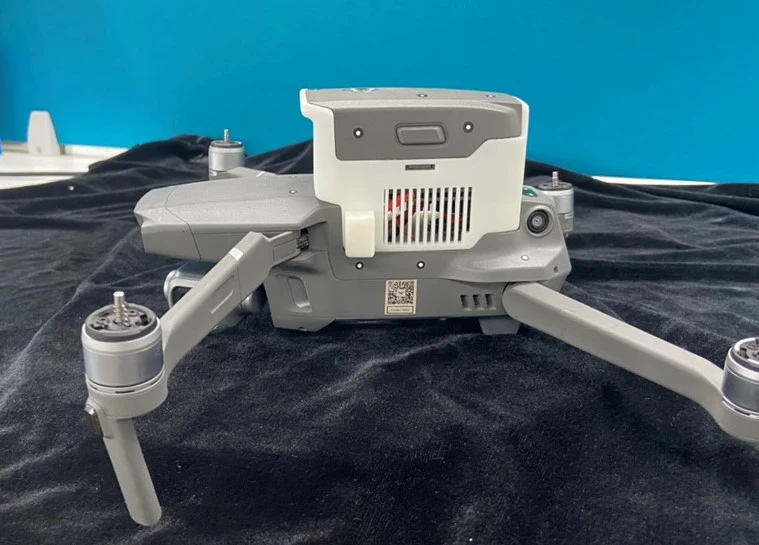
Assembled view of the 3D-printed gray housing
Assembly Analysis of Gears and Mounting Shafts
An XTOM blue-light 3D scanner is used to scan the gears and mounting shafts intended for assembly, capturing STL mesh data. By aligning the gears and shafts with their respective CAD models using reference features, a virtual assembly of the gear components is achieved.
Establish reference data based on the fit between the gear and the mounting shaft, and align this with the CAD model;
-
Perform virtual assembly analysis of the gears through CAD model alignment;
-
The clearance and flushness function calculates the minimum clearance at the meshing point of two gears;
-
A 2D cross-section can be taken at any position along the Z-axis to analyze the minimum clearance.
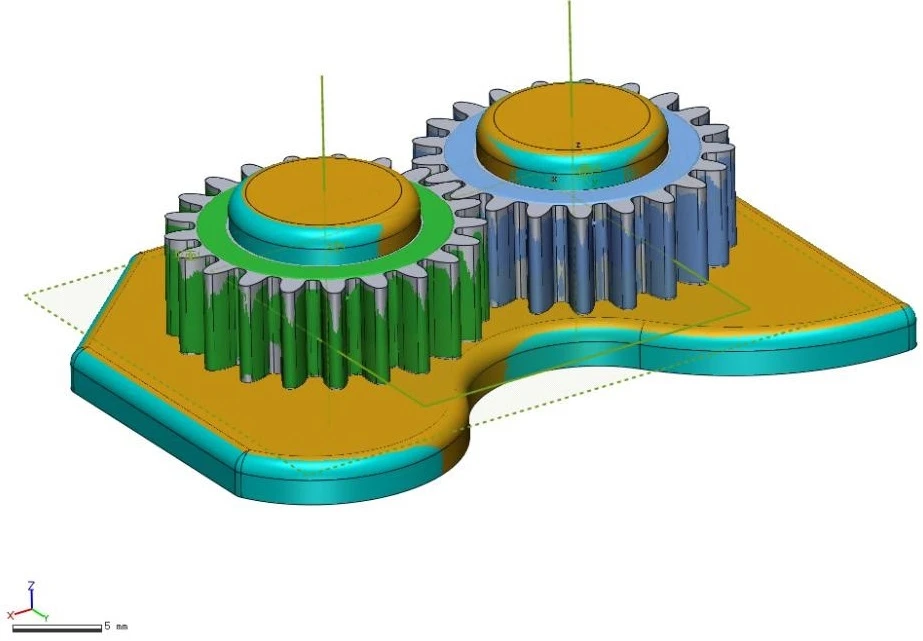
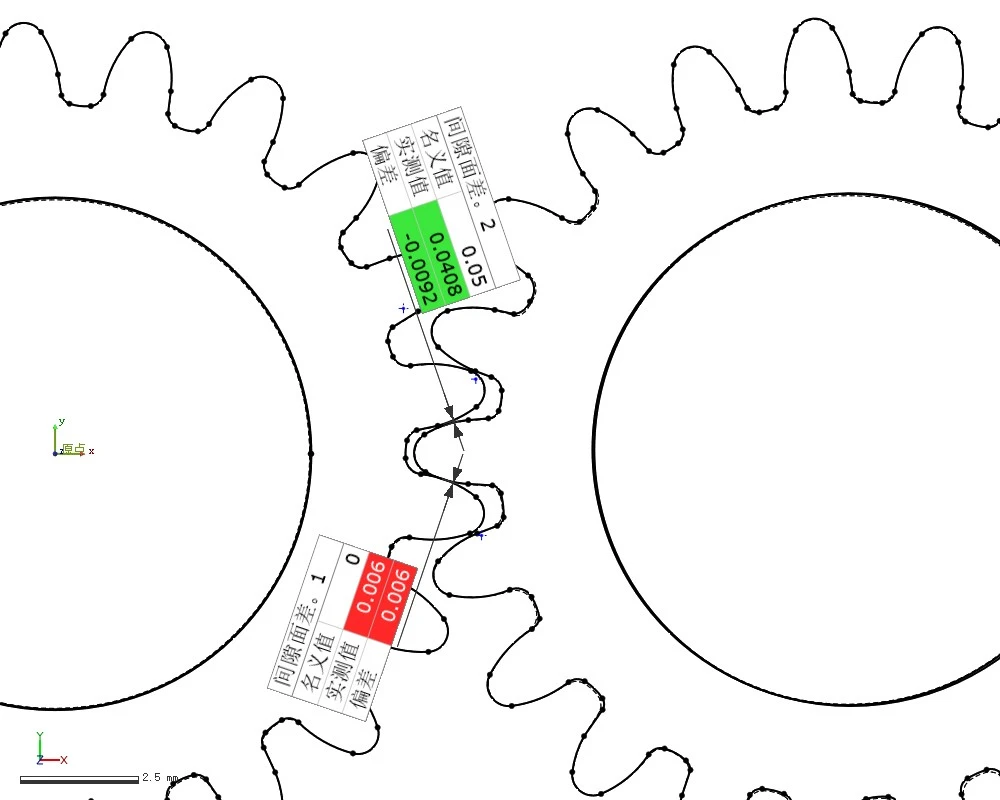
Rapidly and accurately acquire part profile data to ensure that the part's geometry and dimensions meet design standards.
Gear assembly clearance/offset 1: The theoretical meshing distance is 0, the actual measured value is 0.006, and the clearance difference is +0.006 mm; clearance/offset 2: The theoretical meshing distance is 0.05, the actual measured value is 0.0408, and the clearance difference is -0.0092 mm.