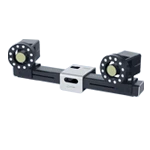
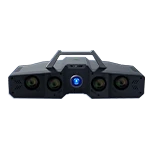
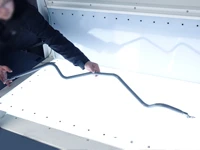
Full-screen displays, foldable screens, and ultra-thin bodies have become mainstream design trends in the smartphone industry; consequently, reliability testing for impact resistance—covering both the device as a whole and the screen—has shifted from traditional qualitative crack observation to full-field quantitative deformation measurement. The XTOP3D XTDIC-SPARK 3D high-speed measurement system, utilizing high-speed 3D-DIC technology, provides structural engineers with a comprehensive solution for the visualization and testing of transient mechanical behavior.
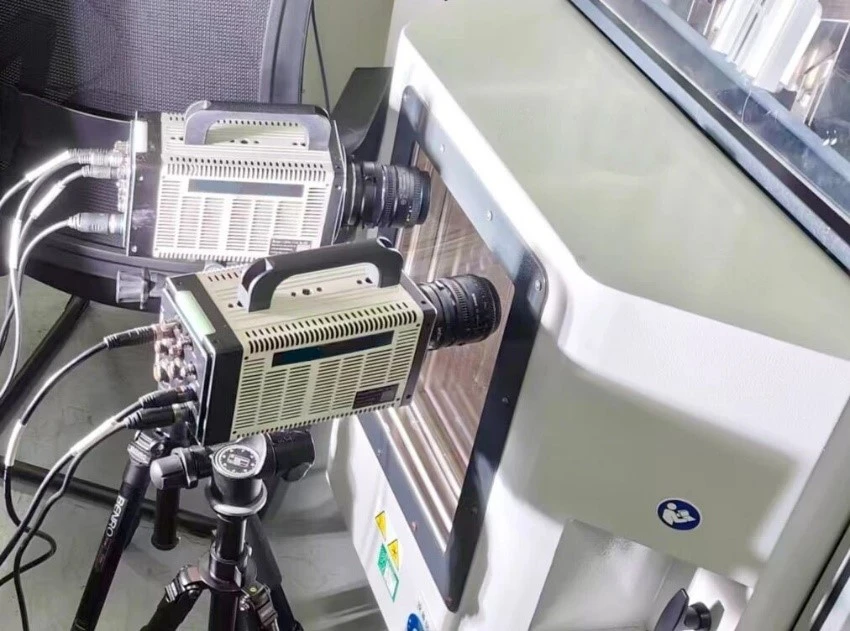
Image Acquisition Process of the XTDIC-SPARK 3D High-Speed Measurement System
01. Experimental Background
1.1. Industry Needs and Testing Challenges
With the widespread adoption of full-screen, foldable, and ultra-thin smartphone designs, the impact resistance of the screen and the overall device structure has become a key indicator of product reliability. The primary mechanical risks encountered during daily use include:
· Drop Impact: When a phone is dropped, it is subjected to transient impact loads. Stress waves propagate and reflect on a millisecond timescale, easily causing stress concentrations at structural weak points (such as the chamfers of the middle frame or screen edges), which can lead to screen shattering or internal component failure.
· Static Compressive Loads: Screens are subjected to quasi-static loads in scenarios such as being squeezed in a pocket or sat upon. Under compression, the deformation compatibility among the various layers of the OLED stack directly affects the screen's crack resistance.
Current mainstream mechanical testing methods in the industry all have significant limitations, as summarized below:
|
Testing methods
|
Basic Principles
|
Core limitations
|
|
Electrical strain gauge measurement method
|
Bonding a strain gauge to measure single-point strain.
|
Point contact lacks full-surface coverage; added mass interferes with lightweight, thin-walled structures.
|
|
Accelerometer
|
Measure the shock acceleration-time curve.
|
Only the overall impact strength is provided; it is not possible to pinpoint areas of stress concentration.
|
|
High-speed visual observation method
|
Recording the crack propagation process using a high-frame-rate camera.
|
It is only possible to qualitatively describe the timing and path of crack formation; the deformation and strain fields cannot be quantified.
|
|
Finite element simulation
|
Virtual Drop/Static Pressure Analysis
|
Relies on the accuracy of material constitutive parameters and lacks experimental validation.
|
Core Issue: The industry urgently requires a non-contact, full-field, transient mechanical measurement method capable of spatially locating regions of strain concentration while simultaneously capturing the entire process of stress wave propagation and crack initiation in the time domain.
1.2 Core Principles and Advantages of High-Speed 3D-DIC Technology
Digital Image Correlation (DIC) technology calculates full-field 3D displacement fields—and subsequently derives full-field strain fields—by tracking random speckle grayscale patterns on a specimen's surface and matching image subsets before and after deformation. Xintuo 3D developed the XTDIC-SPARK 3D high-speed measurement system specifically for high-speed impact and transient dynamic conditions; it offers four unique advantages for impact testing of thin, lightweight mobile phone structures:
1. Non-contact measurement: Eliminates added mass interference and preserves the original structural boundary conditions of the phone's thin-walled design, ensuring measurement results accurately reflect the device's actual impact-induced deformation;
2. Full-field 3D characterization: Simultaneously captures 3D displacement and principal strain data across the entire surface of the phone's back panel and screen, precisely identifying critical zones of strain concentration during the moment of impact;
3. Ultra-high spatiotemporal resolution: Features customizable resolution and frame rates via high-speed cameras and nanosecond-level dual-camera synchronization, capturing every deformation detail throughout the millisecond-scale impact process;
4. Simulation-measurement closed-loop calibration: Full-field displacement and strain data obtained via high-speed 3D-DIC can be directly imported into finite element analysis (FEA) software to refine material parameters and optimize simulation boundary conditions, enabling bidirectional validation between simulation and experimental results.
02. Experimental Method
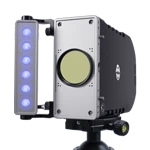
The data acquisition platform for this test is centered around the XTOP3D XTDIC-SPARK 3D high-speed measurement system. Configured with high-speed industrial cameras, a synchronization control system, and a ring-light illumination unit, the platform enables synchronized imaging and full-field deformation analysis under high-speed impact conditions.
① High-speed imaging: Equipped with two identical high-speed industrial cameras (offering resolution options ranging from 1 to 21 megapixels), the system achieves a maximum frame rate of 30,000 fps in full-frame mode, clearly capturing deformation details in every frame during high-speed motion.
② Binocular stereo configuration: Featuring a dedicated high-speed synchronization control unit, the two cameras perform synchronized capture with ultra-low latency (nanosecond level); timestamps for images from the left and right perspectives are perfectly aligned, ensuring high-precision 3D DIC analysis.
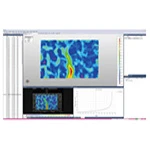
③ Precise synchronization: Integrated with professional DIC analysis software, the system triggers data acquisition in coordination with the impact testing machine, ensuring precise temporal alignment between the image sequences and impact load data.
03. Test Results and Analysis
Test Case 1: Mobile Phone Drop Test
This drop test utilized the XTDIC-SPARK 3D high-speed measurement system paired with two high-speed cameras. The setup featured a full-frame resolution of 1280×1024, an acquisition rate of 9,500 fps, and an ultra-short exposure time of 100 ns to capture the entire millisecond-scale process of the device striking the ground corner-first.
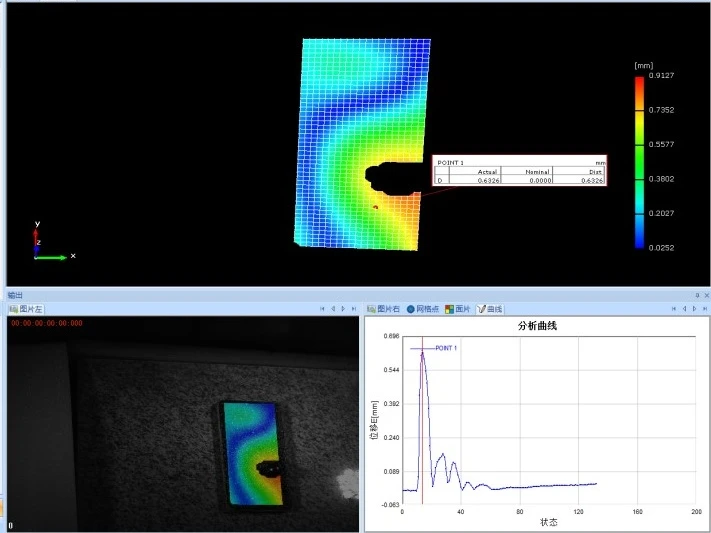
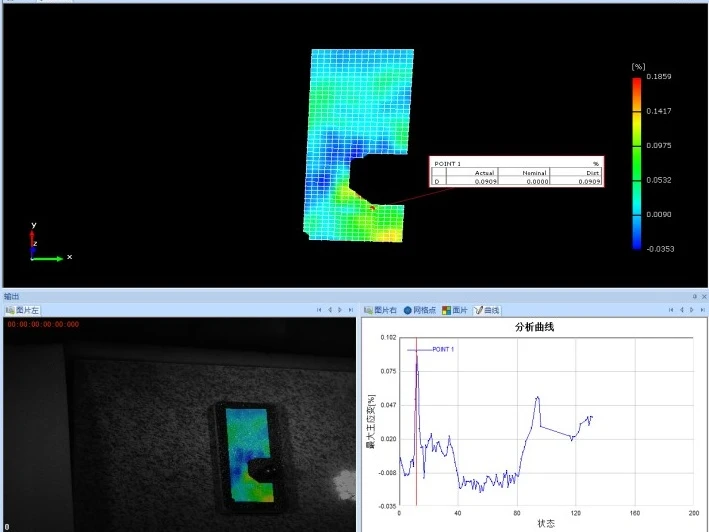
High-speed 3D-DIC technology fully recorded the temporal sequence of events—including the initial corner impact, the propagation of impact stress waves, and the device's subsequent rebound. Data processing via XTDIC-SPARK software generated 3D displacement and principal strain maps, while quantitatively outputting time-resolved out-of-plane displacement and strain values for measurement points across the entire back panel.
Key Test Conclusions:
At the instant of corner impact, a compressive strain wave radiated rapidly from the point of impact across the entire back panel; the resulting maps clearly visualized the transmission gradients and attenuation characteristics of the impact load within the thin-walled casing;
Peak displacement and strain values occurred in the impact zone, identifying it as the area most vulnerable to structural stress; this allowed for the precise localization of potential failure points, such as cracking or denting on the back panel;
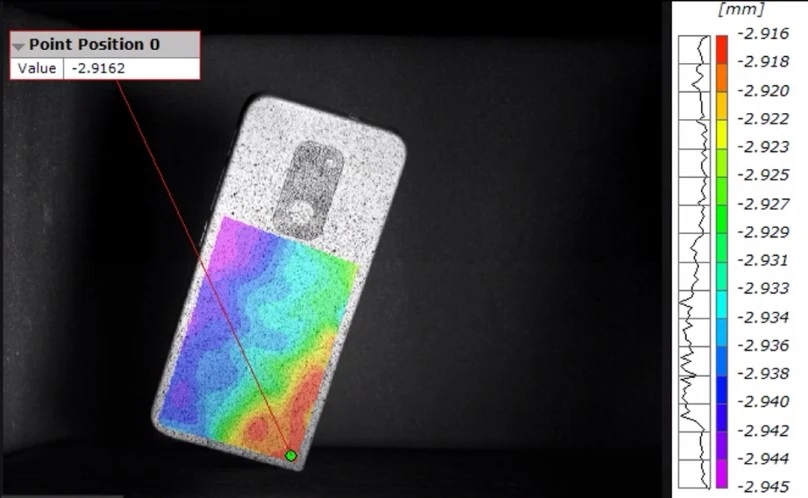
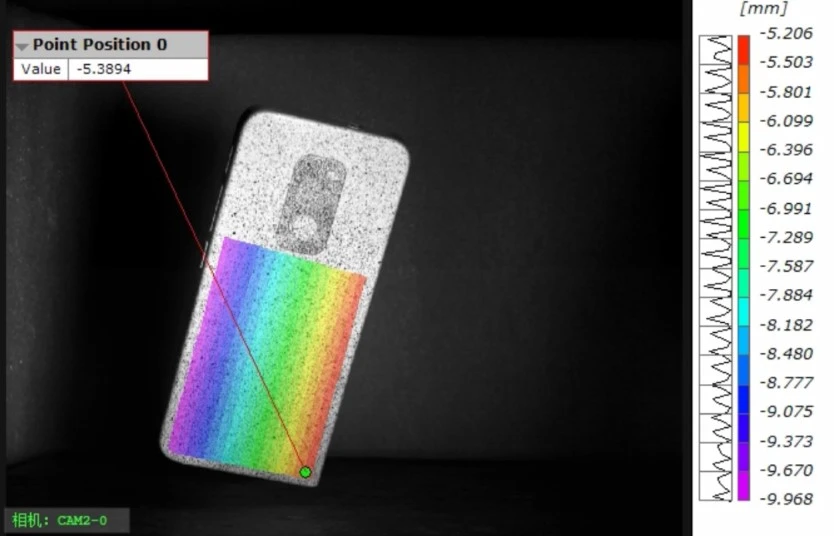
During the stages of impact energy release and phone rebound, the XTDIC-SPARK high-speed DIC measurement system clearly captures the entire process of residual strain relaxation and elastic recovery in the back panel, enabling the quantification of the housing material's damping and elastic recovery characteristics.
The DIC software allows for the selection of arbitrary feature points on the back panel and automatically generates displacement-time and strain-time curves, precisely quantifying peak impact values, strain duration, and the magnitude of residual deformation.
5. The comprehensive quantitative data intuitively reveals the dynamic impact response mechanism of thin-walled mobile phone back panels, providing a direct experimental basis for material selection, topology optimization of rear stiffeners, and the design of corner cushioning structures.
Test Case 2: Screen Impact Transient Deformation Test
The XTDIC-SPARK 3D high-speed DIC measurement system, equipped with an ultra-high-resolution (2560×2016) high-speed camera, was used at a frame rate of 3600 fps to fully capture the transient deformation of the screen during a small-ball impact at its center.
Key Test Findings:
At the moment of impact, significant out-of-plane indentation displacement occurred at the impact point, creating a circular gradient deformation field centered on that point;
The impact-induced deformation wave propagated radially outward from the center; the deformation amplitude gradually attenuated with distance, and the deformation response at the screen edges was significantly lower than that in the central region.
The XTDIC-SPARK high-speed DIC measurement system generates full-field maps that visualize the spatiotemporal spread of deformation; the propagation speed of the deformation wave is directly correlated with the screen glass modulus, screen thickness, and bezel constraints.
By extracting time-history curves from measurement points at the screen edges and center, the system quantifies peak transient strain and deformation response latency, enabling precise assessment of the screen's impact resistance limits and the protective efficacy of bezel cushioning structures.
Leveraging full-field strain data derived from high-speed 3D-DIC technology, targeted optimizations can be made to the screen cover glass, cushioning adhesive layers, and middle-frame support structures, thereby reducing the probability of screen breakage caused by everyday impacts from hard objects.