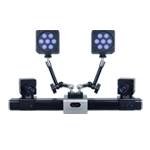
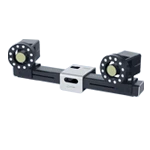
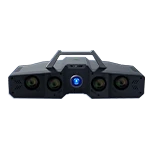
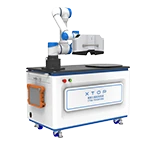
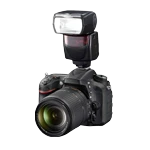
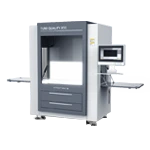
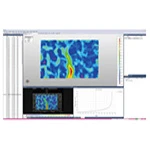
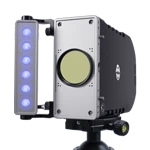
Digital image correlation (DIC) technology, combined with high-speed cameras (frame rates reaching tens of thousands of frames per second), can capture high-frequency vibration signals, meeting the needs of vibration measurement at frequencies of tens of kHz or even higher. Through sub-pixel-level algorithms, it can accurately identify minute displacement changes with sub-micron resolution, making it suitable for high-frequency vibration analysis with small amplitudes.
Using frequency domain analysis methods such as Fast Fourier Transform (FFT), DIC technology can quickly extract modal parameters such as resonant frequency, mode shape, and damping ratio from displacement time history data, enabling real-time modal analysis and helping engineers quickly assess the dynamic characteristics of structures.
Overcoming numerous challenges, DIC technology has demonstrated irreplaceable value in the field of high-frequency vibration:
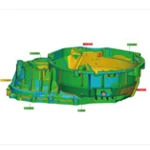
Visualization of full-field mode shapes of complex structures:
Value: It can intuitively present complex three-dimensional vibration modes that are difficult to capture by traditional single-point sensors, such as blade flutter, wing bending-torsional coupling, local resonance of PCB board, and abnormal vibration in the delamination area of composite materials, and accurately identify nodal lines, anti-nodes, and modal participation factors.
Application example: Measurement of high-frequency mode shapes (>5kHz) of turbine blades in aero-engines under high-speed rotation to identify dangerous modes that lead to high-cycle fatigue.
Characterization of vibration properties of microscale structures:
Value: Its non-contact, high-resolution characteristics make it the only effective means of studying the dynamic response of microstructures such as microelectromechanical systems (MEMS), nanoelectromechanical systems (NEMS), microelectronic packaging, and biological cells. It can measure vibrations with nanometer-level amplitudes and MHz-level frequencies.
Application Case: Modal analysis of RF MEMS resonators, accurately measuring their resonant frequency, Q value and mode shape, optimizing design and improving performance.
Research on nonlinear vibration and dynamic instability mechanism:
Value: It provides full-field, transient, and high-resolution dynamic deformation data, offering unprecedented experimental evidence for studying strongly nonlinear and transient processes such as flutter, galloping, parametric resonance, impact response, and dynamic failure of materials, and verifying and calibrating complex nonlinear dynamic models.
Application Case: Flutter Boundary Prediction and Instability Mode Capture of Composite Laminates under Supersonic Airflow.
In-situ monitoring of high-frequency fatigue and damage evolution:
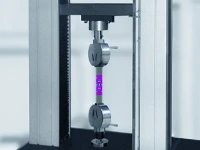
Value: By combining the full-field strain measurement capabilities of DIC, under high-frequency cyclic loading, the local strain concentration, microcrack initiation and propagation, and damage evolution process of materials or structures can be observed in situ and in real time, thus establishing a more accurate vibration fatigue life prediction model.
Application Case: Monitoring the location and propagation path of microcracks in engine hot-end components under high-frequency thermo-mechanical coupling loads.
Model validation and simulation accuracy improvement:
Value: The high-density, high-precision full-field experimental data provided by DIC technology is the most powerful tool for verifying and correcting numerical simulation models such as finite element analysis (FEA), computational fluid dynamics (CFD), and fluid-structure interaction (FSI), significantly improving the confidence of simulation predictions.
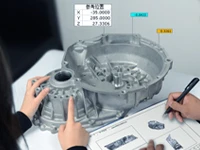
Application Case: Precise calibration of boundary conditions and damping parameters for high-frequency NVH (noise, vibration, and acoustic roughness) simulation models of automotive gearbox housings.