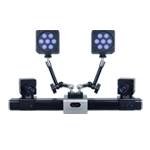
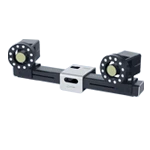
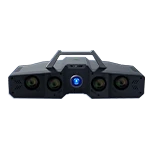
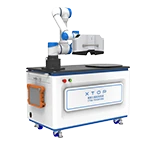
In modern engineering, where the pursuit of ultimate performance and reliability is paramount, precise understanding of vibration characteristics has become crucial to product success, from flutter suppression and vibration-resistant design in aero-engines to automobile manufacturing. However, traditional contact sensors (such as accelerometers and strain gauges) frequently encounter difficulties in measuring high-frequency vibrations, microstructures, and complex surfaces.
Problems such as installation difficulties, significant mass-added effects, and insufficient spatial resolution have hampered engineers' ability to delve into complex vibration phenomena. To address these challenges, a non-contact measurement technology—Digital Image Correlation (DIC)—is emerging as a powerful force, opening up entirely new avenues for vibration modal analysis and the study of high-frequency vibration characteristics.
DIC technology applied to high-frequency vibration measurement
The application of DIC technology to high-frequency vibration modal analysis, especially in the ultra-high frequency field, still faces severe technical challenges:
The "ghost" of motion blur:
Challenges: High-frequency vibrations mean that objects may move a large distance within a single camera exposure time, leading to image blurring, degradation of speckle features, failure of correlation calculations, and a sharp decrease in accuracy.
Solution:
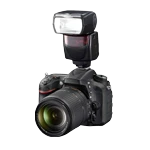
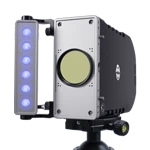
Ultra-high frame rate cameras: shortening exposure time (microseconds or even nanoseconds) is fundamental. They employ ultra-high-speed CMOS/CCD cameras combined with efficient light sources (such as pulsed LEDs and lasers) to provide instantaneous high-brightness illumination.
Precise synchronization: Ensures strict synchronization (nanosecond-level accuracy) between camera exposure, light source pulse, and vibration excitation signal, triggering acquisition at the extreme point of vibration displacement (velocity close to zero) or a specific phase point.
Motion deblurring algorithm: In the image processing stage, develop advanced deconvolution algorithms or use vibration phase information to restore blurred images.
The dilemma between high frequency and spatial resolution:
Challenges: Measuring minute high-frequency vibrations requires extremely high spatial resolution. However, high-resolution cameras typically have low frame rates, while high-frame-rate cameras often lack sufficient resolution. Furthermore, minute amplitudes necessitate even higher displacement measurement accuracy.
Solution:
High-resolution industrial cameras: Combining high-resolution industrial cameras significantly improves the imaging quality and spatial resolution of small areas.
Subpixel algorithm optimization: By employing a high-order interpolation algorithm and a robust correlation function, the displacement measurement accuracy is improved to 0.01 pixels or even higher.
Stroboscopic illumination and phase-shifting technology: Under high-frequency steady-state vibration, a stroboscopic light source is used to provide instantaneous illumination and imaging at specific phase points of the vibration waveform (such as the points of maximum/minimum displacement). Combined with phase-shifting technology, motion can be "frozen," enabling equivalent ultra-high-frequency measurements using ordinary cameras.
The "decoding challenge" of complex mode shapes and dynamic deformation:
Challenges: High-frequency vibrations are often accompanied by complex local modes, nonlinear behaviors (such as friction, gaps, and material nonlinearity), and even mode density or coupling. Traditional DIC post-processing (such as Fourier transform) may not be able to clearly separate dense modes or capture transient nonlinear responses.
Solution:
Advanced modal recognition algorithms: combine full-field time-domain data from DIC with time-domain modal recognition methods (such as random subspace identification (SSI) and feature system realization (ERA)) or frequency-domain methods (such as the multi-reference point least squares complex frequency domain method PolyMAX) to handle dense modalities and nonlinear systems.
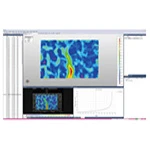
Spatiotemporal analysis: Utilizing the high-density spatiotemporal data provided by DIC technology, dynamic deformation decomposition, intrinsic orthogonal decomposition (POD), dynamic mode decomposition (DMD), etc., are applied to extract dominant modes and coherent structures.
Nonlinear system identification: Combining DIC data and nonlinear system identification theory, nonlinear stiffness and damping characteristics are identified and quantified.