In the field of structural components for light chemical industries—such as engineering parts serving support, load-bearing, and connection functions—evaluating the mechanical properties of microporous materials with complex surface structures (including honeycomb structures, foamed plastics, and non-woven fabrics) is crucial. While compressive deformation behavior directly impacts product performance and service life, the materials' heterogeneous structures, micro-scale dimensions, and complex geometries pose significant challenges for precise deformation monitoring. Digital Image Correlation (DIC) technology—a non-contact, full-field, and high-precision optical measurement method—is emerging as a key tool for overcoming these challenges.
I. Technical Background and Challenges
The deformation behavior of structural components in the light chemical industry under compressive loads directly determines product performance; however, their irregular surfaces, susceptibility to large deformations, and environmental sensitivity pose a threefold challenge for traditional monitoring methods:
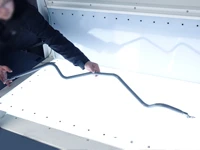
Specimen complexity: Soft materials are prone to damage or interference from contact probes, while complex geometries (such as curved surfaces or porous structures) make the precise placement of strain gauges difficult [1];
Environmental adaptability: Material properties fluctuate with changes in temperature and humidity or in liquid environments, rendering conventional sensors incompatible [2];
Lack of full-field data: Localized measurements fail to capture global failure modes—such as buckling or shear banding—whereas full-field strain distribution is a critical basis for optimizing structural design (Reu, 2014 [3]).
II. Core Advantages and Applications of DIC Technology
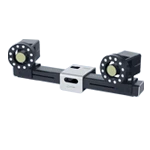
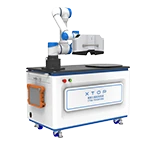
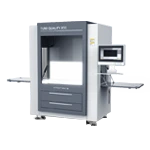
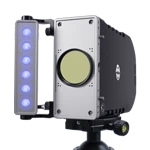
The XTOP3D XTDIC 3D full-field strain measurement system utilizes DIC technology to track grayscale variations in surface speckle patterns, enabling non-contact, dynamic, full-field strain measurement. Capable of synergistic multi-field coupled measurement [4], it successfully addresses the challenge of monitoring compressive deformation in lightweight chemical materials:
Full-field 3D analysis [8]: Combines telecentric lenses with blue-light illumination to precisely capture compressive strain fields in microporous or curved structures (strain accuracy <0.1%) [7];
Multi-physics field fusion [3]: Achieves microsecond-level temporal synchronization with testing machines, establishing a dynamic correlation between load and local strain;
Intelligent algorithm enhancement [11]: Employs intelligent algorithms for the real-time identification of micro-cracking and instability behaviors.
In micro-scale compression deformation monitoring, the single-camera telecentric DIC system minimizes out-of-plane displacement interference through parallax-free imaging and a globally uniform scale, thereby elevating the measurement accuracy of strain fields in complex geometric features (such as micropores and steps) to the sub-micron level. [12]
— "Micro-scale DIC Deformation Measurement Technology Based on Telecentric Lenses," *Optics and Precision Engineering*, 2021
"For compression tests dominated by in-plane deformation, the single-camera telecentric DIC system—offering advantages such as simplified calibration, the elimination of stereo matching, and controllable costs—has become the preferred solution for 'small, precise, and intricate' applications, such as microelectronic packaging and MEMS devices." [13]
— "Review of Digital Image Correlation Methods in Experimental Mechanics," *Advances in Mechanics*, 2015
III. Engineering Applications and Solutions
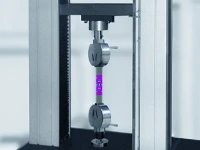
Through compression deformation measurement experiments on lightweight industrial structural components, the application process and value of DIC technology in addressing the challenges of compressing complex, small-scale light-industrial samples are clearly demonstrated.

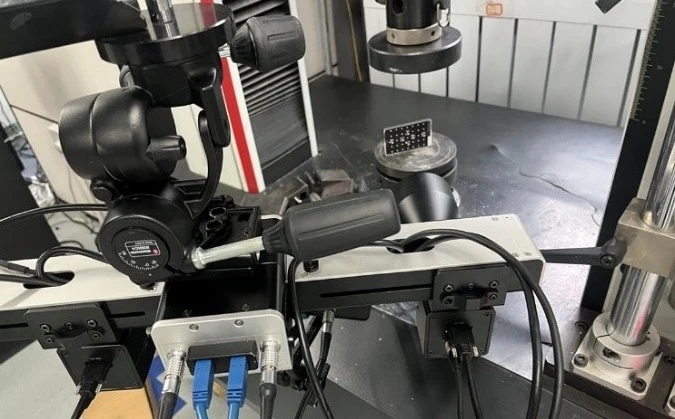
XTOP3D DIC System Paired with Telecentric Lenses (Digifar Lenses)
Solution Deployment:
Micro-scale Imaging: Employs a single-camera DIC system equipped with a telecentric lens (Digifar lens). This setup maintains constant magnification despite height variations and preserves the linear mapping between image coordinates and physical coordinates, effectively overcoming perspective distortion issues associated with small-scale specimens.
Integration and Synchronization: Establishes data communication and synchronization between the DIC system and the testing machine. This ensures precise temporal alignment of displacement, displacement fields, and strain fields with the force data from the testing machine (enabling the construction of stress-strain curves).
Data Processing and Key Results:
Linear Strain Curves: Provides data on the variation of strain in the X and Y directions of the specimen over time (or as a function of mechanical load) during quasi-static compression.
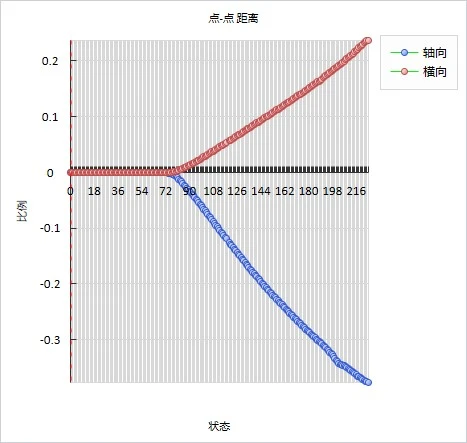
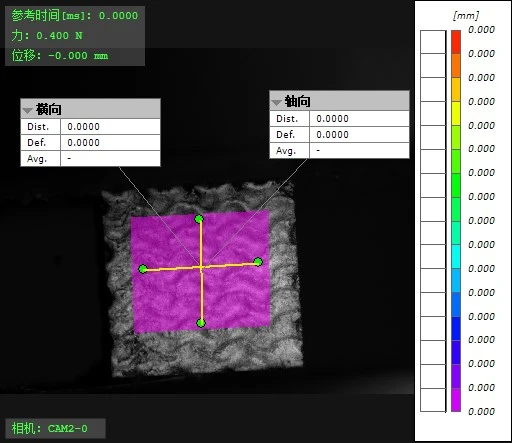
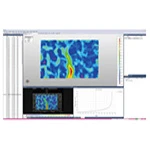
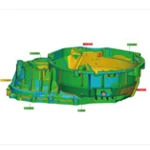
Full-field deformation quantification: Processing yields maps of full-field displacement (X and Y directions, and total displacement) and full-field strain (X-direction linear strain, Y-direction linear strain, and total strain).
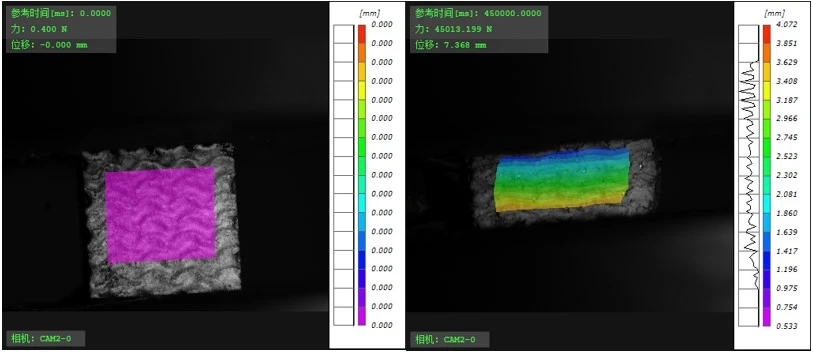
Contour map of total compressive displacement of the specimen
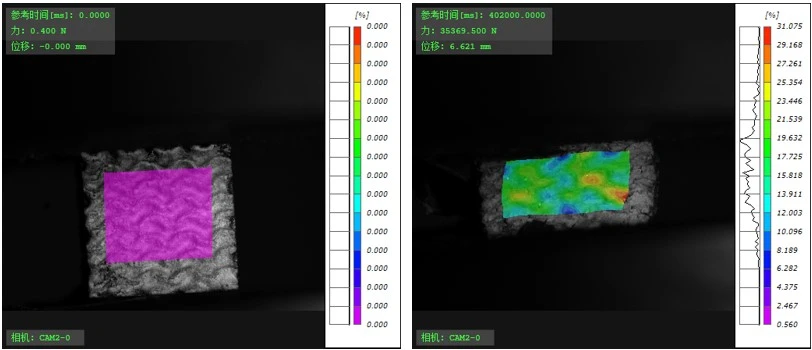
Contour map of total compressive strain for the specimen
Contour Map Comparative Analysis:
It provides a visual representation of the displacement fields of the specimen before and after compression, clearly revealing regions of localized strain concentration; this allows for the detection of potential weak points or non-uniform deformation, even on small-scale, complex surfaces.
By integrating synchronized force data, it is possible to establish true "full-field" stress-strain relationships and curves for key material parameters.
Conclusion: This case study successfully demonstrates that DIC technology enables the quantitative monitoring of critical information—such as local strain distribution, deformation modes, and non-uniformity—that is difficult to capture using traditional methods.
Experimental Conclusions:
As demonstrated by typical case studies, by integrating telecentric lenses, optimizing illumination, and achieving precise synchronization with testing machines, DIC technology enables the accurate acquisition of full-field displacement and strain distributions on small-scale, complex surfaces. It reveals structural deformation modes, strain concentration zones, and non-uniformities, effectively overcoming traditional challenges associated with monitoring the compressive deformation of complex-surface specimens in the light chemical industry.
With continuous advancements in cutting-edge technologies—such as micro-scale imaging, high dynamic range capabilities, and rapid algorithms—and their integration with artificial intelligence, the penetration and depth of DIC applications within the light chemical industry will continue to expand [11]. The vast market for engineering applications underscores the value and potential of DIC, which is poised to play an increasingly pivotal role in advancing material R&D and enhancing product quality control across the light industry.
IV. Market Size of DIC Technology in the Engineering Sector
DIC technology has become a core tool for material characterization, structural testing, and product validation, with a continuously growing market:
Research by QYResearch (2025) [9] indicates that the global market for dedicated 3D-DIC systems stood at $426 million in 2024 and is projected to exceed $870 million by 2031, representing a CAGR of 10.72%; notably, the Chinese 3D-DIC market is expected to grow at a CAGR of 16.3%—the fastest globally—during the 2024–2031 period.
Furthermore, the DIC market is currently transitioning from laboratory-based tools to standard industrial equipment:
Amidst steady global growth (CAGR of 10.5%–10.8%), 3D-DIC subsystems (CAGR 10.7%) and applications in China's light industry (CAGR >25%) are serving as dual growth engines; by 2028, monitoring of complex surfaces in light industry and chemical sectors is expected to account for 21% of the total DIC application market share [9, 10].
References
[1] F. Chen, S. Yang, Application challenges of strain gauge in micro-scale deformation measurement. Experimental Mechanics, 2018.
[2] R. Jones, C. Wykes. Electronic speckle pattern interferometry. Springer Series in Optical Sciences, 1989.
[3] Li Ming, Wang Haiyang. Research on Data Synchronization Methods between DIC Systems and Mechanical Testing Machines in Material Testing. Journal of Experimental Mechanics, 2023, 38(2): 345-352.
[4] M.A. Sutton, J. J. Orteu, H. W. Schreier. Image correlation for shape, motion and deformation measurements: Basic concepts, theory and applications. Springer Science & Business Media, 2009.
[5] B. Pan, K. Qian, H. Xie, A. Asundi. Two-dimensional digital image correlation for in-plane displacement and strain measurement: a review. Measurement Science and Technology, 2009, 20(6): 062001.
[6] B. Pan. Reliability-guided digital image correlation for image deformation measurement. Applied Optics, 2009, 48(8): 1535-1542.
[7] W.A.M. Brekelmans, et al. Microscale deformation measurements: a review. Journal of Micromechanics and Microengineering, 2010, 20(9): 093001.
[8] F. Hild, S. Roux. Digital image correlation: from displacement measurement to identification of elastic properties – a review. Strain, 2006, 42(2): 69-80.
[9] QYResearch. Global and China 3D Digital Image-Related Systems Market Report 2025–2031. QYR-3DDIC-025, 2025.
[10] Frost & Sullivan. Material Testing Digital Transformation Analysis 2025. FS-MT-047, 2025.
[11] Zhang, Y., et al. Deep learning enhanced digital image correlation for efficient and accurate full-field measurement. International Journal of Solids and Structures, 2023, 265-266: 112152.
[12]Tang Chen, Li Zhiyong, Zhang Qingchuan. "Micro-scale DIC deformation measurement technique based on telecentric lenses." *Optics and Precision Engineering*, 2021, 29(3): 512-520.
[13] Xie Huimin, Wang Huaiwen, Gao Jianxin, et al. "Review of the Application of Digital Image Correlation Methods in Experimental Mechanics." *Advances in Mechanics*, 2015, 45(1): 1-23.