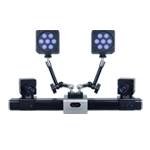
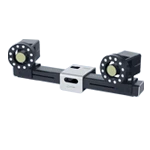
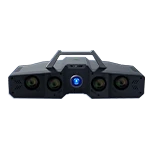
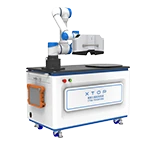
In the extreme high-temperature environments of aero-engine cores, nuclear reactor fuel cladding, and hypersonic vehicle leading edges, materials endure enormous thermal stress. Accurate measurement of their strain fields is crucial for ensuring safety and performance. Traditional contact measurement methods completely fail in these environments—sensors cannot survive, and data reliability is questionable.
Challenge: Measurement difficulties at high temperatures
Sensor limitations: Strain gauges and extensometers can melt, oxidize, or fail at extreme high temperatures.
Contact interference: Contact measurement of the thermal deformation behavior of the interfering material itself.
Missing overall information: Single-point or local measurements cannot capture the overall deformation and stress concentration of complex components.
Harsh environment: Strong heat radiation and medium interference (such as gas) make the measurement environment extremely harsh.
Game Changer: Ultra-High Temperature Resistant DIC Technology
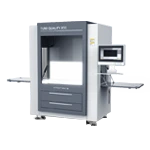
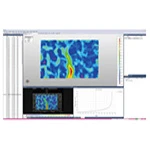
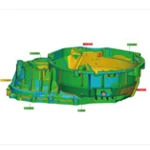
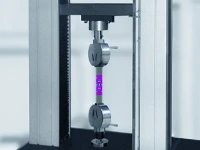
Digital image correlation (DIC) technology, an advanced optical non-contact full-field deformation measurement method, accurately reconstructs the three-dimensional displacement and strain field by tracking the movement of natural or artificial speckle patterns on the sample surface. DIC systems optimized for ultra-high temperature environments overcome the limitations of traditional optical methods, becoming a revolutionary tool in this field.
Key technologies of ultra-high temperature DIC system
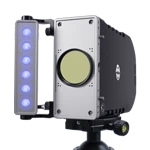
Special high-temperature resistant lens: It adopts a unique cooling design and high-performance heat insulation materials to ensure that the lens works stably under severe heat radiation of 1600°C or even higher, and produces clear images.
High-temperature resistant speckle: High-temperature ceramic or metal-based speckle materials maintain excellent adhesion and contrast under ultra-high temperature, oxidation, and thermal cycling environments, forming the cornerstone of successful measurements. Say goodbye to measurement failures caused by speckle detachment!
Advanced thermal drift compensation algorithm: intelligently identifies and eliminates image distortion caused by high-temperature air disturbance and thermal radiation, significantly improving displacement measurement accuracy (down to the micrometer level).
Powerful computing capabilities: efficiently processes massive amounts of high-temperature image data and outputs full-field strain results in real time or quickly.
Modular protection system: Provides customized protection kits and heat-resistant shields for core components such as cameras, lenses, and light sources, easily coping with the challenges of ultra-high temperature, dusty, and corrosive media in furnaces and combustion environments.
Application Value of Ultra-High Temperature DIC Technology
Materials R&D: Accurately obtain constitutive relationships, creep behavior, fatigue crack initiation and propagation laws of high-temperature alloys, ceramic matrix composites (CMC), and ultra-high temperature ceramics (UHTC) at extreme temperatures to accelerate the design of next-generation high-temperature resistant materials.
Component monitoring: Realistically simulates the thermomechanical deformation, strain concentration, thermal mismatch, and failure modes of turbine blades, combustion chamber liners, and hot-end components under service conditions, providing key data for life prediction and structural optimization.
Process optimization: Online monitoring of transient temperature and strain fields during high-temperature forming, welding, and additive manufacturing processes to optimize process parameters and control deformation and residual stress.
Safety assessment and verification: Provides direct experimental verification of the structural integrity and safety of key equipment such as aero-engines, nuclear energy facilities, and spacecraft under ultra-high temperature and extreme environments.