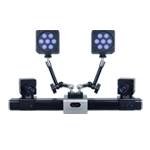
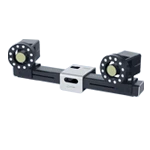
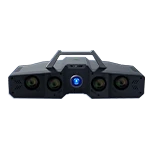
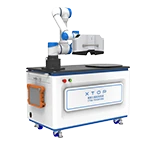
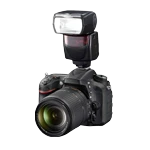
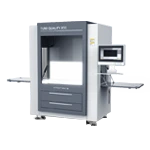
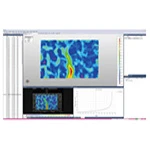
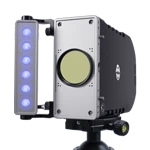
In ultra-high-speed scenarios (>10,000 fps) such as explosive impacts, ballistic penetration, and dynamic material fracture, traditional measurement methods struggle to capture transient strain fields. The high-speed DIC+ ultra-high-speed camera system can be used for dynamic strain measurement, high-speed deformation measurement, ballistic testing, and dynamic material fracture, revealing the secrets of precise measurement of microsecond-level deformation fields.
High-speed dynamic DIC measurement technology challenges
High-speed dynamic measurement faces four major technical challenges: first, motion blur and image tearing, where the target’s violent movement under microsecond-level exposure causes image blurring and loss of speckle features; second, insufficient 3D synchronization accuracy, where the frame rate difference between the two cameras and trigger delay lead to 3D reconstruction distortion; third, the bottleneck of real-time processing of massive data, where TB-level high-speed image streams far exceed the processing capabilities of traditional DIC software; and fourth, interference from complex environments, such as shock wave vibration, debris occlusion, and extreme lighting interference affecting imaging stability.
Innovative technical solution: High-speed DIC dynamic measurement
With continuous breakthroughs in technologies such as image sensors, optical lenses, and image processing, the performance of high-speed cameras has been greatly improved, including higher frame rates, higher resolutions, lower latency, and lower power consumption.
Digital image correlation (DIC) technology combined with a high-speed camera is one of the few solutions capable of acquiring structural displacement and strain information under real high-speed operating conditions. The high-speed camera acquires a continuous sequence of images in an extremely short time, while the DIC algorithm calculates speckle variations in the images to deduce the three-dimensional displacement and strain fields. This equipment combination solution primarily addresses the following three issues:
DIC Algorithm Upgrade
The highly optimized DIC algorithm employs subpixel interpolation, parallel computing, and GPU acceleration technologies to improve computational speed.
Dynamic calibration
Precise dynamic or static calibration is required before or after the experiment to determine camera parameters (intrinsic parameters, extrinsic parameters, distortion). Sometimes, a fixed reference point needs to be added during the experiment for real-time compensation.
Motion blur suppression
An adaptive motion compensation algorithm is used to improve displacement measurement accuracy (under impact load).
Real-time data processing
GPU parallel computing architecture: processing speed up to 500 frames per second (1080p resolution); deep learning-assisted speckle tracking: occluded scene recognition rate >90%.
Engineering protection design
The electromagnetic shielded enclosure resists shock wave interference, the multispectral filter eliminates the effects of explosion flashes, and the modular lens quick-release system can cope with extreme environments.
Industry Applications and Value
Military Industry and Defense: Strain Field Evolution During Projectile Penetration (Case Study: Armor-Piercing Projectile Target Plate Test)
Automotive Safety: B-pillar Deformation Pattern Analysis in Crash Tests (100,000 fps)
Energy Technology: Full-Field Strain Monitoring of Battery Thermal Runaway and Explosion
Materials Science: Measurement of Dynamic Fracture Toughness in Metals with Lamellar Cracks