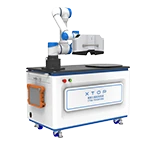
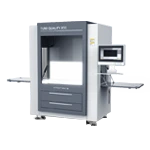
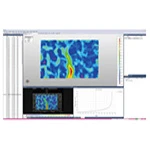
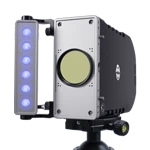
The XTOP3D XTDIC-Micro microscopic strain measurement system is designed to measure surface shape, deformation, and strain in micro-scale materials subjected to applied loads. Utilizing a high-resolution binocular stereo microscope for image acquisition and DIC software capable of complex distortion correction for 3D reconstruction and analysis, the system enables high-magnification deformation measurement. It is ideally suited for measuring strain in materials such as composite fibers, microelectronics, micro-components, and biomaterials.
This 3D microscopic DIC system overcomes challenges such as limited depth of field, optical distortion, and sharp noise artifacts. Through proprietary correction algorithms, it calculates non-parametric deformation zones within the stereo microscope's field of view, thereby correcting for distortions that would otherwise interfere with full-field strain calculations.
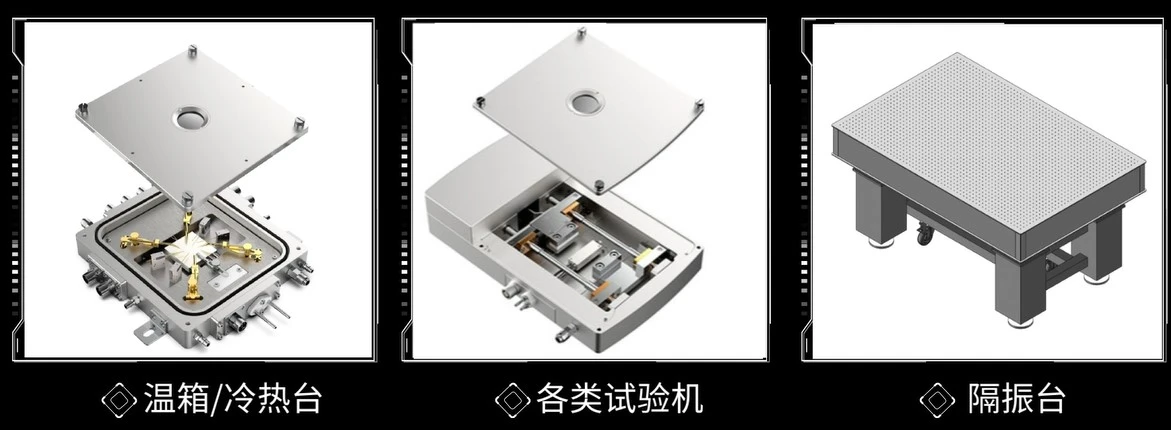
The system can be integrated with various peripherals—such as environmental chambers (heating/cooling stages), in-situ testing machines, and vibration-isolation tables—to facilitate high-precision strain measurements across diverse temperatures and testing scenarios. Applications include dynamic strain analysis, phase transformation behavior, crack initiation and propagation, fatigue and fracture, bending, and high-temperature creep.
Mechanical Testing of Micro-scale Materials
Micro-scale Metal Specimens
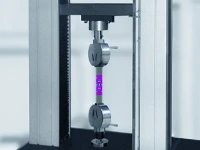
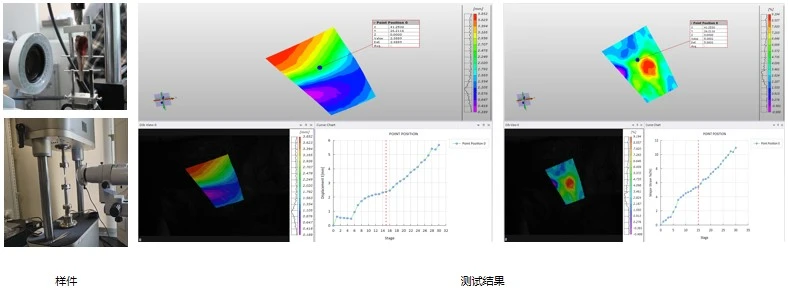
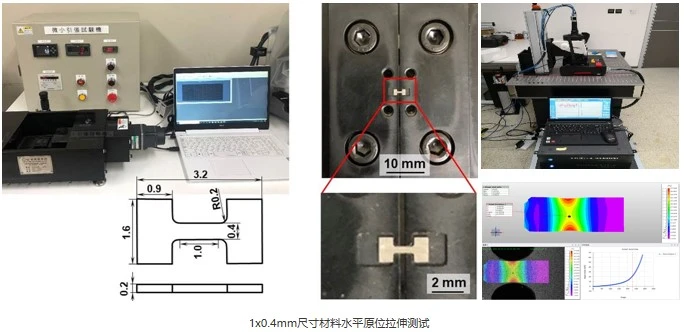
A micro-scale specimen (2 mm) is loaded using an in-situ tensile testing machine while a DIC microscopic strain measurement system captures images at a set sampling rate until the specimen fractures; DIC software is then used to analyze the displacement and strain fields on the specimen's surface.
Micro-biomechanical Deformation Measurement of Bone Material
This study analyzes the mechanical properties of materials—such as bone and muscle—under load. By employing a microscopic Digital Image Correlation (DIC) strain measurement system to analyze changes in surface displacement and strain fields during the loading of a biological lower-leg bone, the research facilitates the testing, simulation, and manufacturing of biomimetic materials.
Radial Compression Experiments on Micro-scale Carbon Fiber Rods
This study investigates the strain and displacement behavior of carbon fiber rods (approximately 5–9 mm in diameter) under radial loading. The rods are secured in a fixture and compressed using a testing machine, while a DIC (Digital Image Correlation) microscopic measurement system is employed to monitor full-field strain variations in both the aluminum components and the rods.
Thermal Performance Testing for Semiconductor Chips
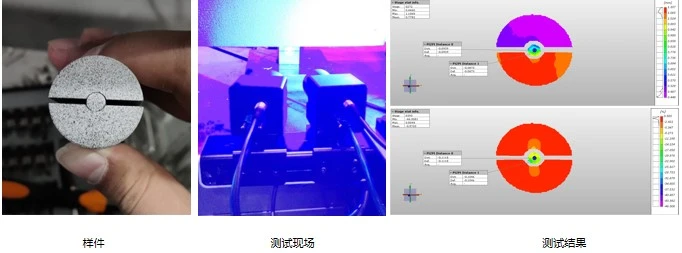
The DIC microscopic strain measurement system utilizes Digital Image Correlation (DIC) technology combined with a stereo microscope to acquire thermal characteristic parameters and transient temperature distribution fields. This enables the validation of thermal failure processes and the refinement of simulation model parameters.
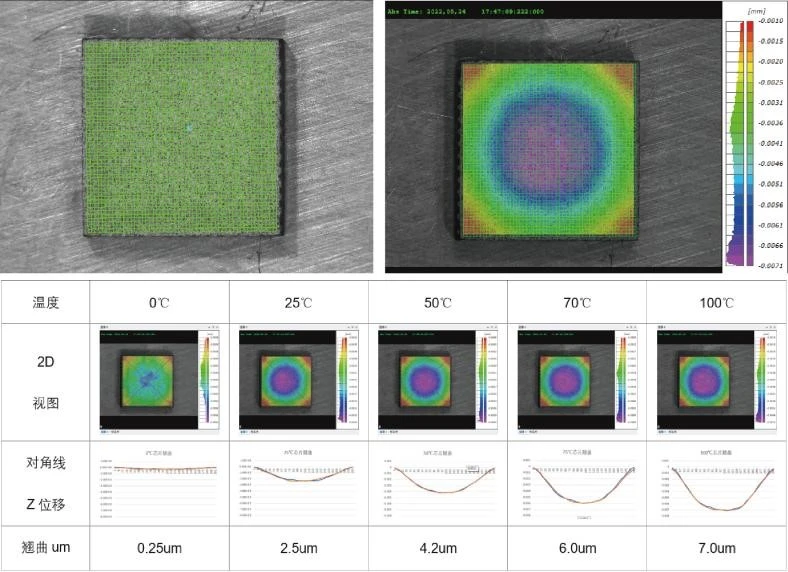
Chip Thermal Warpage Testing
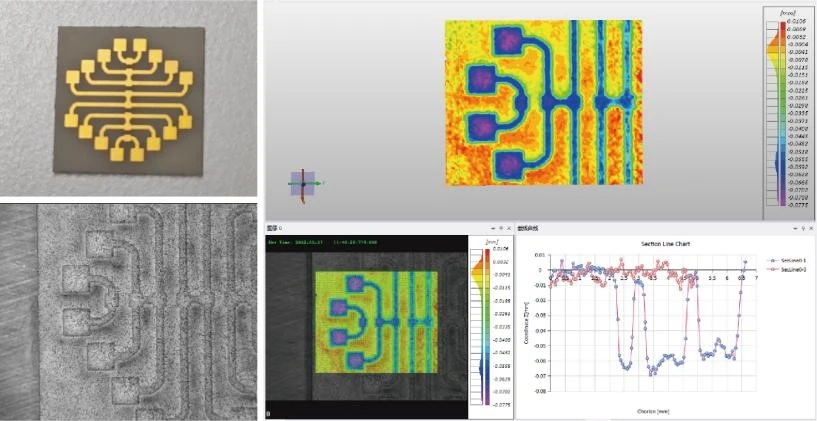
The following test measures thermal warpage deformation in chips. It captures data such as 3D warpage surfaces and cross-sectional warpage profiles, while leveraging powerful DIC software analysis tools to extract 3D point and line information for any specific location.
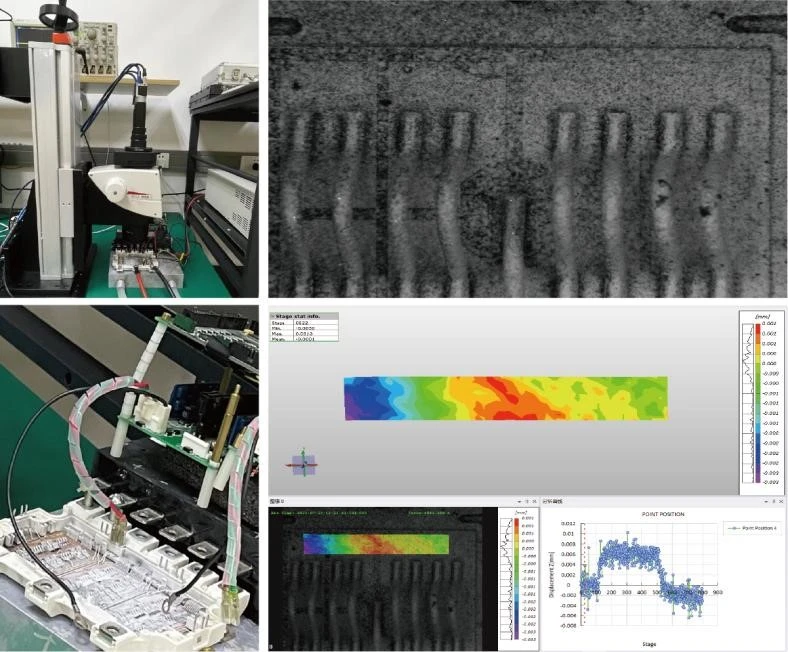
Measurement of Thermal Deformation in Components
The following test examines the thermal deformation process of a component. Testing is used to obtain data such as the 3D surface profile and cross-sectional profiles of chip warpage, while powerful analysis tools allow for the extraction of 3D point and line information at any desired location.
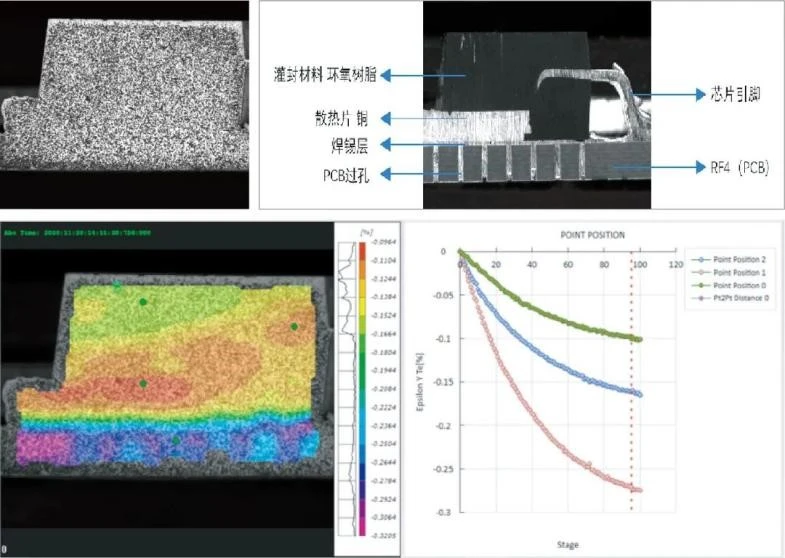
In-plane strain in chip cross-sections
Mismatches in the coefficients of thermal expansion (CTE) between material layers in microelectronic chip packaging structures lead to residual stresses and thermal deformation within the device. A DIC (Digital Image Correlation) microscopic measurement system can measure the deformation and strain of different materials within the chip cross-section, enabling the analysis of thermal strain at the micro-scale.
In-plane strain in PCB copper foil and ceramic substrates
Circuit board assemblies (PCBAs) featuring copper foil on ceramic substrates are highly susceptible to strain-induced solder joint failure. Excessive mechanical strain during manufacturing processes—particularly under harsh conditions—can lead to various failure modes. Measuring minute displacements and strains in PCBs across different temperature ranges helps improve product yield and reliability.