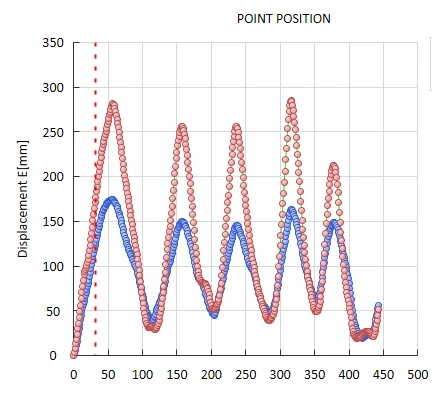
Knee braces are scientifically designed based on principles such as physics and biomechanics to ensure continued protection during leg movement, making them excellent physical aids for the recovery of joint function.
Leg movement trajectories are complex, and the contours of joints and tendons are pronounced, making leg braces prone to slippage. Digital Image Correlation (DIC) technology enables the measurement of quantitative data—such as the displacement and movement posture of the brace relative to the leg during activity—thereby providing data-driven support for brace design.
DIC Technology Application
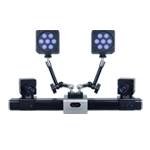
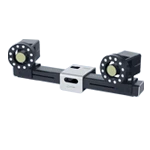
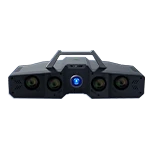
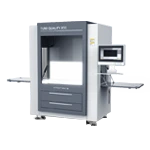
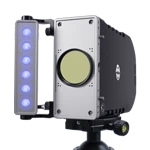
The XTDIC non-contact 3D full-field strain measurement system is based on Digital Image Correlation (DIC) and binocular stereo-vision technology. It captures images of speckle patterns or markers on an object across various deformation stages in real-time. By smoothing displacement field data and visualizing strain information, it enables rapid, high-precision, real-time, and non-contact 3D strain and displacement measurement.
A knee brace consists of thigh and calf straps connected by an adjustable knee hinge. This hinge controls the knee's flexion and extension angles, thereby limiting the joint's range of motion and providing therapeutic support.
To prevent the brace from slipping relative to the leg, it is necessary to measure the relative displacement at multiple points between the leg and the brace. Traditional displacement sensors have several limitations in practical applications:
1. Measurement Limitations: A single sensor measures displacement at only one point and has a limited range. Furthermore, displacement data is often derived through mathematical calculations based on other physical measurements, inevitably introducing errors during processing.
2. Self-weight Interference: As contact-based sensors, their own weight can create a "mass effect" when attached to lightweight leg braces, potentially skewing displacement data during movement.
3. Low Efficiency: Strict environmental requirements and high hardware costs make structural displacement measurement inconvenient and expensive.
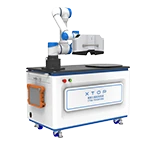
The XTOP3D XTDIC 3D full-field strain measurement solution effectively addresses the issues associated with traditional contact displacement sensors. It features easy installation, rapid calibration, a wide measurement range, and high precision. It enables efficient, high-speed measurement of model displacement and strain, facilitating 3D full-field and multi-point 3D displacement and strain analysis.
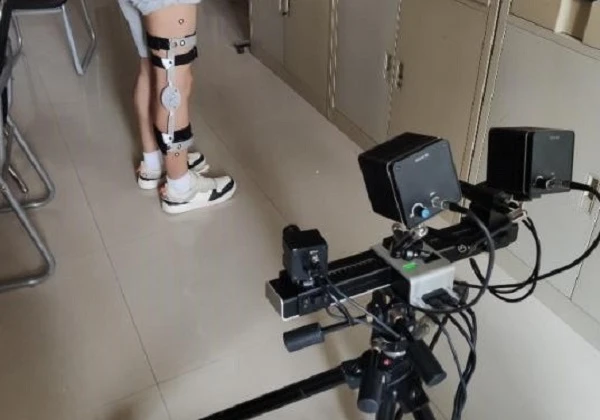
For the leg brace displacement test, the XTDIC 3D full-field strain measurement system is used with 12mm lenses, a 600mm field of view, and a frame rate of 20 fps. Markers are placed at target locations to measure the brace's slippage relative to the leg by tracking the relative displacement of these points. Analysis of DIC Displacement Measurement Data
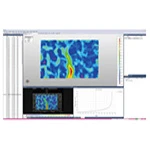
The XTDIC 3D full-field strain measurement system enhances 3D measurement technology through algorithms such as high-precision registration, tracking, and interpolation. It achieves tracking precision of up to 0.001 pixels, enabling both full-field and multi-point measurements.
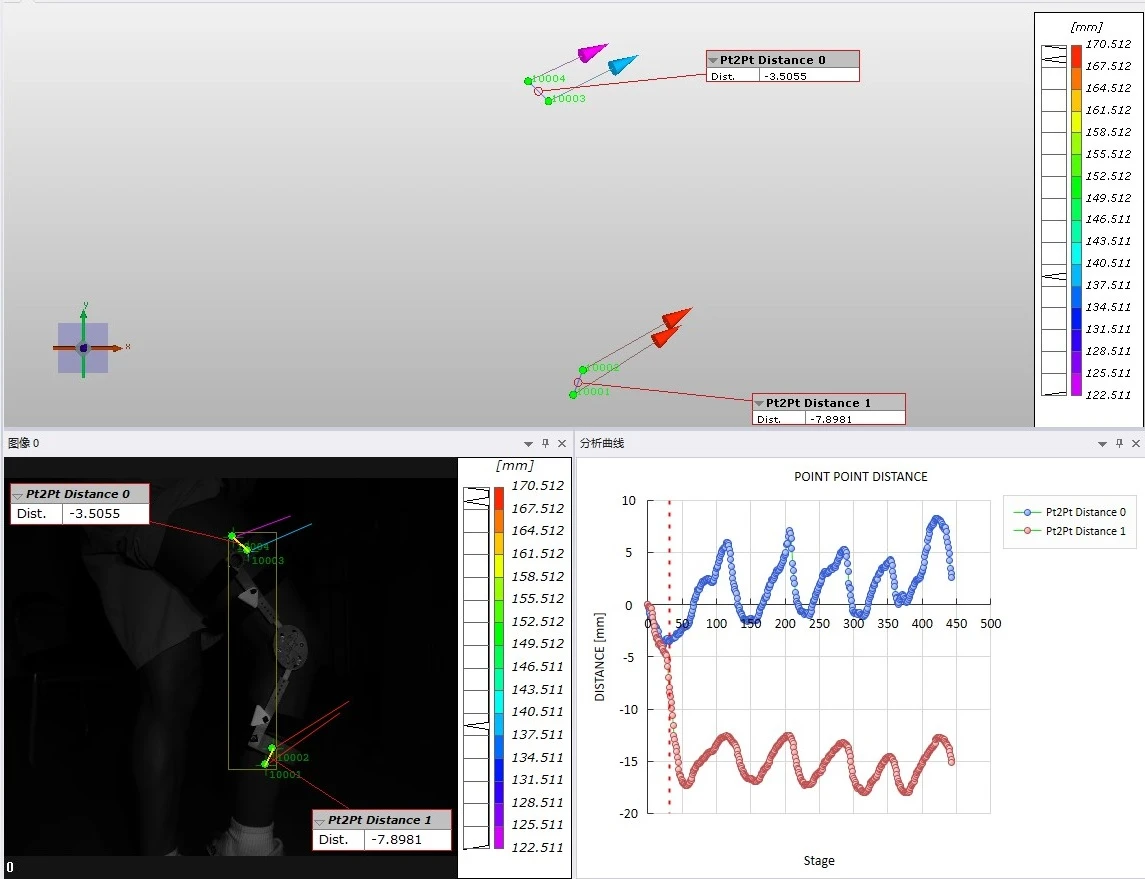
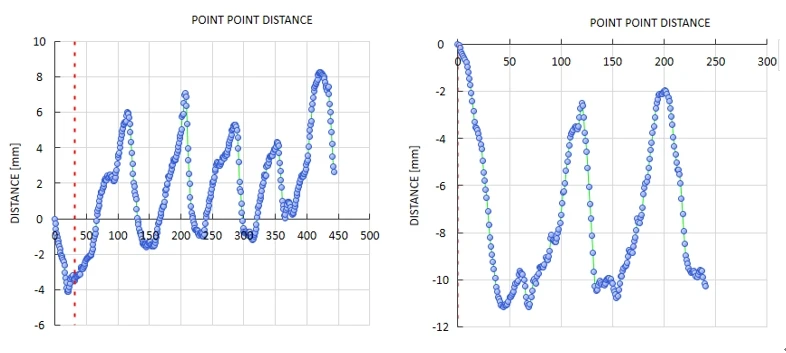
Thigh and lower leg displacement curves
Downward slippage of thigh guards under different conditions
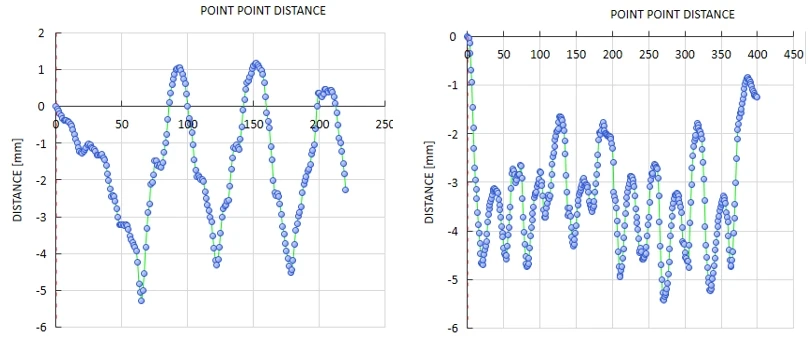
Downward slippage of the lower-leg brace under different conditions (marker placed below the brace; negative values indicate downward slippage)
With the advancement of science and technology, non-contact measurement methods have become a primary direction in the development of displacement measurement technology and are now widely applied. By utilizing the XTDIC 3D full-field strain measurement system to measure the displacement of a knee brace, static or dynamic measurements can be conducted independently and objectively without imposing any constraints or interference on the object being tested.
The testing process is straightforward, data processing is rapid, and the displacement measurement results are highly effective. The XTDIC system enables real-time, accurate, and quantitative measurement of the relative displacement (slippage) between the thigh, the lower leg, and the brace itself. With measurement precision and processing speeds that fully meet testing requirements, the system serves as an advanced, intuitive tool for the measurement, evaluation, and optimization of structural mechanical performance.