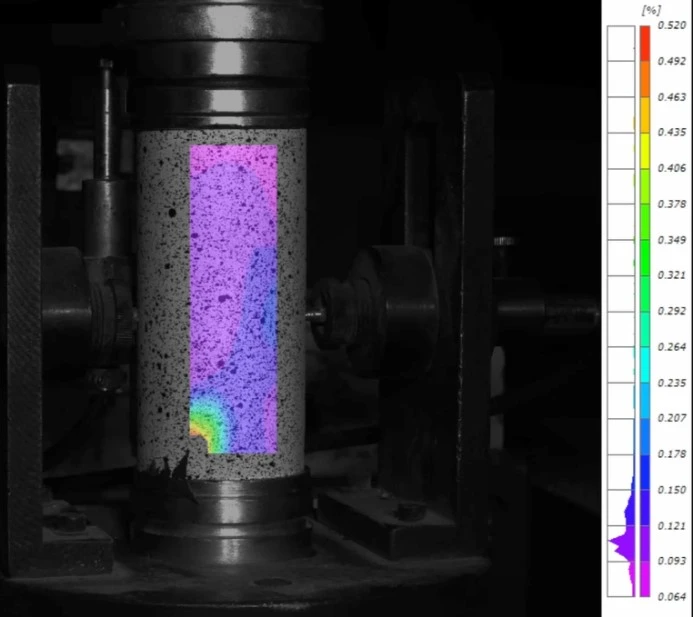
In the fields of civil engineering materials and structural mechanics, enhancing the comprehensive performance of engineering structures has long been a key focus. Measurement technology plays a vital role in the extensive structural analysis and material performance testing conducted within civil engineering. Unlike traditional single-point measurement methods, Digital Image Correlation (DIC) technology is widely used in civil engineering due to its advantages of being non-contact, capable of full-field measurement, and highly accurate.
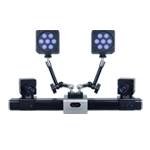
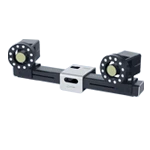
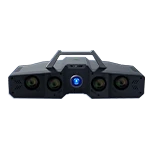
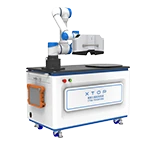
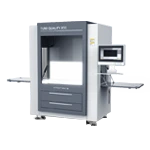
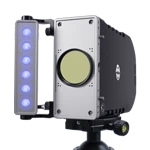
The XTOP3D XTDIC 3D full-field deformation measurement system utilizes DIC technology to offer non-contact, high-precision, full-field measurement capabilities. It serves as an alternative to traditional measurement methods and is applicable to mechanical performance tests—such as compression, bending, tension, and splitting—on concrete and rock specimens.
360° Compression Measurement of Concrete Columns
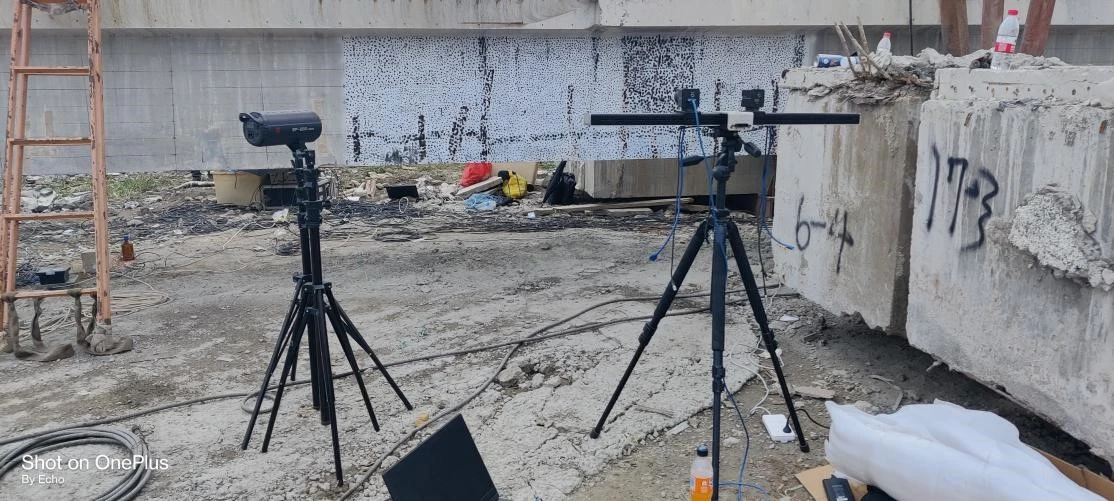
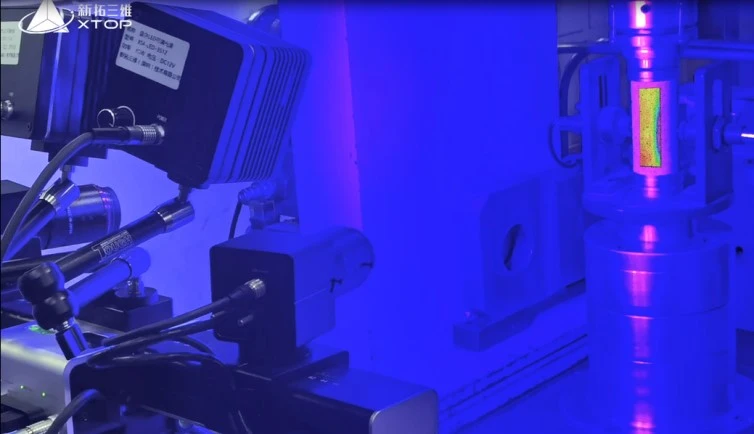
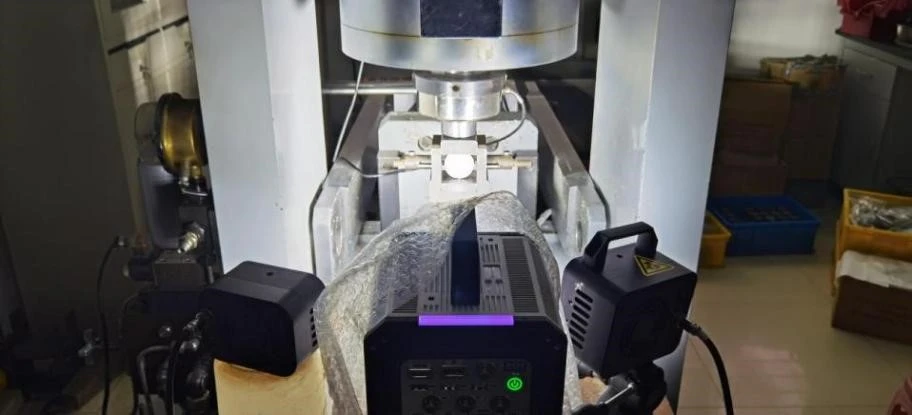
To meet the requirement for 360° full-circumference measurement of cylindrical specimen surfaces, a multi-camera DIC setup is employed. Four sets of camera heads are positioned around the specimen to cover the entire circumference. Photogrammetry techniques are used to unify global point coordinates, thereby enabling 360° coverage of the column and a wide field of view.
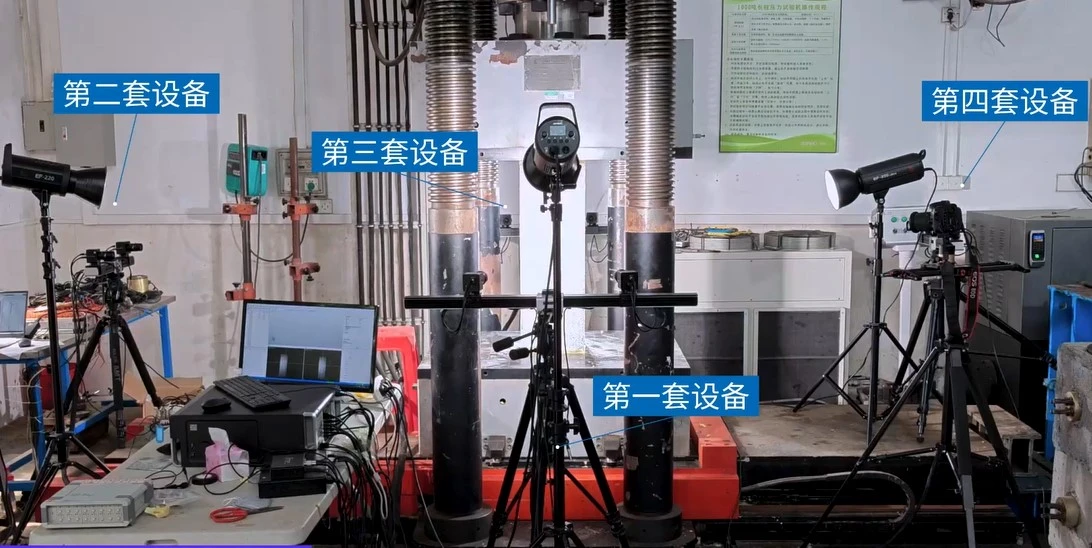
DIC system with four sensors for 360° observation of concrete columns.
Elastic Stage – DIC Displacement Field Analysis
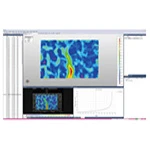
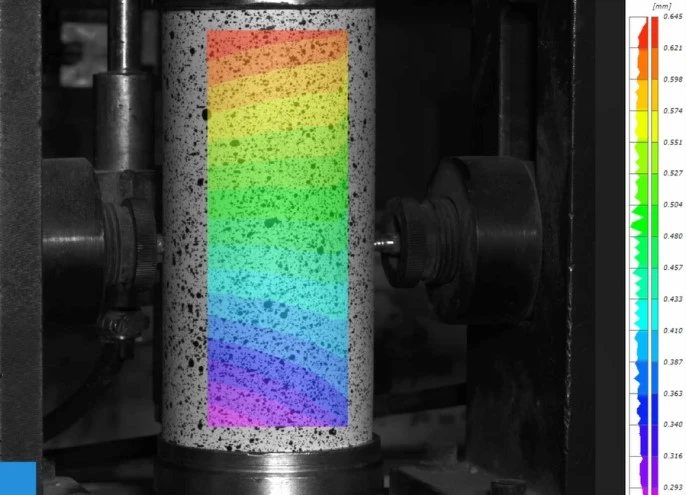
The XTDIC 3D full-field strain measurement system divides the region of interest (ROI) on the specimen into a grid at specific pixel intervals, performs DIC calculations on the defined target points, and outputs full-field displacement data.
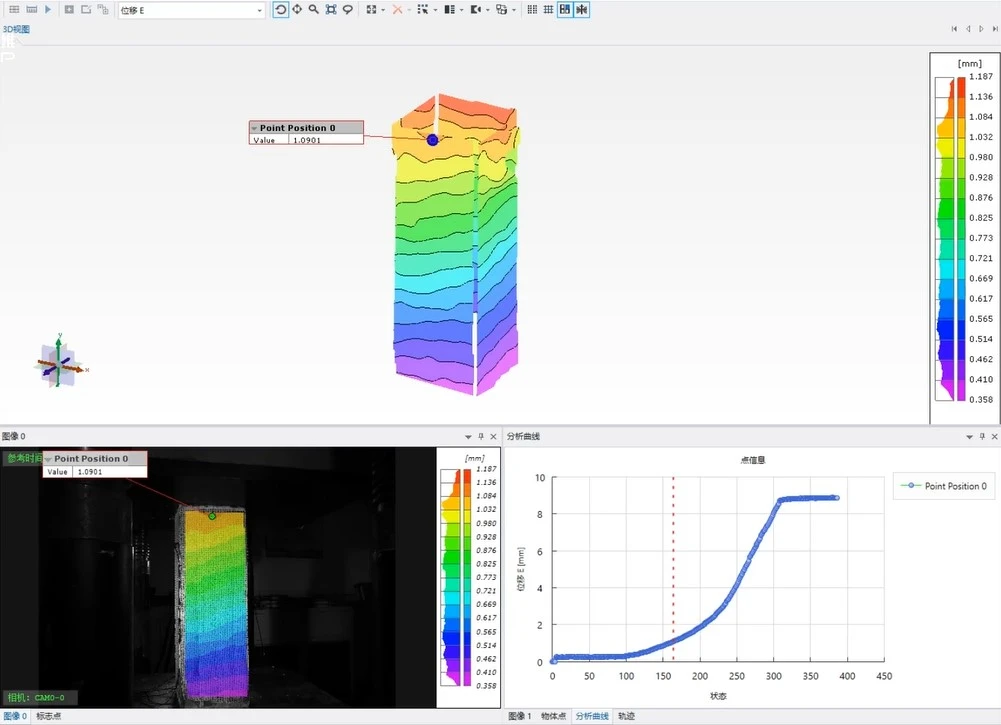
360-degree measurement of 3D displacement fields
Crack Propagation and Failure Stage – DIC Displacement Field Analysis
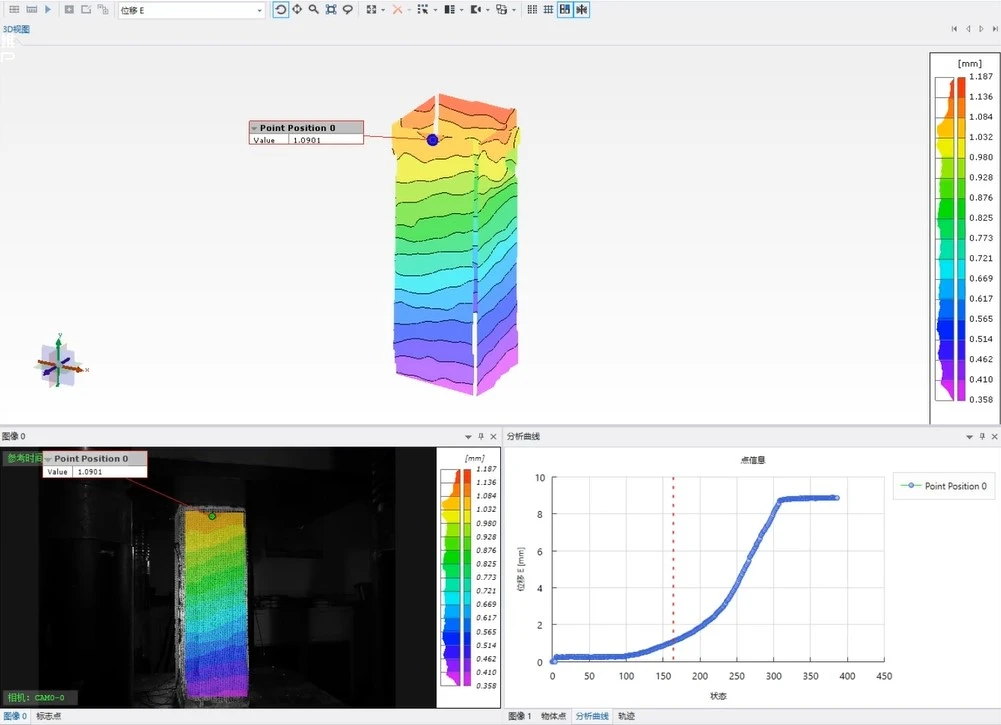
Crack Propagation and Failure Stage: Displacement Field Analysis
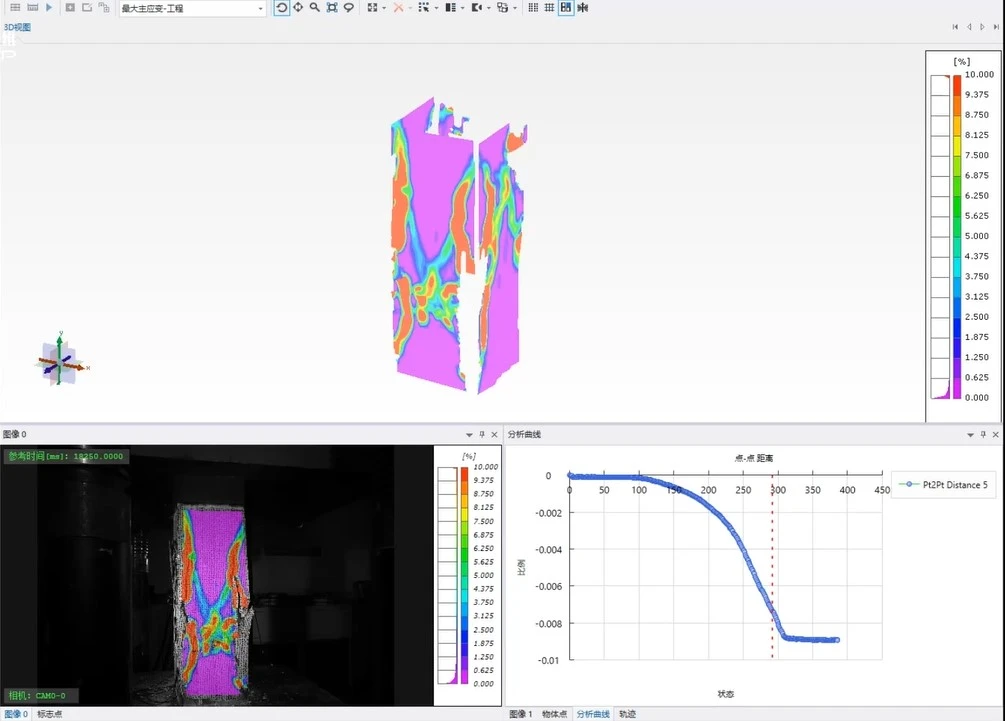
Crack Propagation and Failure Stage: Strain Field Analysis
Three-Point Bending Test of Concrete Beams
The flexural performance of large-scale concrete beams was evaluated using three-point bending loading. A 3D full-field strain measurement system (Xintuo 3D DIC) was employed to capture displacement and strain fields, as well as the trends of crack initiation and propagation.
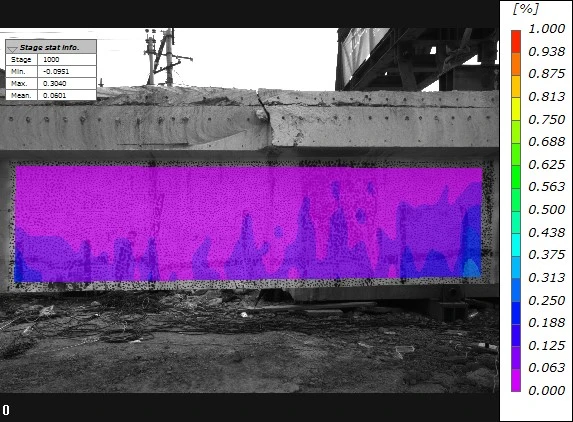
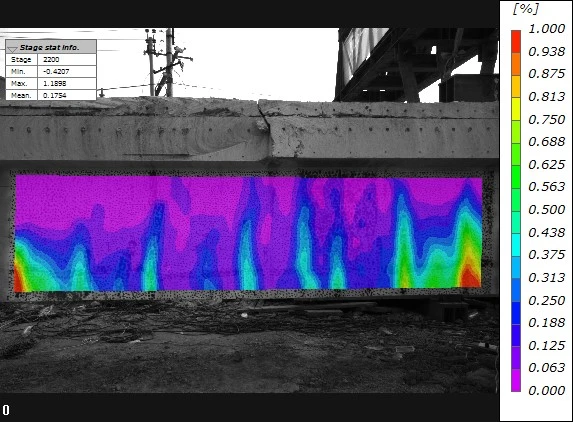
The XTOP3D DIC 3D optical strain measurement system captures images during the three-point bending test of a large-scale concrete beam; the DIC software then analyzes and calculates the corresponding strain maps—as well as comparative maps—for each loading stage.
Strain field at the 930 MPa stage
Strain field at the 2115 MPa stage
Rock Mechanical Property Testing
The XOP3DXTDIC 3D optical strain measurement system is widely used in testing construction materials and conducting rock compression, splitting, and crack propagation tests. It captures strain and displacement data regarding the evolution of rock failure, providing the necessary data to support safety assessments of civil engineering structures.
Rock Compression Strain Measurement
The XTDIC 3D full-field strain measurement system, paired with a high-speed camera, is used to monitor cylindrical rock samples during compression tests at a non-contact acquisition rate of 5,000 frames per second. A black-and-white dot pattern is employed to track sample deformation during loading. The XTDIC system facilitates image processing, visualization, and analysis of the rock damage process under various loading conditions.
DIC technology was used to analyze the distribution of the damage strain field; during compression, micro-cracks initiated in regions of high surface damage strain and eventually propagated into a macroscopic main crack, with instability occurring in the high-strain areas. The damage strain field can be utilized to analyze the damage evolution behavior of rock materials.
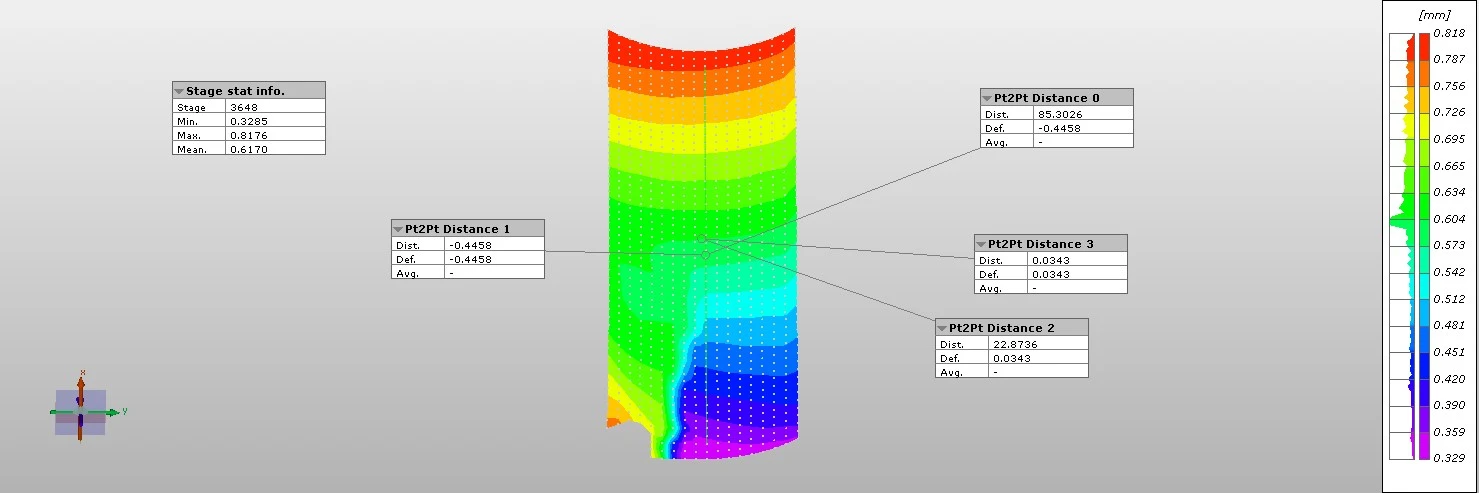
Displacement field of rock under compressive loading
Contour plot of resultant displacement in the X, Y, and Z directions for the 3D region.
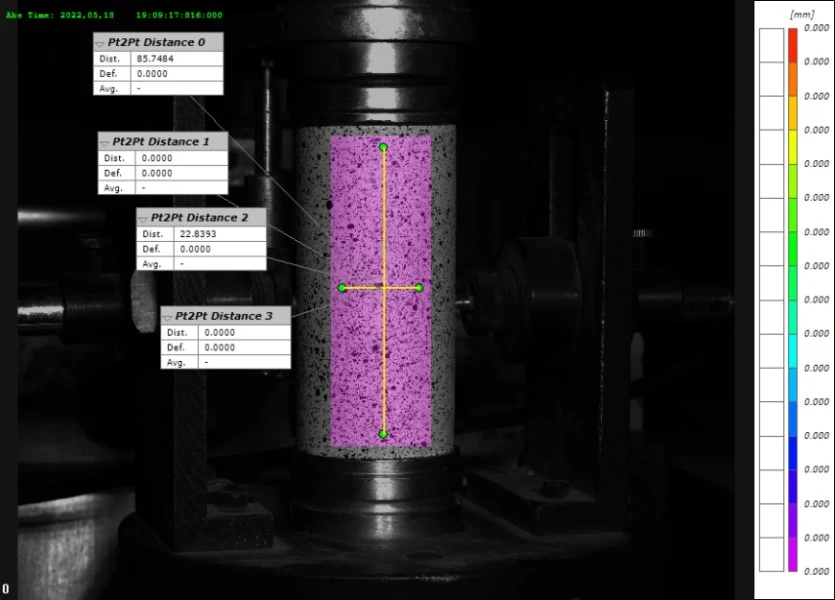
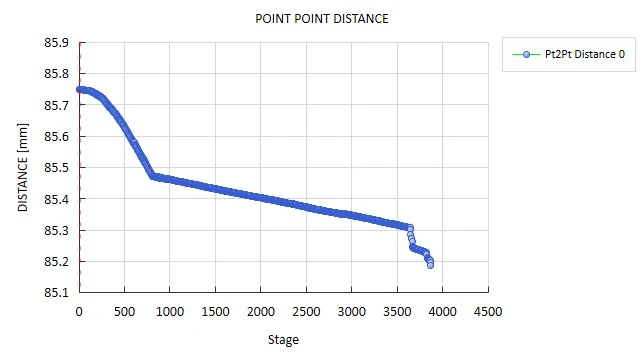
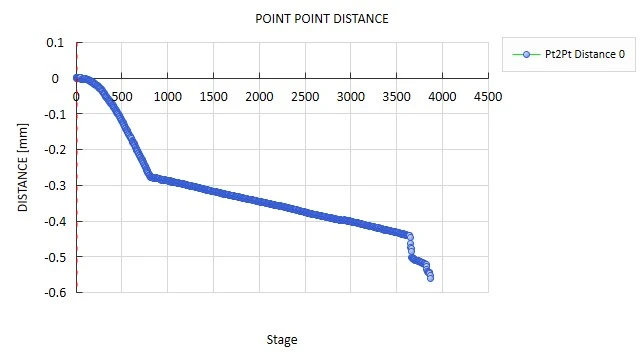
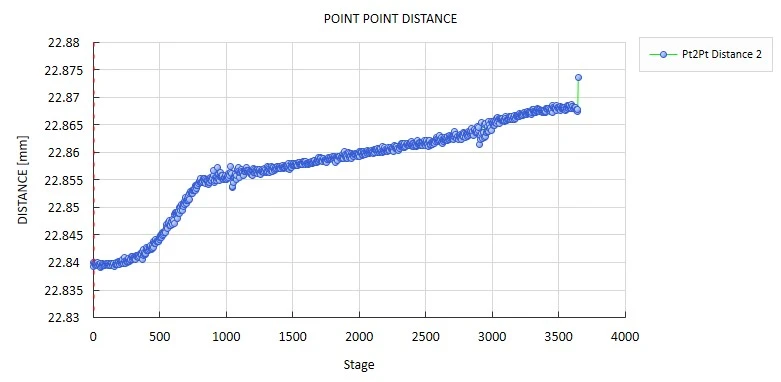
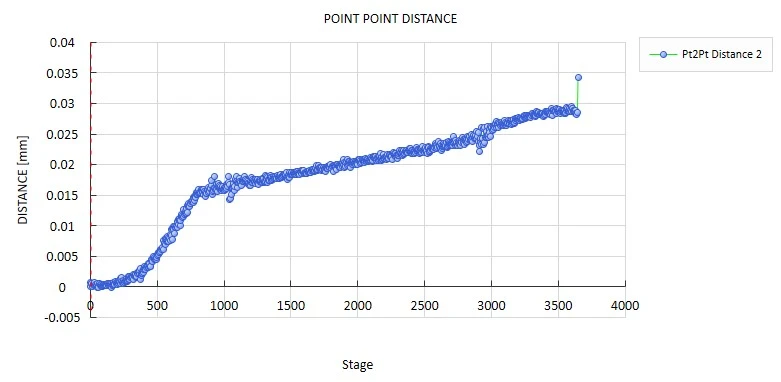
The measurement locations are shown in the figure above; the changes in distances between surface points were analyzed, and the parameters under compression are presented in the figure below:
Vertical point-to-point distance-length curve
Curve of relative change in vertical point-to-point distance
Lateral distance-to-point curve
Curve of relative change in lateral point-to-point distance
Application of DIC in the Brazilian Splitting Test for Rock
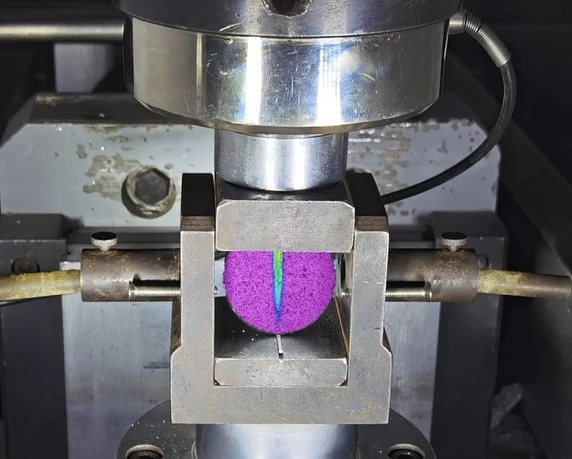
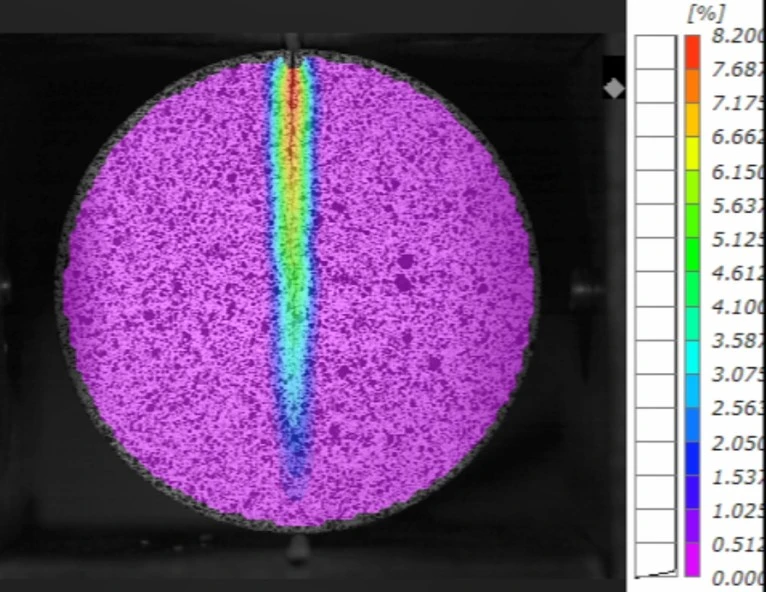
In the Brazilian splitting test for rock, the XTDIC 3D full-field strain measurement system is paired with a high-speed camera to capture images of the rock failure process at high frame rates. By integrating this with DIC analysis software, quantitative full-field strain maps (tensile, compressive, and shear) under load can be generated, visualizing the rock failure and strain evolution processes.
High-speed camera captures images of the rock splitting failure process.
DIC software analysis revealed distinct trends in the maximum principal strains (in both X and Y directions) and crack behavior during the splitting of the rock material; color maps were used to analyze the regions of maximum strain, crack evolution, and specific numerical values.
Uniaxial Compression DIC Testing of Rock
An XTDIC 3D full-field strain measurement system paired with a high-speed camera was employed to monitor full-field strain during the test at a non-contact acquisition rate of 5,000 frames per second. The study involved a comparative analysis of the rock specimens' macroscopic mechanical parameters, the evolution of spatial strain fields, and their failure modes.
The XTDIC 3D full-field strain measurement system is used for image processing, visualization, and analysis of the rock compression failure process under loading in a testing machine.
Contour map of resultant displacement in the X, Y, and Z directions for rock under 3D compression.
Strain field contour map of rock under compressive loading