The quality and wind-load-bearing capacity of wind turbine blades are closely linked to the economic viability of wind power development, the overall performance of the turbine unit, and the efficiency of wind energy utilization. Ensuring that blades exhibit excellent torsional load performance helps enhance their reliability and operational efficiency.
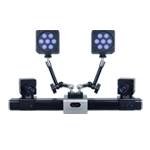
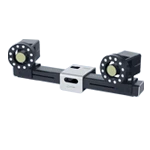
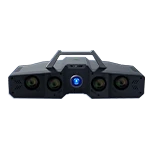
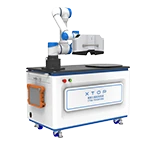
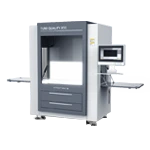
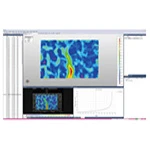
Leveraging Digital Image Correlation (DIC) technology, XTOP3D utilized the XTDIC 3D full-field strain measurement system to conduct ground-based dynamic torsional deformation tests on massive, high-capacity (multi-megawatt) wind turbine blades. The tests validated the feasibility, accuracy, reliability, and outdoor suitability of the XTDIC system for measuring such oversized blades.
Optimizing blade performance—and ensuring reliable, safe, and long-lasting operation with low maintenance costs—requires complex simulation design, followed by calibration and validation using experimental data. Collecting deformation data on massive blades under load is challenging; the use of non-contact DIC technology requires overcoming a series of data acquisition and measurement hurdles.
1. Large-scale array measurement
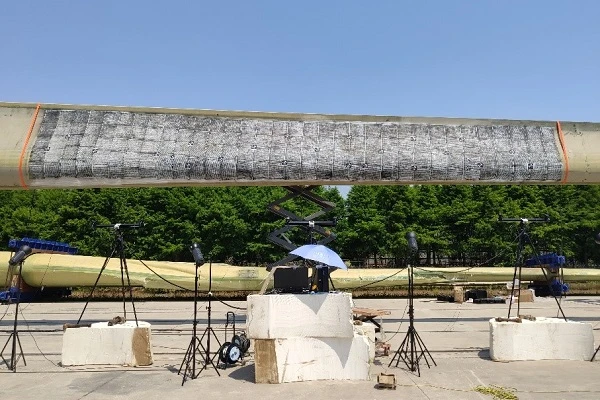
With a total blade length of 76 meters and a test zone spanning 36 to 48 meters, the setup employed an array of two XTDIC 3D full-field strain measurement systems. By utilizing a multi-camera stitching algorithm, the system achieved 3D full-field strain measurement coverage across an area exceeding 100 meters. As the industrial cameras could not be positioned at the same height as the blade, an upward-tilted viewing angle was adopted for the measurements.
2. Large-scale blade calibration and optical distortion correction
Based on large-scale calibration technology, the XTDIC system allowed for efficient on-site calibration and optical distortion correction (including lens assembly correction) following setup, ensuring high calibration accuracy and precise image capture across the massive scale.
3. Large-scale speckle pattern application
Creating speckle patterns over a measurement area spanning tens of meters represents a massive undertaking. To ensure high-quality speckles for precise data acquisition and analysis, a white base coat was first applied to the blade. Subsequently, tools such as stencils were used to spray irregular black spots onto the surface, creating the speckle pattern. Global coded markers were also applied, and a photogrammetry system was used to capture the coordinates of these global points. 4. Elimination of Ambient Light Interference
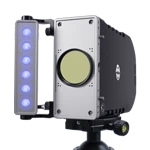
By employing blue light projection and noise reduction algorithms to mitigate ambient light interference, the accuracy of the measurement data was ensured, thereby validating the robustness and reliability of the XTDIC 3D full-field strain measurement system in environments subject to such interference.