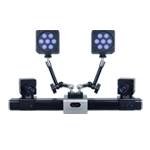
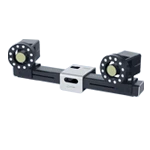
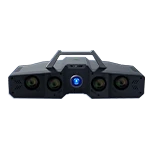
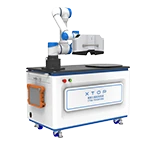
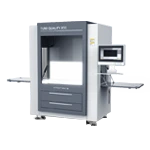
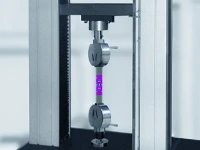
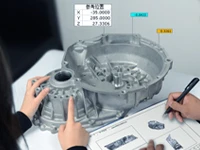
In research fields such as mechanics of materials, solid mechanics, composite mechanics, and fracture mechanics, the integrity, precision, and visualization of experimental data directly determine the quality and depth of research. Traditionally, strain measurement relied primarily on strain gauges and extensometers; however, these devices yield only single-point or averaged data, making them inadequate for investigating cutting-edge topics like damage mechanisms, deformation localization, and multi-field coupling. As of 2026, Digital Image Correlation (DIC) technology has seen rapid adoption. Thanks to its robust capabilities in full-field measurement, dynamic analysis, and multi-field coupling, it has become a key piece of testing equipment in university laboratories and research institutes specializing in mechanics and materials, propelling domestic mechanics research to new heights.
Strain gauges and extensometers continue to play a vital role in fundamental mechanics education and basic testing. Extensometers are used for classic experiments—such as determining the elastic modulus, Poisson's ratio, and yield strength of metallic materials—helping students grasp the standard definition of strain. Meanwhile, strain gauges facilitate single-point strain monitoring experiments, allowing students to learn the fundamental principles of sensor-based measurement. Both tools are easy to operate and cost-effective, making them ideal for introductory teaching and standardized basic research. However, when tackling advanced research topics, the limitations of traditional equipment become apparent: an inability to capture deformation gradients, observe crack initiation and propagation, or provide full-field strain distribution data restricts research to macroscopic average properties, hindering a deeper understanding of microscopic deformation and material failure mechanisms.
Current cutting-edge research in mechanics focuses on areas such as anisotropic materials, heterogeneous materials, fracture mechanics, dynamic mechanics, and multi-field coupling (e.g., thermo-mechanical interactions). These are precisely the domains where 3D DIC strain measurement systems excel; DIC equipment is highly adaptable to the specific needs of advanced research, offering comprehensive functionality and exceptional expandability.
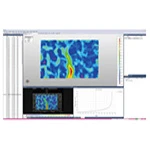
First, it supports cutting-edge research on composite materials. Composites are a major area of interest in materials science, where phenomena such as delamination, debonding, fiber breakage, and interfacial failure manifest as localized damage. By generating full-field strain maps, 3D DIC systems record the location of damage initiation, propagation paths, and strain evolution patterns in real-time. This provides a wealth of visual experimental data essential for developing constitutive models, optimizing ply structures, and implementing damage-resistant designs for composite materials. The system also supports a microscopic DIC module, enabling micro-scale strain testing in conjunction with a microscope and bridging the gap between macro- and micro-scale mechanics research.
Secondly, it facilitates research in fracture mechanics and damage mechanics. Strain concentration at the crack tip is a central focus of fracture mechanics; however, precisely positioning strain gauges at the crack tip is difficult, and extensometers—which provide averaged data—tend to smooth out peak strain values. With pixel-level spatial resolution, the 3D DIC strain measurement system accurately captures full-field strain and displacement fields at the crack tip and calculates key parameters such as stress intensity factors and fracture toughness, perfectly meeting the requirements of fracture mechanics testing.
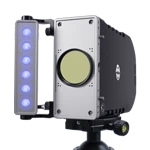
Thirdly, it is suitable for research experiments involving dynamic and extreme environments. Many mechanics projects require high-speed impact, explosive loading, and coupled high/low-temperature testing; traditional contact-based equipment is prone to detachment or damage under high-speed loading, and sensors often fail in high-temperature environments. The DIC system can be equipped with high-speed cameras and high-temperature measurement modules, allowing for stable operation at temperatures up to 2000°C and under high-strain-rate dynamic loading. It enables the simultaneous acquisition of mechanical loading, temperature field, and strain field data, meeting the demands of cutting-edge multi-field coupling research.
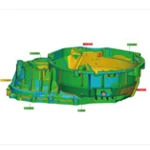
Fourthly, it integrates with Finite Element Analysis (FEA) to enable the benchmarking of simulations against experimental results. Modern mechanics research emphasizes the combination of simulation and experimentation. The 3D DIC system allows for point-by-point comparison between measured full-field strain/displacement data and FEA results, facilitating the calibration of simulation model parameters and improving simulation accuracy—capabilities that traditional devices like strain gauges and extensometers cannot offer, making it a vital asset for high-level research.
Based on current trends in research and engineering testing requirements, the equipment configuration strategy for comprehensive mechanics laboratories has become clear: extensometers and strain gauges are used for basic teaching and standard testing, while 3D DIC full-field strain measurement systems are deployed for cutting-edge research, specific projects, and in-depth mechanism analysis. The research-grade 3D DIC system designed for universities—complete with professional data analysis software, extensive post-processing functions, comprehensive teaching case studies, and technical training—effectively balances the dual needs of educational demonstrations and high-end research. From single-point measurements to full-field visual measurements, and from contact to non-contact methods, the evolution of strain testing technology is pushing the boundaries of mechanics research. Today, DIC technology has become a mainstream experimental method in scientific research. Selecting a professional 3D DIC strain measurement system empowers innovation in mechanics research, helping universities and research institutes generate more high-level research outcomes.