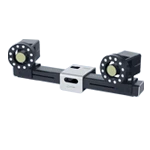
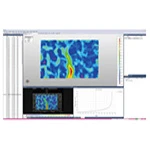
Spherical curved surfaces are widely used in aerospace, optical instruments, energy equipment, medical devices, and many other fields. The geometric accuracy and mechanical properties of these structures directly affect the functionality and reliability of products, making accurate measurement of their deformation crucial. However, the curvature characteristics of spheres present numerous challenges to traditional measurement methods. The introduction of multi-camera DIC technology offers a completely new technical approach for the measurement of spherical curved surfaces.
Precise measurement of the surfaces of spherical/curved structures is crucial in numerous scientific research and engineering applications. Examples include monitoring the deformation of spherical components in aircraft under complex operating conditions, and analyzing the surface properties of spherical material samples under stress or environmental changes in materials science research. Traditional measurement methods often struggle to achieve comprehensive and high-precision measurements when dealing with the unique curved surfaces of spheres.
Digital image correlation (DIC) technology, as a non-contact optical measurement method, has received widespread attention and application in recent years. However, conventional DIC systems have many limitations when measuring the surface of spherical structures, such as limited field of view, difficulty in covering the entire surface of the sphere, and measurement accuracy being greatly affected by curvature. To overcome these limitations, multi-camera digital image correlation systems for measuring spherical surfaces have emerged. By constructing a stable and high-precision multi-camera DIC measurement system, high-precision deformation measurement of the entire circumference and field of the spherical structure surface can be achieved.
Technical challenges in measuring the curved surface of a sphere
The main technical challenges in measuring spherical curved surface structures include:
Geometric complexity
A sphere is a continuously curved surface with the same radius of curvature everywhere, but its direction changes continuously. This geometric property makes:
Traditional contact measurements require frequent adjustments to the probe orientation, resulting in low efficiency and poor repeatability.
- Single-camera DIC systems are limited by their field of view and cannot obtain deformation data on the back of the sphere.
- Severe perspective distortion exists at the edges of the curved surface, significantly reducing measurement accuracy.
The deformation gradient changes drastically.
During the loading of a sphere, strain tends to concentrate in the equatorial and polar regions, resulting in drastic changes in deformation gradient. Speckle images in high-strain regions are prone to severe deformation, exceeding the matching capabilities of traditional DIC algorithms.
Surface features are uneven
Many spherical structures have non-uniform surface features, such as polished surfaces, coatings, and marking lines. These surface non-uniformities can affect speckle formation and the accuracy of image correlation matching.
Multi-camera DIC solutions
Circular camera array layout
For measuring the curved surface of a sphere, we recommend a circular camera array layout. Multiple cameras are evenly spaced around the sphere, with each camera responsible for observing a specific angular range of the sphere's surface. The advantages of this layout are:
- All cameras are approximately equidistant from the center of the sphere, simplifying the calibration process.
- Sufficient overlap exists between adjacent cameras to facilitate data stitching and fusion.
- Theoretically, it can cover any proportion of the surface area of a sphere.
Spherical speckle technology
Speckle is fundamental to DIC measurements. For spherical surfaces, we have developed a dedicated spherical speckle technique:
Flexible speckle film lamination : Using a pre-stretched speckle film to fully adhere to the spherical surface avoids uneven deformation caused by planar speckle on curved surfaces.
Laser speckle projection : This method uses a laser speckle generator to project a high-contrast speckle pattern onto a spherical surface, suitable for smooth surfaces where speckle films cannot be applied.
Fluorescent speckle labeling : Fluorescently labeled particles are injected into the interior of a transparent or translucent sphere, and the internal deformation is observed from the outside.
Surface coordinate mapping algorithm
The multi-camera DIC system employs a spherical parametric coordinate mapping algorithm to map the coordinates of the planar images acquired by each camera to a spherical coordinate system. This process includes:
1. Spherical Fitting: Based on calibration parameters and observation data, fit the precise position and radius of the sphere's center.
2. Parametric mapping: Mapping each pixel to (θ, φ) spherical coordinates.
3. Coordinate unification: Unify the measurement data from all cameras to the same spherical coordinate system.
4. Grid resampling: Generates a regularly distributed spherical measurement grid, facilitating subsequent data processing and visualization.
Adaptive matching strategy
To address the severe deformation in the high-strain region of a sphere, the multi-camera DIC system employs an adaptive sub-region size and shape function order matching strategy:
- Use smaller subregions in low-strain regions to improve spatial resolution.
- Automatically increase the sub-region size in high strain concentration regions to ensure matching convergence.
- Use higher-order shape functions (such as quadratic shape functions) to describe the local deformation field.
Typical application cases
Case 1: Measurement of Thermal Deformation of Satellite Fairing
The fairing of a certain type of satellite has a diameter of 3 meters, and its overall shape changes need to be measured in a simulated space thermal cycling environment. Using a 12-camera ring array system, the three-dimensional deformation field of the fairing during the entire temperature cycling process was successfully obtained with an accuracy better than 0.01 millimeters.
Case 2: Burst Test of a Spherical High-Pressure Vessel
During the explosion of a spherical high-pressure vessel, the internal pressure changes drastically, making it difficult to capture the entire deformation process using traditional measurement methods. By deploying a 24-camera high-speed DIC system, the entire process from pressurization to failure was recorded at a data acquisition rate of 100,000 frames per second, providing valuable data for structural safety assessment.
Case 3: Artificial Joint Ball Head Wear Test
The wear behavior of the artificial hip joint head directly affects its service life. Multi-camera DIC technology can accurately measure the contact stress and wear deformation on the head surface under simulated physiological load conditions, providing quantitative data for the optimized design of artificial joints.
Measurement accuracy guaranteed
To ensure high accuracy in spherical surface measurement, the multi-camera DIC system employs several accuracy assurance measures:
System-level calibration : The system is calibrated using a high-precision spherical calibration target, achieving a calibration accuracy better than 0.5 pixels.
Temperature compensation : Performing temperature compensation on optical components and mechanical structures to eliminate the effects of ambient temperature changes.
Error statistical analysis : Perform statistical analysis on repeated measurement data to assess measurement uncertainty.
Comparative verification : Comparative verification with traditional methods such as interferometers and coordinate measuring machines.
Multi-camera DIC technology has brought about a revolutionary change in the measurement of spherical curved surfaces. It not only solves the limitations of traditional measurement methods in the face of complex curved surfaces, but also, with its non-contact, full-field, and high-precision characteristics, has become an indispensable tool for the study of spherical structural deformation.
If you are facing the challenge of measuring spherical surfaces, please contact our technical team. We will provide a complete solution tailored to your specific needs, from solution design and system integration to data processing.