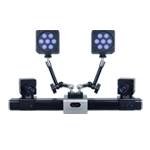
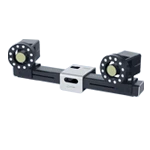
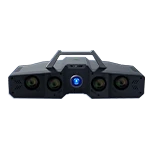
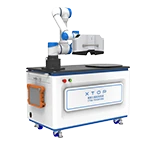
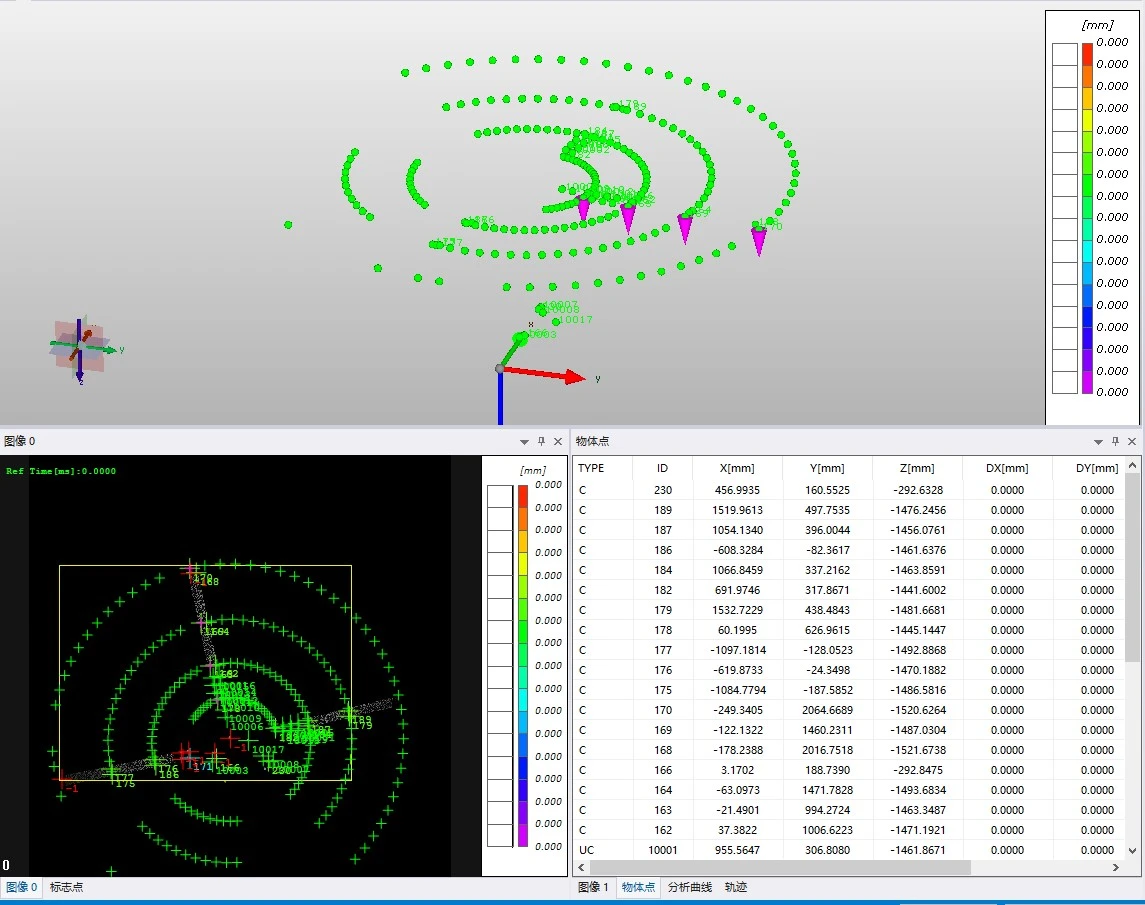
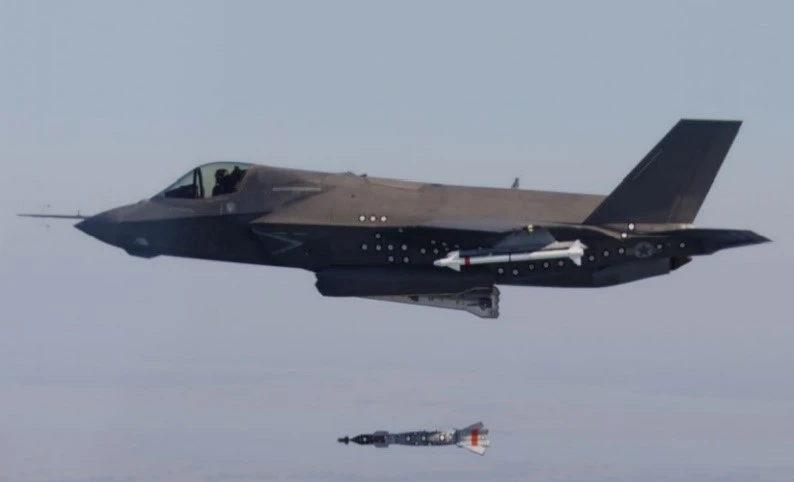
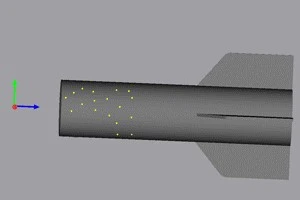
For an aircraft, the 3D spatial motion and attitude of a target represent key kinematic parameters derived from the decomposition of its flight state. Data regarding the 3D motion trajectories and six-degree-of-freedom (6-DOF) measurements of aircraft structural components are invaluable for design, testing, optimization, and failure analysis.
During actual flight, the trajectories, attitudes, and deformation patterns of aircraft structural components are complex and dynamic, directly impacting both flight safety and aerodynamic performance. Utilizing XTOP3D’s XTDIC-STROBE 3D dynamic measurement technology to capture deformation distribution during flight helps enhance operational reliability and shorten the R&D testing cycle.
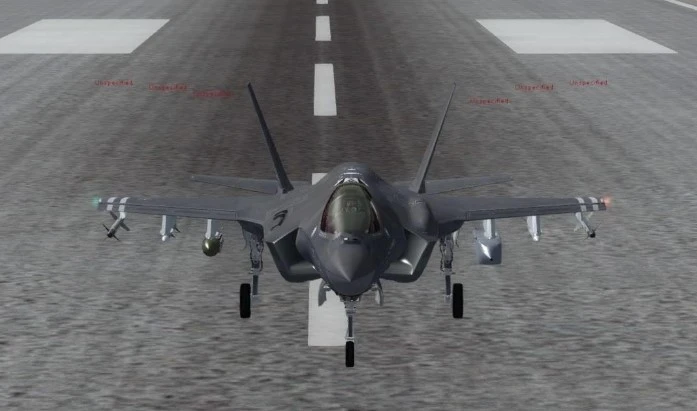
Dynamic Trajectory Measurement Using DIC During Flight
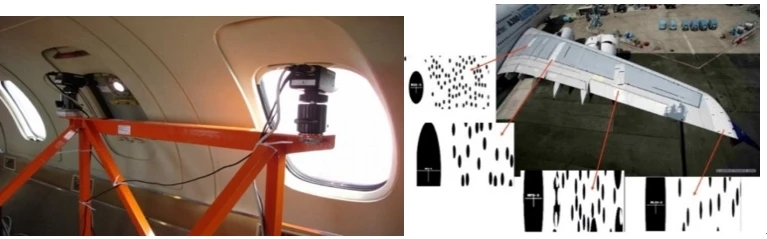
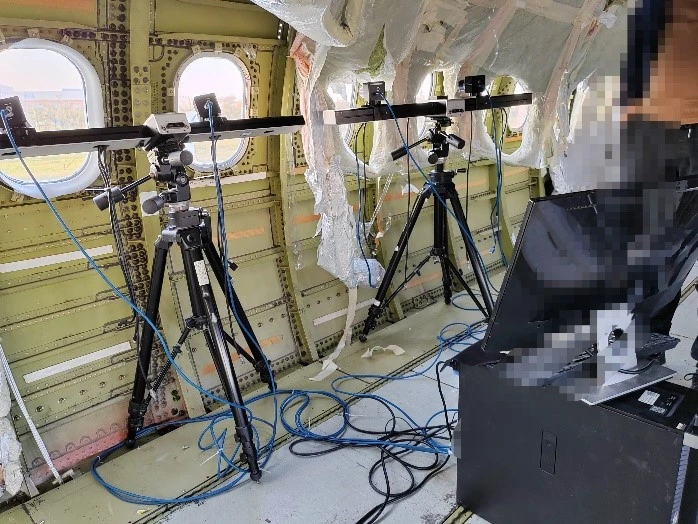
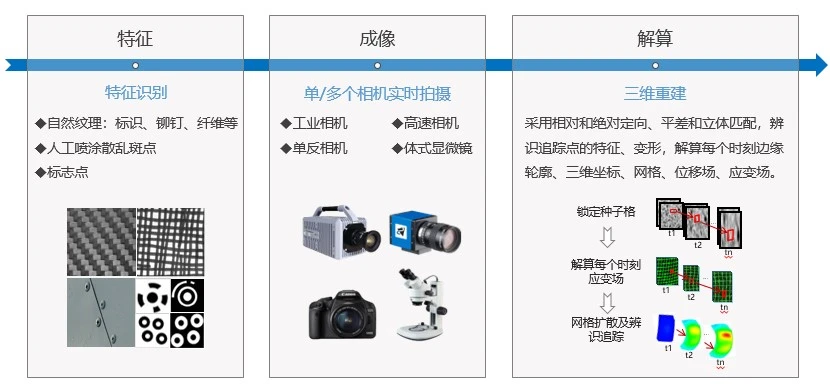
In modern aircraft performance testing, motion analysis of the airframe and its structural components typically relies on theoretical simulations or wind tunnel experiments. The XTOP3D XTDIC-STROBE 3D dynamic measurement system enables the measurement of trajectories, attitudes, displacements, and deformations of aircraft structural components and onboard payloads during actual flight. By mounting high-speed cameras on the aircraft to capture real-time imagery during flight, and subsequently processing and analyzing the data using DIC software, precise measurement results are obtained.
The XTDIC-STROBE 3D dynamic measurement system utilizes high-speed cameras to capture images and DIC software to calculate the displacement and deformation of specific markers under load. It is suitable for a wide range of applications, including deformation and attitude measurement of wind tunnel models (across low-speed, high-speed, and hyper-speed regimes), structural dynamics testing of flexible wing models in supersonic wind tunnels to determine displacement distribution during vibration, and the measurement of wing deformation under actual flight conditions.
Eliminating Airborne Camera Jitter Interference
A dynamic camera positioning method is employed. During flight, the aircraft's structural components undergo irregular vibrations; the airborne camera vibrates along with them, interfering with the measurement accuracy of Digital Image Correlation (DIC).
Using known global control points, the XTDIC-STROBE 3D dynamic measurement system utilizes the spatial resection method to determine the camera's position in real-time, effectively eliminating measurement errors caused by camera jitter.
Single-image spatial resection is a process that uses the image coordinates of control points as observations to solve for the interior and exterior orientation elements of the photograph. Since there are only six unknowns regarding exterior orientation elements, a minimum of three control points is required for the calculation. The single-image spatial resection algorithm is iterative, utilizing the photogrammetric triangular pyramid method to calculate initial values.
DIC Camera Dynamic Positioning
During flight, aircraft structural components undergo irregular vibrations; however, the flexible deformation of local rigid components is negligible compared to the rigid-body motion of the airborne camera. Consequently, the rigid structural components are assumed to be free of flexible deformation.
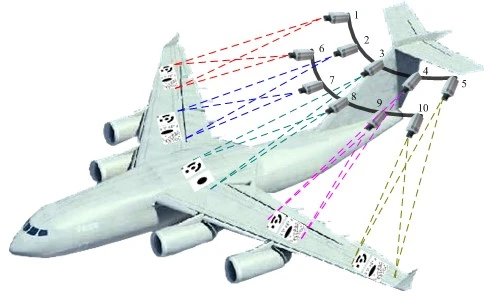
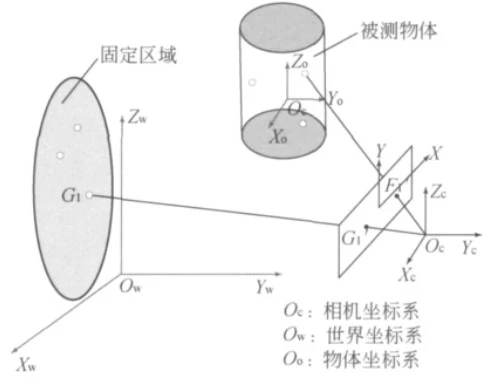
The camera positioning method is illustrated in the figure below: if control points in a fixed area are visible within the measurement camera's field of view, spatial resection is used to directly calculate displacement, attitude, and trajectory.
Due to spatial constraints on the aircraft, if the primary measurement camera cannot simultaneously observe both the target area and the fixed area, a coupled camera method may be employed to indirectly determine the position of the primary measurement camera.
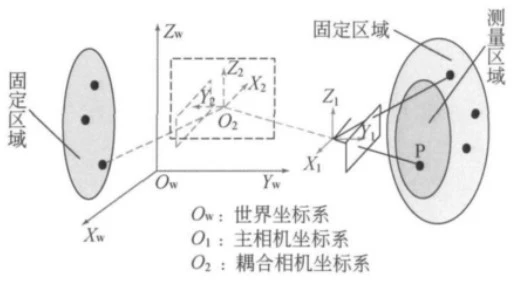
Camera dynamic positioning
DIC-based Trajectory and Attitude Measurement
Flight testing requires precise determination of the motion trajectory and attitude of an aircraft's rigid components. Traditional measurement methods—such as the use of sensors, theodolites, or 2D image tracking—offer only rough estimates of motion patterns and are limited to qualitative analysis.
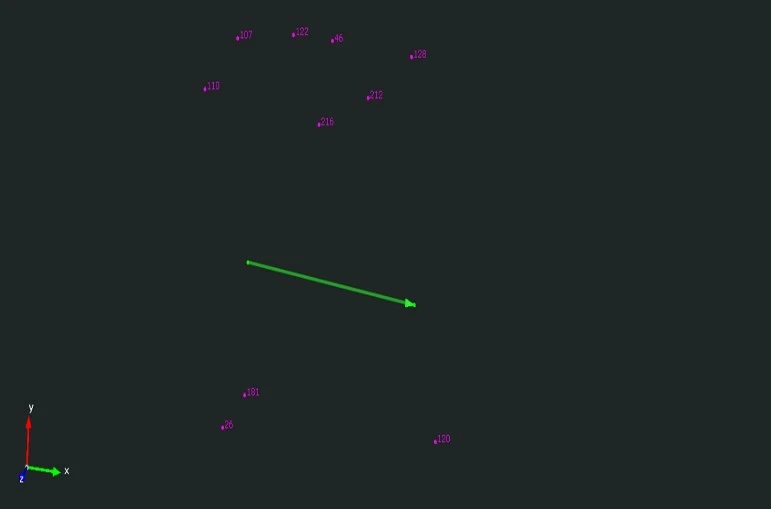
In flight data, attitude represents the rotation of a target about the three axes of a specific coordinate system. Utilizing the spatial resection method, the XTDIC-STROBE 3D dynamic measurement system rapidly computes the motion trajectory and attitude of a rigid body's centroid. By analyzing markers on the rigid body, the system precisely calculates 3D coordinates and derives the rotation and translation matrices—representing attitude and trajectory—that relate the rigid body's coordinate system to the world coordinate system.
Trajectory and Attitude Measurement
Typical Case Study: Trajectory and Attitude Measurement
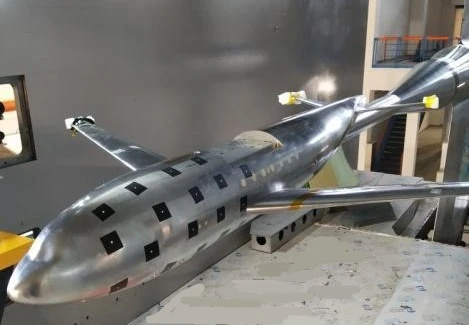
Full-Scale Aircraft Attitude Analysis in a Wind Tunnel
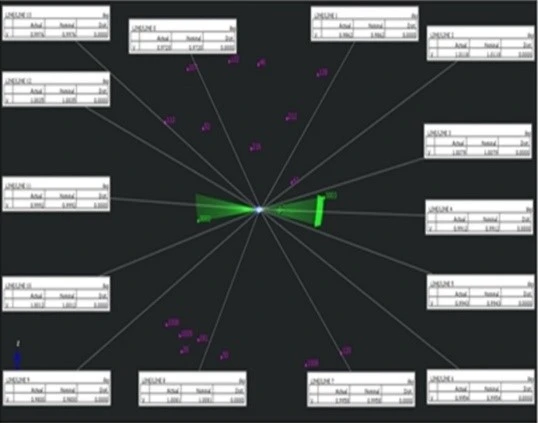
The XTDIC-STROBE 3D dynamic measurement system, combined with high-speed cameras, is used to monitor the attitude, deformation, and local strain of an aircraft model within the wind tunnel through an observation window.
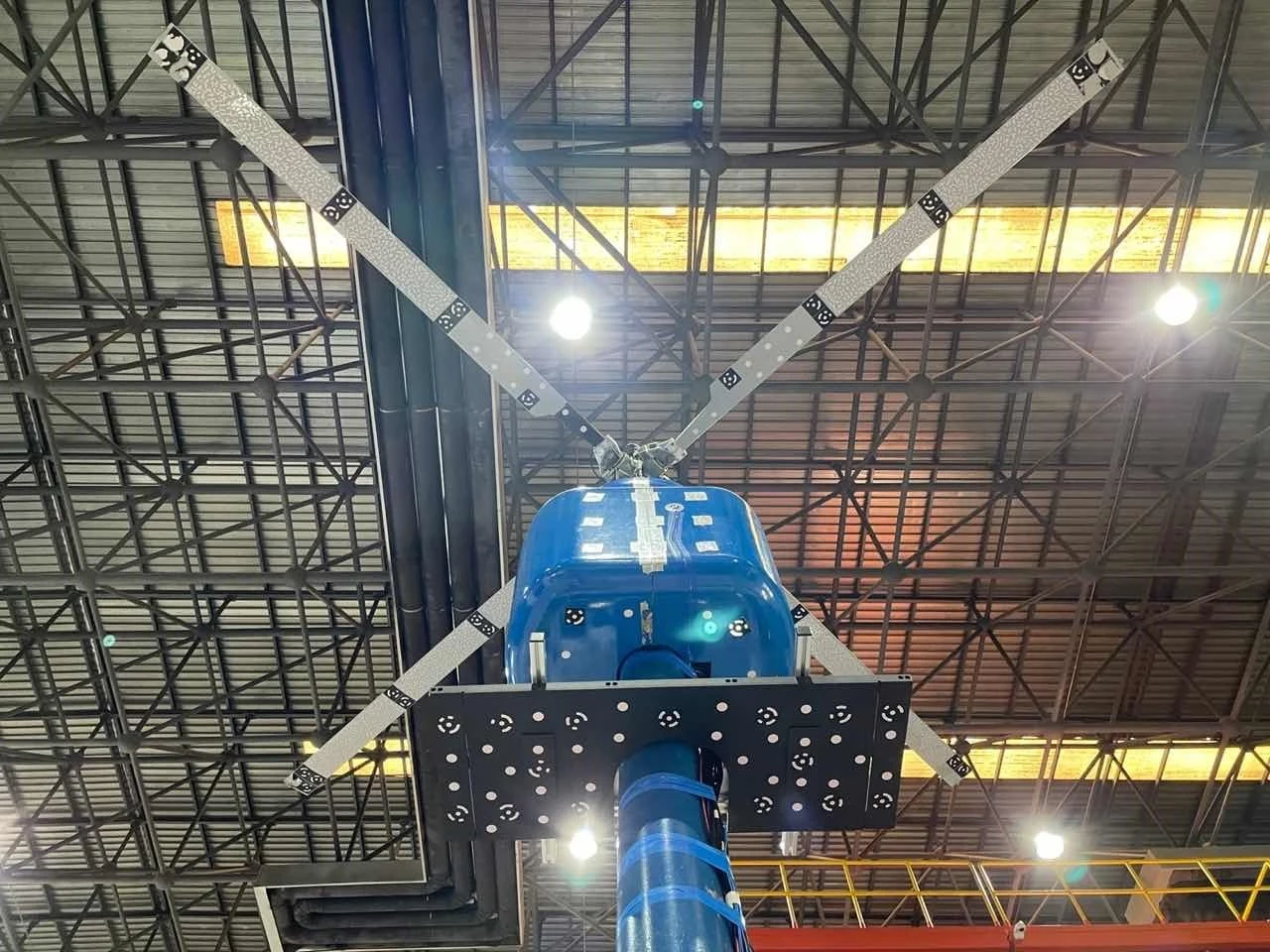
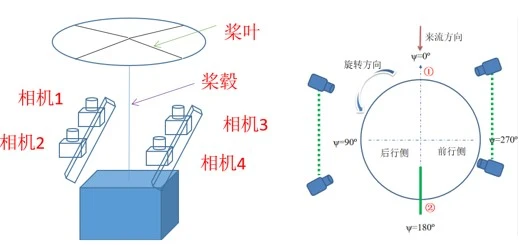
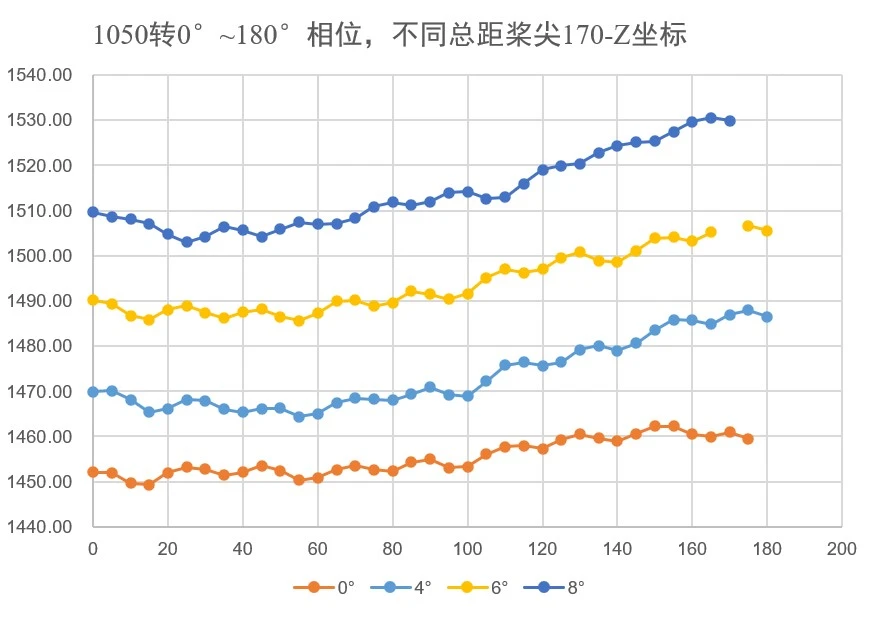
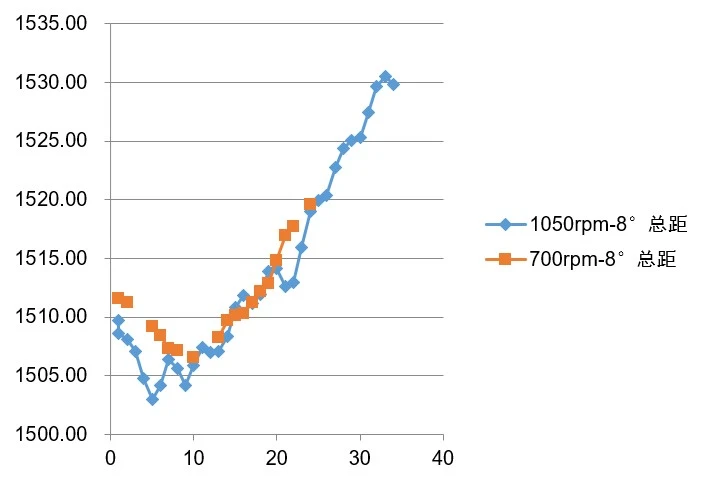
Analysis of Helicopter Rotor Operational Status
Analysis of Missile Flight Trajectory and Attitude
The XTDIC-STROBE 3D dynamic measurement system, paired with ground-based high-speed cameras, captures high-speed images of the target object within a designated observation window. This setup enables the analysis of structural deformation in the weapon bay during door opening, as well as the tracking of the missile body's attitude and trajectory.
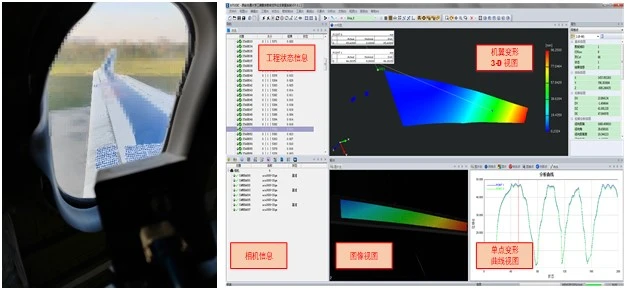
In-flight Wing Deformation Testing
Multiple XTDIC-STROBE 3D dynamic measurement systems are employed to perform measurement and conjugate vibration suppression, enabling the monitoring of dynamic wing deformation.