Materials used in sectors such as aerospace, mechanical engineering, energy, and national defense often operate under coupled conditions involving mechanical loads and extreme temperatures—including high/low temperatures and thermal cycling. Accurately determining mechanical parameters—such as strength, modulus, and fracture toughness—across various temperature ranges is crucial for assessing material reliability in service.
While traditional contact-based measurement methods face significant limitations in extreme environments, Digital Image Correlation (DIC) technology has emerged as a core tool for experimental mechanics under such conditions. Its advantages—including non-contact operation, full-field measurement capabilities, and robust environmental adaptability—effectively support material design, failure analysis, and performance optimization.
I. DIC-Based Tensile Testing: Visualizing the Entire Material Deformation Process
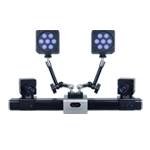
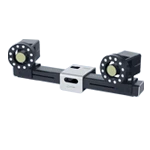
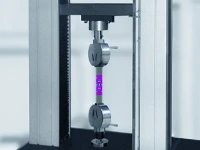
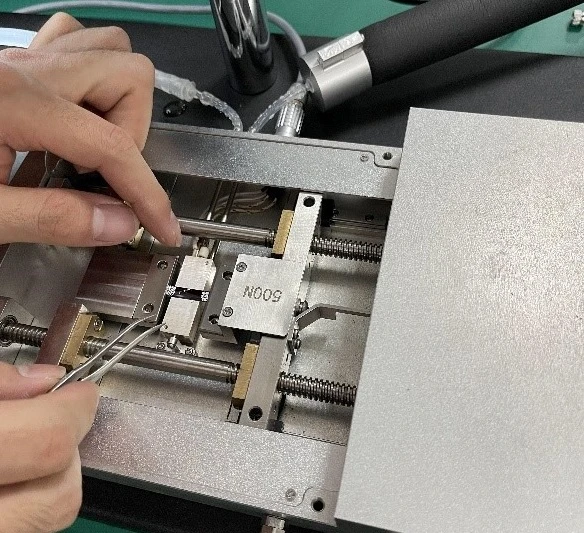
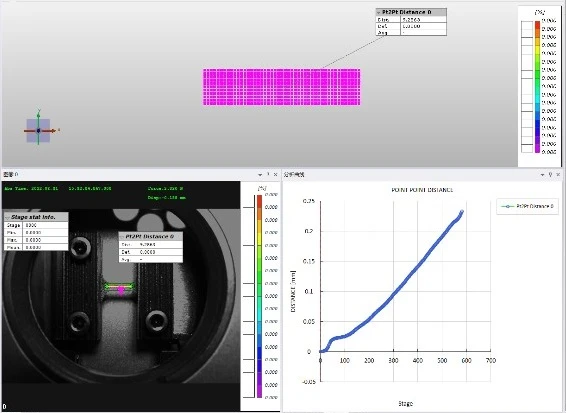
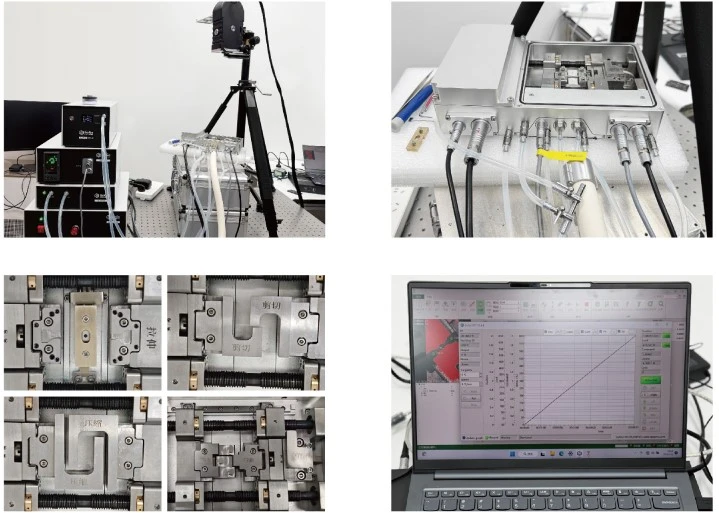
Utilizing the XTOP3D XTDIC 3D full-field strain measurement system for in-situ tensile testing enables high-precision, dynamic capture of full-field deformation, strain evolution, and damage behavior in micro-scale materials under load. This approach bridges the gap between macroscopic mechanical performance and microscopic failure mechanisms, clearly elucidating the nonlinear deformation patterns and root causes of failure in micro-specimens, thereby providing data support for engineering and technological innovation.
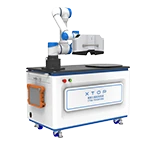
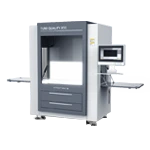
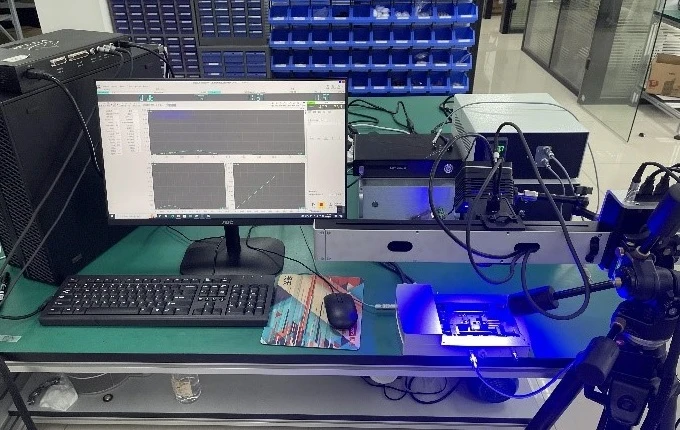
Testing using XTOP3D DIC technology in conjunction with an in-situ tensile testing machine
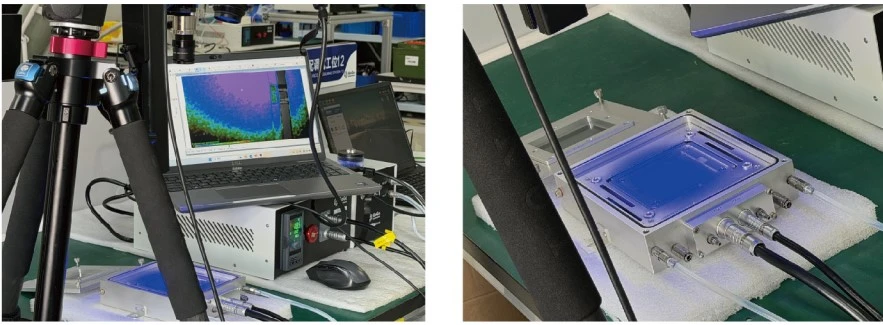
In high- and low-temperature environments, DIC technology enables precise strain data acquisition and quantifies the impact of temperature on material mechanical properties. It provides a visual representation of thermo-mechanical coupling behavior, deformation localization, and failure processes, while simultaneously outputting full-field strain data to support model validation—thereby effectively reducing the number of experiments and lowering R&D costs.
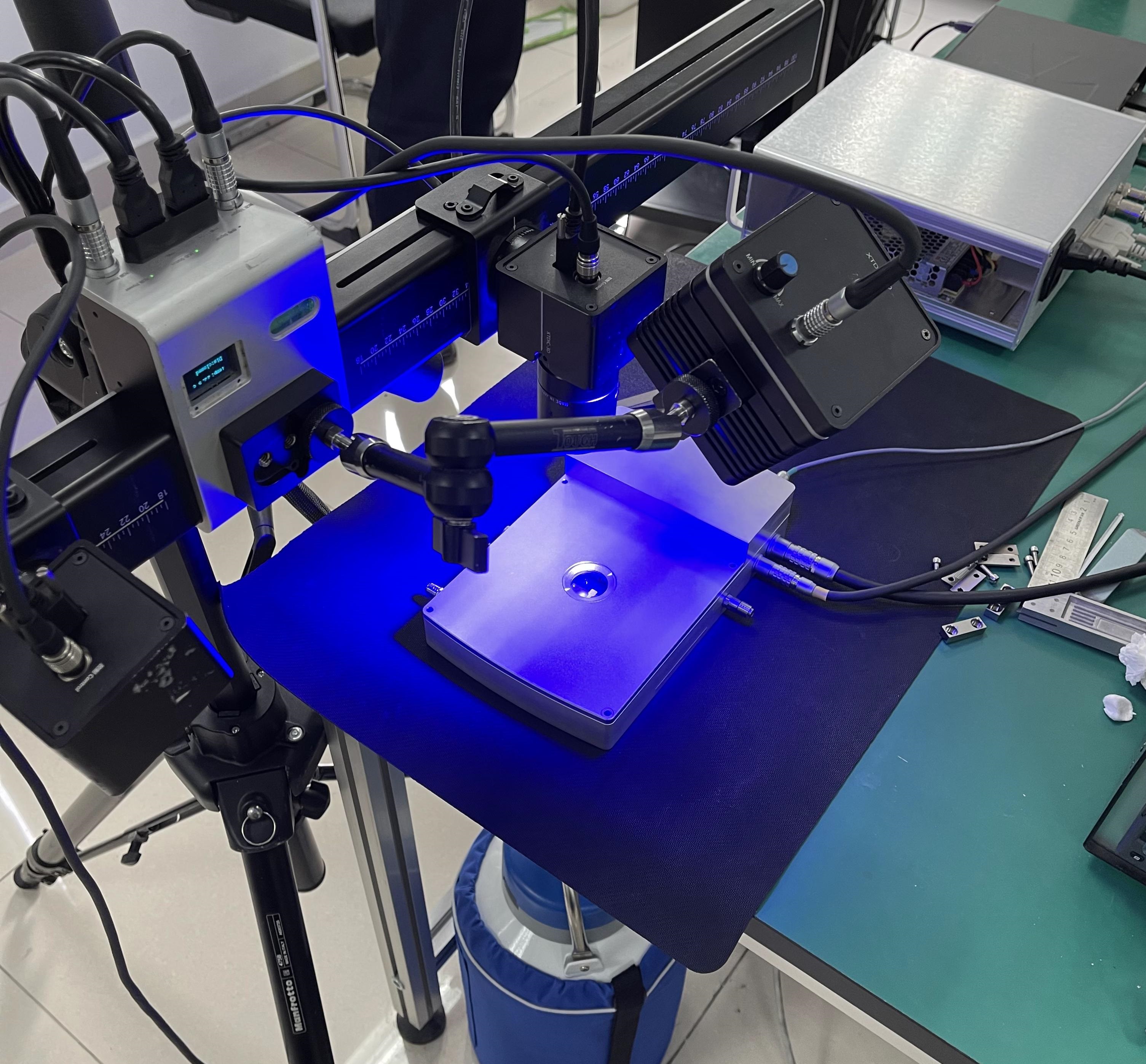
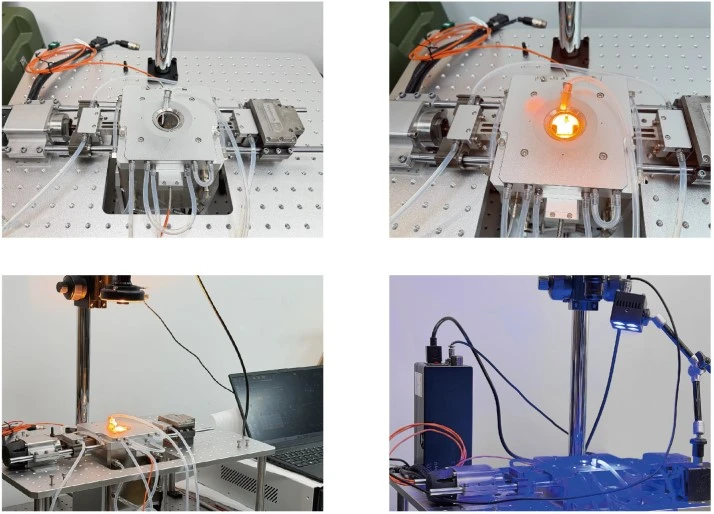
In-situ tensile heating/cooling stage (20N/200N mechanical module), -80°C to 300°C
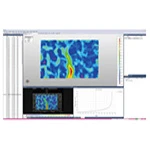
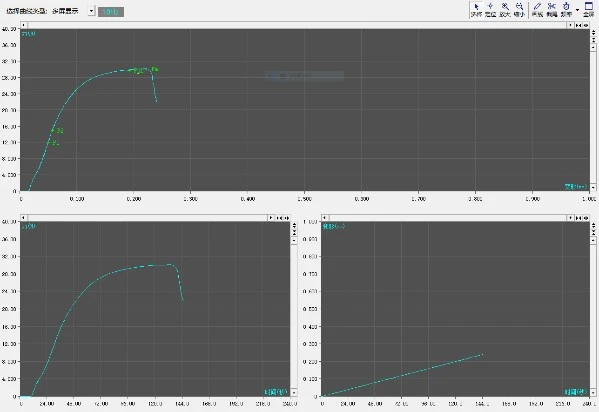
Tensile Stress-Strain Analysis Using XTOP3D DIC Technology
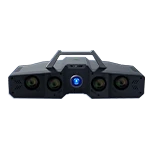
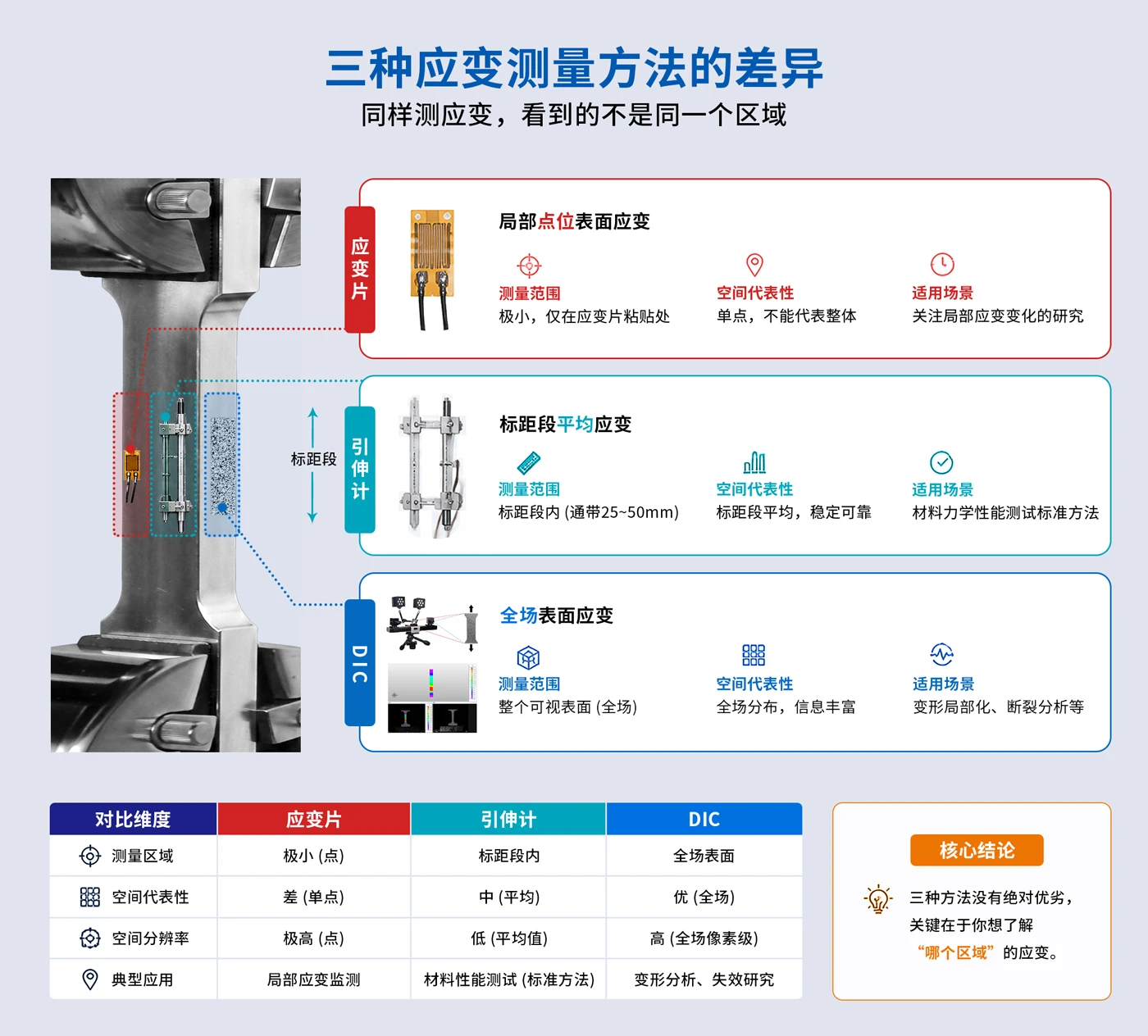
The testing solution utilizing the XTOP3D XTDIC-VG video extensometer maintains the advantages of non-contact measurement, thereby avoiding issues such as stress interference or specimen damage associated with contact-based equipment, and is suitable for extreme high- and low-temperature operating conditions. Leveraging DIC algorithms to track feature points, the system achieves a measurement accuracy of Class 0.2 (compliant with the JJG762 metrological standard). It enables quantitative analysis of microscopic behaviors—including micromechanical properties, phase transitions, crack initiation and propagation, high-temperature creep, and fatigue fracture—making it widely applicable to the study of diverse specimens such as metals, ceramics, polymers, fibers, and biomaterials.
II. Application of DIC Technology in High- and Low-Temperature Chamber Environments
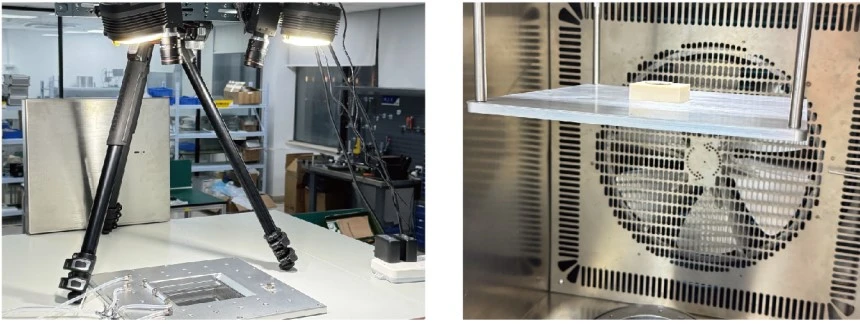
Designed for environmental reliability testing of products such as electronics, new energy components, and automotive parts, DIC technology operates reliably within enclosed high- and low-temperature environments characterized by rapid temperature fluctuations. By employing specialized temperature-resistant speckle patterns, algorithmic thermal drift compensation, synchronized thermal imaging control, and precision calibration, the technology effectively overcomes interference—such as optical distortion, thermal gradients, and frost or fogging—to enable full-field deformation measurements (including tension, bending, torsion, and buckling) under constant-temperature or thermal cycling conditions.
III. Application of DIC Technology in Ultra-High-Temperature Environments
To meet research needs for ultra-high-temperature conditions in sectors such as spacecraft thermal protection, aero-engines, and nuclear energy, Xintuo 3D’s DIC technology is compatible with high-temperature infrared heating furnaces. It operates in extreme temperature scenarios ranging from room temperature to 1700°C, overcoming measurement challenges posed by intense thermal radiation, transient high temperatures, and steep temperature gradients.
By synchronizing with infrared thermal imagers, the DIC technology enables coupled multi-physics measurements of temperature and strain fields. It intuitively reveals the thermo-mechanical response patterns and constitutive relationships of materials undergoing rapid temperature changes and non-uniform thermal fields, serving as a critical tool for high-temperature material selection, structural design, and performance verification in advanced engineering fields.