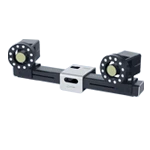
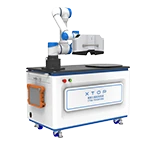
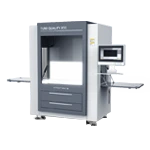
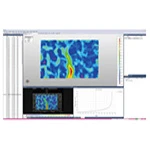
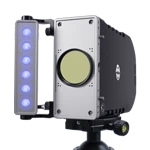
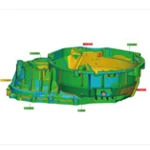
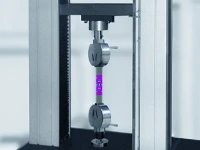
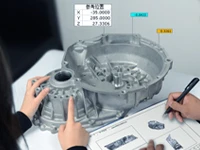
In extreme high-temperature environments such as aircraft engine combustion chambers, rocket booster nozzles, and nuclear reactor fuel cladding, even minute deformations and failures of materials and structures can have far-reaching consequences. Traditional contact measurement methods are ineffective in the face of high temperatures. The 3D digital image correlation (3D-DIC) full-field testing system, with its unique advantages of being non-contact, covering the entire field, and offering high precision, has become a crucial tool for understanding the mechanical behavior of materials and structures under high-temperature conditions.
Core Challenges and Technological Breakthroughs of High-Temperature DIC
High-temperature environments present multiple severe challenges to DIC measurements:
Strong thermal radiation interference: The intense infrared radiation emitted by a hot object itself severely interferes with camera imaging and obscures the texture of the object's surface.
High-temperature speckle stability: Conventional speckle markings (such as paint) are prone to oxidation, peeling, discoloration, or even vaporization and failure at high temperatures.
Thermal disturbance and thermal drift: High-temperature environments cause severe air disturbances, changes in the refractive index of light, and thermal expansion of the camera and the measured object, introducing significant measurement errors.
Camera thermal protection and calibration: Precision camera lenses cannot withstand high temperatures and require special thermal protection design. Furthermore, system calibration parameters are prone to drift at high temperatures.
In recent years, significant technological breakthroughs have been achieved in addressing these challenges:
High-temperature resistant special speckle technology: High-temperature resistant ceramic-based coatings such as zirconia and alumina, as well as high-stability speckles formed by direct laser etching and plasma spraying, can remain stable for a long time at 1000°C or even above 1600°C (Jones et al., 2022).
Multispectral and active illumination technology: Narrowband filters are used to precisely match the wavelength of laser or LED illumination (such as blue light), effectively suppressing the interference of thermal radiation from high-temperature objects and improving the signal-to-noise ratio of images (Smith & Johnson, 2023).
Advanced thermal drift compensation algorithm: Combining background reference point, thermal expansion model and time series analysis algorithm, it effectively identifies and eliminates systematic errors caused by changes in ambient temperature (Zhang et al., 2023).
Integrated thermal protection and cooling system: Develop high-temperature resistant lens windows (such as sapphire) and active water-cooled/air-cooled protective covers to ensure clear imaging of the camera at a safe distance.
Key application areas and high-temperature DIC test data
High-temperature 3D-DIC technology has become an indispensable research and verification tool in many cutting-edge fields:
Aerospace engines:
Failure analysis of thermal barrier coatings (TBC) on turbine blades: Accurate measurement of the full-field strain distribution of the coating under thermal cycling loads reveals the mechanisms of interfacial delamination and coating cracking. A study successfully captured the strain concentration at the edge of the TBC coating reaching 1.5% at 1200°C using high-temperature DIC, accurately predicting the failure location (Chen et al., 2022).
Combustion Chamber Panel Thermal Deformation and Creep: Under near-real-world high temperature and pressure conditions, the thermal deformation and creep deformation of the combustion chamber panel were measured to optimize the cooling structure design. Data shows that for a certain alloy, at 850°C and under constant load, the creep strain DIC measurement value after 100 hours has an error of less than 3% compared with the theoretical model prediction (Aerospace Materials Testing Report, 2023).
Energy and Power:
Nuclear fuel cladding performance evaluation: Creep, swelling, and burst behavior of zirconium alloy cladding tubes were measured in a high-temperature, high-pressure water/steam environment, providing crucial data for nuclear safety. Experiments show that DIC can clearly depict the initiation and propagation process of localized necking in cladding tubes at 600°C in high-temperature water (Nuclear Engineering International, 2023).
Key components of gas turbines/steam turbines: Evaluate high-temperature bolt preload loosening, rotor thermal deformation, and fretting wear of blade-disc tenon joints.
New material development and characterization:
Ultra-high temperature ceramics (UHTCs) and metal matrix composites (MMCs): Fracture toughness, thermal shock resistance, and oxidation behavior were measured at extreme high temperatures (>1500°C). Recent research shows that a novel silicon carbide fiber-reinforced ceramic matrix composite exhibits significantly better crack tip opening displacement (CTOD) and fracture energy than conventional materials under three-point bending at 1600°C, as measured by DIC (Advanced Materials, 2023).
Core Value: Driving High-Temperature Design and Reliability Improvement
The value of the high-temperature 3D DIC full-field testing system far exceeds simple data acquisition:
Validation and correction of simulation models: Provides high-precision full-field experimental data on material constitutive models and structural responses under high-temperature conditions, significantly improving the accuracy of CAE simulation predictions.
Revealing failure mechanisms: Visually demonstrating the complex failure processes such as crack initiation, propagation, interface debonding, and buckling instability at high temperatures, providing direct evidence for failure prevention.
Optimize design and process: Guide the optimization of high-temperature component structures (such as cooling channel layout), material selection, and connection process improvement to enhance product performance and lifespan.
Accelerate the R&D cycle: Quickly obtain key performance data, reduce trial and error costs, and shorten the cycle from R&D to application of high-temperature components.
The high-temperature 3D DIC full-field testing system serves as a bridge connecting extreme environments with the real mechanical behavior of materials/structures. With continuous breakthroughs in special speckle patterns, optical filtering, thermal protection, and intelligent algorithms, its temperature limits, measurement accuracy, and reliability are constantly improving. In the pursuit of higher performance and reliability in aerospace, energy, and advanced manufacturing fields, this technology is playing an irreplaceable and crucial role, providing powerful scientific tools and engineering support for humanity to explore high-temperature limits and manage extreme environments.