Digital Image Correlation (DIC) is a non-contact optical measurement technique that extracts the full-field morphology, deformation, or motion of an object by capturing images of the target before and after deformation and subsequently performing image analysis. Due to its advantages—including being non-interfering, requiring simple instrumentation, and enabling full-field measurement—DIC is widely utilized in measurement applications across scientific and engineering disciplines.
Digital Image Correlation (DIC) can be broadly categorized into two types: Two-Dimensional Digital Image Correlation (2D-DIC) and Three-Dimensional Digital Image Correlation (3D-DIC, or stereo-DIC). 3D-DIC enables the measurement of full-field 3D morphology, 3D displacement, and strain on the surfaces of both planar and curved objects. Furthermore, it overcomes several limitations inherent to 2D-DIC—such as the requirement that the camera's optical axis be perpendicular to the measurement plane, the restriction to measuring only in-plane displacements on planar objects, and the susceptibility of measurement results to the influence of out-of-plane displacements.
The 3D-DIC method originated in the field of experimental mechanics, where it was employed to measure displacement and strain fields. As the technique has matured, the distinct advantages offered by 3D-DIC have led to its widespread adoption in various other domains, including materials science, biology, medicine, industrial inspection, and aerospace engineering.
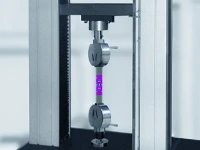
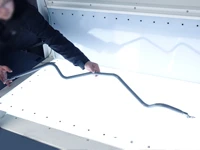
In the fields of materials science and mechanics, researchers utilize 3D-DIC to characterize material morphology or to quantify the 3D deformation of material specimens under various loading conditions, thereby enabling the calculation of strain and the subsequent analysis of the materials' mechanical properties. In the medical sector, researchers employ 3D-DIC to measure human body displacements and motion trajectories, or for surgical navigation purposes—specifically, to track the pose (position and orientation) of bone segments.
In the aerospace industry, 3D-DIC has been applied in the research and development of Mars landing systems; it provides critical data—such as full-field strain measurements—during the development of spacecraft heat shields, thereby facilitating improvements in their structural design. This diverse array of applications has firmly established the pivotal role of 3D-DIC within the scientific and engineering landscape, while simultaneously driving new demands for the technique—particularly regarding requirements for high precision, rapid computational speed, and robust reliability.