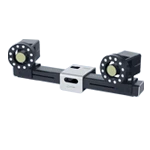
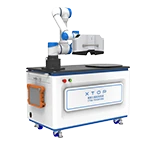
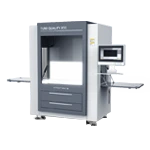
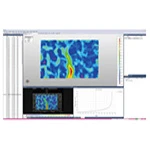
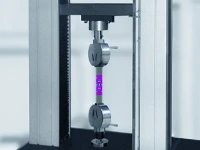
Measuring the mechanical behavior of materials in high-temperature environments has long been a challenging task in experimental mechanics. In April 2025, validation experiments conducted by R&D personnel at a leading domestic equipment manufacturer demonstrated that a high-temperature DIC system maintains high precision even under extreme conditions. The experiments utilized a high-temperature DIC measurement system; during the elastic phase, the deviation between DIC measurements and those from traditional extensometers was ≤1.2%; during the plastic phase, the deviation was ≤2.8%; and even during the critical phase immediately preceding fracture—despite localized speckle blurring caused by high-temperature thermal haze—the maximum deviation remained a mere 3.5%. This technology successfully resolves issues regarding the melting of speckle patterns and the suppression of red-light interference in high-temperature environments, thereby providing a reliable tool for assessing the material properties of hot-section components in aero-engines.
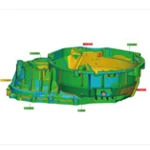
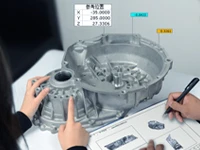
As a non-contact modern optical measurement technique, DIC (Digital Image Correlation) offers distinct advantages—including a simple optical path, excellent environmental adaptability, and a wide measurement range—and has been widely adopted in the field of material mechanical property characterization. Compared to traditional measurement methods, DIC technology possesses significant advantages: comparative experiments conducted in 2018 indicated that while the measurement error between DIC and strain gauges fell within the 5%–10% range, DIC uniquely enables the simultaneous capture of displacement and strain in all directions—whether at a specific point or across a designated region—an capability not possessed by traditional extensometers or strain gauges.
As the measurement precision of high-temperature DIC strain measurement equipment continues to improve under extreme operating conditions, engineers are now able to precisely capture the entire mechanical behavioral process of materials in high-temperature environments—from the elastic phase right up to the instant of fracture. This wealth of data is driving the evolution of next-generation aerospace materials toward becoming lighter, stronger, and more durable. Building upon these innovative trends, high-temperature 3D-DIC is poised to play an increasingly pivotal role in the following domains:
Advanced Aerospace Propulsion Systems:
Next-Generation Scramjets / Rotating Detonation Engines: Precisely measuring the thermal deformation, thermal stress, and fatigue life of combustion chambers and nozzles under conditions of extremely high heat flux density (>MW/m²) and intense transient thermal shock, thereby providing critical data for thermal-structural design and thermal management.
Nuclear Thermal Propulsion (NTP) / Nuclear Electric Propulsion (NEP): Measuring the thermo-mechanical behavior of critical components—such as fuel elements, cladding, and reflectors—within simulated nuclear reactor environments characterized by high temperatures (>2500 K) and intense radiation, thereby ensuring nuclear safety. Reusable Launch Vehicle Thermal Protection Systems (TPS): During ground-based aerodynamic heating simulation tests, perform full-field measurements to characterize the deformation, strain evolution, and failure modes of novel lightweight, high-strength TPS materials—such as new carbon-carbon (C/C) composites and ultra-high-temperature ceramic matrix composites—during simulated atmospheric re-entry.
Controlled Nuclear Fusion Energy:
Plasma-Facing First Wall Materials and Components: Under simulated conditions involving high temperatures (>500°C), intense neutron irradiation (requiring specialized shielding or off-line measurement techniques), and complex electromagnetic environments, measure the deformation, damage, and fatigue of tungsten-based divertors and blanket modules subjected to thermal loads, particle flux bombardment, and electromagnetic forces. This is critical for the engineering design and safe operation of ITER and future fusion reactors.
Energy Development in Extreme Environments:
Supercritical CO2 (sCO2) Brayton Cycle Power Generation: Measure the creep, fatigue, and corrosion-mechanics interactions of core components—such as turbines and heat exchangers—within high-temperature, high-pressure (>700°C, >20 MPa) sCO2 environments.
Deep Geothermal / Hot Dry Rock Extraction: Investigate the deformation and fracture behavior of reservoir rocks, as well as the long-term stability of Enhanced Geothermal Systems (EGS), under high-temperature, high-pressure (>400°C, >100 MPa) water-rock interaction conditions.
Advanced Manufacturing and Materials Genome:
High-Temperature Materials Design and Performance Prediction: By integrating high-throughput computation (e.g., CALPHAD, CPFEM) with high-throughput experimentation (utilizing combinatorial materials chip technology), employ high-temperature Digital Image Correlation (DIC) to rapidly acquire massive datasets on the constitutive behavior and failure characteristics of various materials—such as novel superalloys, high-entropy alloys, and ceramic matrix composites—across a wide range of temperature-stress states, thereby accelerating the construction of high-temperature materials "genome" databases.
Performance Validation of Additively Manufactured (3D-Printed) High-Temperature Components: Conduct full-field assessments of the anisotropy, residual stress relaxation behavior, and fatigue performance of additively manufactured parts—fabricated from materials such as superalloys, titanium alloys, and ceramics—at elevated temperatures, in order to optimize printing processes and post-processing treatments. Assessment of Joining Technologies under Extreme Conditions: Precisely measuring the stress distribution, creep behavior, and failure mechanisms of joints—formed via processes such as high-temperature brazing, diffusion bonding, and friction welding—when subjected to high-temperature service environments.
The High-Temperature Full-Field Strain Measurement System based on Digital Image Correlation (DIC) is evolving from a specialized tool for solving specific problems into a versatile infrastructural platform supporting future industrial applications in extreme environments and cutting-edge scientific exploration. The convergence of multi-physics fields, the empowerment of artificial intelligence, and the breakthrough of performance limits constitute the central themes of its development.
As the technology continues to mature and its application scenarios expand in depth, high-temperature DIC technology will provide deeper insights into the mysteries of materials and structures under extreme operating conditions. It will offer indispensable core data support for the design of more efficient, safer, and more reliable high-temperature systems and equipment, thereby driving revolutionary advancements in fields such as aerospace, energy, and materials science. To embrace these innovative trends is to embrace a future in which systems operating under extreme conditions remain fully controllable, measurable, and designable.