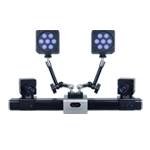
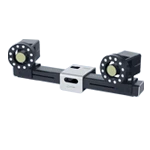
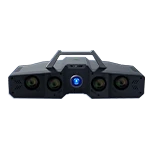
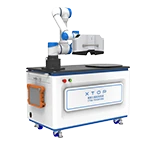
In high-end manufacturing sectors—such as precision instrumentation and aerospace—the monitoring of millimeter-scale micro-vibrations (with amplitudes ranging from 0.1 to 10 mm) is directly critical to equipment reliability. While traditional sensors struggle to capture the intricate details of full-field deformation, 3D Digital Image Correlation (3D DIC) technology—boasting a displacement resolution of less than 0.01 pixels—is currently redefining the standards for precision in micro-vibration monitoring.
I. The Three Technical Pillars of Millimeter-Level Monitoring
Sub-pixel Displacement Analysis Algorithm
Utilizes the Inverse Gauss-Newton (IGN) method to achieve 0.001-pixel displacement detection
Incorporates surface interpolation techniques to enhance single-point precision to 0.0001 mm (100 nm)
(Equivalent to a displacement magnitude of 1/800th the diameter of a human hair)
Multi-Camera Synchronous 3D Reconstruction
The DIC dual/multi-camera system reconstructs object 3D coordinates with a stereo matching accuracy exceeding 99%
Eliminates out-of-plane displacement errors, ensuring Z-axis vibration measurement accuracy of ±0.3 μm
Microsecond-Level Dynamic Response Capability
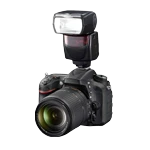
High-speed CMOS cameras support acquisition rates of up to 500,000 fps
Capable of resolving vibration waveforms on a 1 μs timescale (e.g., thermally induced vibrations in chip packaging)
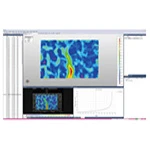
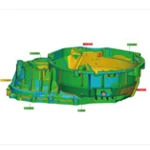
ALT Tag: 3D DIC System Captures Micro-Vibration Deformation Cloud Map of a Turbine Blade | 0.005 mm Displacement Resolution
II. Empirical Comparison: Breaking Through Traditional Limitations
|
Monitoring Methods
|
Measurement Dimensions
|
Minimum Resolution
|
Applicable Frequency Range
|
|
Accelerometer
|
Single Point
|
0.01mm
|
0-5kHz
|
|
Laser Vibrometer
|
Single Point
|
0.001mm
|
0-1MHz
|
|
3D DIC Technology
|
Full-Field
|
0.0001mm
|
0-20kHz
|
III. Engineering Implementation Pathways for Micro-vibration Monitoring
Nanoscale Speckle Preparation
Utilizes micro-spraying technology to create 2–50 μm speckle dots (particle size < 1/20 of the monitoring precision)
Employs ceramic-based speckles for high-temperature environments (thermal resistance up to 1200°C)
Full-Field Modal Parameter Extraction
Directly calculated from DIC displacement field data:
Mode Shape Visualization: Automatically generates OPD (Optical Path Difference) contour maps
Damping Ratio Calculation: Logarithmic decrement method achieves an accuracy of ±0.15%
Strain Energy Density Analysis: Identifies potential fatigue risk zones
IV. Vibration Measurement Applications in Cutting-Edge Fields
Lithography Machine Vibration Control
A lithography machine manufacturer utilized 3D-DIC to monitor micro-vibrations within its lens assembly.
Successfully controlled the amplitude of 0.78 Hz ambient vibrations to within **±1.2 nm**.
Spacecraft Solar Array Deployment Monitoring
Captured low-frequency flutter (0.5–2 Hz) with an amplitude of 0.05 mm during the deployment process.
The vibration suppression solution improved attitude control precision by 90%.
Precision Bearing Clearance Inspection
Analyzed 2.8 μm micro-vibrations induced by ball element circulation.
Provided early warning of potential bearing failure.