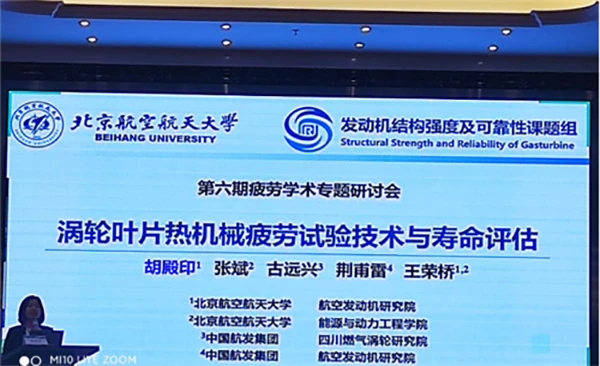
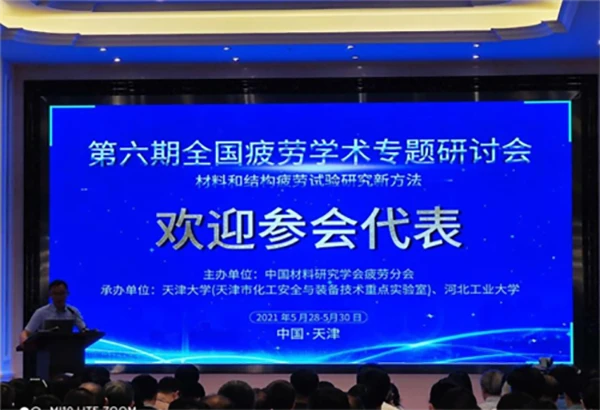
From May 28 to 30, the "6th Symposium on Fatigue (2021)—New Methods for Fatigue Testing and Research on Materials and Structures," hosted by the Fatigue Branch of the Chinese Materials Research Society, was held in Tianjin. The conference aimed to share research findings regarding new theories, methods, and technologies for fatigue testing of engineering materials and structures, as well as to discuss their development trends.
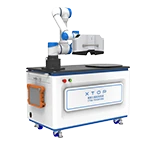
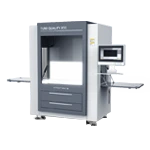
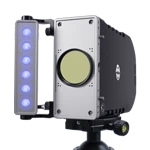
XTOP3D showcased its flagship in-house developed product—the XTDIC 3D optical strain measurement system—at the symposium. The system provides precise, efficient, and visual 3D digital solutions for fatigue research on new materials, fatigue fracture and failure analysis of engineering components, and corrosion fatigue analysis.
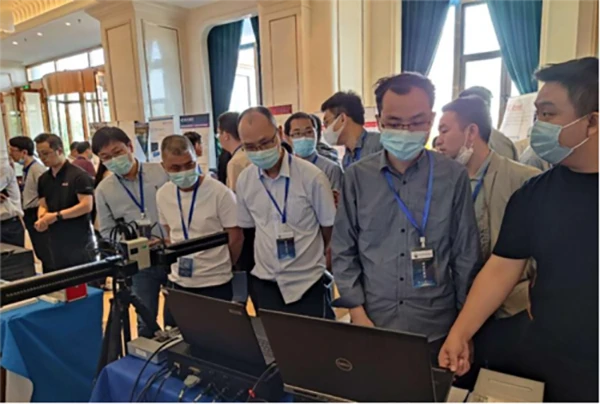
XTOP3D Full-Field Strain Measurement Solution
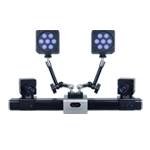
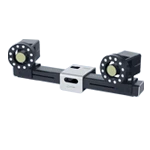
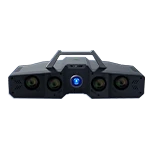
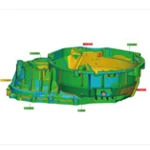
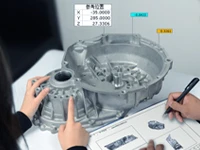
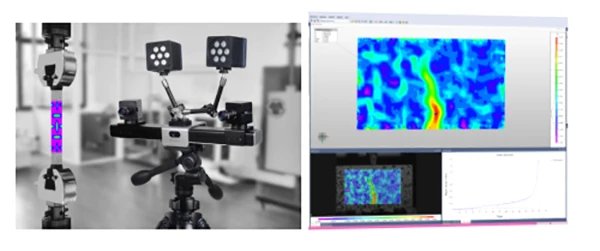
The XTDIC 3D optical strain measurement and analysis system showcased by XTOP3D at the conference is China's first independently developed 3D deformation measurement system based on Digital Image Correlation (DIC) technology. Featuring core algorithms with proprietary intellectual property rights, the system rapidly acquires 3D coordinates, full-field displacement, and strain data. It supports measurement areas ranging from 50mm to 10m and achieves a strain measurement accuracy of up to 0.005%.
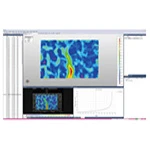
The XTDIC system captures full-field strain data on materials during both experimental testing and actual service. It enables the observation and analysis of the entire process—from crack initiation to ultimate failure—as materials and structures undergo deformation under loading. The system is widely applied in testing scenarios involving tension, compression, bending, and shear failure, offering researchers a novel solution for fatigue performance testing.
Key Application Areas
Mechanical Property Measurement: DIC technology is used to test the mechanical properties of materials such as solid rocket propellants, rubber, optical fibers, piezoelectric films, and composite materials, as well as natural materials like wood, rock, and soil.
Damage and Failure Detection: DIC technology is widely applied in fracture mechanics research, including the measurement of strain fields and crack-tip opening displacements (CTOD) at crack tips, as well as high-temperature crack-tip strain field analysis. It is also utilized for the non-destructive testing of ceramic capacitors, electronic components, and electronic packaging.
Micromechanics Measurement: When combined with electron microscopy, DIC is increasingly used for micromechanics measurements and the assessment of surface roughness.
XTOP3D Full-Field Strain Measurement Application Case
Biaxial Tensile Testing of Metallic Materials
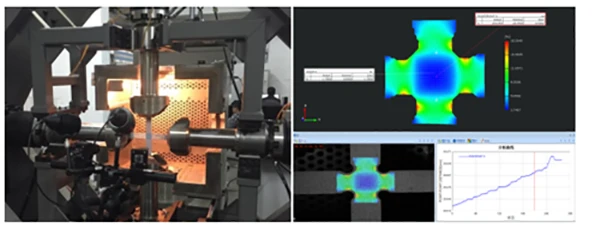
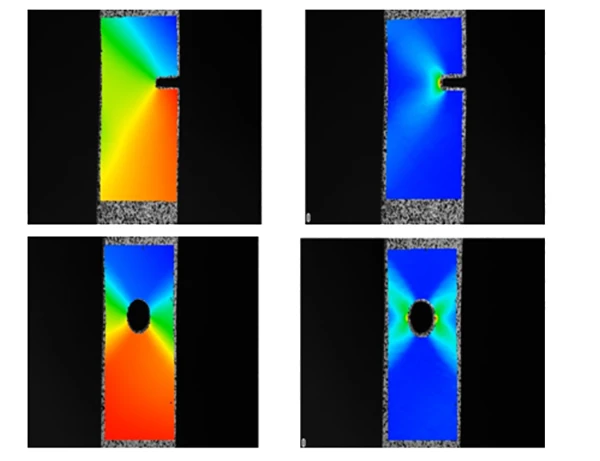
The XTDIC system can communicate with the dual-channel force signals of a biaxial tensile testing machine. During biaxial tensile tests on aluminum alloy specimens, the system monitors surface strain field variations, measures relevant mechanical property parameters, and analyzes the mechanical performance of the aluminum alloy material.
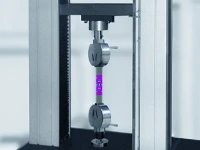
Round bar fatigue test
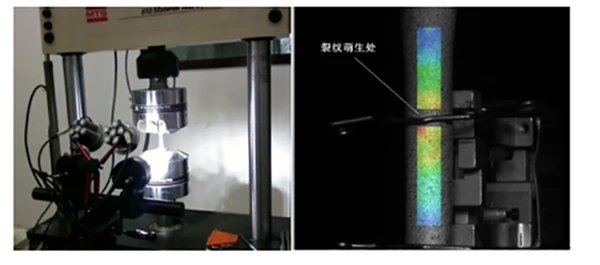
The XTDIC system tracks the position of the same pixel in the speckle image before and after deformation of the object surface, and obtains the displacement of the pixel, thereby obtaining the full-field displacement of the specimen surface. Strain data is automatically calculated based on displacement data to help study the fatigue fracture mechanism and behavior of materials and structures during stress.
Concrete Three-Point Bending Test
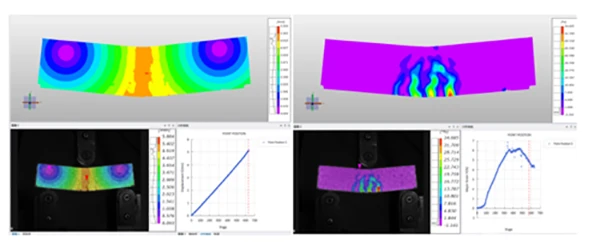
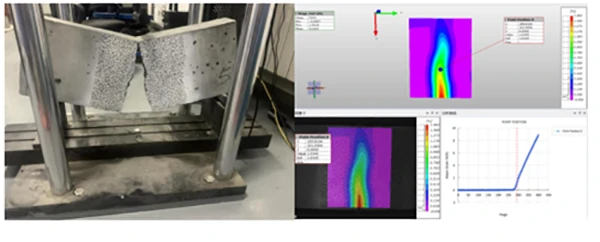
Traditional three-point bending tests utilize strain gauges to detect cracks but cannot predict the initial location of crack formation. By capturing images to analyze deformation and strain data on the specimen's surface, the XTDIC system enables the observation of crack propagation and evolution from multiple perspectives and angles.
Fracture Impact Mechanics Testing
Impact toughness (Ak value) represents a material's ability to resist deformation and fracture under impact loading; the magnitude of this value indicates the quality of the material's toughness. The XTDIC system can measure the processes of crack initiation and propagation, while recording full-field surface deformation of the material under impact loading.
Strain Testing of Skeletal Material Under Load
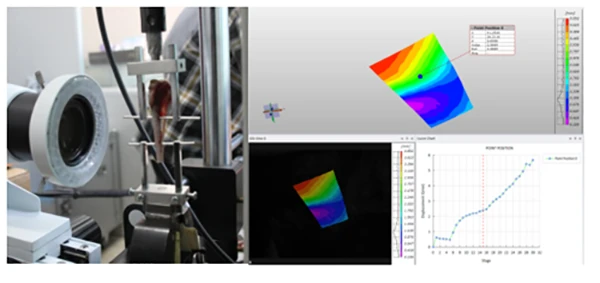
When an external force is applied to a bone, the skeletal structure undergoes stress, strain, and complex changes. An animal model simulating tibial loading is used to verify the bone's tensile deformation and tensile strength. The XTDIC system supports various strain measurement methods; when combined with an optical stereo microscope to magnify the region of interest on a chicken tibia, it enables the observation of fine details, clearly revealing the displacement and strain fields in the areas subjected to the load.
Finite Element Simulation Validation
Finite element simulation is suitable for analyzing and calculating mechanical properties such as material and structural strength, stiffness, buckling stability, dynamic response, and elastoplastic behavior. Measured data from the XTDIC system allows for the comparison and validation of simulation data, facilitating the adjustment and optimization of simulation parameters, as well as the optimized design of materials and structures based on experimental data.