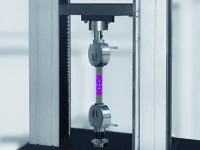
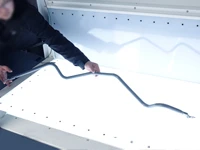
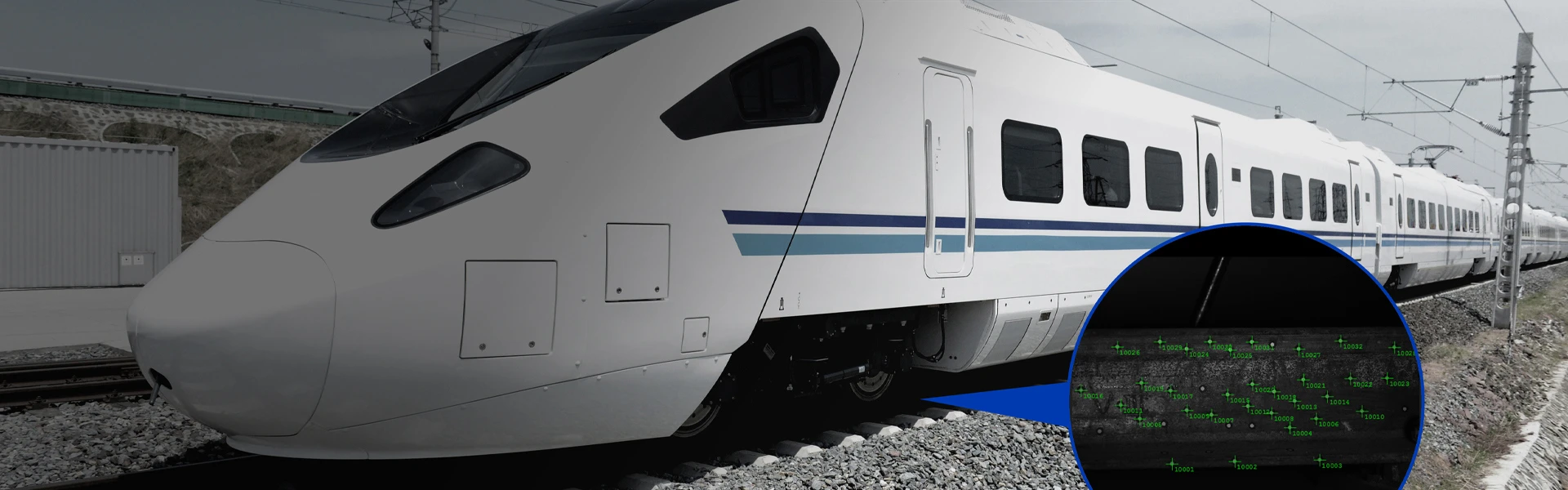
Bridges, tunnels, and slopes along rail transit routes can undergo complex deformation across their full extent under the coupled effects of dynamic train loads, surrounding rock pressure, rainfall, and earthquakes. Stress concentration, crack initiation, and progressive sliding often develop in localized areas.
Three-dimensional digital image correlation (3D DIC) provides non-contact, full-field surface measurement with submillimeter resolution for dynamic analysis. It directly produces complete displacement fields, multicomponent strain fields, and crack propagation histories. The technology supports research into structural mechanics using physical models of bridges, tunnels, and slopes, providing experimental data for design optimization, construction risk management, and long-term operation and maintenance.
01. What Can 3D DIC Do for Bridge, Tunnel, and Slope Monitoring?
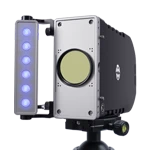
3D DIC uses industrial cameras to track changes in the grayscale patterns of speckles and calculate 3D coordinates. It delivers full-field displacement, normal, shear, and principal strain data, as well as crack propagation characteristics, with submillimeter measurement accuracy down to 0.01 mm. It supports static and quasi-static tests, high-speed dynamic and impact tests, and continuous long-term observation.
Compared with conventional point-based monitoring, 3D DIC analyzes full-field deformation data rather than only a few discrete points. It captures stress concentration zones and the full progression of plastic deformation and crack initiation and propagation, making it well suited to mechanism studies, simulation validation, model tests, and on-site deformation assessment.
02. DIC Algorithms for Complex Test Conditions
Rail transit applications range from small laboratory models to large outdoor structures, with substantial environmental interference and complex deformation behavior. Reliable test results depend on a comprehensive suite of proprietary DIC algorithms.
|
Proprietary Algorithms
|
Application Value
|
|
Subpixel Speckle Tracking and Analysis
|
Resolves speckle features with high precision to achieve submillimeter measurement accuracy down to 0.01 mm, detecting early microdeformation and signs of microcrack initiation.
|
|
Global Control Point Calibration for Large Fields of View
|
Enables long-range calibration over large fields of view for large-scale bridge and slope tests, ensuring consistent accuracy at all measurement points across the field of view.
|
|
Robust Outdoor Interference Suppression
|
Suppresses measurement noise caused by wind-induced vibration, changing illumination, and temperature drift to support continuous on-site observation.
|
|
Load-Image Time Synchronization
|
Provides precise hardware synchronization with loading systems and shaking tables, matching each image frame to its corresponding loading condition to reconstruct the complete time history of deformation and damage.
|
|
Automatic Crack Detection and Threshold Alerts
|
Automatically identifies crack locations and propagation lengths and supports user-defined deformation and strain thresholds.
|
|
Full-Field Post-Processing and Analysis
|
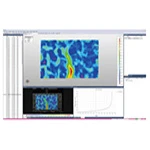
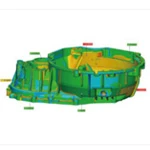
Generates displacement and strain contour maps, cross-section deformation curves, and measurement-point time histories in one click for structural performance analysis and simulation validation.
|
03. Case Studies: 3D DIC in Bridge, Tunnel, and Slope Model Tests
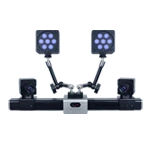
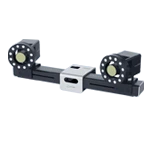
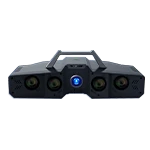
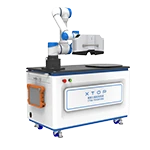
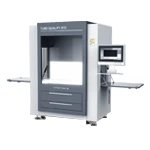
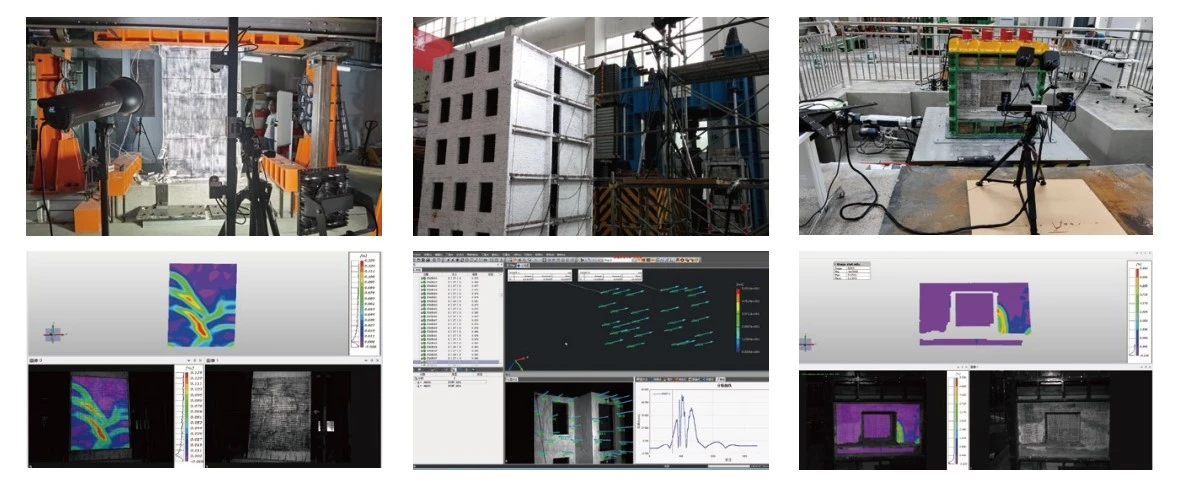
XTOP 3D's XTDIC 3D Full-Field Strain Measurement System tracks the complete deformation evolution of bridges, tunnels, and slopes under different loads. It identifies stress concentrations, plastic shear bands, and areas susceptible to sliding, providing quantitative full-field measurements for structural design optimization, construction risk assessment, and refinement of support schemes.
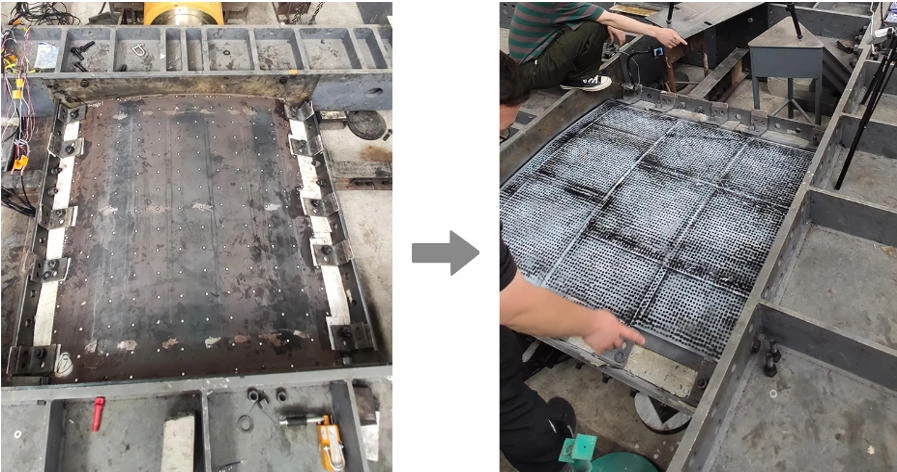
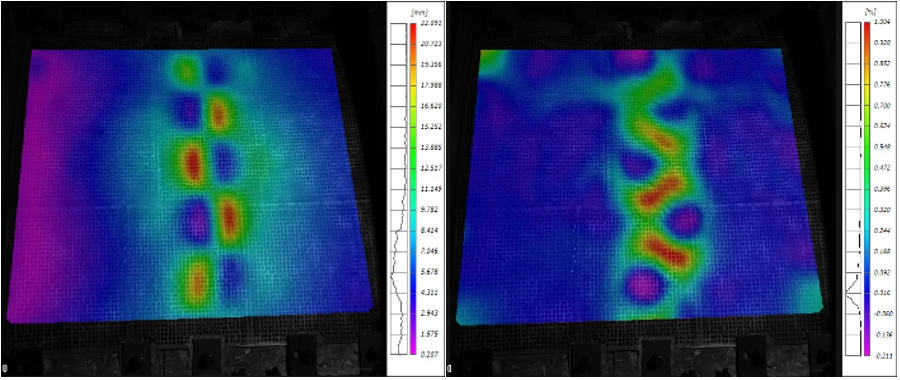
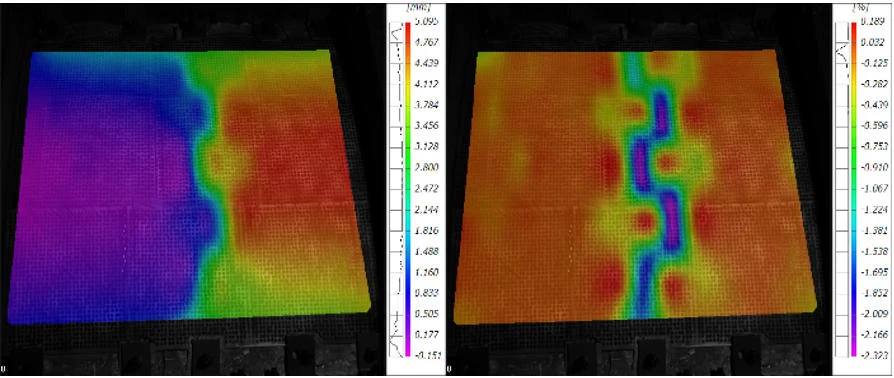
Case 1: Load Testing of a Scale Model of a Steel-Concrete Composite Main Girder for a Road-Rail Bridge
Test Setup: A scale model of the steel-concrete composite main girder of a road-rail bridge was subjected to staged static loading to reproduce the main girder's actual loading conditions.
Test Results: Full-field DIC contour maps illustrate how stresses redistribute throughout loading and accurately locate regions of concentrated strain within the member.
Engineering Value: The results provide a quantitative full-field basis for main girder optimization and mechanical performance analysis, help refine girder design theory, and support assessment of long-term in-service bridge safety.
Case 2: Four-Point Bending Test of a Concrete Beam
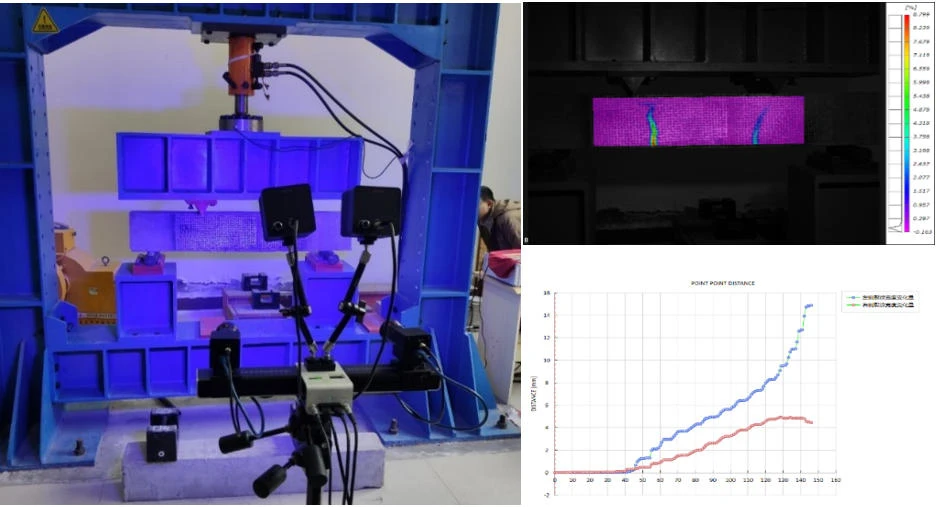
Test Setup: A scaled concrete bridge beam specimen was subjected to staged four-point bending to simulate the effects of dynamic train loads.
Test Results: DIC clearly identifies stress concentration locations in the web and bottom slab. Time-history curves reveal sudden strain changes caused by crack initiation at the critical load.
Engineering Value: The results reveal how concrete beam failure develops, guide optimization of main girder cross-sections and stiffeners, and inform fatigue cracking risk assessment for concrete bridges in service.
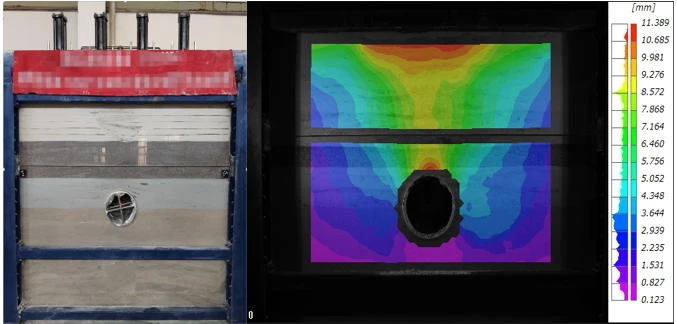
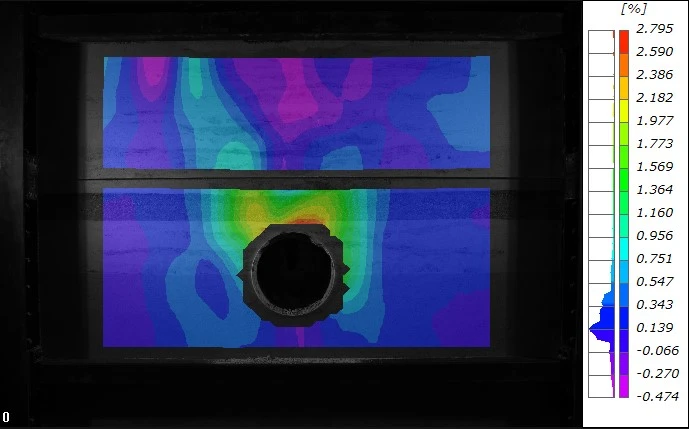
Case 3: Tunnel Surrounding Rock Collapse Test Using a Similitude Model
Test Setup: A layered model of the rock surrounding a tunnel was constructed using analogous materials. Unloading of the surrounding rock simulated the complete progression from tunnel instability to collapse.
Test Results: Full-field data show the greatest settlement in the overburden above the tunnel crown. Principal strain contour maps reveal curved plastic shear bands near the tunnel haunches and capture the complete development of the ground settlement trough.
Engineering Value: The results quantify key deformation indicators associated with surrounding rock instability and provide measured data for selecting advance grouting and initial support parameters, helping reduce the risk of tunnel collapse during construction.
Case 4: Surface Disturbance Simulation for Shield Tunneling Beneath Existing Structures
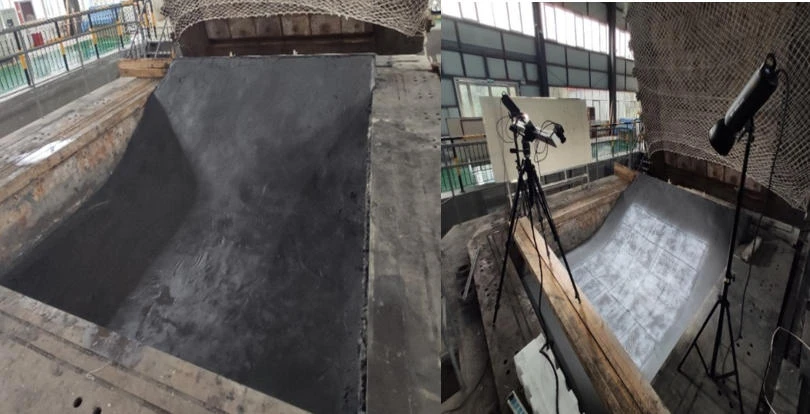
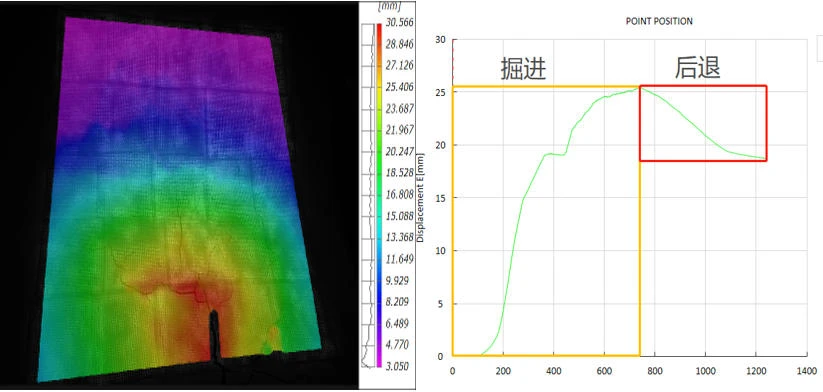
Test Setup: A scaled physical model was based on a shield tunnel passing beneath the main canal of China's South-to-North Water Diversion Project. The test simulated the complete sequence of shield advance and withdrawal.
Test Results: Maximum surface settlement occurs directly above the tunnel. Time-history curves clearly distinguish increasing settlement during advance from slight rebound during withdrawal, quantifying the extent of disturbance associated with each construction stage.
Engineering Value: The results verify the suitability of the shield excavation and support systems and provide a basis for settlement control and construction risk management in similar tunneling projects beneath existing structures.
Case 5: Shaking Table Test of Rock Slope Seismic Response
Test Setup: A scale model of a rock slope along a rail transit route was tested on a shaking table using earthquake wave inputs with different peak accelerations.
Test Results: DIC measures slope sliding displacement under different seismic intensities, precisely identifies weak zones where instability first occurs, and determines the critical acceleration threshold for seismic stability.
Engineering Value: The results support optimization of rock bolt and lattice support schemes, improving the seismic safety margin of slopes along rail transit routes.
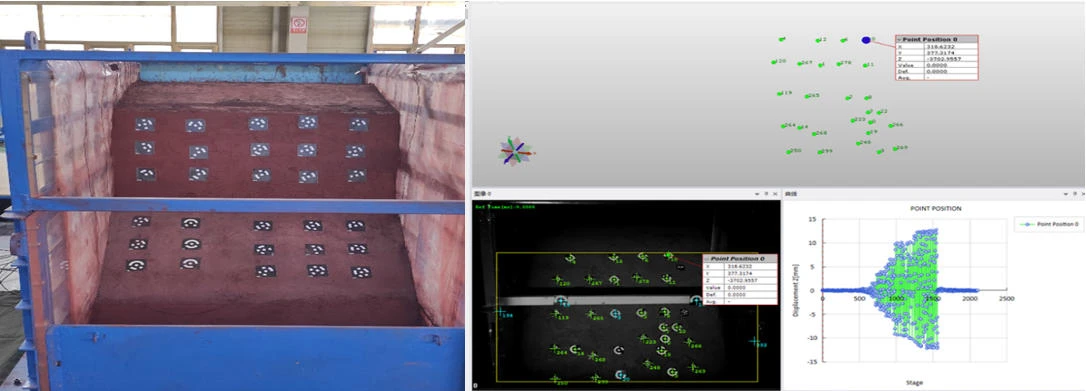
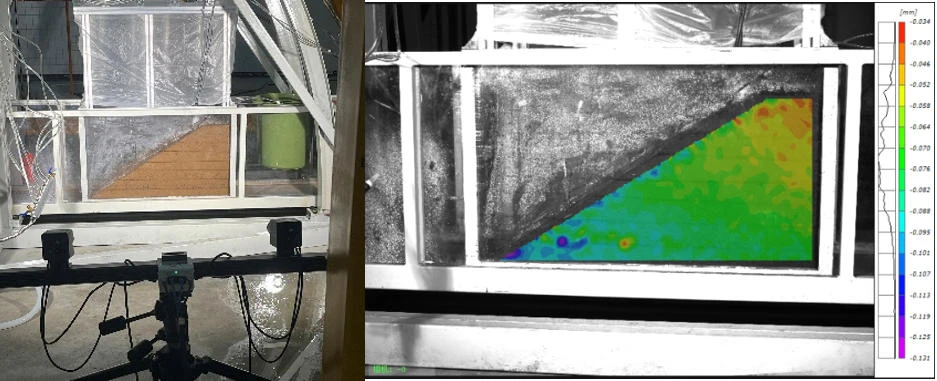
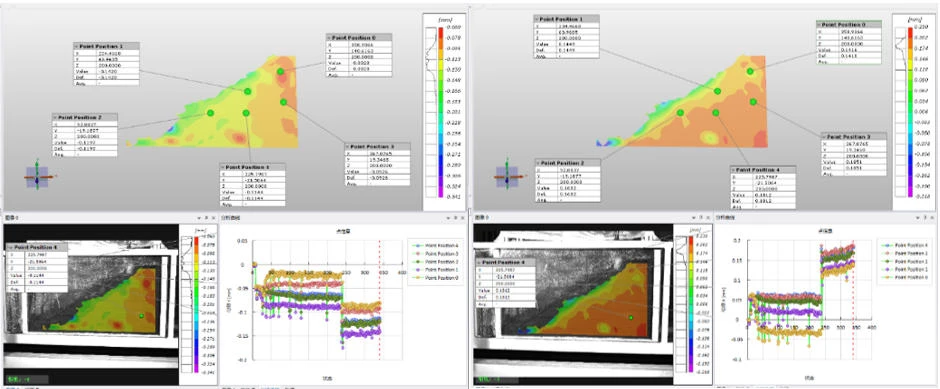
Case 6: Rainfall-Induced Sliding Failure Test of a Soil Slope
Test Setup: A physical soil slope model was subjected to artificial rainfall to simulate rainwater infiltration during the rainy season.
Test Results: Strain accumulates continuously from the slope crest to the midslope region, gradually forming a curved critical slip surface. The measurements capture the full progression from microdeformation to overall slope failure.
Engineering Value: Full-field strain anomalies reveal precursor signals of landslides and provide a basis for decisions on slope protection and reinforcement along rail transit routes.
04. Application Summary
The XTDIC 3D Full-Field Strain Measurement System uses proprietary DIC algorithms to extend beyond conventional discrete-point monitoring. It supports laboratory model studies of deformation mechanisms and testing in complex outdoor engineering environments, capturing the complete progression from microdeformation to instability and failure in bridges, tunnels, and slopes, including stress concentrations, plastic zones, and crack propagation.
DIC supports studies of structural behavior and underlying mechanical mechanisms, support scheme optimization, and construction risk assessment for bridges, tunnels, and slopes. It provides a quantitative, full-field digital measurement method for structural safety assessment along rail transit routes, helping identify structural risks at an early stage.