I. Overview
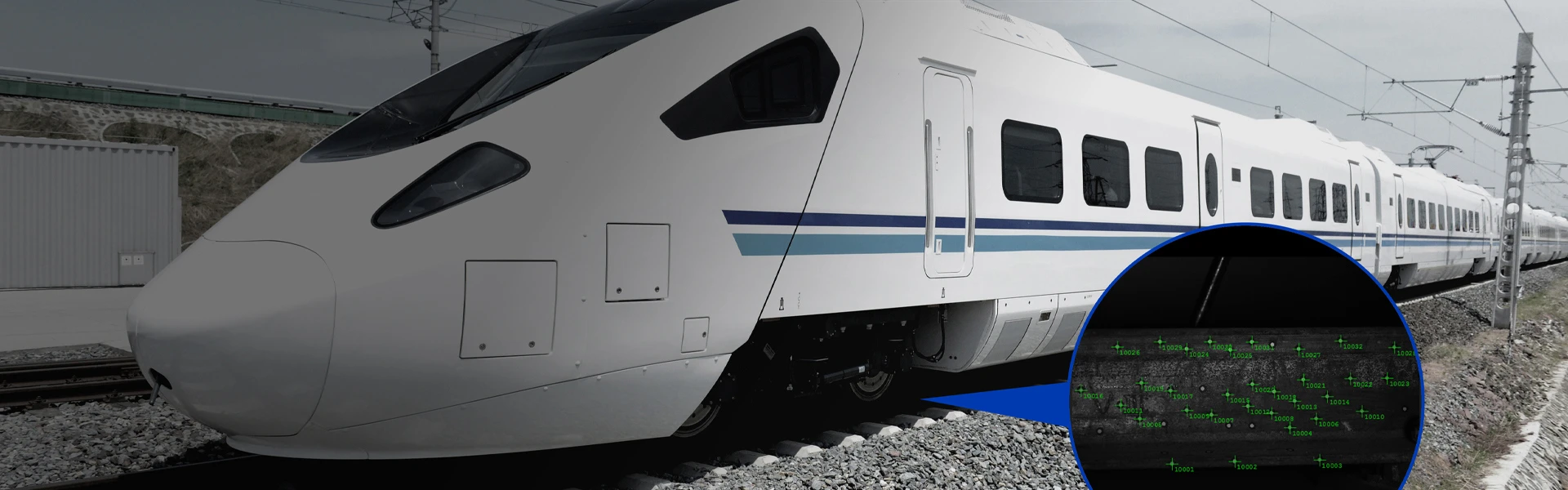
When high-speed trains or conventional railway trains traverse curved sections of track, they generate significant centrifugal dynamic loads. This causes the rails to shift laterally and creep longitudinally, while rail clips, fasteners, and sleepers—subjected to long-term cyclic loading—gradually develop looseness, plastic deformation, and fatigue-induced cracking. In the best-case scenario, this leads to deviations in track geometry and increased train vibration; in the worst-case scenario, it can trigger derailments.
Traditional track inspection methods suffer from inherent limitations: manual inspections cannot capture the transient, micro-scale deformations that occur on a millisecond timescale as a train passes. Contact-based sensors, such as strain gauges and accelerometers, require complex wiring and provide only single-point data, making it highly likely that critical areas of stress concentration will be overlooked. Similarly, laser Doppler vibrometers are restricted to single-point measurements; they lack the synchronization required to simultaneously capture comprehensive, integrated mechanical data across rails, fasteners, and sleepers.
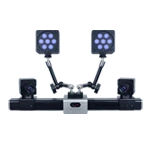
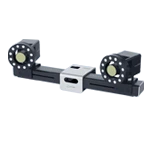
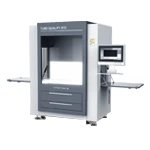
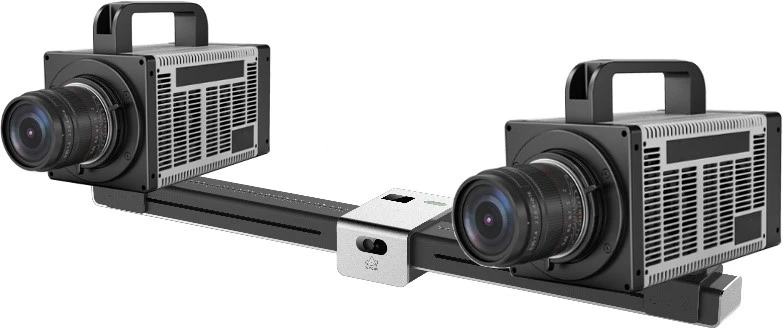
This solution centers on high-speed 3D Digital Image Correlation (3D-DIC) optical measurement technology, utilizing two specialized XTOP3D systems: the XTDIC-STROBE 3D dynamic DIC system and the XTDIC-SPARK high-speed DIC measurement system. These are tailored for specific testing scenarios, including centrifugal sliding/slippage simulations on curved tracks and impact-vibration testing of rail-wheel interfaces. The solution provides comprehensive, quantitative data on 3D displacements, strains, and vibrations across the entire lifecycle—from the R&D of rail components and research into track dynamics to the digital operation and maintenance of in-service lines. It delivers empirical data to support the optimization of rail structures, proactive warning of defects, and the calibration of finite element (FE) simulations.
II. Core Industry Testing Requirements
1. Verification of Lateral Stability on Curved Tracks
Quantify the resistance of various rail clips and fastening systems against rail slippage; identify high-risk locations for fatigue failure, such as bolts and the base of rail clips; establish safety warning thresholds for lateral rail displacement (at the millimeter scale); and shorten the R&D iteration cycle for components while reducing overall product verification costs.
2. Analysis of Vibration-Damping Performance in Track Dynamics
Analyze the vibration attenuation patterns of rails under vertical and longitudinal wheel-rail impact forces; quantify track regularity indices to guide the iterative optimization of ballast beds and vibration-damping fastening systems. Furthermore, utilize empirical vibration data to refine model parameters, thereby enhancing the precision of designs related to track superelevation, ballast bed stiffness, and vibration-mitigation strategies.
3. Digitalized Research and Predictive Maintenance
Generate standardized, full-field deformation maps and time-series displacement curves to detect early-stage, micron-scale micro-slippage damage. This facilitates a transition from "reactive emergency repairs" to "condition-based forecasting and preventive maintenance."
III. Advantages of High-Speed DIC Measurement Technology
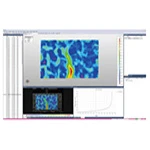
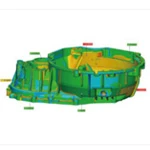
The XTOP3D high-speed DIC (Digital Image Correlation) measurement system offers several key advantages: millisecond-level transient full-field capture, ultra-high measurement precision (at the micron scale), non-destructive full-field synchronous measurement, and robust adaptability to complex operating conditions. It enables the complete, lossless recording of transient deformations—such as those occurring when a train navigates a curve or experiences wheel-rail impacts—and utilizes sub-pixel tracking precision (down to 0.005 pixels) to detect minute structural deformations. The DIC software automatically generates standardized data, including displacement contour maps and time-series curves. Furthermore, the system can be precisely configured to suit the specific requirements of various testing scenarios.
(I) Precision Equipment Matching for Specific Scenarios
1. XTDIC-STROBE (Dynamic Load Testing for Curved Track)
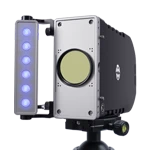
Featuring a binocular high-speed camera system with an acquisition rate of up to 4500 fps, this setup is integrated with a hydraulic multi-stage lateral loading device. It is designed for the quantitative measurement of full-field slippage and plastic deformation in rails and rail fasteners subjected to low-frequency, alternating lateral loads.
2. XTDIC-SPARK (High-Frequency Vibration Testing for Rails)
Equipped with 2048×1536 high-resolution binocular cameras and an acquisition rate of 5000 fps, this system is tailored for high-frequency vibration scenarios—such as those caused by wheel-rail impacts—and provides comprehensive, synchronized data on instantaneous rail displacement, vibration velocity, and acceleration decay.
IV. Typical Application Cases for Track Vibration & Deformation Monitoring
Case 1: Simulated Centrifugal Force Loading Test on Curved Track
1. Brief Description of Test Conditions
A hydraulic system is used to apply incremental lateral thrust, effectively replicating the increasing centrifugal lateral loads experienced by a train while traversing a curve. This setup allows for the comprehensive observation of outward rail displacement and the deformation of rail fasteners under load. The monitoring array covers the entire fastening assembly, including the rail base, spring clips, and fastening bolts.
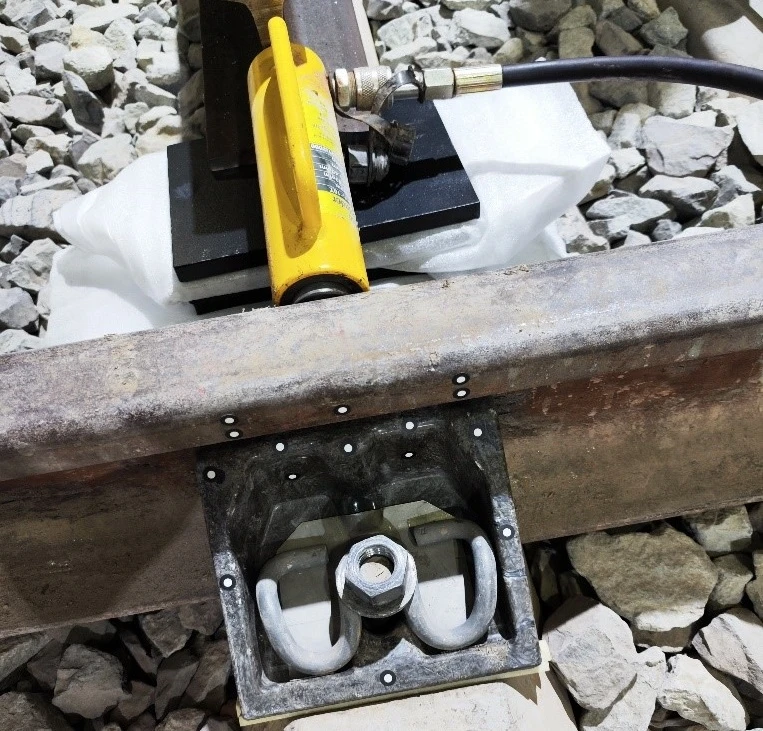
Track Hydraulic Loading Test Site & Fastener Marking Area
2. Interpretation of Measured Data and Engineering Value
(1) Full-field Displacement Color Contour Map of Fasteners
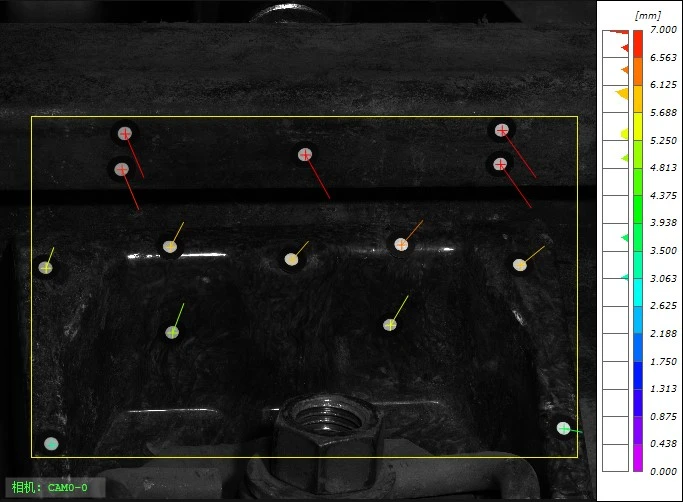
Contour plots provide an intuitive visualization of deformation across the entire assembly. Red and yellow zones indicate peak displacement—concentrated at the contact interface between the rail and the fastening clip, as well as at the base of the bolts—enabling the immediate identification of critical areas prone to stress concentration and fatigue cracking.
Engineering Value: By overcoming the limitations of localized monitoring via discrete sensors, these comprehensive, visualized deformation results serve as a guide for improving fastener structural design—for instance, by increasing the thickness at the base of the fastening clip or optimizing bolt preload specifications.
(2) Curve of relative displacement between two points on the fastener
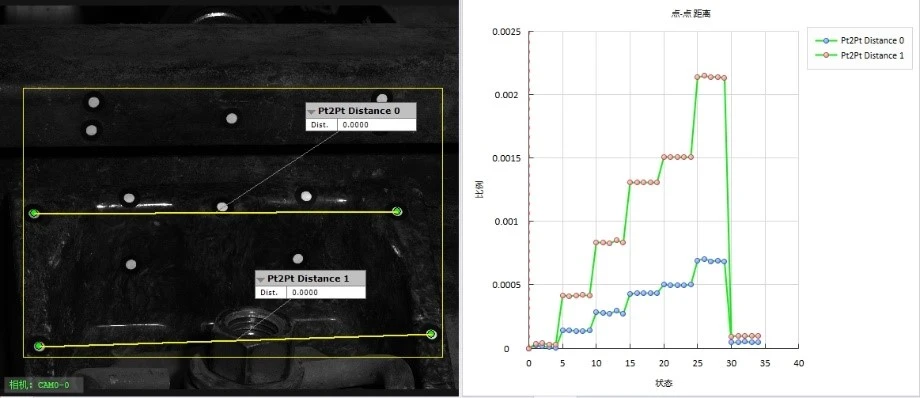
Displacement increases in a stepwise manner with the loading level and fails to return to zero upon unloading, providing clear evidence that the fastener undergoes irreversible plastic slip. A comparative analysis of multiple curves allows for the rapid quantification of differences in slip resistance between new and used fasteners.
Engineering Value: Provides quantifiable mechanical metrics for the performance verification of new fastener designs, the selection of track components, and the development of industry standards.
(3) Lateral displacement curve of the rail side
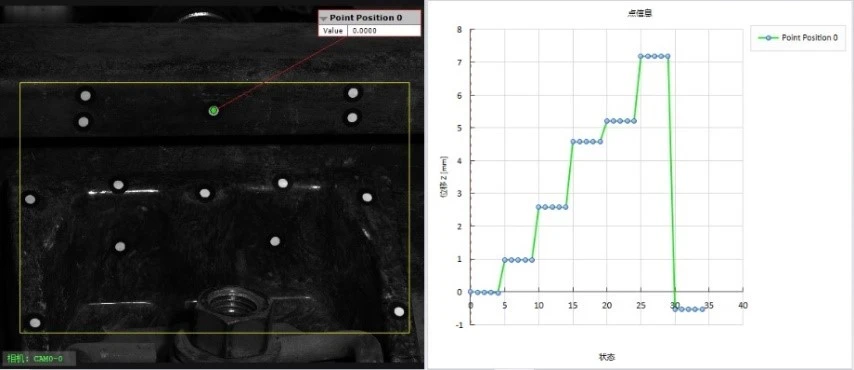
Under incremental loading, the lateral displacement of the rail exhibits a stepwise increase, allowing for the precise determination of the ultimate slip value. In accordance with railway standards, a millimeter-scale threshold for excessive displacement has been established as an early warning indicator.
Engineering Value: This serves as a critical safety assessment metric for curved track sections, facilitating the implementation of digital standards for on-site railway infrastructure inspections. When displacement approaches the defined threshold, timely interventions—such as retightening rail fasteners or reinforcing the ballast bed—can be carried out to mitigate the risks of train instability or derailment caused by outward rail displacement.
3. Overall Value of the Case
Designed for scenarios involving rail fastener R&D and mechanical testing on curved tracks, this solution enables quantitative comparison of the constraint performance of different fasteners, detects early-stage slippage damage at the micron level, establishes a digital early-warning system for lateral track deformation on curves, and facilitates the simultaneous calibration of track mechanical simulation models.
Case 2: Dynamic Impact-Induced Vibration Testing of Rails
1. Brief Description of Test Conditions
To simulate the impact excitation between train wheels and rails, the test incorporates two sets of impact conditions—vertical and longitudinal—to replicate operational vibrations. The measurement area covers 400 mm × 300 mm, with data captured via a high-speed camera at 5,000 fps, allowing for a comprehensive recording of the entire decay process of high-frequency rail vibrations.
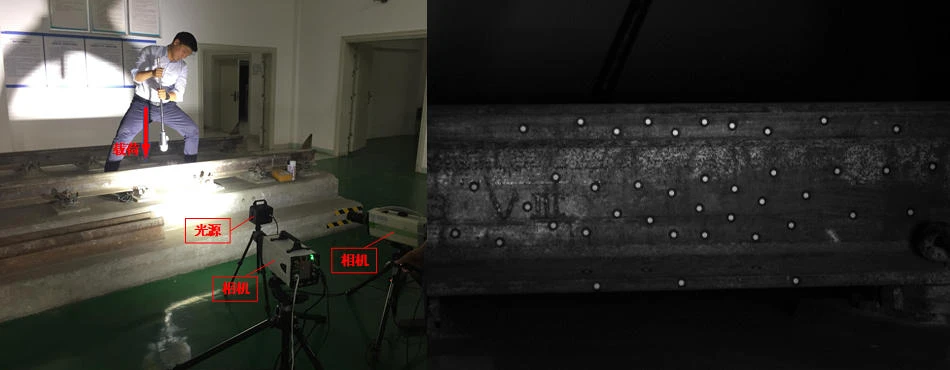
On-site vibration simulation testing of rails & layout of marked points in the test area
2. Interpretation of Measured Data and Engineering Value
(1) Vertical Impact-Induced Vibration Displacement Curve of the Rail
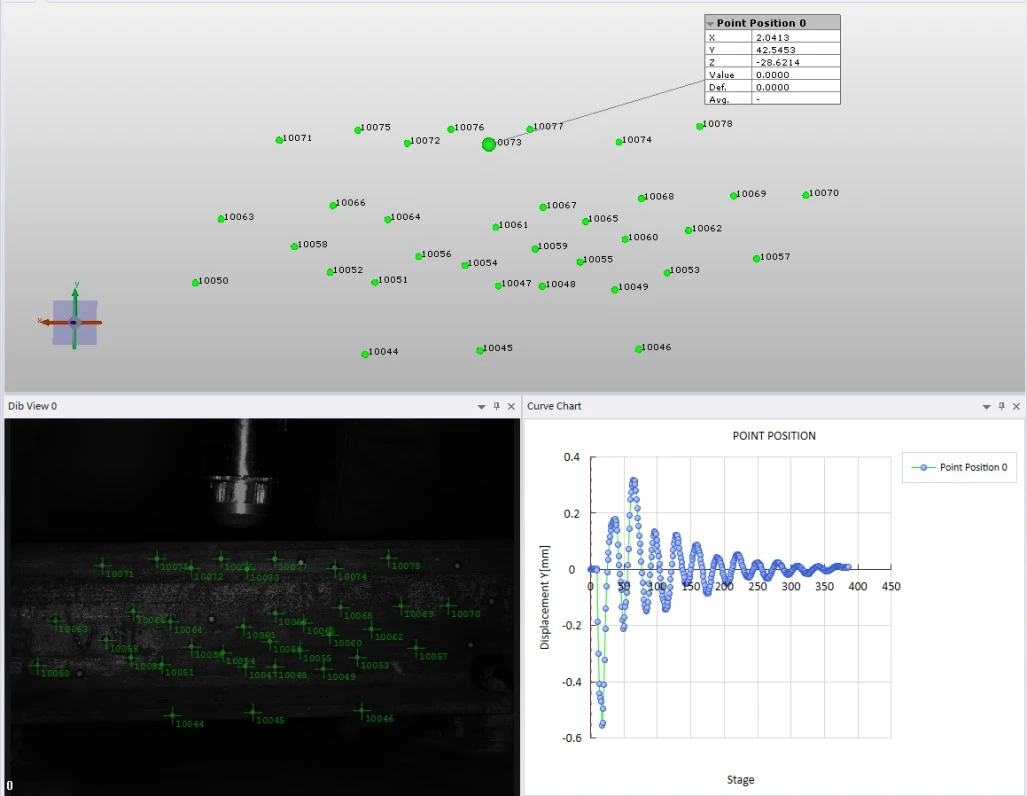
Under a vertical impact, the rail exhibits a maximum vibration peak of 0.6 mm. Following the removal of the load, the vibration amplitude decays progressively until it returns to zero; the resulting curve clearly illustrates the vibration period and the rate of damping-induced decay.
Engineering Significance: This provides a direct indication of the track's vertical stiffness and vibration-mitigation capacity. If the vibration decays slowly or the peak displacement is excessively high, it suggests that the track bed elasticity or the performance of the vibration-damping pads is insufficient—conditions that can lead to vehicle instability (bouncing) and noise levels exceeding permissible limits along the line. These data serve as a basis for optimizing vibration-mitigation components.
(2) Longitudinal impact-induced vibration displacement curve of the rail
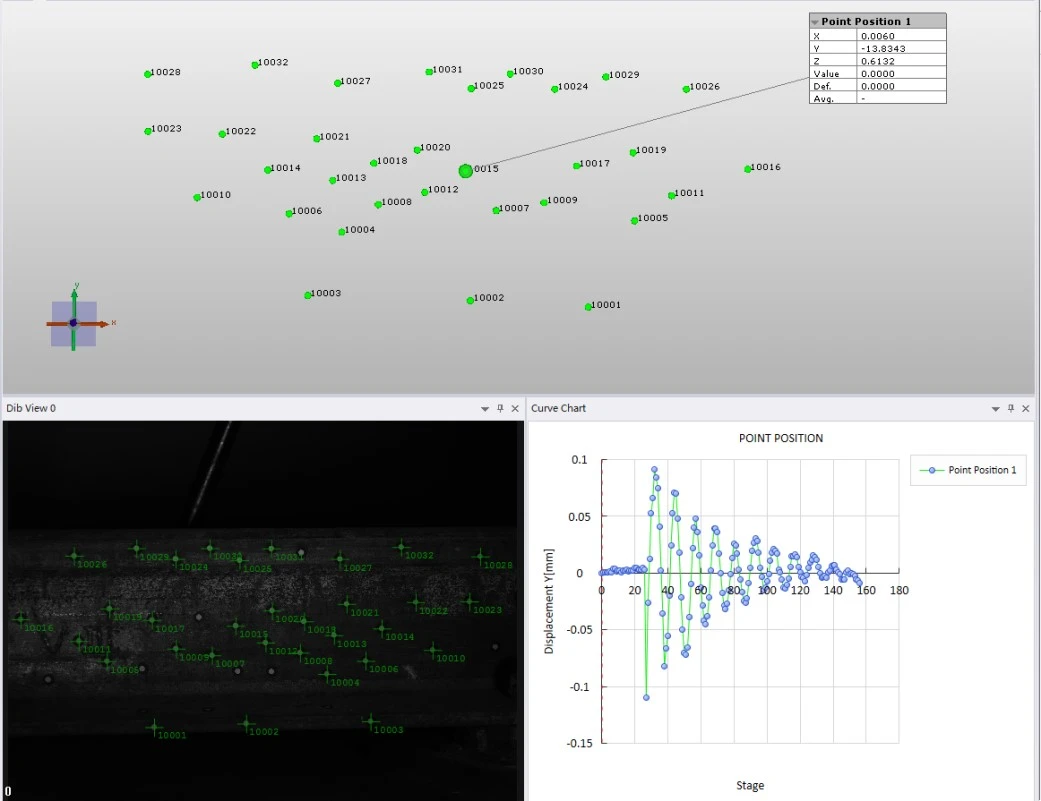
The peak coupled vibration of the rail induced by longitudinal impact is only 0.1 mm—a value significantly smaller than the vertical deformation—which allows for a clear differentiation of the track's stiffness across various directions.
Engineering Value: This provides a dynamic basis for the design of anti-creep structures for curved tracks and rail expansion joints. Furthermore, it enables the calibration of finite element simulation results by correcting parameter deviations, thereby enhancing the precision of track design.
3. Overall Value of the Case
High-speed DIC technology supports fundamental research in railway vibration/noise reduction and dynamics. It quantifies the multi-directional vibration and damping decay characteristics of rails, provides quantitative metrics for track regularity, facilitates the iterative development of track beds and vibration-attenuating fasteners, reduces operational vibrations and noise along the line, and ensures the long-term stable service of the track.
V. Summary of the Solution
Leveraging high-speed Digital Image Correlation (DIC) optical measurement technology, this solution addresses two critical testing scenarios: lateral displacement of curved tracks and impact-induced vibration at the wheel-rail interface. It provides comprehensive full-field contour maps and time-series data, translating dynamic deformation and vibration metrics into actionable insights for track optimization and safety management.
By transcending the limitations of traditional inspection methods, this high-speed 3D DIC solution offers a novel, digitized approach to measuring displacement, deformation, and vibration for high-speed railways, conventional rail lines, and urban transit systems. Through precise, dynamic, and full-field empirical data, it strengthens the foundation for operational stability, continuously empowering the safe, efficient, and low-carbon operation of rail transit networks.