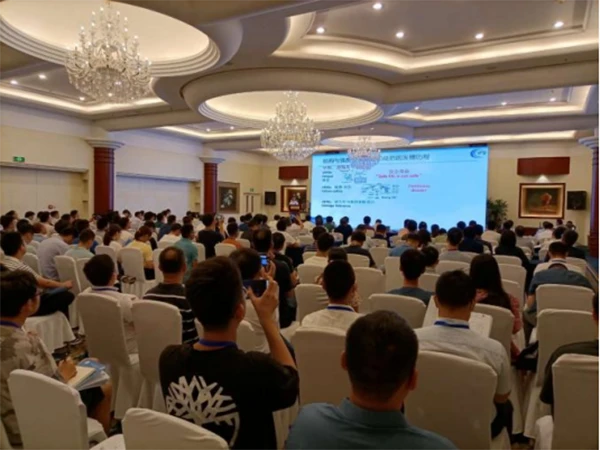
The 8th Youth Forum on Material and Structural Strength, hosted by the Materials Branch of the Chinese Mechanical Engineering Society and organized by Jiangnan University, was held in Wuxi, Jiangsu Province, from June 25 to 27.
As the equipment manufacturing industry undergoes transformation and upgrading in sectors such as petrochemicals, marine engineering, and transportation, new demands have emerged regarding materials, manufacturing technologies, and structural strength. Taking place during the inaugural year of the national "14th Five-Year Plan," the forum facilitated in-depth discussions and exchanges on topics such as the balanced design of material strength and toughness for service performance, as well as strength testing and life prediction under extreme and complex operating conditions.
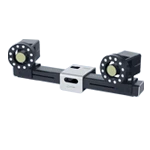
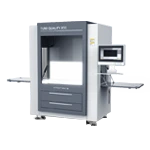
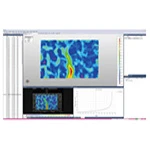
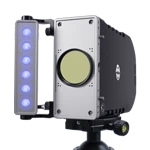
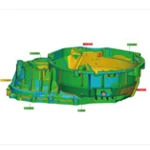
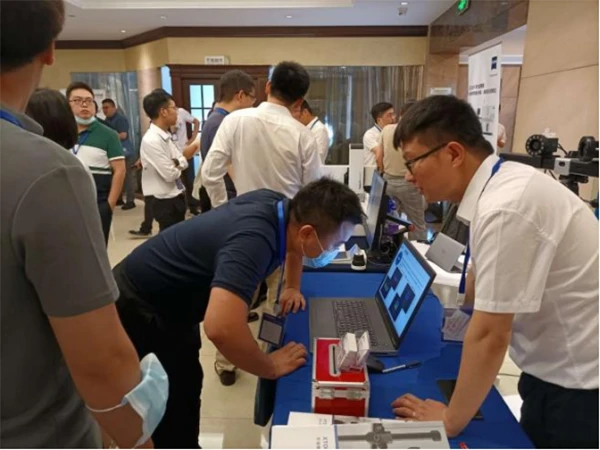
The XTDIC 3D full-field strain measurement system showcased by XTOP3D on-site was a major highlight. By tracking the displacement of pixels in speckle patterns before and after surface deformation, the XTDIC system calculates full-field displacements across the surfaces of materials and structures. This proprietary technology represents a significant achievement that meets advanced international standards, enabling precise analysis of fatigue fracture mechanisms and behavior in materials and structures under load.
Traditional fatigue testing of materials and structures typically employs contact-based measurement methods. However, factors such as material anisotropy and the need to measure fatigue and crack evolution render conventional electrical measurement techniques unsuitable. The XTDIC system captures full-field data across the entire field of view, enabling the analysis of the complete process—from crack initiation to structural failure—under loading conditions. Widely used in the study of material and structural fatigue, fracture, and failure, it provides a scientific basis for optimizing finite element designs.
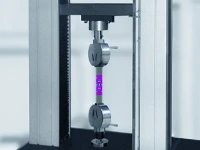
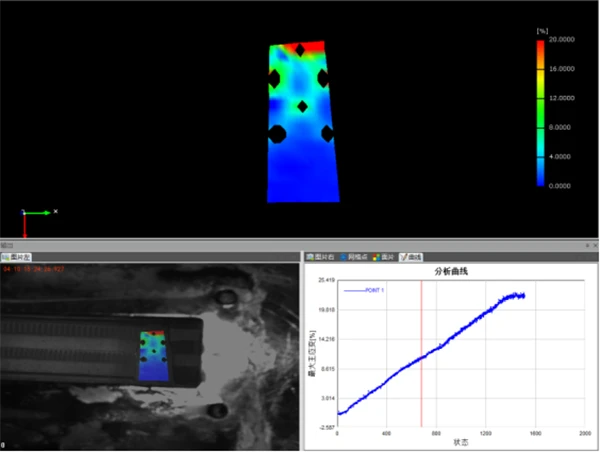
High-Temperature Material Tensile Testing
To achieve significant breakthroughs in materials research—such as for automotive applications and welding processes—researchers are developing materials that are lighter, stronger, and capable of withstanding higher temperatures for extended periods.
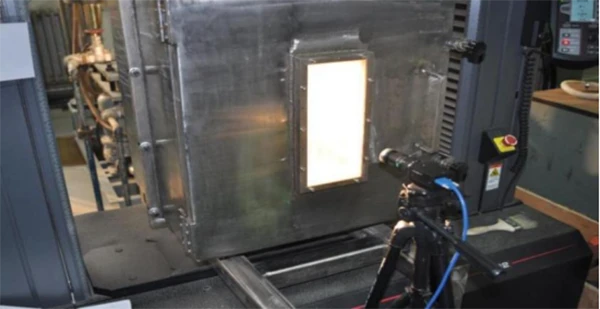
XTOP3D provides reliable, non-contact measurement solutions for high-temperature material mechanics testing. The XTDIC system utilizes a proprietary, specialized speckle patterning technique combined with various narrowband filters and interference filters to ensure the clear capture of speckle patterns at high temperatures, enabling strain measurement during tensile testing at temperatures up to 3,000°C.
High-Temperature Welding Deformation
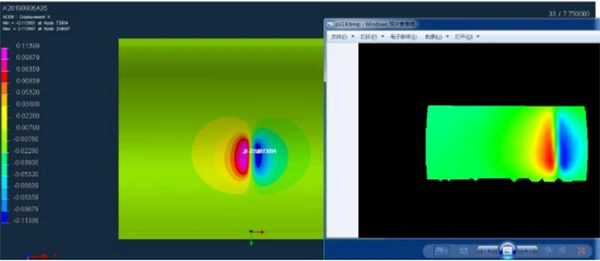
Investigating the deformation mechanisms within the weld zone during the welding process has long been a challenge. Due to temperatures exceeding 1000°C in the weld zone, contact-based measurement methods are compromised by the heat, making it difficult to effectively measure surface displacement on materials or structures in such high-temperature environments.
The XTOP3D XTDIC system is utilized for testing welding deformation in sheet metal. It records displacement and strain at the final stage of deformation and provides intuitive, accurate measurements of 3D displacement and strain during the welding process. By correlating these results with numerical simulations, the system yields scientific measurement data to support research into welding deformation.
Microscopic Tensile Measurement of Metallic Materials
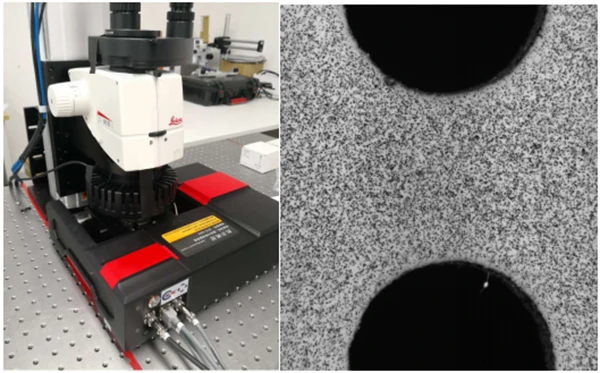
The mechanical properties of materials are crucial for the efficient operation of equipment. By determining these properties—and analyzing them in the context of service conditions and failure phenomena—one can investigate the causes and patterns of failure, establish appropriate performance metrics, and validate product durability, stability, and safety, thereby securing a competitive advantage.
Strain testing of materials at the micro-scale—utilizing optical or electron microscopy (at micron or even nanometer resolution) combined with XTOP3D Digital Image Correlation (DIC) technology—enables the rapid and precise determination of mechanical properties (such as elastic modulus and yield strength) from load-displacement curves obtained during tensile testing.
Sheet Metal Forming Limit (FLC)
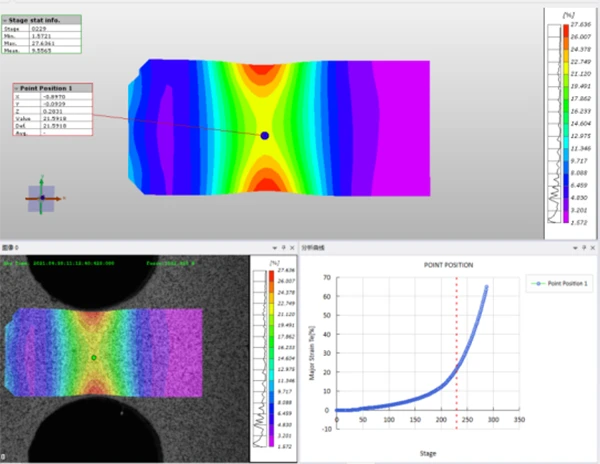
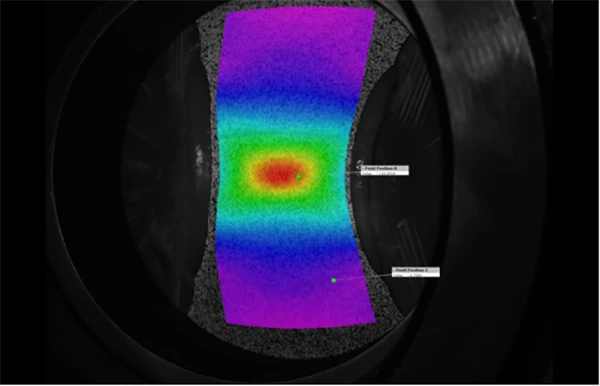
Sheet metal forming is a critical material processing technology, and the sheet metal forming limit serves as a key indicator for evaluating the formability of sheet materials. By measuring the deformation limits of materials under load, the system provides a technical foundation and practical criteria for optimizing forming processes.
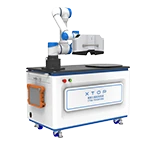
The XTDIC-FLC 3D Sheet Metal Forming Limit Measurement System measures the full-field instantaneous displacement and strain fields on the sheet surface under load. It enables the assessment of mechanical properties—such as rigidity, impact resistance, and dimensional stability—ensuring excellent formability and compliance with the operational requirements of manufactured components.
Hopkinsson Bar Tensile Testing
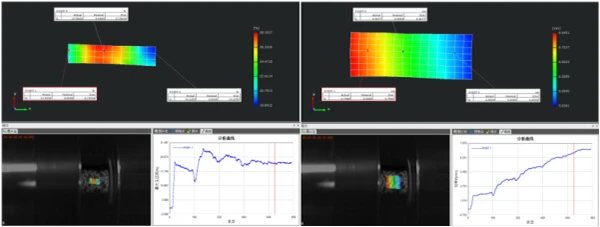
The Hopkinsson bar experiment is primarily used to test the dynamic mechanical properties of materials. When a striker bar impacts the input bar at high speed, an incident pulse is generated within the input bar; the stress wave travels through the elastic input bar to the specimen, causing the material to undergo high-speed deformation under the influence of the stress pulse. As the stress wave passes through the material, it generates a reflected pulse that travels back into the elastic input bar and a transmitted pulse that enters the output bar.
By utilizing the XTDIC system, it is possible to capture the dynamic mechanical properties of materials under pulse loading and record stress-strain curves during dynamic tensile testing. This enables the study of material behavior under dynamic loads, thereby facilitating engineering design and practical applications.
Strain and displacement fields of materials under impact loading
Growth and Evolution of Structural Cracks
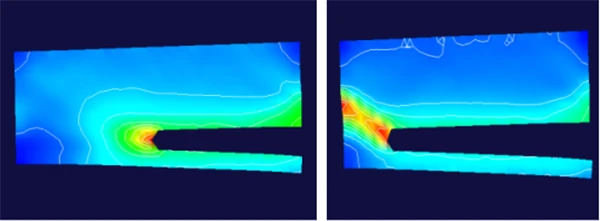
Ductile materials are susceptible to brittle fracture during service, even when stresses remain below the yield limit. Fracture mechanics employs fracture toughness to quantify the critical stress required for crack propagation—leading to material failure—in the presence of pre-existing internal or structural defects.
Strain distribution during the fracture process
Structural Load Fatigue
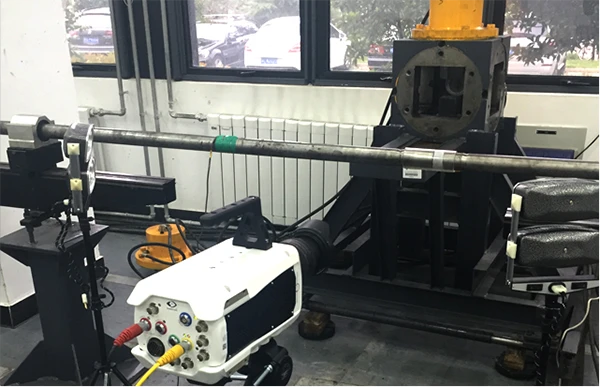
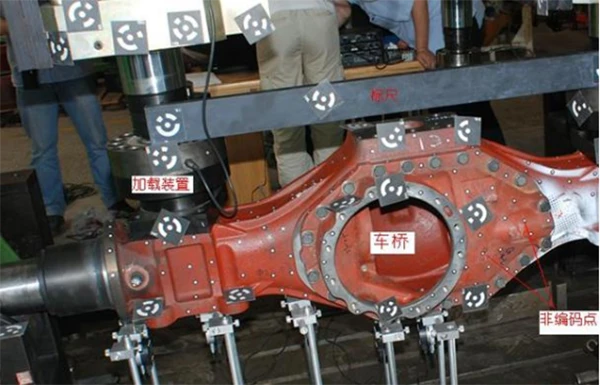
For newly designed and manufactured axles, simulated load testing using specialized, high-dynamic-performance stationary test rigs is required to evaluate operational performance and reliability metrics. Given the wide range of operating parameters and the complex, variable nature of service conditions, it is essential to capture data on deformation at critical locations and the onset of cracking.
The XTDIC system enables the measurement of deformation and the initiation points of damage at critical axle locations. It records full-field deformation on the axle's structural surface in real-time, providing a clear visualization of displacement changes across the entire measurement area and supplying the data necessary for analyzing load-induced deformation and reliability.
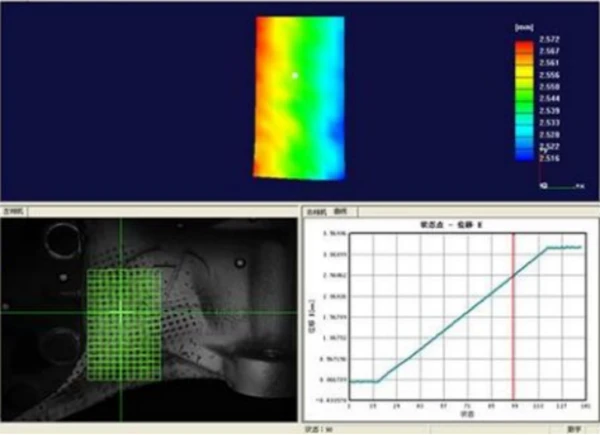
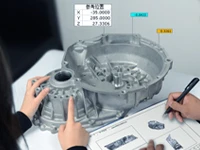
Strain Measurement Results for Mechanical Components
Technology empowers industry; innovation leads the future. Xintuo 3D possesses extensive engineering measurement expertise covering areas such as the fatigue behavior and failure of materials and structures; the determination of material strength and toughness; fatigue failure under complex operating conditions; and the microstructural characterization of material deformation and damage. Leveraging its proprietary XTDIC 3D full-field strain measurement system—and focusing on the measurement needs of scientific research and high-end manufacturing—the company continuously researches and iteratively enhances its software algorithms to provide researchers and technical professionals with high-performance strain measurement solutions for materials and structures.