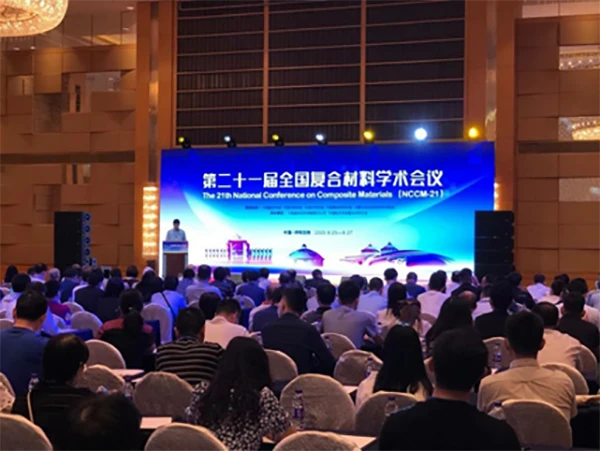
On August 26, the 21st National Academic Conference on Composite Materials opened in Hohhot, jointly hosted by the Chinese Society of Aeronautics and Astronautics, the Chinese Society of Astronautics, the Chinese Society of Theoretical and Applied Mechanics, the Chinese Society for Composite Materials, and the Inner Mongolia Association for Science and Technology. Attendees included Xu Huibin, an Academician of the Chinese Academy of Engineering and President of Beihang University, and Gong Shengkai, an Academician of the Chinese Academy of Engineering and a professor at the Institute of Frontier Science and Technology, Beihang University.
The theme of this year's conference was "Composite Materials: Green, High-Quality, and Highly Efficient." The event featured nine parallel sessions covering various fields of composite materials. Top academicians, scholars, and experts were invited to present reports and engage in exchanges, jointly exploring the frontiers of current research and future development directions to further advance both theoretical and practical studies in the field. Over the course of the two-day conference, more than ten experts from sectors such as aerospace composites delivered outstanding presentations.
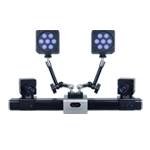
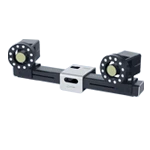
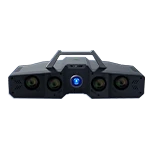
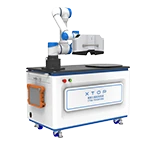
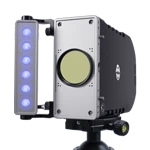
At the National Academic Conference on Composite Materials, XTOP3D and Kaier Measurement & Control showcased their equipment in a joint exhibition for the first time. As a provider of high-performance testing and measurement instruments, Kaier Measurement & Control offers a complementary product portfolio to XTOP3D; this collaboration embodies the principles of shared technology and integrated industrial development. By presenting cutting-edge products for stress-strain testing, the partnership aims to facilitate R&D and mechanical property testing within the composite materials sector. XTOP3D exhibited its XTDIC 3D optical strain measurement and analysis system, seeking to provide attending experts and scholars with state-of-the-art methods and tools for composite material testing.
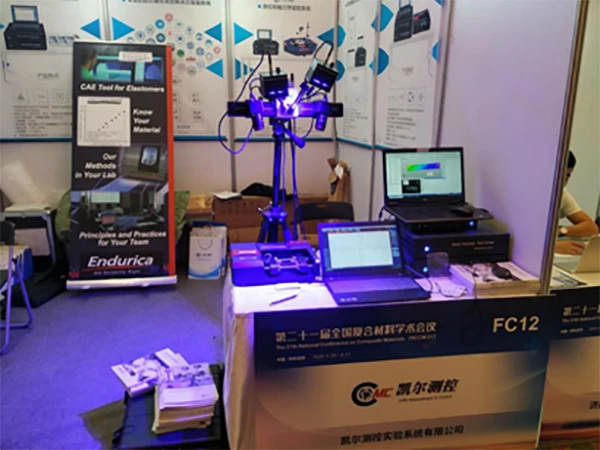
Traditional static response measurements typically employ resistance strain gauges and extensometers. Factors such as the gauge's bonding area, location, orientation, and adhesion quality can affect measurement accuracy; meanwhile, extensometers are bulky and only yield the average strain within the gauge length. Composite structures are anisotropic materials characterized by multiple elastic constitutive parameters, rendering traditional electrical measurement methods inadequate for meeting testing requirements. Based on proprietary algorithms and digital image processing technology developed by Xintuo 3D, the XTDIC system captures the full-field 3D displacement of specimens and enables quantitative analysis of displacement and strain—proving particularly effective for detecting non-uniform strain fields.
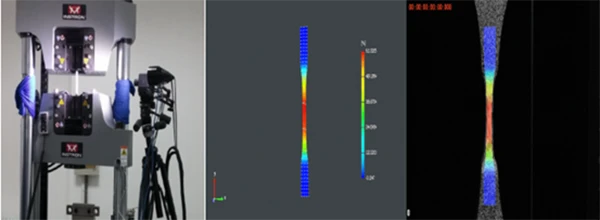
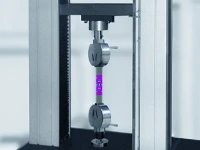
Material Tensile Testing
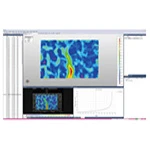
The XTDIC system not only captures full-field data from test specimens but also enables the observation and analysis of the entire process—from crack initiation to final failure—as composite materials undergo deformation under load. Currently, 3D optical strain measurement methods are widely used in testing the tensile, compressive, flexural, and shear failure of composite materials; furthermore, the empirical data obtained through optical measurement serve as a powerful tool for researchers to validate and optimize finite element designs.
The new materials industry—led by composites—is expanding rapidly, with production capacities for various composite materials ranking among the highest globally. China is accelerating the cultivation and development of this industry, a move of significant strategic importance for supporting major national engineering projects and establishing new advantages in international competition. Moreover, as global manufacturing shifts toward intelligent and green production, lightweight, high-strength composite materials are increasingly finding applications in areas such as lightweighting for automotive and rail transport, construction materials, anti-corrosion solutions for the petrochemical industry, wind power, and environmental protection.
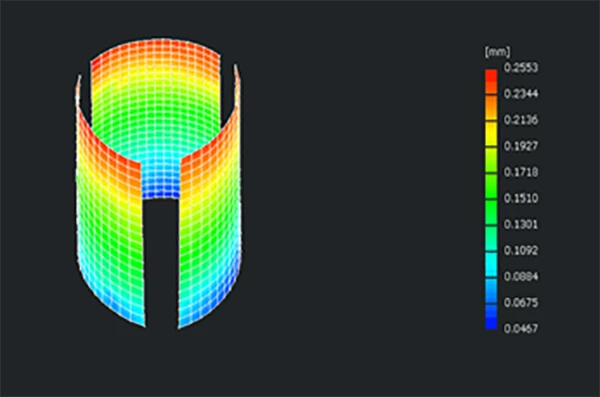
Material compressive strain field
Currently, applications in major engineering projects impose increasingly stringent performance requirements on materials. Research laboratories must test composite materials that meet practical production needs, ensuring the resulting combinations satisfy specific mechanical property parameters. This necessitates the continuous matching of various constituent materials to achieve desired characteristics—such as specific levels of toughness, strength, and hardness—through rigorous and precise testing to ultimately produce composites that meet the required mechanical specifications.
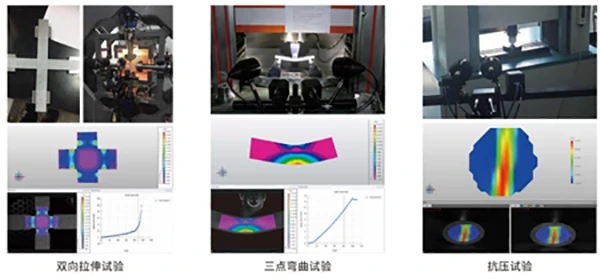
The technical specifications of the XTOP3D XTDIC system have reached an advanced international level. With a wealth of application cases in composite material testing, the system integrates seamlessly with various test rigs and testing machines developed by CARE, making it suitable for the vast majority of mechanical property tests for composite materials. It has also achieved impressive results across multiple disciplines, including mechanical engineering, materials science, mechanics, and civil engineering. At the conference, XTOP3D demonstrated the XTDIC system's measurement capabilities and showcased industry application cases and promotional materials; many attendees highly recognized XTOP3D’s DIC technology products and solutions, expressing interest in further collaboration.
As a leading enterprise in 3D industrial inspection and a provider of comprehensive 3D optical strain measurement solutions, XTOP3D will continue to work hand-in-hand with CARE. By leveraging reliable 3D optical strain measurement solutions and high-performance testing instruments, the partnership aims to advance scientific research across composite material disciplines and facilitate the industrial application of composite materials.