Seepage prevention is critical in tunnel engineering; in recent years, various incidents involving subway leaks have frequently made headlines. For instance, the section between Ploshchad Muzhestva and Lesnaya stations on Line 1 of the St. Petersburg Metro experienced multiple water ingress incidents during its operational phase, resulting in severe structural damage, track deformation, and ground subsidence. Similarly, in my country, incidents involving water ingress and subsidence have occurred on numerous lines, including Shanghai Metro Line 4, Hangzhou Metro Line 4, Fuzhou Metro Line 1, and Foshan Metro Line 2.
Tunnel seepage prevention is closely linked to public safety. Water ingress incidents serve as a wake-up call for the tunnel engineering sector, highlighting the urgent need to prioritize research into seepage prevention technologies and material performance.
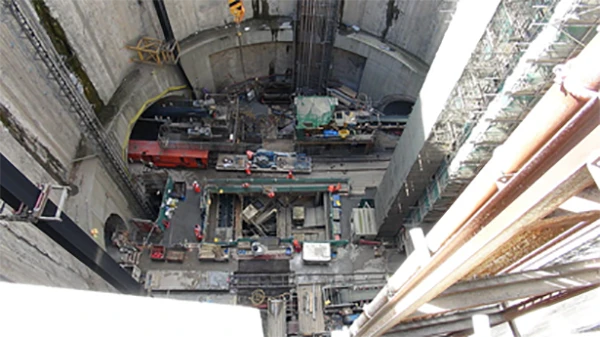
Water leakage in underground engineering is closely linked to the materials used. Issues arise such as the difficulty of adhering to mix design principles for waterproof concrete due to the widespread use of ready-mixed concrete; a lack of understanding regarding the properties, functions, and applications of new waterproofing materials; materials failing to meet design specifications; and material selection that overlooks specific project characteristics.
Waterproofing is a critical aspect of mountain tunnel construction—a key component of underground engineering. Tunnel leakage not only compromises the durability of the concrete lining and impairs the functionality of internal facilities but also degrades the tunnel environment. In cold regions, leakage can cause the road surface to freeze and icicles to form on the ceiling, thereby disrupting normal tunnel operations. Constructing leak-free tunnels remains a long-standing challenge in tunnel engineering.
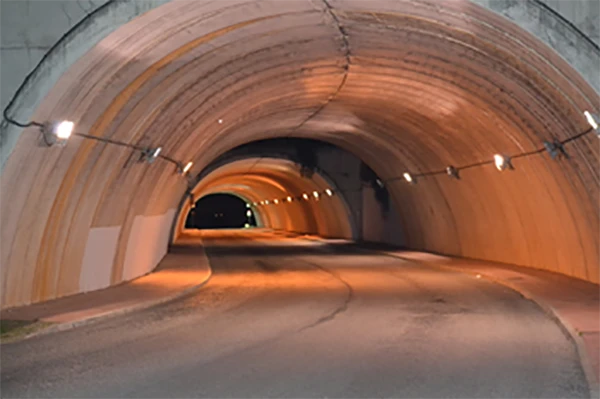
Currently, three main types of tunnel waterproofing technologies are employed domestically and internationally: watertight waterproofing (focusing on prevention through the surrounding rock, the structure itself, and additional waterproofing layers); drainage-based or gravity-drainage waterproofing (focusing on water diversion and discharge); and hybrid waterproofing (combining prevention and drainage).
Materials form the foundation of waterproofing. Through a combination of technology importation and independent development, my country's waterproofing materials industry has advanced rapidly, establishing product lines that include membranes, coatings, and sealants made from various base materials. Conducting mechanical property tests on these materials is of significant value and importance for enhancing their waterproofing and impermeability performance.
Analysis of the Mechanical Properties of Rubber Materials
Rubber waterstops are primarily made from materials such as chloroprene rubber and EPDM rubber; characterized by stable quality and strong adaptability, they are widely used for waterproofing construction joints in underground engineering projects. In accordance with the national standard GB 18173.2 (*Polymer Waterproofing Materials – Part 2: Waterstops*), mechanical property indicators—such as tensile strength, elongation at break, and tear strength—must be verified through sampling and re-testing during construction.
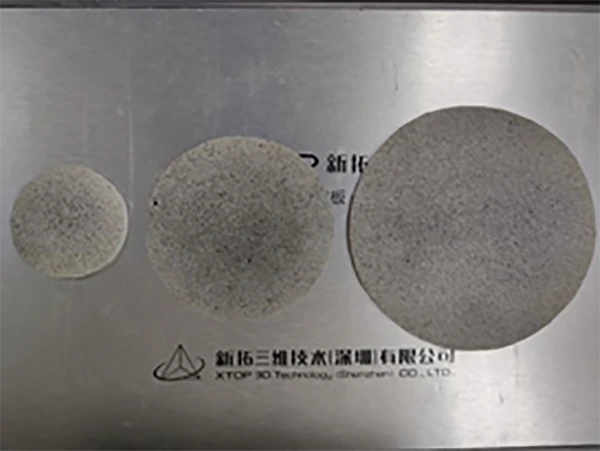
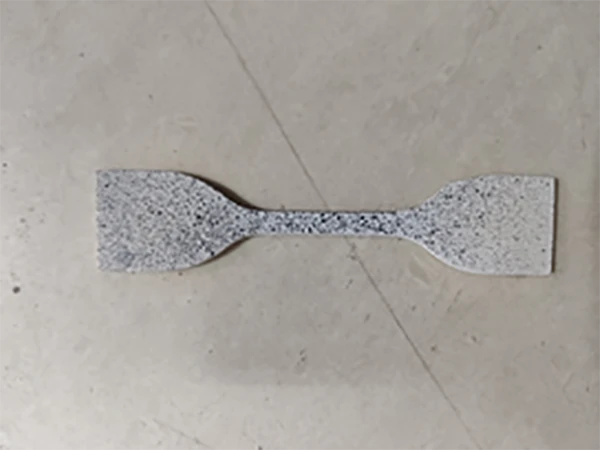
Rubber waterproofing material test specimens
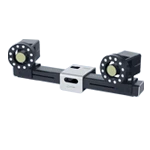
A university materials research laboratory employed XTOP3D’s XTDIC 3D strain and deformation measurement and analysis system to measure the mechanical properties of rubber materials used for construction joint waterproofing. The objective was to research and develop waterproofing materials that better meet the waterproofing requirements of structures and buildings, and to obtain technical performance indicators regarding the physical and mechanical properties of the rubber.
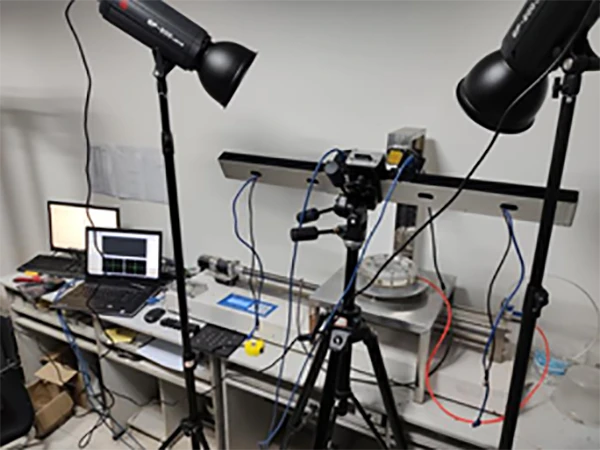
Two rubber material specimens were used in this study to measure mechanical properties—such as tensile modulus, deformation, and elongation at break—relevant to their application as sealing materials. These properties were assessed through a tunnel hydrostatic pressure simulation test (simulating deformation caused by water pressure) and a tensile test.
Experiment 1: Tunnel hydrostatic pressure simulation test (deformation under pressure)
Rubber specimens were prepared and coated with a black-and-white speckle pattern. Each specimen was placed in a cylindrical test apparatus and subjected to pressurized water loading; the XTOP3D XTDIC camera system simultaneously captured data regarding the deformation at various stages.
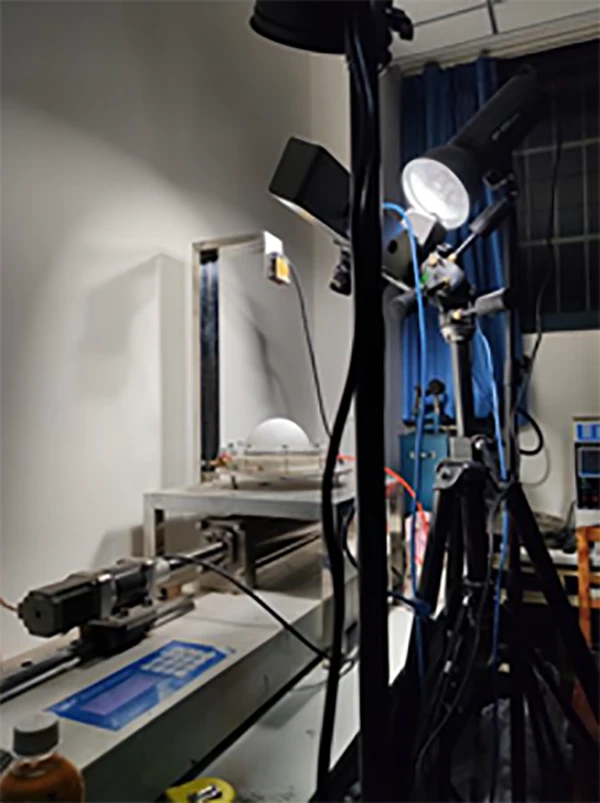
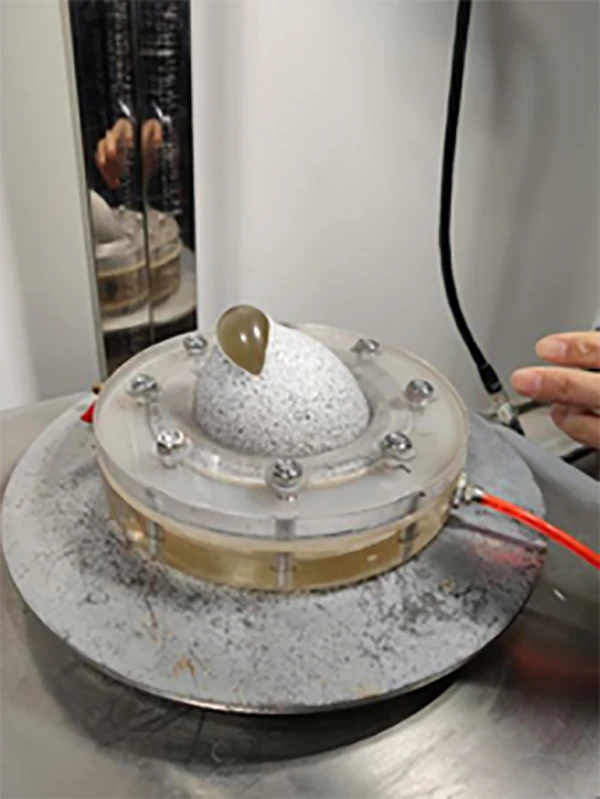
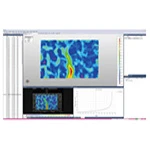
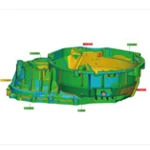
Using the XTOP3D XTDIC system—and employing techniques such as grid-based strain analysis and Digital Image Correlation (DIC)—the displacement and strain fields of the rubber specimen were calculated based on a sequence of video images capturing the specimen's deformation during the operation of the pressurization device.
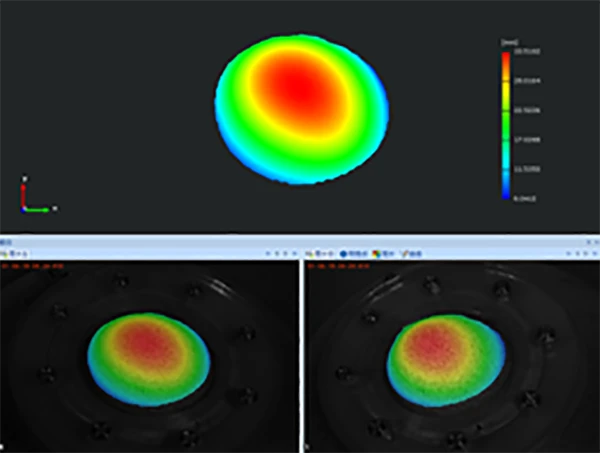
Bulging displacement
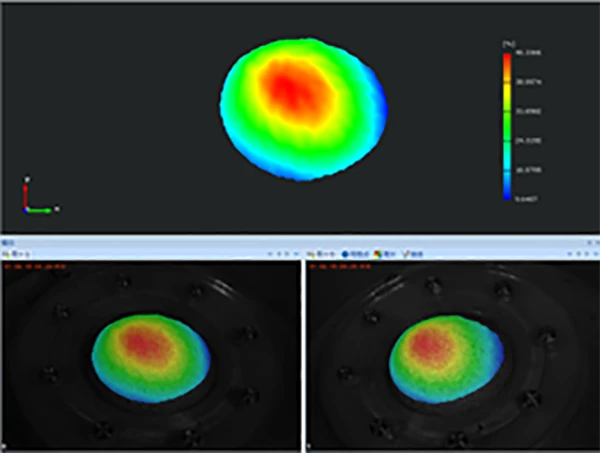
Bulging strain
Experimental results demonstrate that the rubber specimen exhibits uniform biaxial stress expansion and good formability during bulge deformation; the data obtained provide a reliable reference for analyzing displacement characteristics and the elastic modulus.
Experiment 2: Tensile Test
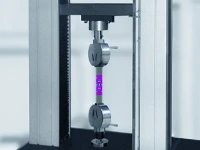
A speckle pattern was applied to the specimen surface. Upon activation of the testing machine, the XTDIC system (by Xintuo 3D) performed synchronous data acquisition until specimen fracture, at which point recording ceased; the captured images were then analyzed and processed.
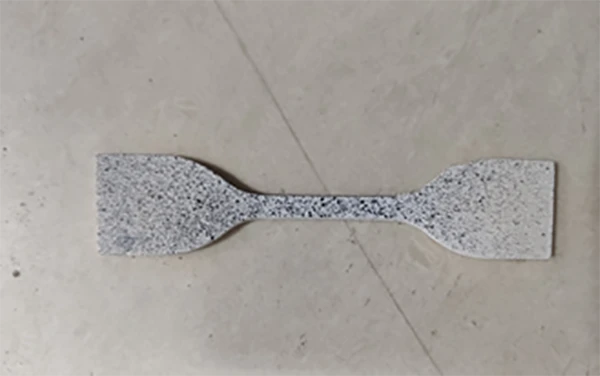
The XTOP3D XTDIC system obtains the displacement field of the object surface by comparing coordinate changes of points within the measurement area across different deformation states, and subsequently calculates the displacement and strain fields of the specimen surface.
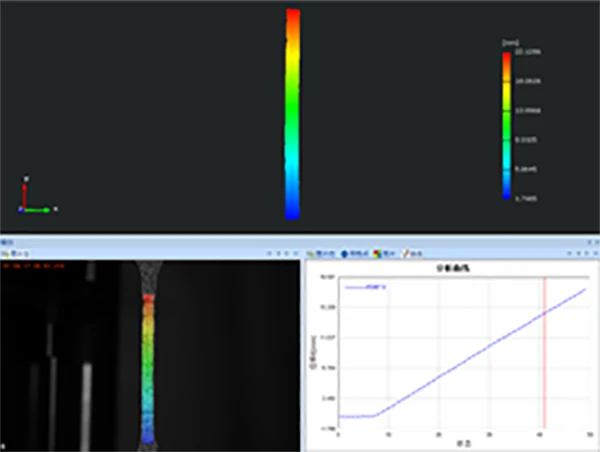
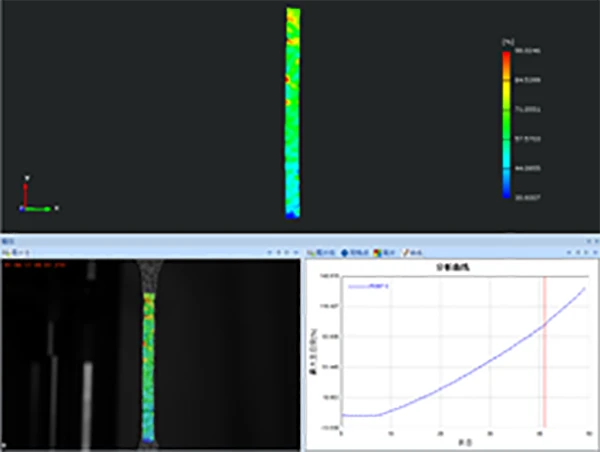
In this experiment, two rubber specimens were tested to precisely determine properties such as tensile strength, maximum elongation, tear strength, and elasticity. These data provide a reliable foundation for studying the mechanical properties of rubber materials, as well as for material design and finite element simulation. Continuous research into mechanical properties helps define the material's engineering application scope, thereby ensuring superior waterproofing performance.
Experimental data show that as the tensile test progresses, the specimens undergo significant deformation and displacement; displacement and strain values at critical locations steadily increase until failure occurs due to rupture. Data regarding the mechanical properties of the rubber material are collected and recorded to guide its research, design, and optimization.
Practical experience demonstrates that a single waterproofing method is insufficient to solve the global challenge of water leakage in underground engineering. Current approaches favor hybrid waterproofing methods that employ multiple lines of defense and layered protection to ensure underground tunnels remain watertight. From a materials perspective, it is essential to select high-performance waterproofing layers and structural self-waterproofing materials appropriately, while also strengthening waterproofing treatments at critical details such as joints and expansion joints.