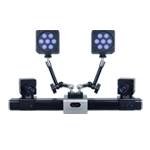
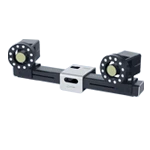
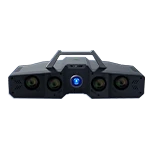
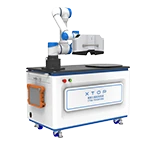
1. Non-contact Full-field Strain Measurement System – Mechanical Testing of Composite Materials
There are many novel materials today that we may not have heard of before. They often bear sophisticated technical names—such as "composite materials"—which might sound unfamiliar, yet they appear in every aspect of our lives and profoundly influence the way we live and work.
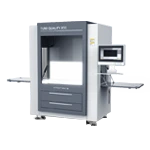
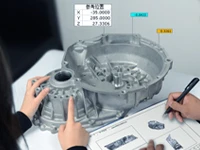
Composite materials are created by combining two or more materials with distinct properties and characteristics using specialized techniques and processes. The constituent materials retain their original traits while complementing one another, resulting in enhanced overall performance. Generally, composite materials offer superior performance compared to single-component materials. Currently, research institutions employ non-contact full-field strain measurement systems to conduct mechanical testing on the physical properties of these materials.
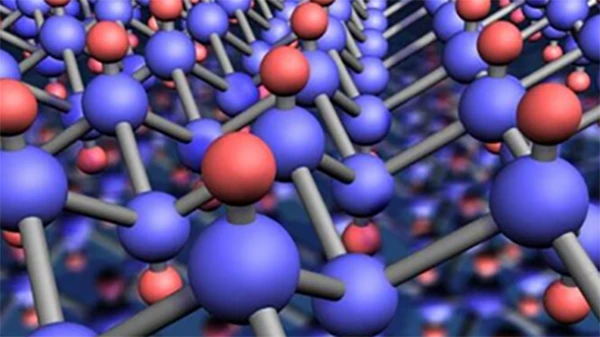
In the course of production and daily life, people have created a vast array of composite materials; they are ubiquitous, ranging from household furniture—such as tables and chairs—to aircraft and rockets. Indeed, the majority of modern, high-strength materials fall into the category of composites.

In the automotive industry, composite materials offer unique vibration-damping characteristics—effectively reducing vibration and noise—as well as excellent fatigue resistance; they are easy to repair after damage and facilitate integrated molding, making them suitable for manufacturing vehicle bodies, structural components, drive shafts, engine mounts, and interior parts.

In sectors such as the chemical industry, textiles, and mechanical manufacturing, carbon fiber/resin matrix composites—which offer excellent corrosion resistance—are used to fabricate chemical processing equipment, textile machinery, papermaking machines, photocopiers, high-speed machine tools, and precision instruments.
It is safe to say that the world would look very different today without composite materials. They are inextricably linked to every aspect of modern life—from our daily routines and transportation to technological advancements in information, communications, and manufacturing.
2. Non-contact Full-field Strain Measurement System – Tensile Deformation Measurement of Composite Materials
Composite materials possess properties distinct from their constituent materials; while retaining certain characteristics of the raw materials, the resulting composites exhibit enhanced performance in areas such as strength, stiffness, toughness, hardness, durability, and corrosion resistance. By controlling and adjusting the raw material ratios and manufacturing processes, composites with tailored properties can be produced, making them innovative materials whose performance characteristics can be engineered.
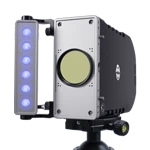
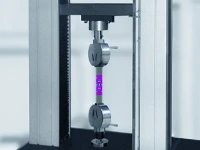
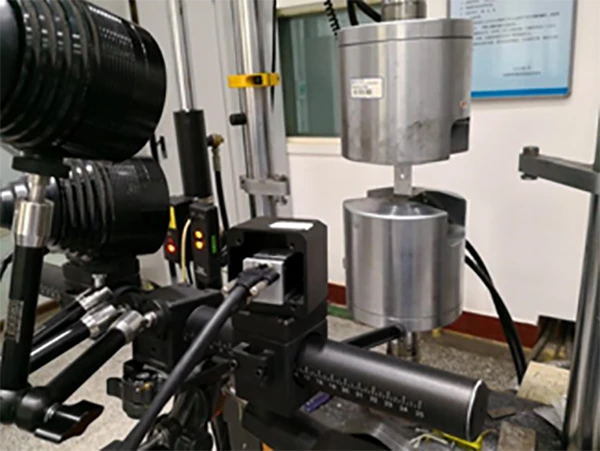
Research into the mechanical properties of composite materials is crucial for their design and selection. A university laboratory conducted tensile tests on composite materials and utilized XTOP3D’s XTDIC non-contact full-field strain measurement system for image acquisition and data analysis. The objective was to investigate the deformation of the composite specimens under tensile loading and thereby analyze their mechanical properties.
When the tensile testing machine begins operation, the XTDIC non-contact full-field strain measurement system simultaneously performs image acquisition; this process continues until the composite specimen fractures, at which point acquisition stops and the collected data undergo calculation and analysis.
3. Measurement of Tensile Deformation in Composite Materials – Analysis of Experimental Results
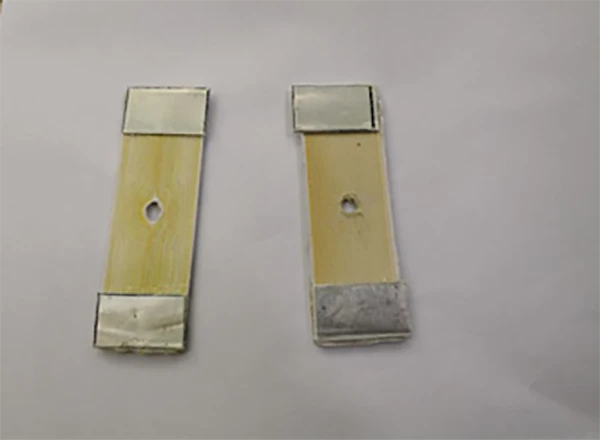
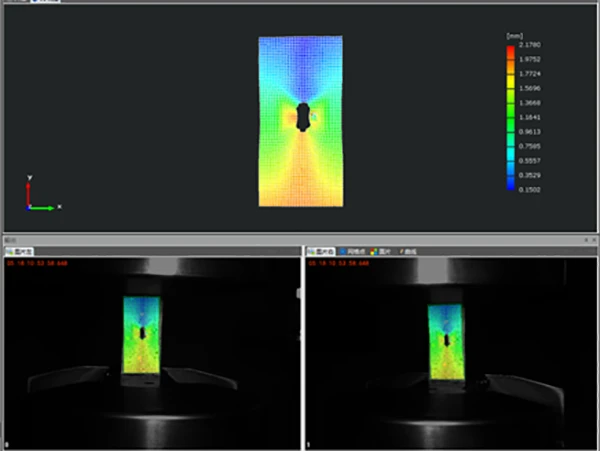
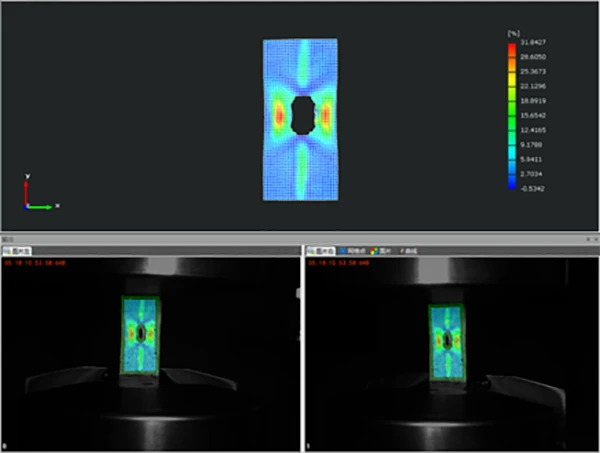
In this experiment, the XTDIC non-contact full-field strain measurement system was used to acquire and analyze data for two composite material specimens, designated as Strain Measurement Specimen 1 and Strain Measurement Specimen 2.
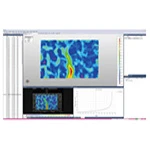
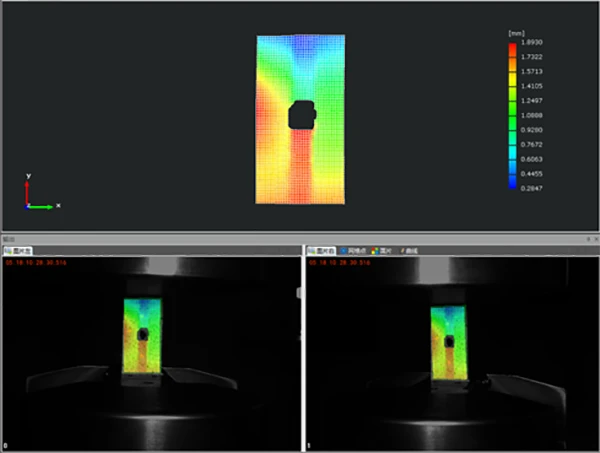
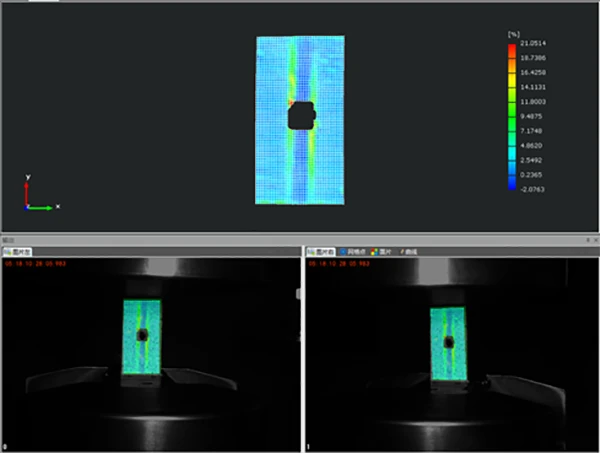
(I) Displacement field and strain field contour maps for Strain Measurement Specimen 1:
(II) Displacement field and strain field contour maps for strain measurement specimen 2:
Composite materials offer excellent performance and high practicality; without them, the world would lack many conveniences and comforts. Furthermore, the mechanical properties of composite materials are complex and unique; quantifying these properties through data is essential for their effective application in manufacturing across various sectors.
4. Non-contact Full-field Strain Measurement System – Conclusions from Composite Material Mechanics Experiments
In this experiment, the XTDIC non-contact full-field strain measurement system was employed to conduct full-field measurements on the specimens and analyze their strain and deformation behavior during tensile testing. This approach allows for an assessment of the material's resistance to elongation—within both elastic and plastic ranges—and its fracture characteristics under tensile loading.
Analysis of the experimental data reveals that, as the tensile test progressed, the specimen underwent significant deformation and displacement, with displacement and strain values at critical locations steadily increasing. Ultimately, the specimen failed due to fracture at these critical locations under the applied tensile stress. By recording and analyzing the failure modes of the specimens, data reflecting the material's mechanical properties can be obtained; comparing these results with finite element simulation data provides valuable guidance for the research, design, and optimization of composite materials.