my country has now become the world's second-largest economy, the largest industrial nation, and the leading trader in goods; this rapid economic expansion has resulted in a situation where the demand for energy outstrips supply. Amidst the growing scarcity of traditional fossil fuels and the urgent call for a "low-carbon economy" driven by climate change concerns, green energy is receiving increasing attention.
Wind energy is a quintessential form of clean, renewable energy, with wind power generation serving as its most significant application. An assessment based on my country's current energy mix and global energy trends indicates that vigorously developing wind energy not only helps improve the ecological environment and address climate change but also aligns with strategic goals for long-term economic and social sustainability.
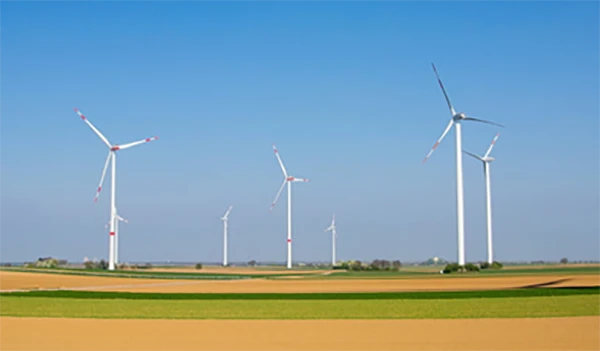
With the large-scale development and utilization of wind energy, the number of wind turbine units has grown, and the size of turbine blades has steadily increased. As the key component that converts wind energy into mechanical energy, the blade is also the most expensive part—accounting for approximately 20% of the total production cost—and serves as the foundation for achieving optimal energy utilization and economic efficiency. The design, manufacturing quality, and operational condition of the blades directly impact the turbine's performance and power generation efficiency.
During operation, wind turbine blades must withstand immense wind loads and endure various forms of external erosion, including airflow scouring caused by rotation, impacts from sand and grit, and intense ultraviolet radiation.
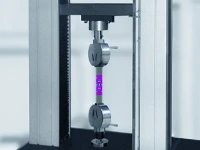
As critical load-bearing structural components, wind turbine blades must be designed to prevent structural failures such as breakage or delamination. The International Electrotechnical Commission (IEC) mandates full-scale structural testing—including static load tests—as part of the safety certification process for wind turbine blades; consequently, such testing is of paramount importance.
DIC (Digital Image Correlation) Technology: Tracking Key Points on Wind Turbine Blades
Studying the overall deformation and buckling behavior of wind turbine blades under load is crucial for evaluating their performance and service life. Traditional deformation measurement techniques—such as electrical strain gauging—are contact-based, discrete, and non-3D methods.
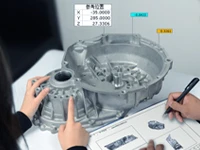
To overcome the challenges and limitations associated with traditional structural measurement methods for wind turbine blades, a research institute—following a period of research and testing—plans to utilize XTOP3D’s XTDIC 3D full-field strain measurement and analysis system. The objective is to study the rotational trajectory of the blades, analyze the displacement paths of key points on the blades, and measure the turbine's rotational trajectory.
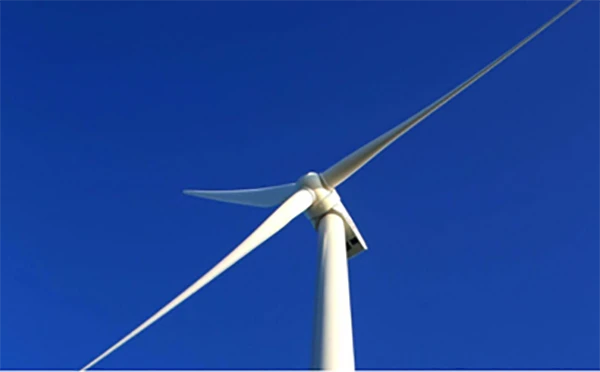
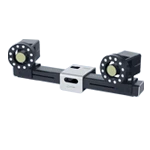
The experimental setup was arranged, and a wind turbine blade model was used for testing. Loading was applied to the blade model, and the XTDIC 3D optical strain measurement system—equipped with two high-speed cameras—was used to capture real-time images of the blade model at various stages of deformation; the experiment was then concluded, and data acquisition was completed.
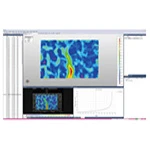
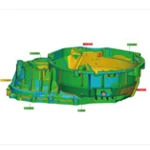
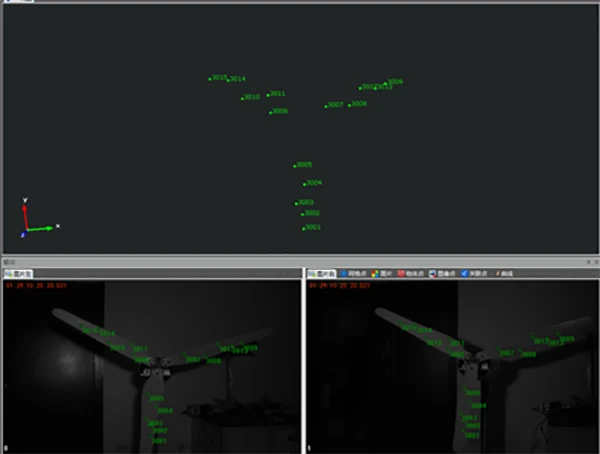
(1) Images of the wind turbine blade model in its unloaded state were captured to serve as a reference for calculating blade deformation. Subsequently, the load was applied, and DIC digital speckle analysis software was used to process the experimental data, as shown in the figure.
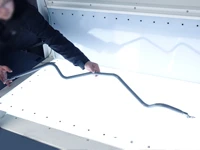
(II) By selecting a specific key point on the wind turbine blade model, the corresponding displacement curve for that key point can be plotted, as shown in the figure;
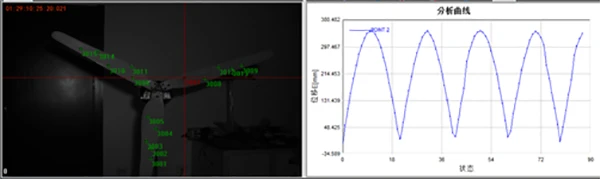
(III) Use DIC digital speckle analysis software to create a deformation field and complete the analysis of the motion trajectories of the marker points, as shown in the figure.
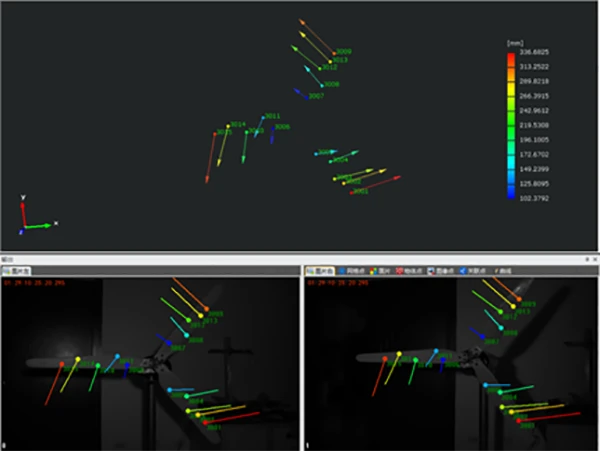
The DIC (Digital Image Correlation) system enables the analysis of displacement trajectories for key points on the wind turbine blade model, thereby determining the deformation at these locations; the deformation zones shown in the figure represent areas where the magnitude of surface deformation exceeds a preset threshold.
Furthermore, analysis of the measurement data reveals that the displacement of the blade model in the direction of rotation increases progressively along the span, with the greatest displacement occurring near the blade tip. Under loading, the blade model primarily undergoes out-of-plane bending—manifesting chiefly as out-of-plane deformation.
Technical engineers from XTOP3D analyzed the key factors and challenges associated with the measurement process. Using the DIC system, they successfully measured the displacement trajectories of key points on the blade model during rotation, cross-verified the accuracy of the out-of-plane displacement measurements, and compared the experimental data with simulation results. The displacement trajectory curves for the key points aligned with actual behavior, successfully achieving full-scale structural displacement and deformation measurement of the wind turbine blade model during high-speed operation.