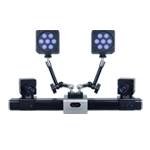
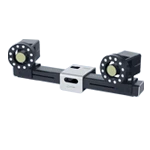
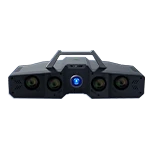
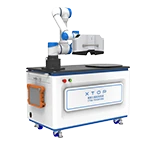
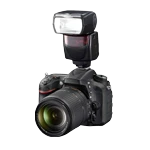
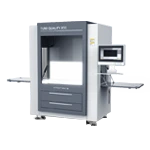
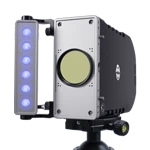
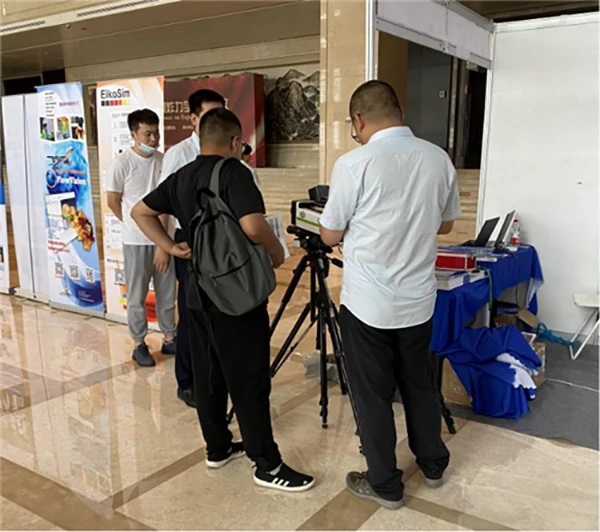
From July 16 to 19, the 13th National Conference on Explosion Mechanics officially kicked off in Xi'an. XTOP3D showcased its XTDIC 3D full-field strain measurement system and XTDIC-STROBE 3D dynamic measurement system. At the XTOP3D booth, the company's stress and strain measurement solutions for explosion and impact mechanics attracted significant attention from attending scholars and experts.
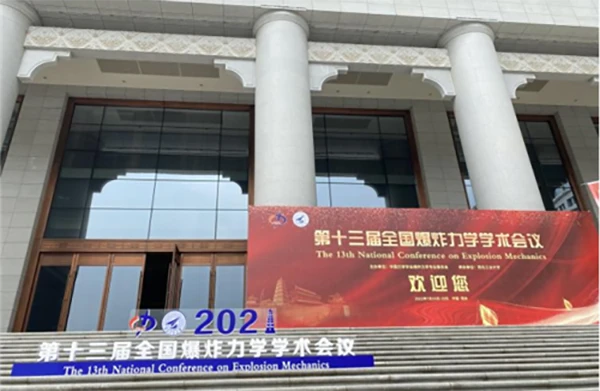
Hosted by the Professional Committee on Explosion Mechanics of the Chinese Society of Theoretical and Applied Mechanics, this conference aims to facilitate the exchange of the latest research findings in the field of explosion mechanics and to promote the development of the discipline and related scientific and technological endeavors. The conference features 17 thematic sessions dedicated to discussing scientific and technical issues regarding the application of explosion mechanics in areas such as national economic growth and the advancement of cutting-edge technologies. Topics include impact dynamics of composite materials; impact dynamics in aerospace materials and structures; mechanisms and technologies for high-speed impact damage effects and protection; simulation of crack propagation in heterogeneous materials; and research on damage evolution and spallation in metallic materials.
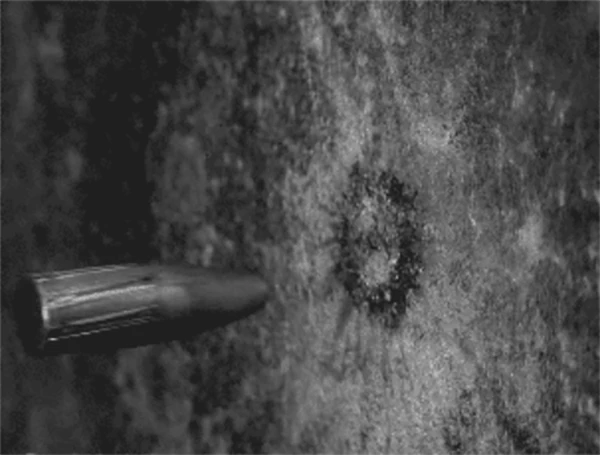
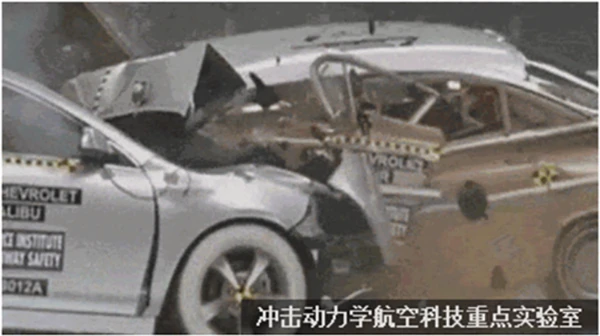
Explosion mechanics primarily investigates the initiation and evolution of explosions, as well as the utilization and mitigation of their mechanical effects. Explosions and high-speed impacts generate phenomena such as intense shock waves, high-speed flows, large-scale deformations, and structural failure. The field of explosion and impact mechanics finds extensive application in areas including weapons development, high-performance materials, structural protection, infrastructure engineering, mineral resource extraction, mechanical processing, and industrial safety.
Impact dynamics studies the phenomena—specifically wave propagation (stress waves)—that arise when materials or structures are subjected to rapidly changing, short-duration impact loads, leading to motion, deformation, and failure in solid materials. In essence, it examines the dynamic response processes of structures under the influence of dynamic loads.
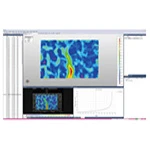
XTOP3D’s proprietary 3D dynamic measurement technology utilizes high-speed digital cameras to capture the motion and deformation of objects in real time. It enables the acquisition of transient images during high-speed motion and employs DIC (Digital Image Correlation) analysis software to evaluate strain and stress conditions. This provides critical data for measuring deformation, tracking displacement, and analyzing trajectories of objects under high-speed conditions.
Equipped with high-speed cameras, the XTDIC-STROBE 3D dynamic measurement system offers powerful capabilities for measuring and evaluating displacement and trajectories in the field of explosion impact mechanics. Based on speckle patterns on the object's surface, XTDIC-STROBE captures full-field data and measures strain zones in real time. It is suitable for applications such as explosion impact mechanics, crash testing, vibration analysis, ballistic testing, explosion testing, bird strike testing, Hopkinson tensile testing, and fracture mechanics research.
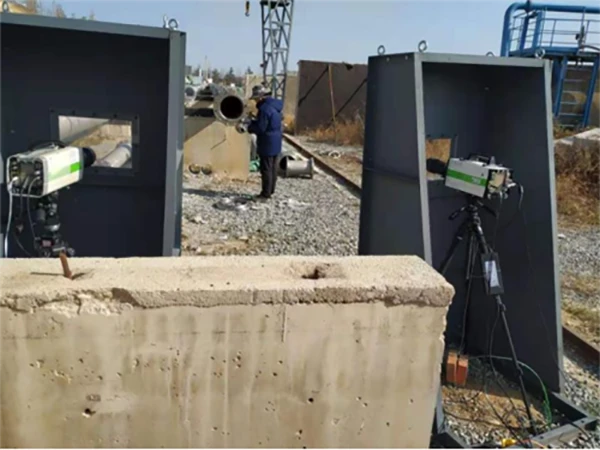
1. Explosion Impact Testing of Pipeline Structures
The damage and destruction caused to structures by underground explosion impacts, as well as the effects of blast-induced vibrations on the normal operation of buildings and equipment, are subjects of significant interest in the engineering field. Studying the failure characteristics and dynamic responses of materials and structures subjected to explosion impacts helps improve the impact resistance and protective capabilities of underground pipeline structures.
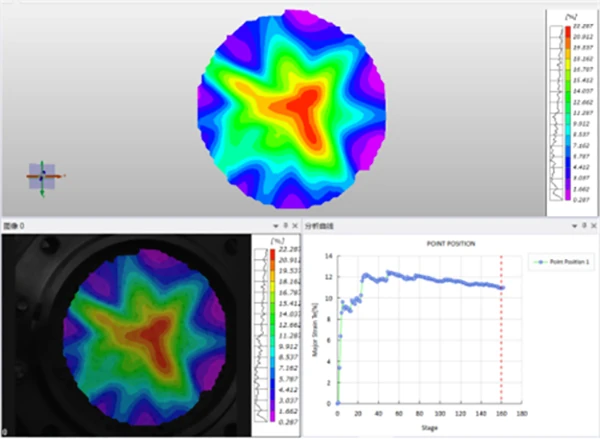
XTDIC-STROBE uses high-speed cameras to capture the entire process of the pipeline explosion impact and records digital images in real time. By processing these images using the DIC method, the system obtains 3D deformation field data. This allows for the analysis of the pipeline's 3D deformation morphology, displacement fields, velocity fields, and strain fields, enabling an assessment of its dynamic deformation, failure behavior, mechanical properties, and protective performance.
2. Hopkinson Pressure Bar Test
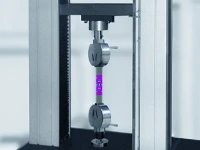
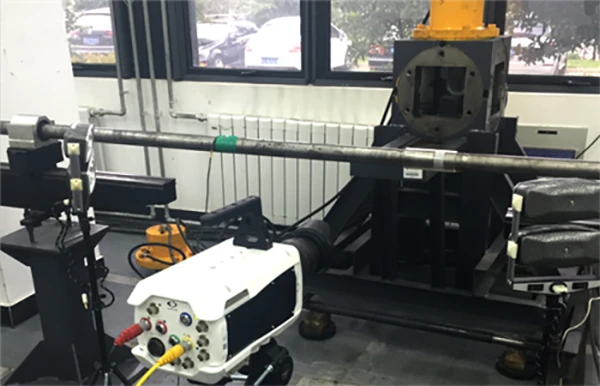
Conventional static tensile testing evaluates materials in a state of static equilibrium, operating on the premise that inertial effects can be ignored. In contrast, explosive or impact loading is characterized by extremely short durations; under these conditions, the material undergoes a dynamic process involving rapid changes over time.
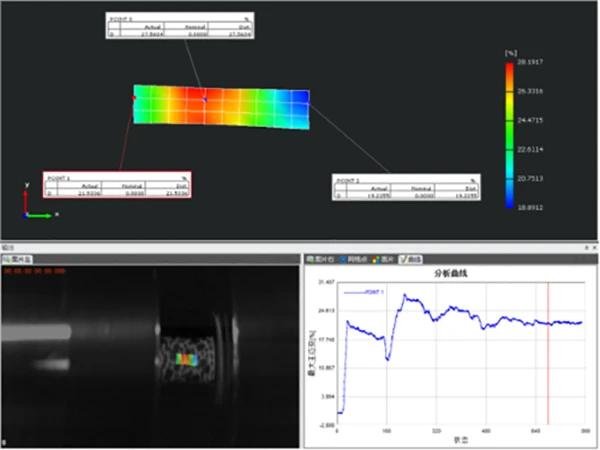
Hopkinson bar testing enables the measurement of significant material changes occurring on a microsecond timescale under intense impact loads—conditions that entail high loading or strain rates. The XTDIC-STROBE 3D dynamic measurement system efficiently captures the material's stress-strain response, allowing for the analysis of dynamic mechanical properties across various strain rates via the system's software.
3. Armor-Piercing Projectile Penetration Performance Testing
Key indicators of an armor-piercing projectile's lethality include the minimum impact velocity required to penetrate an armor target of a specific thickness and any anomalous changes in the projectile's nutation angle upon impact. Conducting penetration performance tests is essential for accurately evaluating the projectile's power to destroy armored targets and assessing its post-penetration destructive capability.
The XTDIC-STROBE 3D dynamic measurement system—which analyzes speckle patterns on the specimen surface to capture full-field data and measure localized strain—enables the analysis of penetration depth and effects. Furthermore, the deformation of both the projectile structure and the target provides a comprehensive reflection of the projectile's inherent quality and ballistic performance.
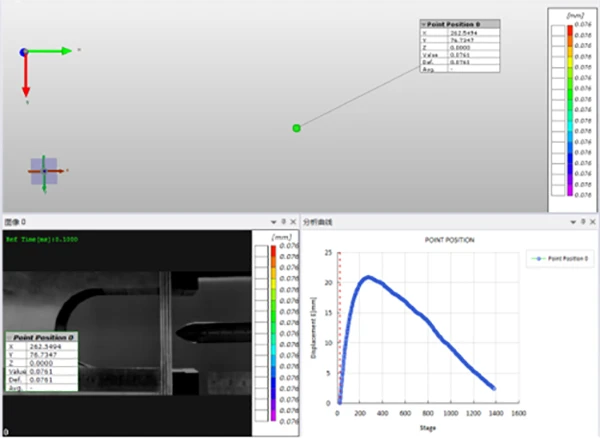
XTOP3D’s XTDIC-STROBE 3D dynamic measurement system, based on high-speed vision technology, is designed for measuring high-speed displacement trajectories in scenarios such as explosions, impacts, and vibrations. The company possesses fully proprietary Digital Image Correlation (DIC) technology—ranking among the best globally and leading the domestic market—and stands as a homegrown brand with independent, controllable technology. XTOP3D remains committed to leveraging its strengths in technological innovation and independent R&D of core technologies to provide advanced measurement solutions to users across scientific research and engineering sectors.