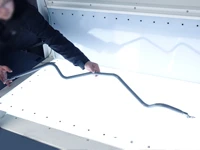
Concrete can be considered the skeleton of cities and industry, having a profound impact on human life; the various buildings and structures that make up our cities are constructed from it, and it accounts for over 80% of structural materials.
Valued for its excellent water resistance, moldability, and cost-effectiveness, concrete is one of the most important structural materials in construction. Since 2003, the volume of concrete poured in my country every two years has surpassed the total amount poured in the United States throughout the entire 20th century. Everyone is likely familiar with the following major infrastructure projects.
Beijing Daxing International Airport—one of the world's largest airports and the largest aviation hub globally—was built using 1.6 million cubic meters of concrete and 52,000 tons of steel. It covers an area of 47 square kilometers, equivalent to four-fifths the size of Manhattan.

The Hong Kong-Zhuhai-Macao Bridge—the world's longest cross-sea bridge—spans a total length of 55 kilometers. The project utilized 1.08 million cubic meters of concrete and took nine years to construct, resulting in a massive, winding structure that comprises bridges, artificial islands, and a tunnel.

Although concrete consumption in my country has declined in recent years, it still accounts for nearly half of the global total. The volume of reinforced concrete used in highways, bridges, railways, urban development, and other infrastructure projects remains immense.
Tensile and compressive tests are the most common mechanical property tests for construction materials, effectively evaluating their fundamental mechanical characteristics. The tensile and compressive strengths of construction materials depend on their operating conditions, which are in turn determined by the materials' inherent structural properties.
Concrete quality plays a crucial role in the overall quality of building structures. As an inorganic non-metallic material, concrete is relatively brittle; its tensile strength is significantly lower than its compressive strength, making it primarily suitable for applications involving compression. Conducting compression and tensile tests on concrete provides essential data for material selection and for calculating the strength and stiffness of structural components.
Conducting concrete compression and tension experiments using a DIC grid strain analysis system.
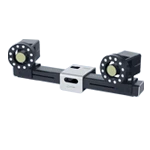
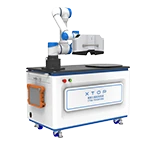
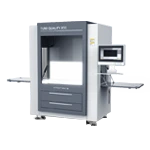
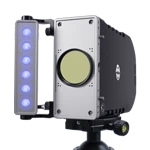
To better analyze the deformation behavior of concrete specimens under load in a mechanical testing machine, a university laboratory center plans to use the XTOP3D-developed DIC (Digital Image Correlation) grid strain analysis system. This system will capture full-field strain data throughout the loading process, facilitating the analysis of the specimens' mechanical properties.
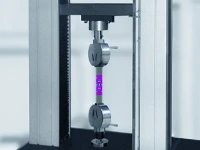
The experiment consists of two parts: tensile testing and compression testing of the concrete specimens. Two specimens are used for the tensile tests—one observed from the front and the other from the side—while a single specimen is used for the compression test.
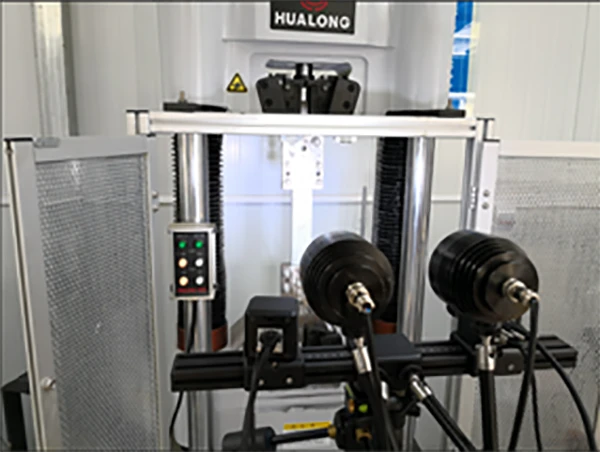
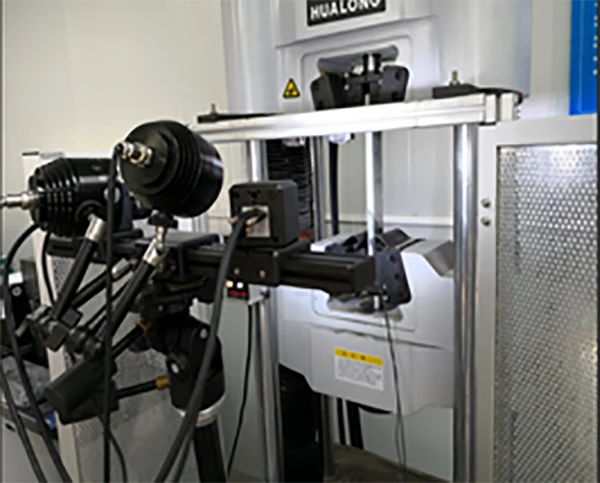
(I) Front-view tensile test observation
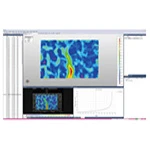
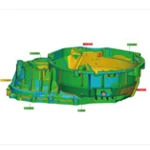
Based on the captured images, analysis and calculations were performed using DIC grid strain analysis software to ultimately generate displacement field and strain field maps for the tensile process.
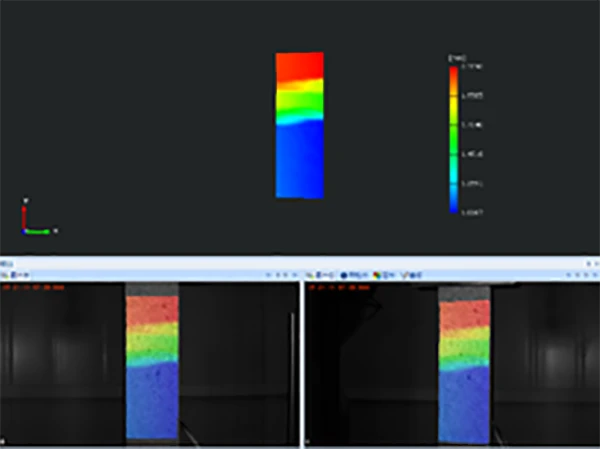
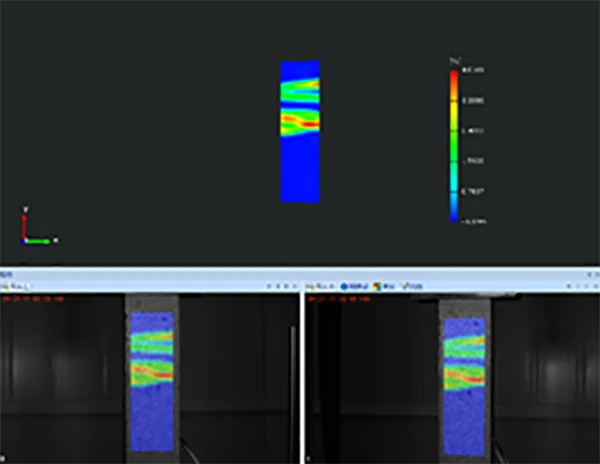
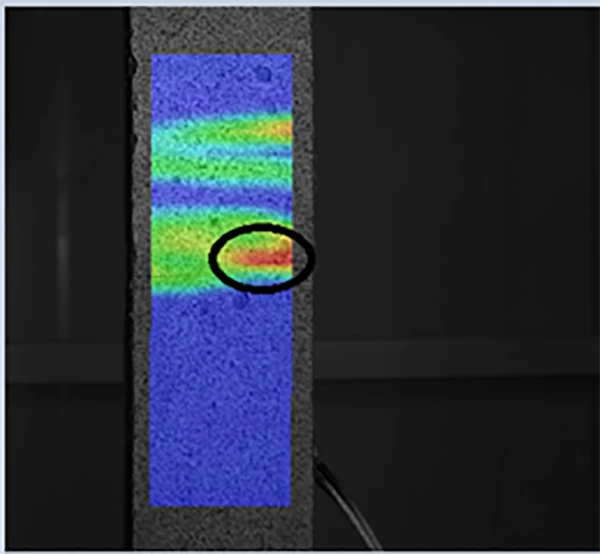
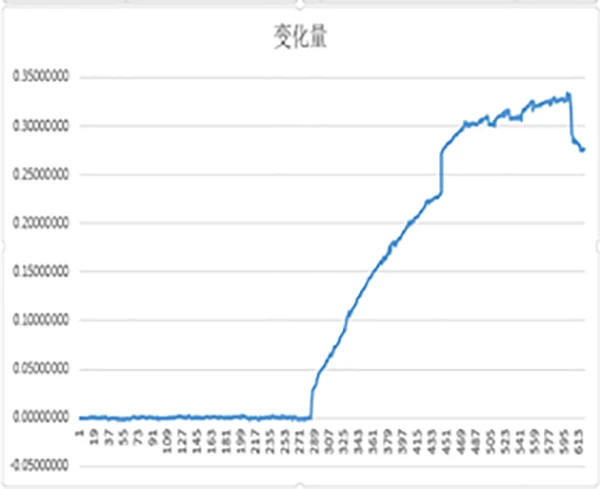
The analysis of the initial appearance and crack width propagation is shown in the figure below; for details, please refer to the data column on the right showing the magnitude of change.
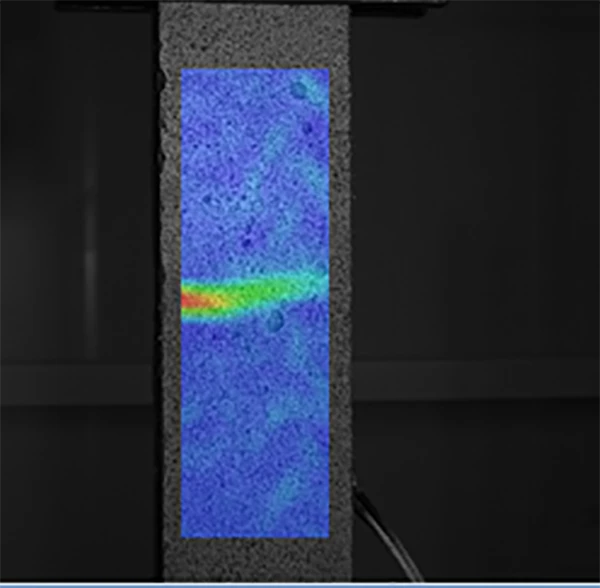
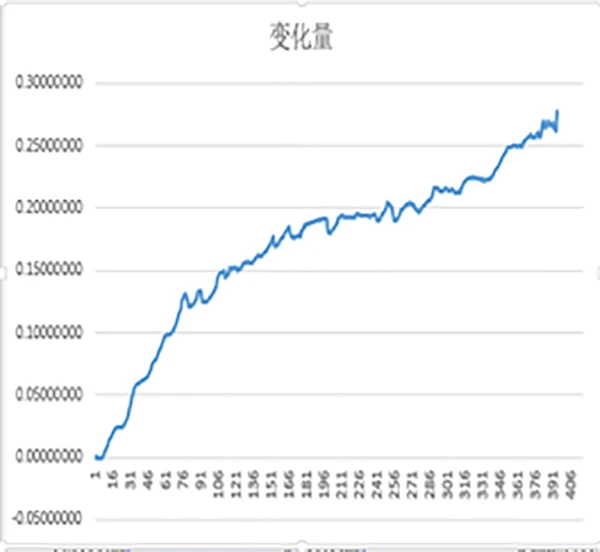
The analysis of the appearance and crack width progression of the second crack is shown in the figure below; the second crack did not result in a final fracture, and the crack width exhibited a slight rebound—details can be found in the column showing the magnitude of change on the right.
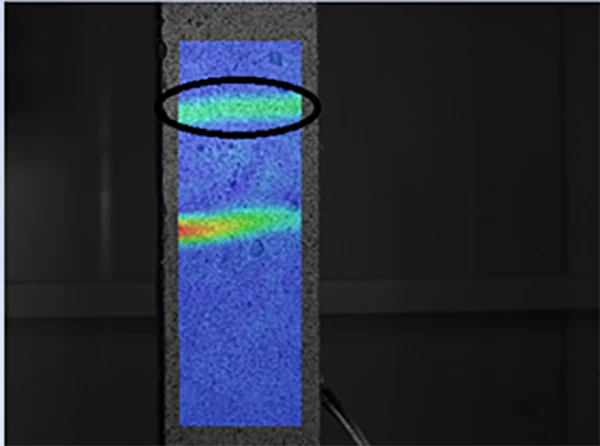
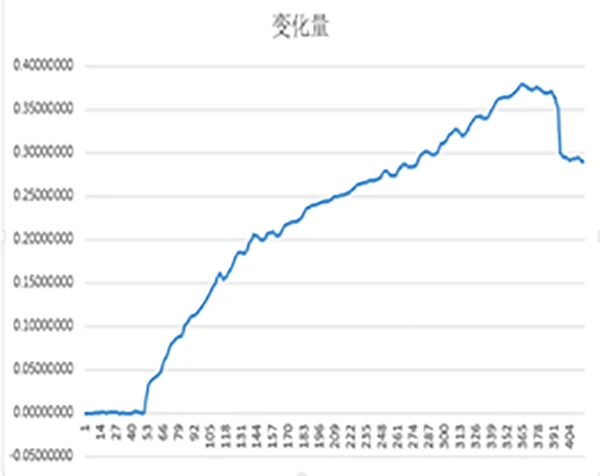
The analysis of the appearance and crack width progression of the third crack is shown in the figure below; it ultimately merged with the first crack and propagated until failure (refer to the data column on the right for specific changes).
(II) Side-view observation of the tensile test
Based on the captured images, analysis and calculations were performed using DIC grid strain analysis software to obtain the displacement and strain fields throughout the tensile process.
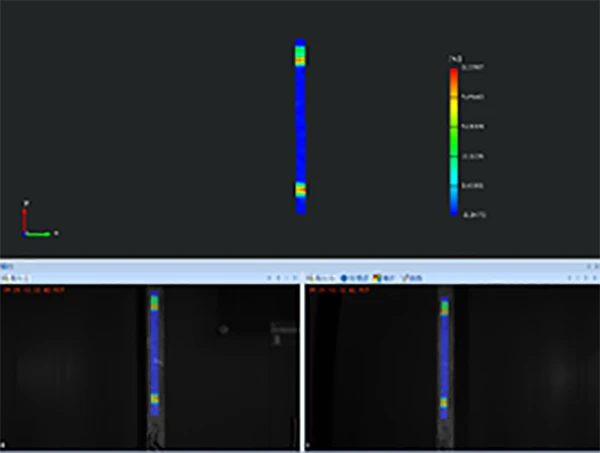
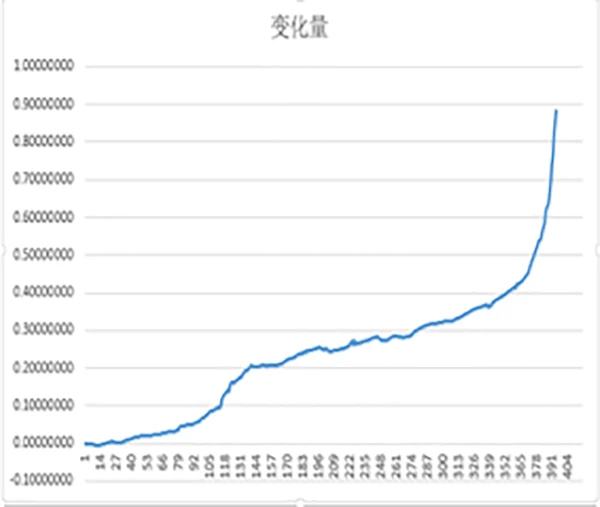
The analysis of the initial appearance and crack width propagation is shown in the figure below, tracing the process up to final fracture; specific data regarding the magnitude of change can be found in the column on the right.
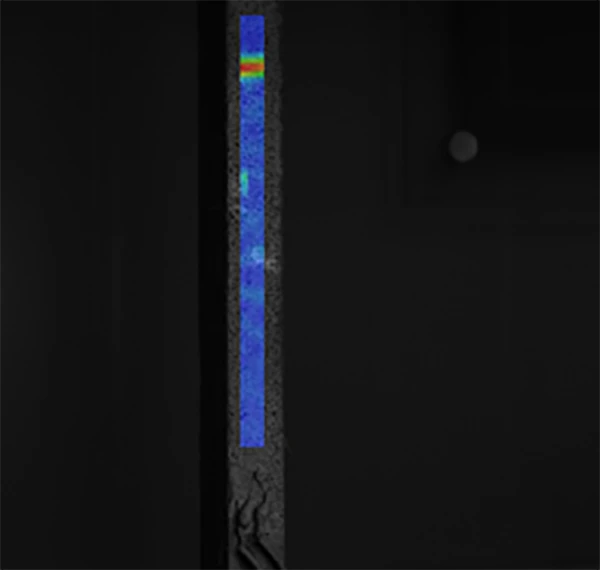
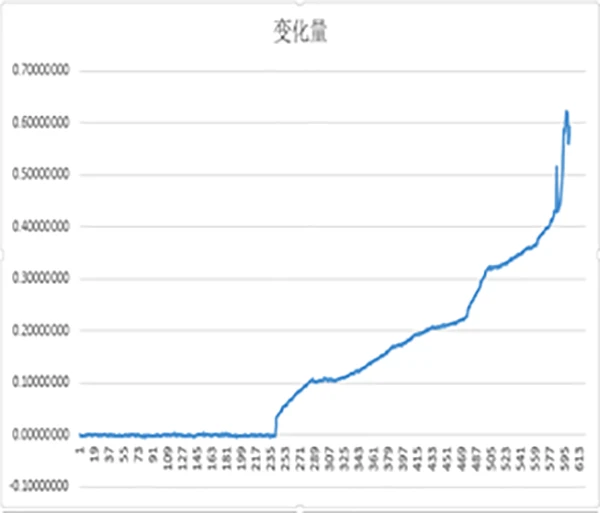
The analysis of the appearance and crack width progression of the second crack is shown in the figure below; the second crack did not result in a final fracture, and the crack width exhibited a slight rebound—details can be found in the column showing the magnitude of change on the right.
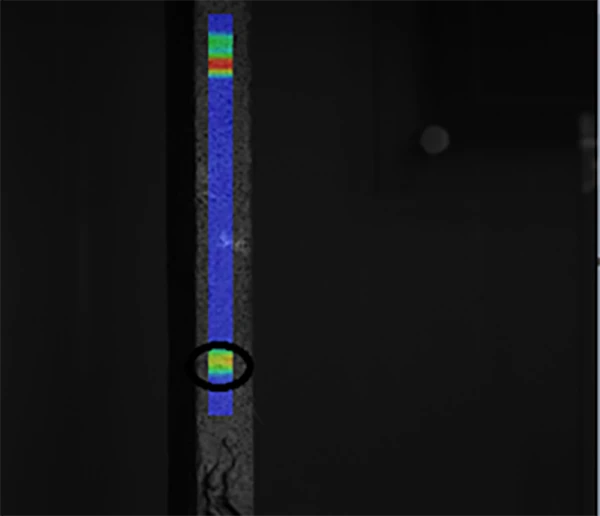
(III) Compression Test
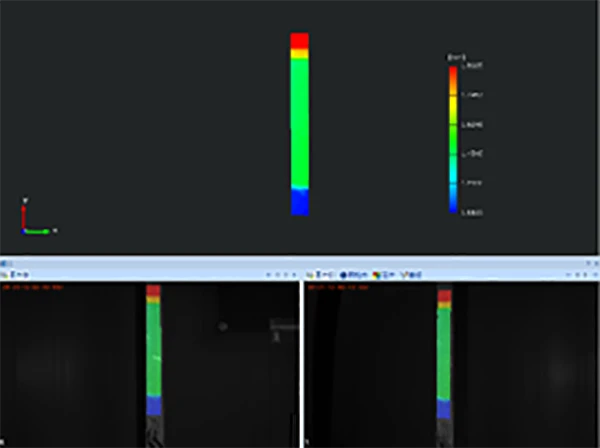
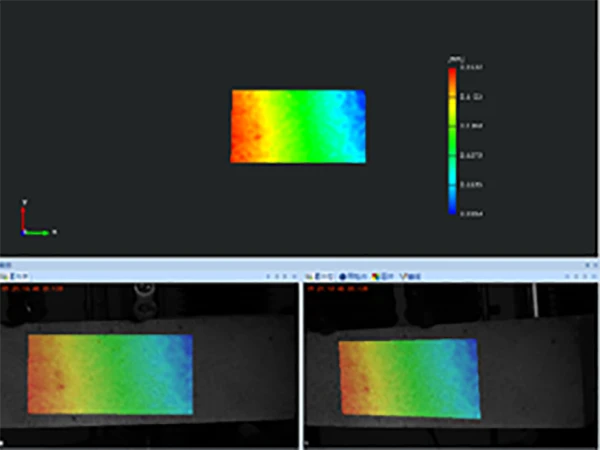
Based on the captured images, the analysis and calculations for all images were performed using the XTDIC system analysis software, ultimately yielding the displacement and strain fields during the compression process, as shown in the figure below.
The interconnections between particles within concrete are governed by attractive and repulsive forces; both of these forces are functions of the distance between particles, and changes in this distance reflect the magnitude of the interaction forces. A thorough understanding of the properties of brittle materials like concrete is directly linked to the cost and safety of civil engineering structures.
An experimental center at a university conducted compression and tensile tests on concrete, utilizing the XTOP3D DIC (Digital Image Correlation) grid strain analysis system for image acquisition and computational analysis. This process enabled the determination of displacement and strain fields during tension and compression, as well as the calculation of tensile and compressive strengths and the influence of deformation modulus on strength, thereby facilitating in-depth research into the strength characteristics of brittle concrete materials under complex stress conditions.