The automotive industry is a modern sector characterized by high capital, technology, and labor intensity. After more than a century of development, automobile manufacturing has evolved into a vast industrial chain; it stands as one of the world's most significant industries—ranking at the top in terms of scale and output value—and accounts for a substantial share of global manufacturing.
The automotive industry acts as a powerful driver for the upgrading of industrial structures and the growth of related sectors. It is distinguished by strong industrial interdependencies, rigorous technical requirements, and a vast array of components, while also benefiting from significant economies of scale. The automotive parts industry serves as the essential foundation for the automotive sector's sustained and steady growth; only with a robust parts industry can the automotive sector truly flourish.
Applications of Bent Tubing in Automotive Parts
Automotive piping components play a critical role across various vehicle systems, functioning much like the nerve bundles or respiratory tracts of the human body. They are essential for the safe, energy-efficient, and environmentally friendly transport of working media—such as gases and liquids—throughout these systems.
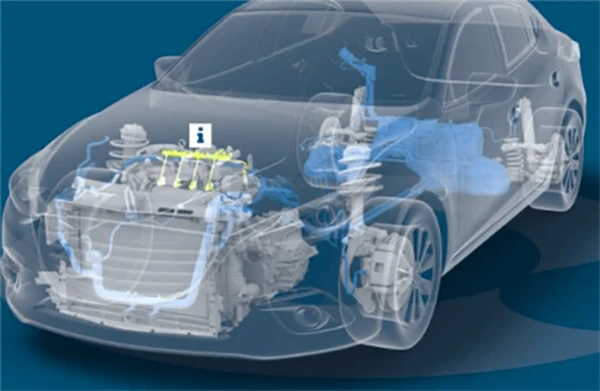
Automotive piping systems come in a wide variety of types and material properties; industry classifications include braking, transmission, steering, intake/exhaust, cooling, and fuel systems. Piping geometries vary according to layout and functional requirements. Virtual layout processes must account for fundamental piping characteristics and manufacturing constraints, while appropriate design and analysis methods are selected based on the specific piping type.
Automotive piping is intricately linked to systems such as the chassis, powertrain, and HVAC, serving as a critical component for the efficient operation of these assemblies. Following virtual layout and design, rigorous measurement and inspection are conducted to identify potential layout or assembly issues early on. While ensuring the functionality of each piping system, the design is optimized for overall consistency, the neatness of piping and wiring harnesses, and component integration.
Challenges in Automotive Bent Pipe Manufacturing
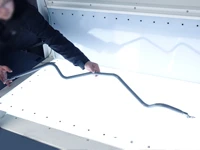
Leading global automotive bent-pipe manufacturers must produce hundreds of different pipe models daily for mass production. Meeting stringent product precision standards amidst such high production volumes is crucial. Manufacturers must evolve their measurement solutions to enable rapid, simple quality inspections and facilitate real-time feedback and correction of parameter deviations directly on the bending machine.
Historically, bent-pipe quality inspection has been a time-consuming and labor-intensive challenge:
On one hand, traditional inspection relied heavily on manual checks using physical fixtures. Visual assessments could not be quantified, the process was slow—precluding 100% inspection—and labor costs were steadily rising. Machine setup and adjustment often required numerous iterations, and manual inspection data lacked traceability.
On the other hand, due to complex geometries, high machining precision requirements, and the multitude of parameters to be measured, conventional inspection tools—such as mechanical gauges, general-purpose measuring instruments, and Coordinate Measuring Machines (CMMs)—struggled to meet the demands of high-precision, high-volume production involving diverse models. On the other hand, inspection using dedicated gauges is a contact-based method that requires clamping the workpiece into the gauge, which can scratch the surface of high-end pipe fittings; furthermore, the gauges themselves come in a wide variety, entailing high manufacturing and storage costs.
3D Optical Measurement Solution for Bent Tubes
Vision-based inspection technology used in automotive component manufacturing represents a major leap forward in modern manufacturing. In the mass production of complex bent tubes, it serves as the "eyes" for monitoring and controlling the production process and product quality, ensuring that complex piping meets specifications, performance standards, and operational requirements.
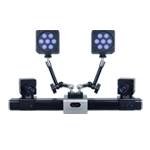
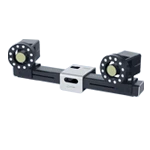
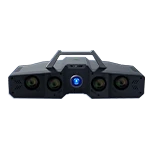
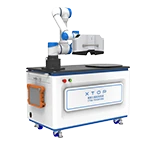
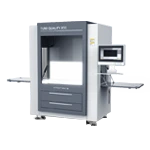
For years, XTOP3D has been dedicated to the independent development of in-line inspection technology for bent tubes and has launched the Tube Qualify inspection system. Utilizing multiple high-frame-rate, high-resolution industrial cameras, the Tube Qualify system rapidly captures precise 3D data from complex pipe fittings and simultaneously reconstructs 3D models of multiple tubes within two seconds, delivering both high measurement accuracy and speed.
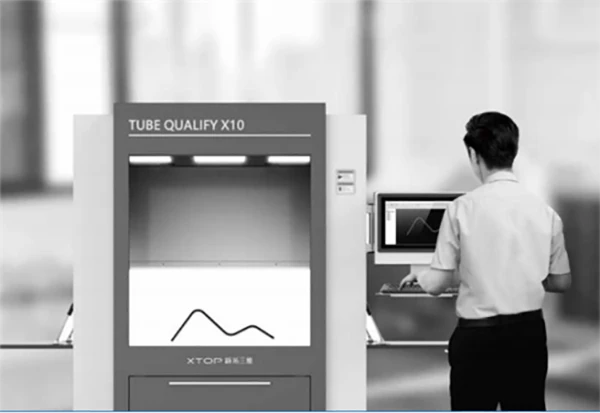
The Tube Qualify system integrates inspection, processing guidance, and feature measurement for complex automotive tubing, offering manufacturers a versatile, portable, and precise solution. Xintuo 3D’s advanced, intelligent, and high-precision non-contact tube measurement solution ensures rigorous quality control for tubes and wire components.
By adopting the Tube Qualify system, automotive tube manufacturers can eliminate the need for traditional physical inspection fixtures—thereby significantly reducing costs associated with fixture fabrication and storage—while also preventing surface scratches on the tubes during the inspection process.
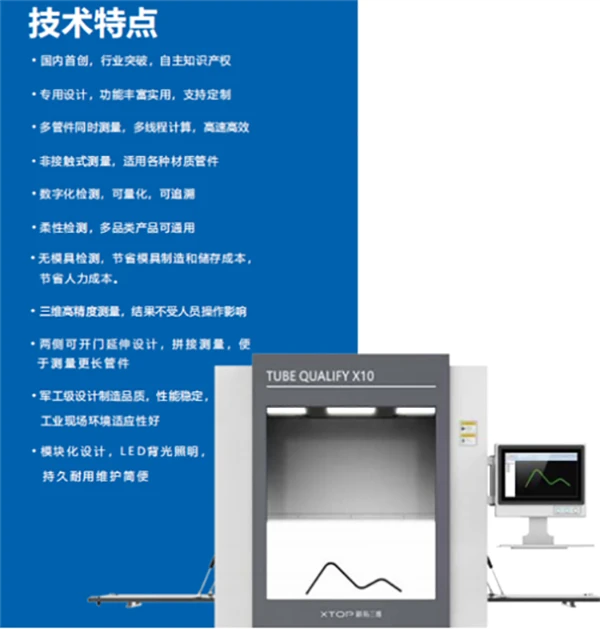
On the other hand, as a versatile, non-contact inspection solution for bent automotive tubes, it enables quantitative assessment at various points and simultaneous measurement of multiple tubes. Furthermore, measurement data can be fed back to the tube-bending machine in real time for iterative adjustments, vastly improving the efficiency of machine setup and process optimization—boosting inspection and setup efficiency by dozens of times compared to traditional methods—while also reducing material waste during the setup process.
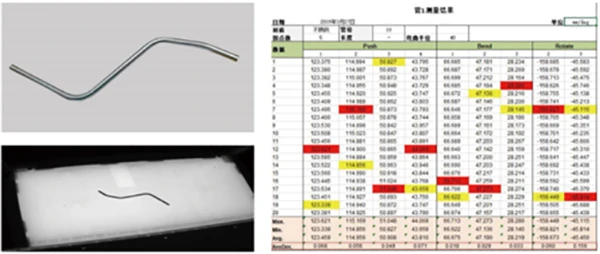
Tube bending manufacturing equipment has evolved from mechanical machinery to CNC systems and is currently rapidly advancing toward intelligent equipment. The Tube Qualify tube measurement solution enables in-machine inspection and closed-loop compensation, thereby enhancing machining precision and manufacturing efficiency while reducing costs; this lays a solid foundation for automotive tube manufacturers to secure a leading position in future tube production technology.